
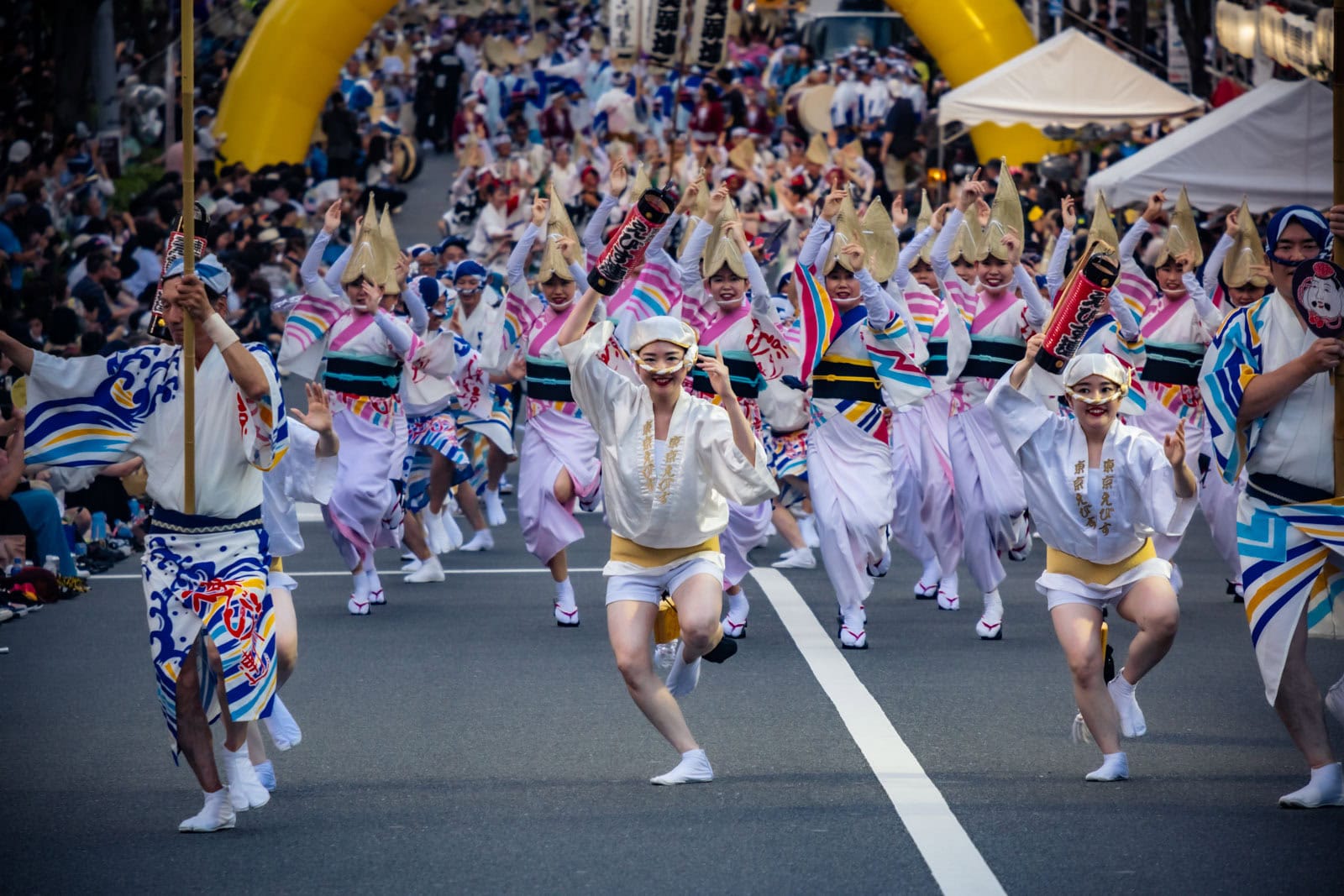
Every August, Koenji Awa Odori turns up the summer heat with two-nights of music, dance, and tradition. This is your chance to see one of Tokyo’s largest festivals. It is truly spectacular.
This 400-year-old tradition from Tokushima Prefecture comes to the heart of the city. With over 10,000 dancers and a million spectators, the festival is an unforgettable experience and a must-photograph event.
The Koenji Awa Odori Festival experience
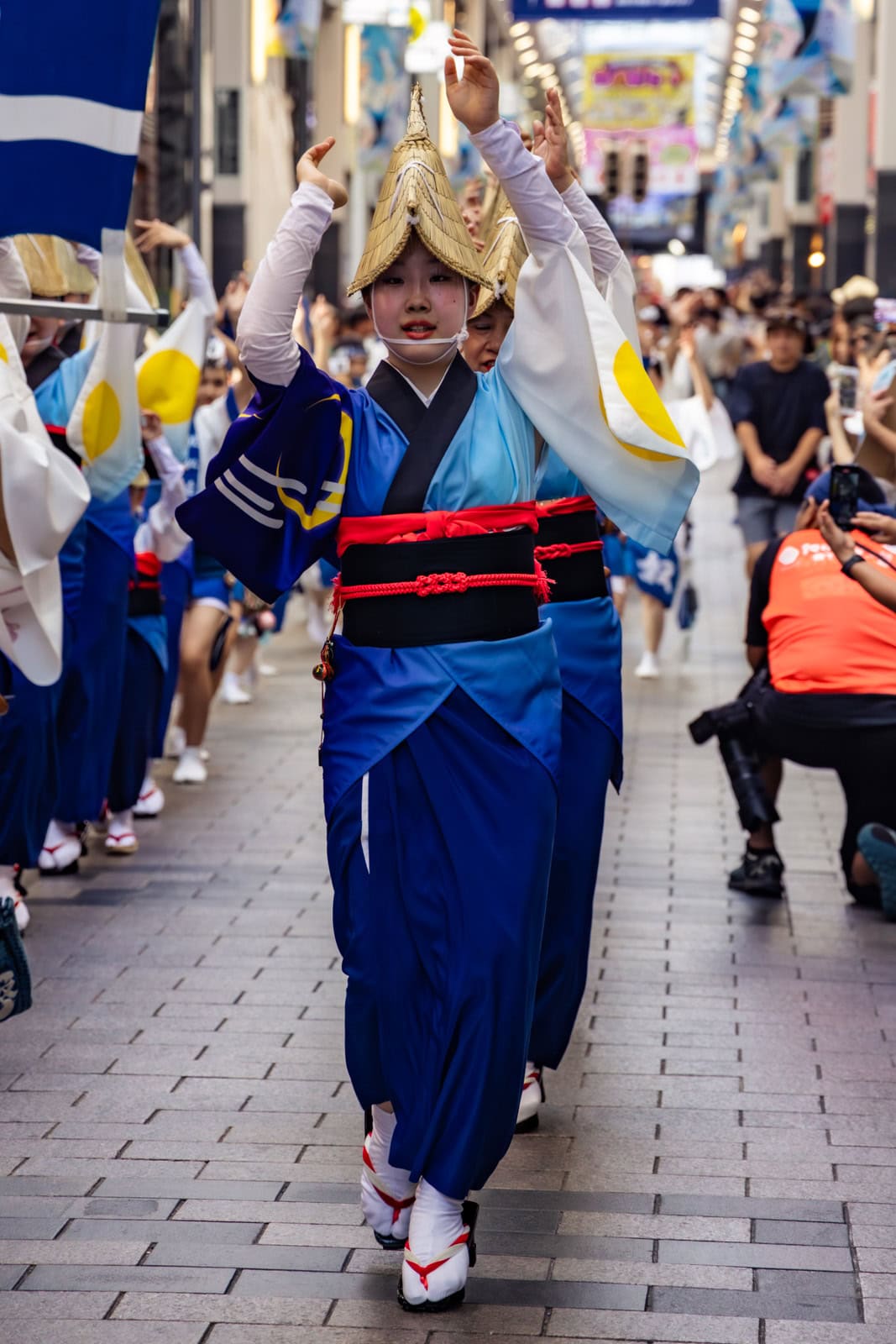
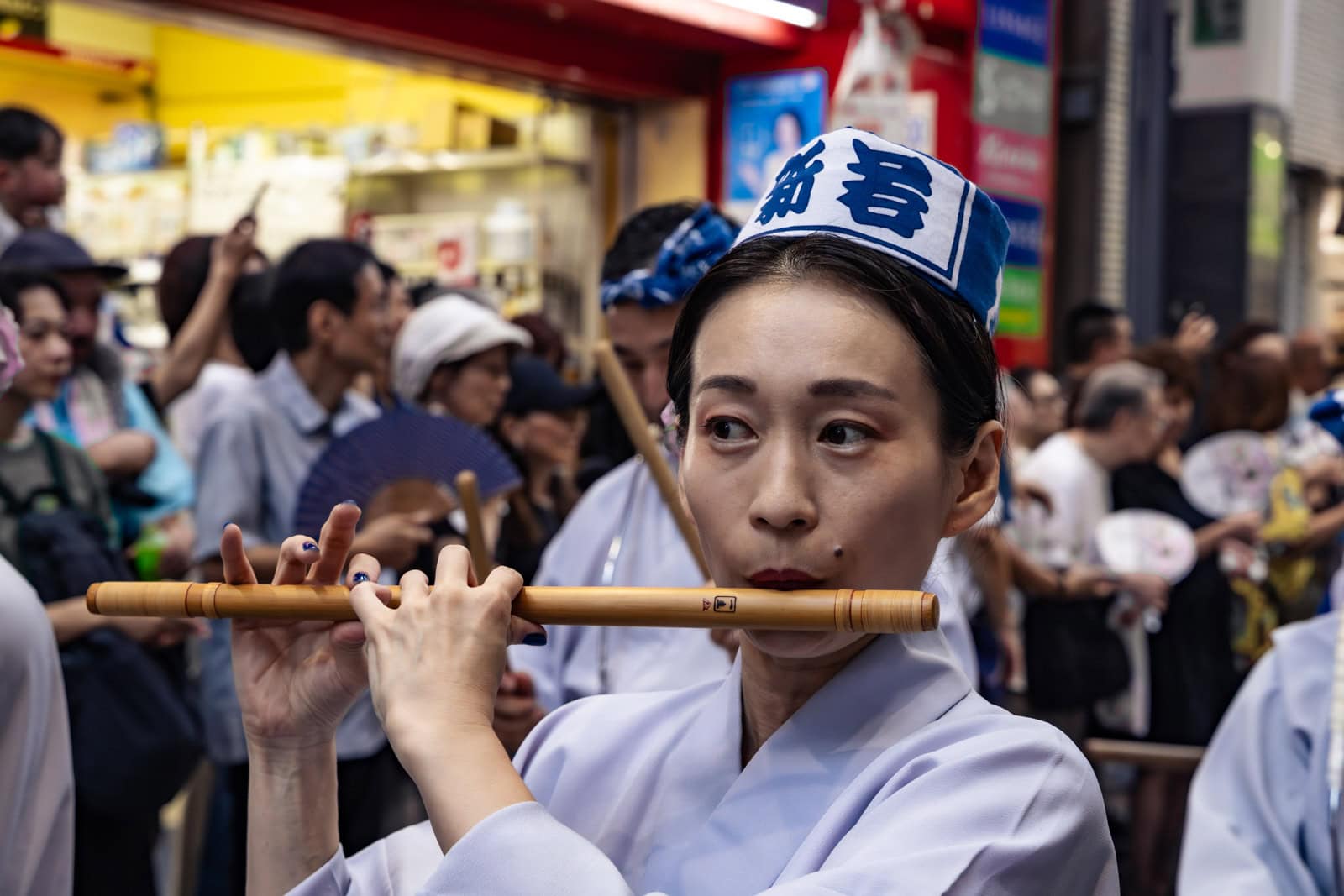
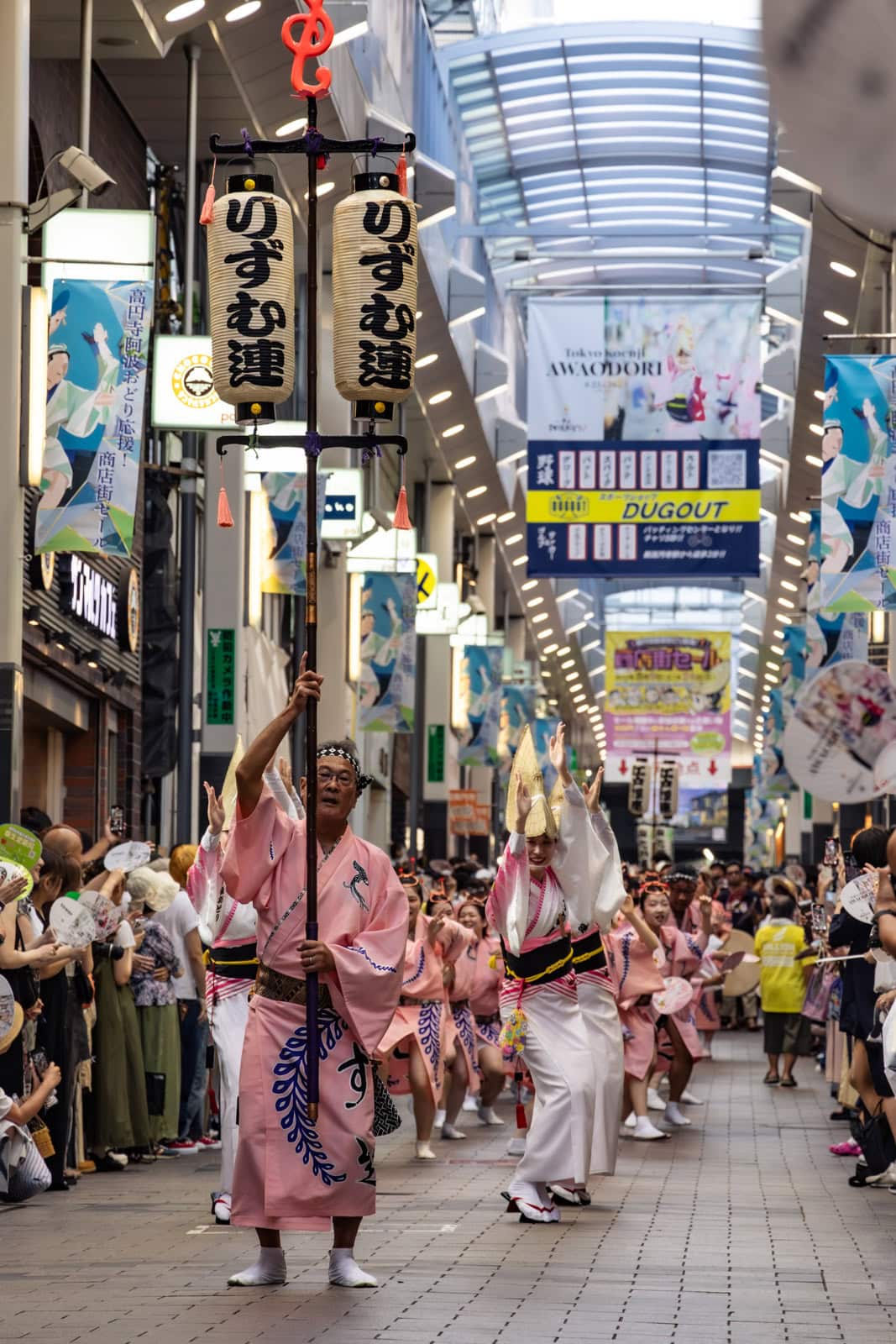
At the core of the Awa Odori is the relentless, hypnotic two-beat rhythm of drums, flutes, gongs, and shamisens. For three hours over two nights, performers move through a five-kilometer figure-of-eight course in a feat of endurance and joyous celebration.
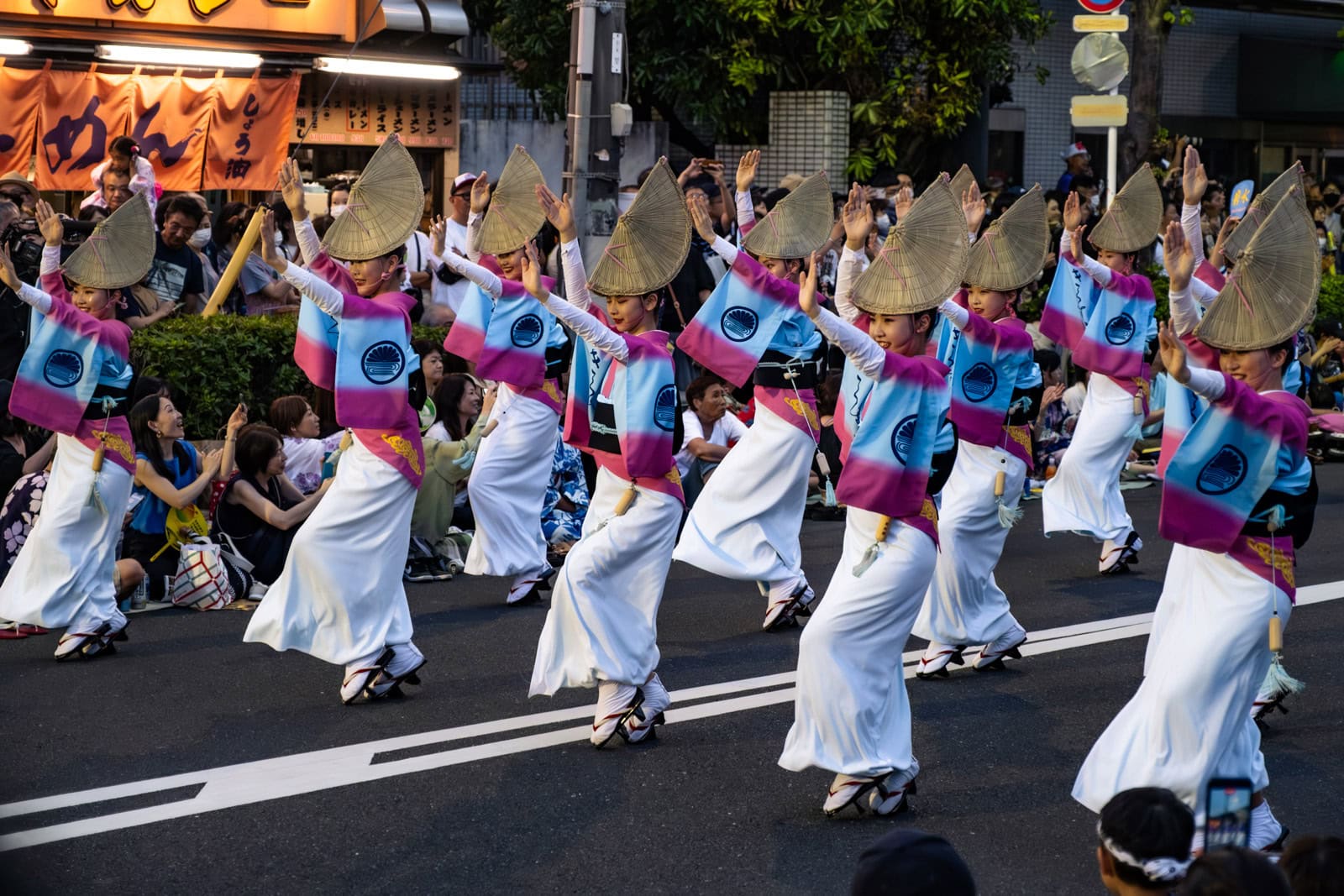
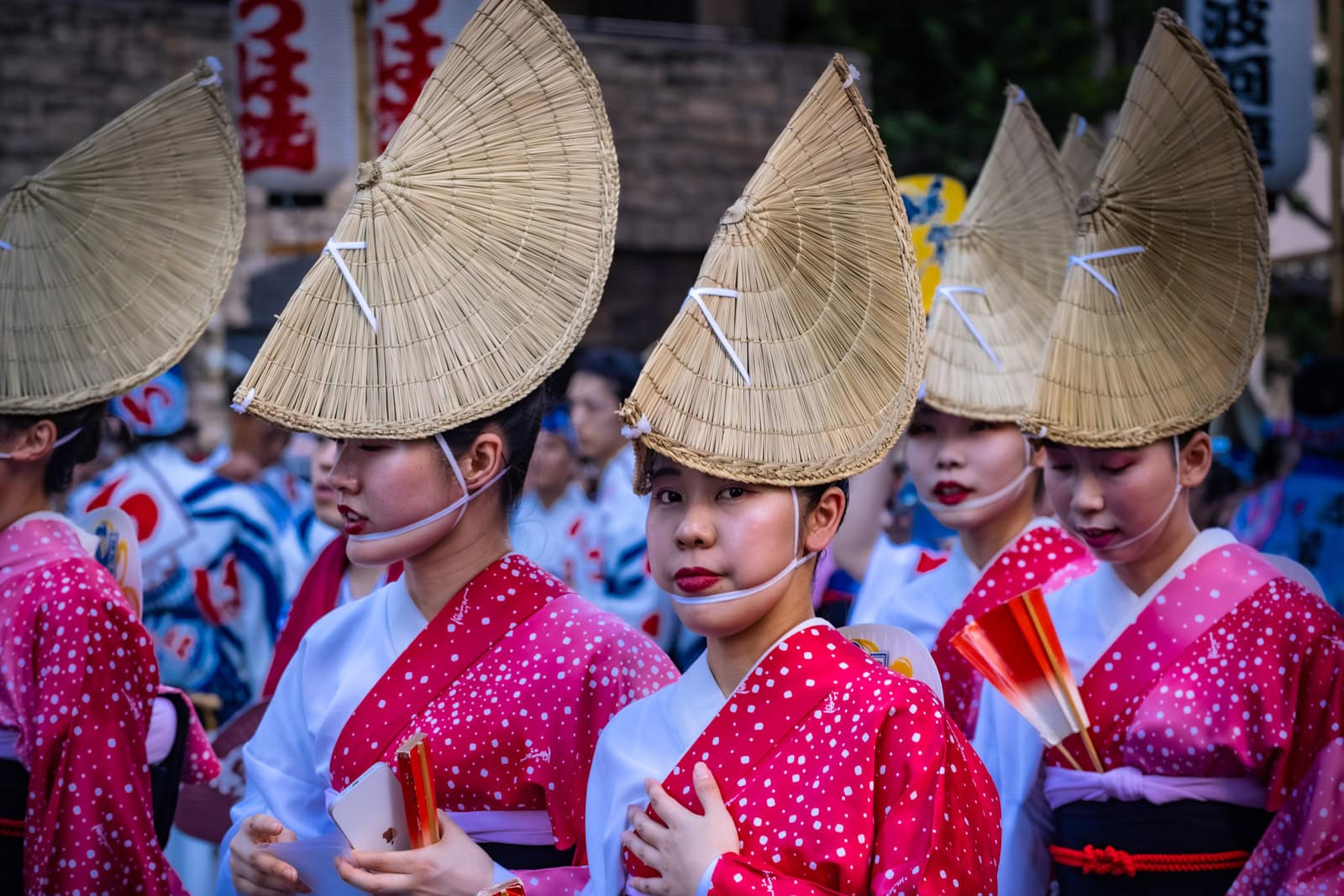
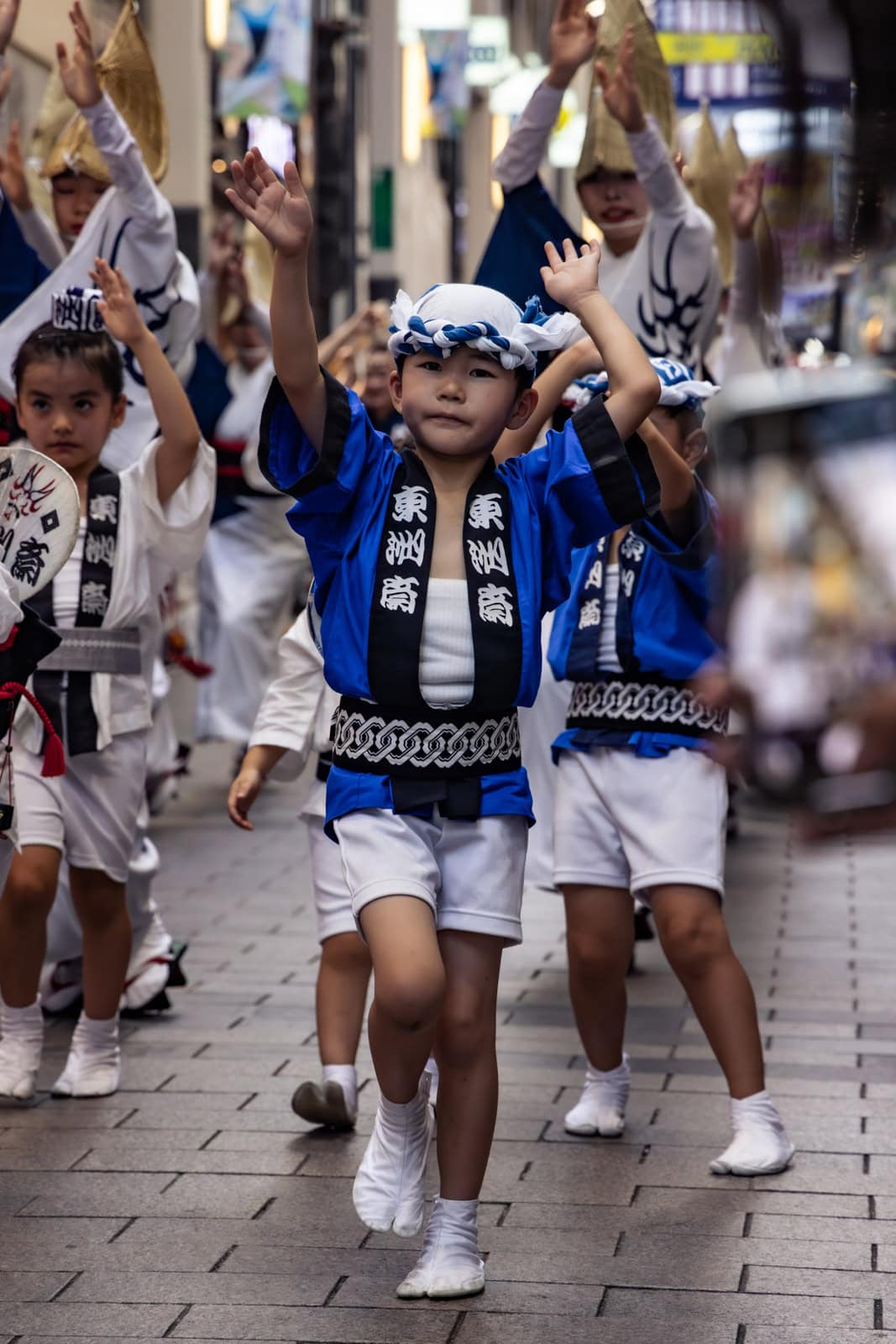
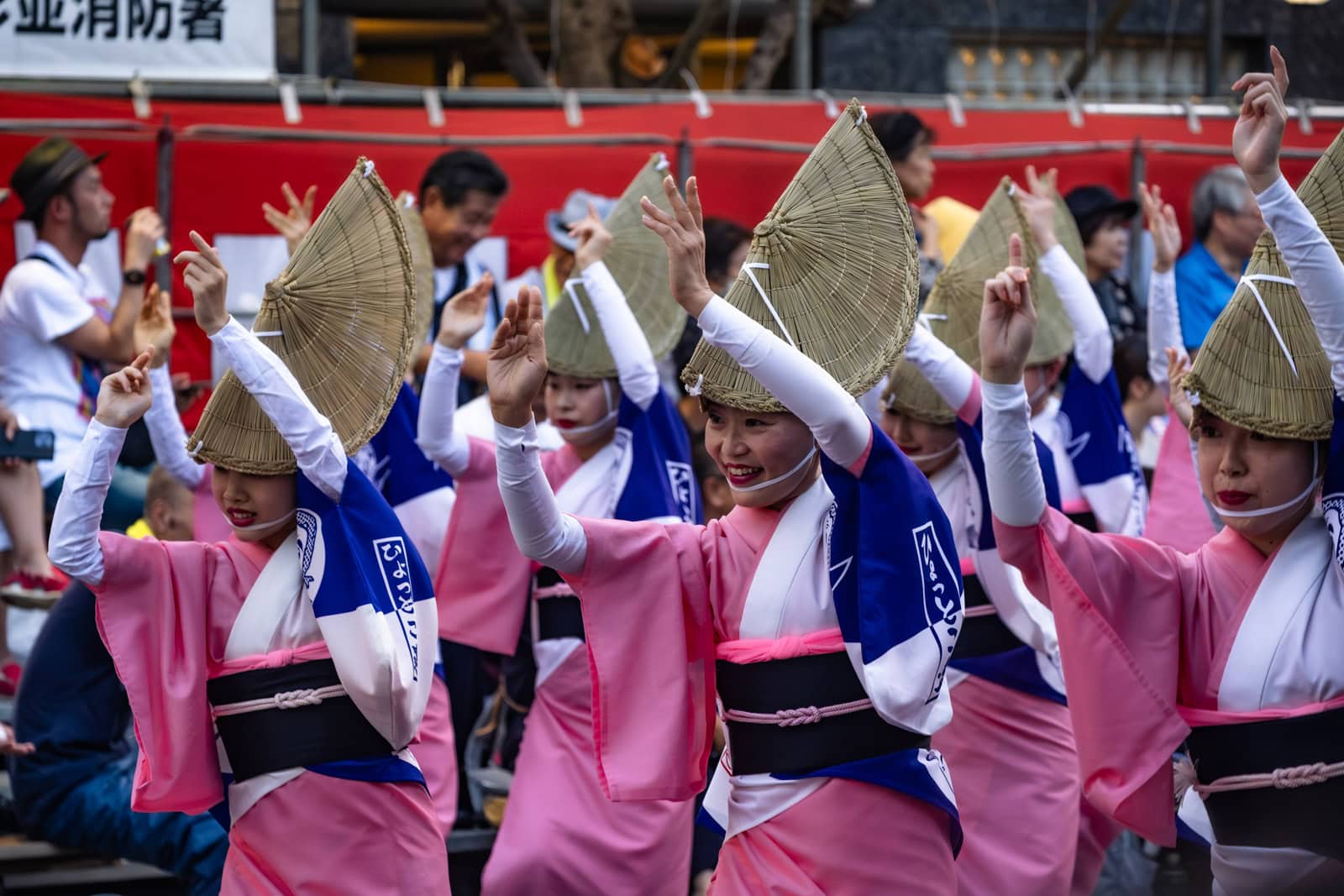
There are two distinct dancing styles. Women are the graceful ones, balanced on the tips of their geta sandals. Men play a dynamic, humorous role often jumping around.
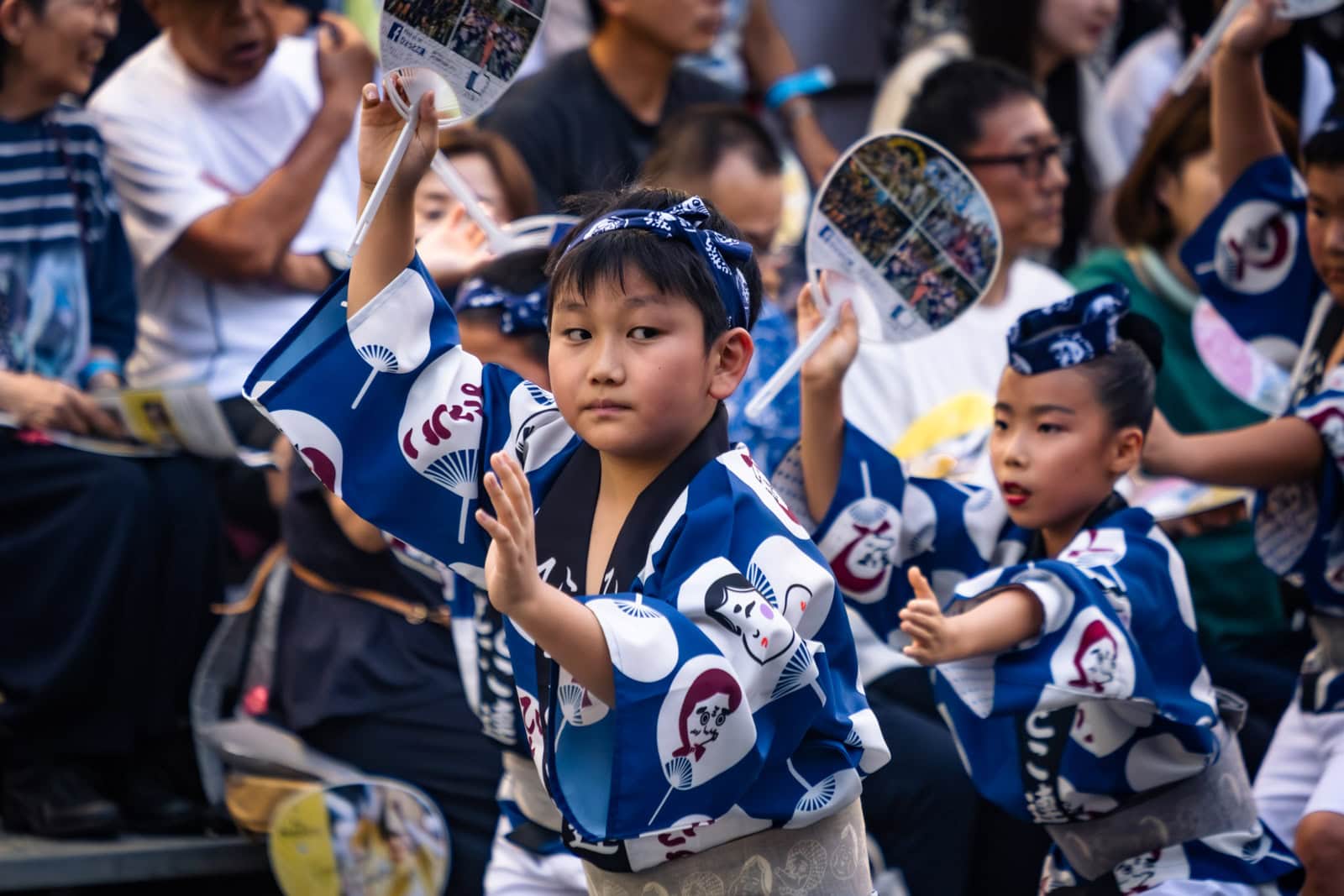
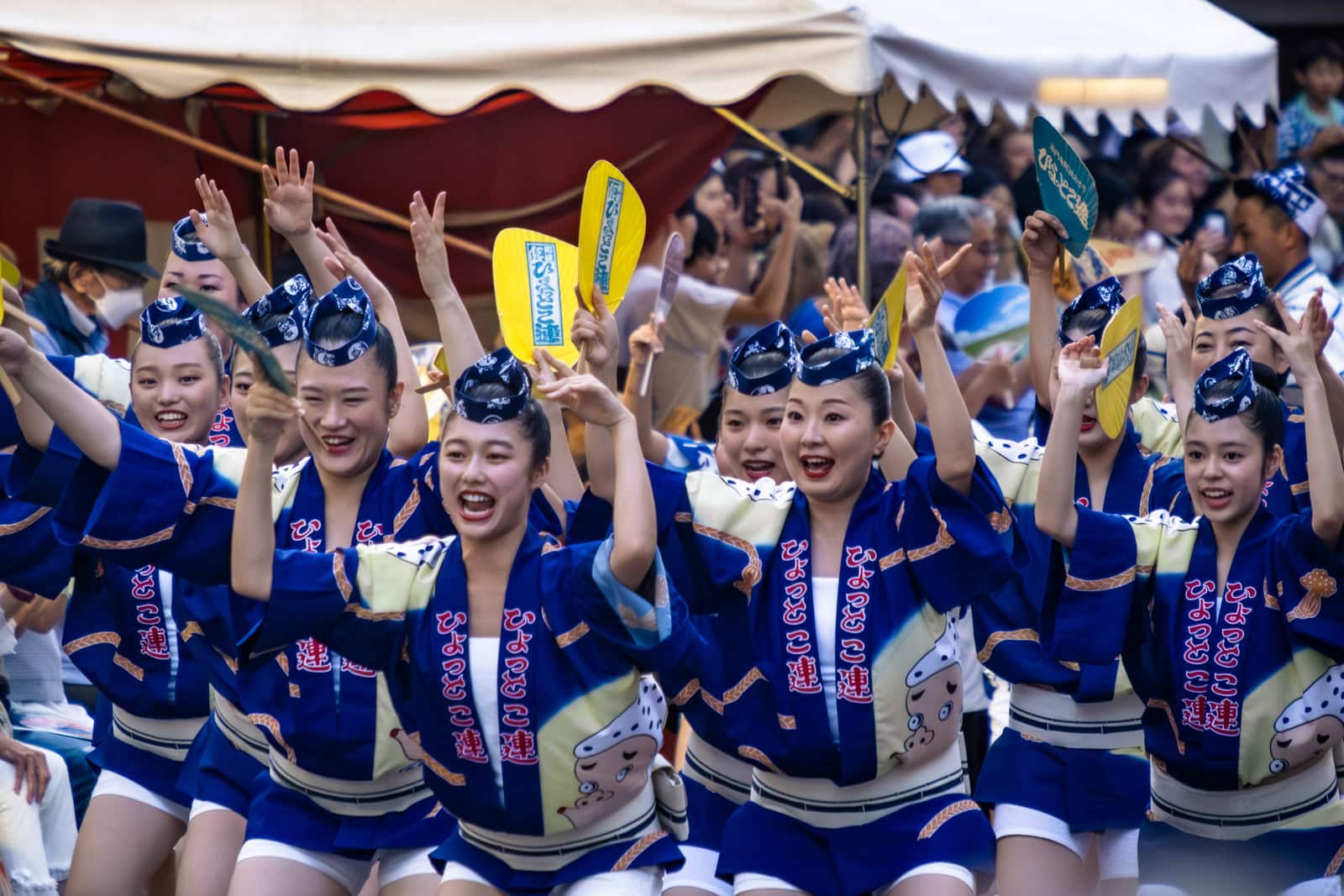
The 10000-12000 dancers and musicians are organized into 150-200 groups called “ren” (連). Each has its own distinct style, costume, and musical arrangement.
Some groups are large and have existed for decades, while others represent local companies or universities. This variety is what makes the procession so fascinating to watch.
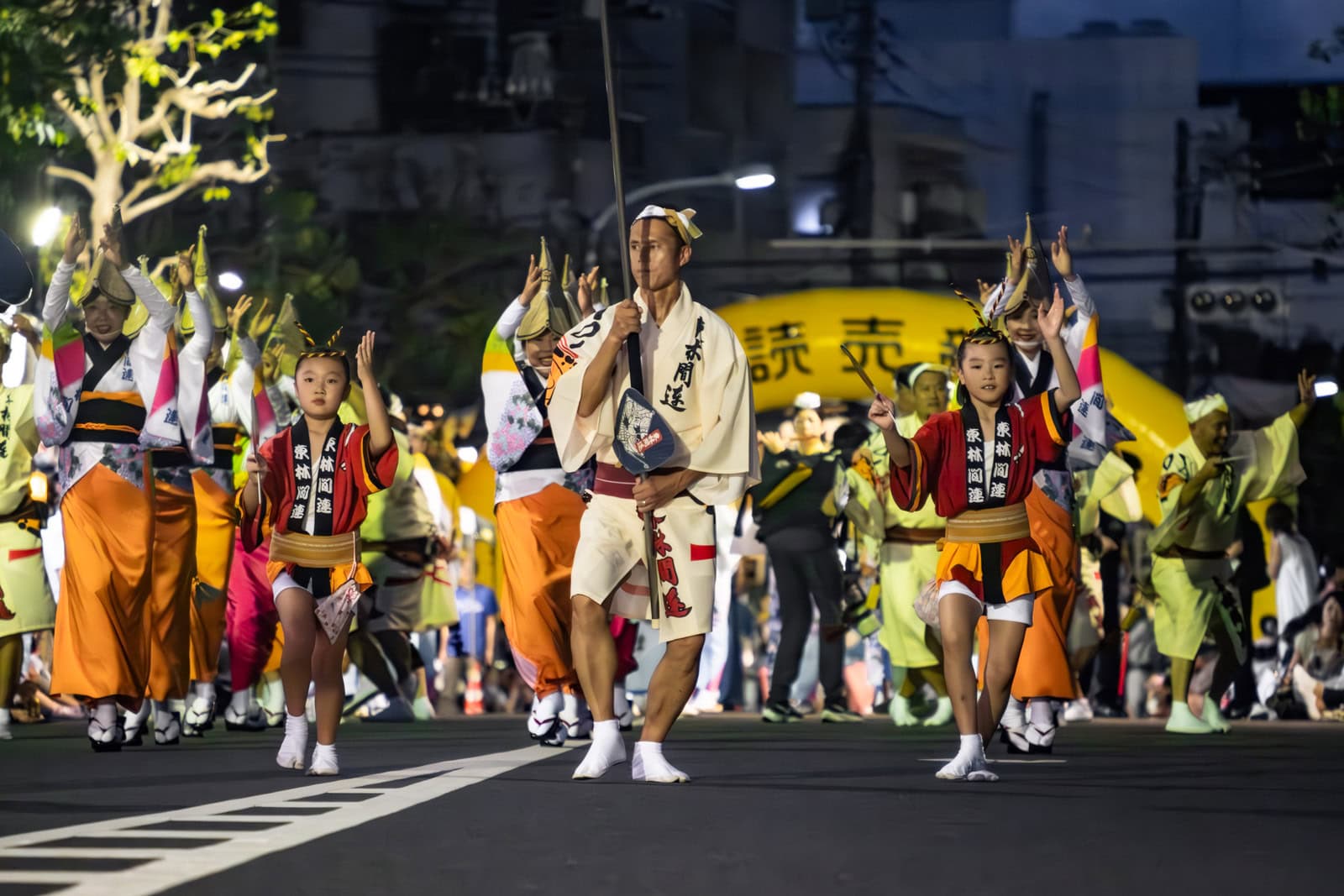
The size of the Koenji event makes it unique. Many are much smaller. The Shimokitazawa Awa Odori (guide here) has 21 ren and takes place along cramped streets.
Awa Odori articles from previous years
Where is the event held?
Koenji Awa Odori is held on the streets between Koenji Station (Chuo, Sobu, Tozai lines) and Shin-Koenji Metro (Marunouchi line) Station. The dancers follow a roughly figure-of-eight route along:
Konan Street (the main stage)
This wide road is the main stage where you can shoot from the curb. You can also shoot from behind the road barriers. As the dancers approach, you get fantastic head-on photo opportunities.
At the barriers, the dancers turn, and bow to the crowd. They then walk to the next part of the course to continue. Just be mindful of festival staff and participants.
Koenji Pal Shopping Street (Shotengai)
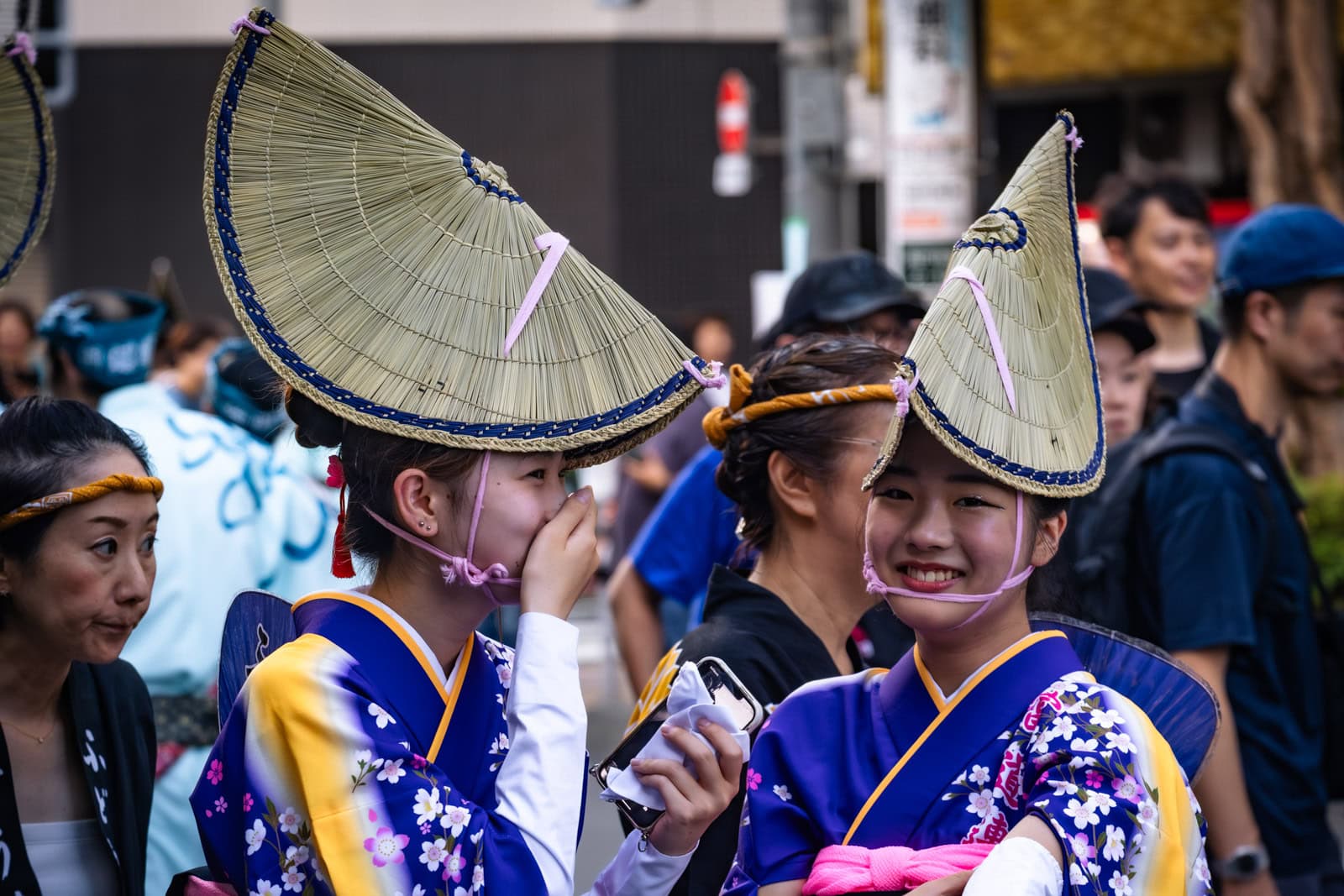
For a completely different feel, head to this covered arcade. The narrower space creates a more intimate setting, allowing you to capture the intensity of the dancers’ expressions and the intricate details of their costumes. Note this is a standing-only area.
Koenji Awa Odori 2027 information
Festival dates & times
When the exact dates for 2027 are known, I’ll publish them here.
Schedule
The procession runs from 5 p.m. to 8 p.m. on both Saturday and Sunday.
Cost
The event is free to watch from the street.
Paid seating
For a guaranteed, unobstructed view, reserved seating is available for approximately ¥15,000. Links will appear here when official details and retail outlets release their plans for the next event.
How to get to Koenji
JR Koenji Station: Served by the JR Chuo and Sobu lines, and the Tozai Metro line.
Shin-Kōenji Station: Served by the Tokyo Metro Marunouchi Line.
For the most up-to-date information, consult the official Koenji Awa Odori website.
Tips for a great experience
To make the most of your visit, plan to arrive by 3:30 p.m. to secure a good viewing spot along the route. The event is in August, so be prepared for the heat.
Festival food & local eats
While the dancing is the main event, the festival is also a treat for your taste buds. Keep an eye out for street food vendors (yatai) selling festival classics like yakisoba and grilled squid.
For a sit-down meal, the area around Koenji Station is a food paradise. It’s famous for its lively izakayas (Japanese pubs) and world-class ramen shops. Visit them before or after the main procession.
“What to take” checklist
- A fan (uchiwa or sensu): Essential for the late-August humidity. If you forget it, don’t worry too much, as Awa Odori staff often hand them out.
- A drink: To stay hydrated.
- A small towel or handkerchief: For sweat.
- A plastic sheet or small folding stool: If you plan on waiting a long time on the curb.
- A portable battery: For your phone, as you’ll be taking lots of pictures and videos.
Spectator etiquette
- Be mindful of space: Crowds are huge, so be considerate of those around you.
- Keep pathways clear: Don’t block access for festival staff or emergency services.
- Take your trash home: However, teams of rubbish collectors patrol some areas, so you might encounter them. Due to the crowds, people at the back pass their rubbish forward to be collected. Don’t be surprised if you become part of the chain!
My verdict: Is the Koenji Awa Odori worth it?
An audience of one million must say something! Even though Koenji’s Awa Odori came from Shikoku it has become a much loved event in Tokyo. The tradition, colors, noise, effort and energy of the participants needs to be experienced. It is perfect for photographers.
I hope this guide helps you enjoy one of Tokyo’s most spectacular summer nights! If you want to see another of the city’s festivals, check out [My First Hachioji Matsuri (2025): Drums, Floats, and Frenzy].