Tokyo Metropolitan Government Building Observatory Guide

The Tokyo Metropolitan Government Building in Shinjuku offers two free observation decks located 202 meters above ground. Known locally as ‘Tocho,’ these twin towers provide 360-degree panoramic views of landmarks like Tokyo Skytree and Mount Fuji. Entry is completely free, making it the most popular budget-friendly alternative to paid observatories in the city.

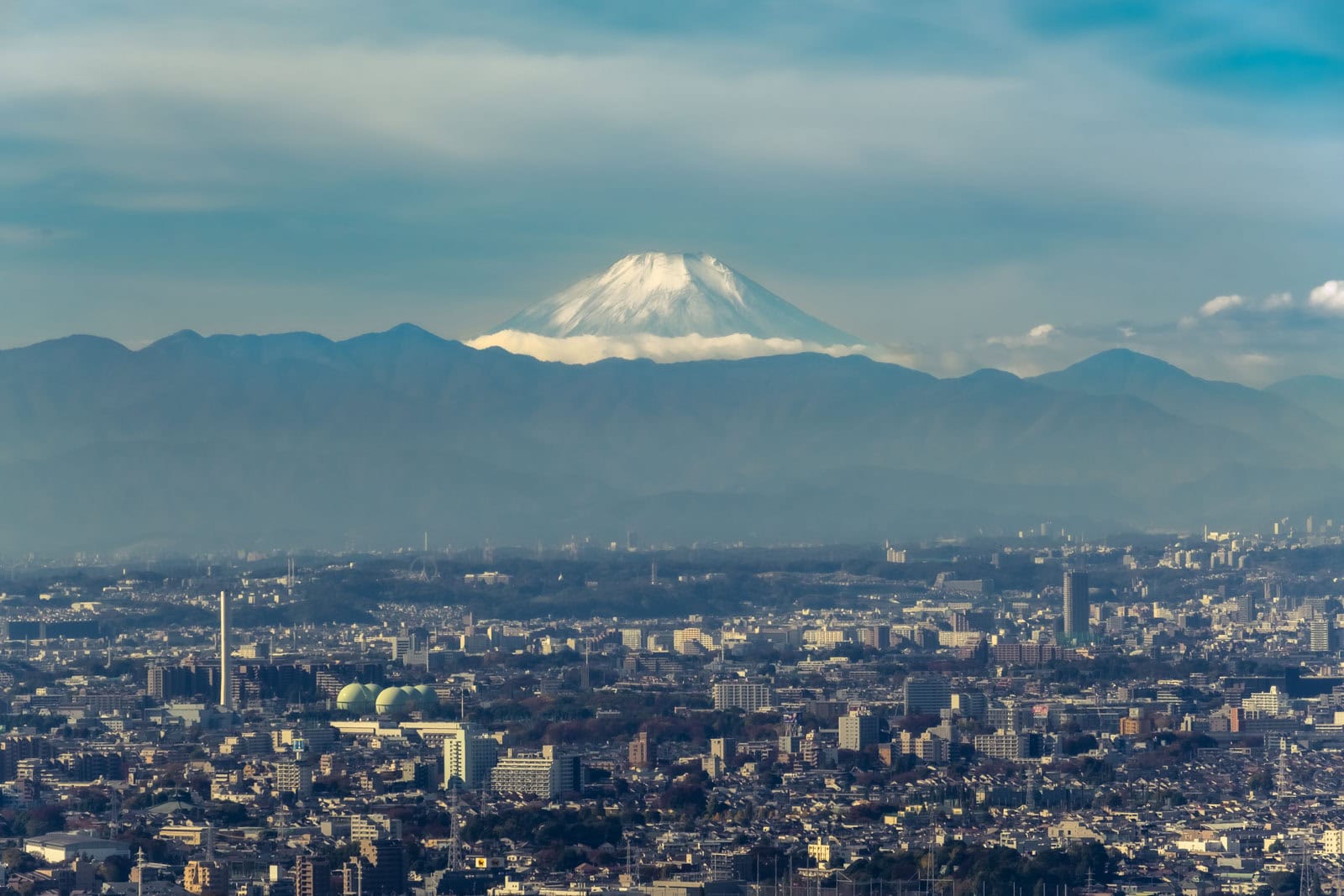
A snow-capped Mount Fuji stands behind a city.
Snow-capped Mount Fuji lies to the southwest.

Discover Tokyo’s top free observatory at the Tokyo Metropolitan Government Building. Offering stunning city views from 243 meters, it’s the perfect spot to witness Mount Fuji at sunset or experience the building’s transformation through record-breaking digital art projections. This iconic landmark is essential for any photographer or traveler. It is one of the best things to do in Shinjuku.
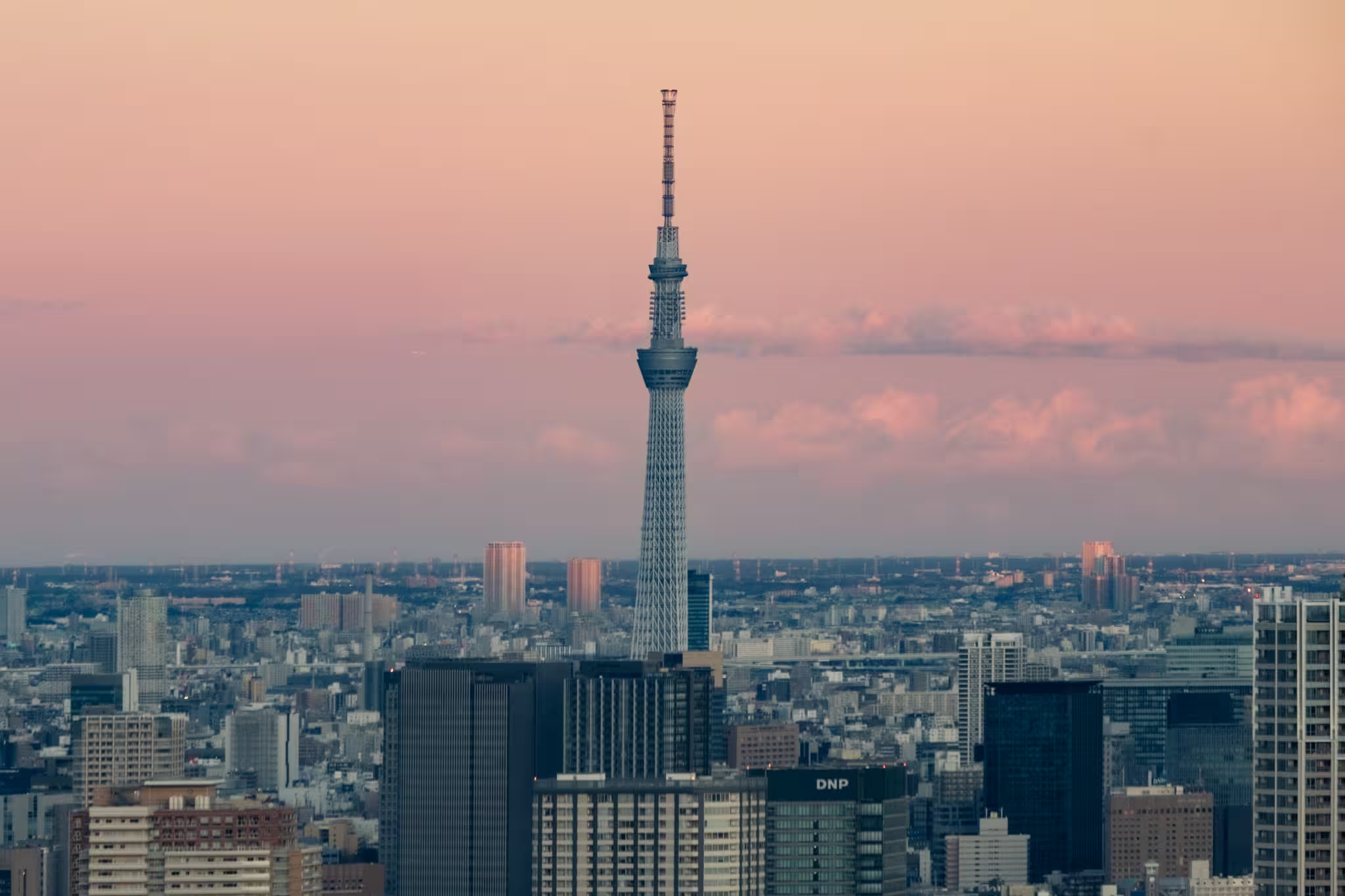
Tokyo Skytree towers over the city at sunset.
In the north is Tokyo Skytree.

Why visit the TMG observatory?

1. Free entry
2. Amazing sunset and Tokyo night views
3. Fuji views
4. Digital art
5. Kusama piano

Skyscrapers create a concrete jungle.
Looking towards the center of the city.

North vs. South observatory

You can see Mt. Fuji from the North observatory, but its windows are oriented toward Tokyo’s suburban areas. A sea of houses will be in front of you.

My advice is to skip the north tower. Head directly to the southern observatory is best. It offers the best views of the central city and Mt. Fuji. At night, the cityscape comes alive with light. It’s like a scene from science fiction. Get your camera out and click away, as there is much to see. This is a great place for Japanese travel photography. Just be prepared for crowded windows at sunset.

Just be prepared for crowded windows at sunset. Everyone wants to see Mt Fuji!
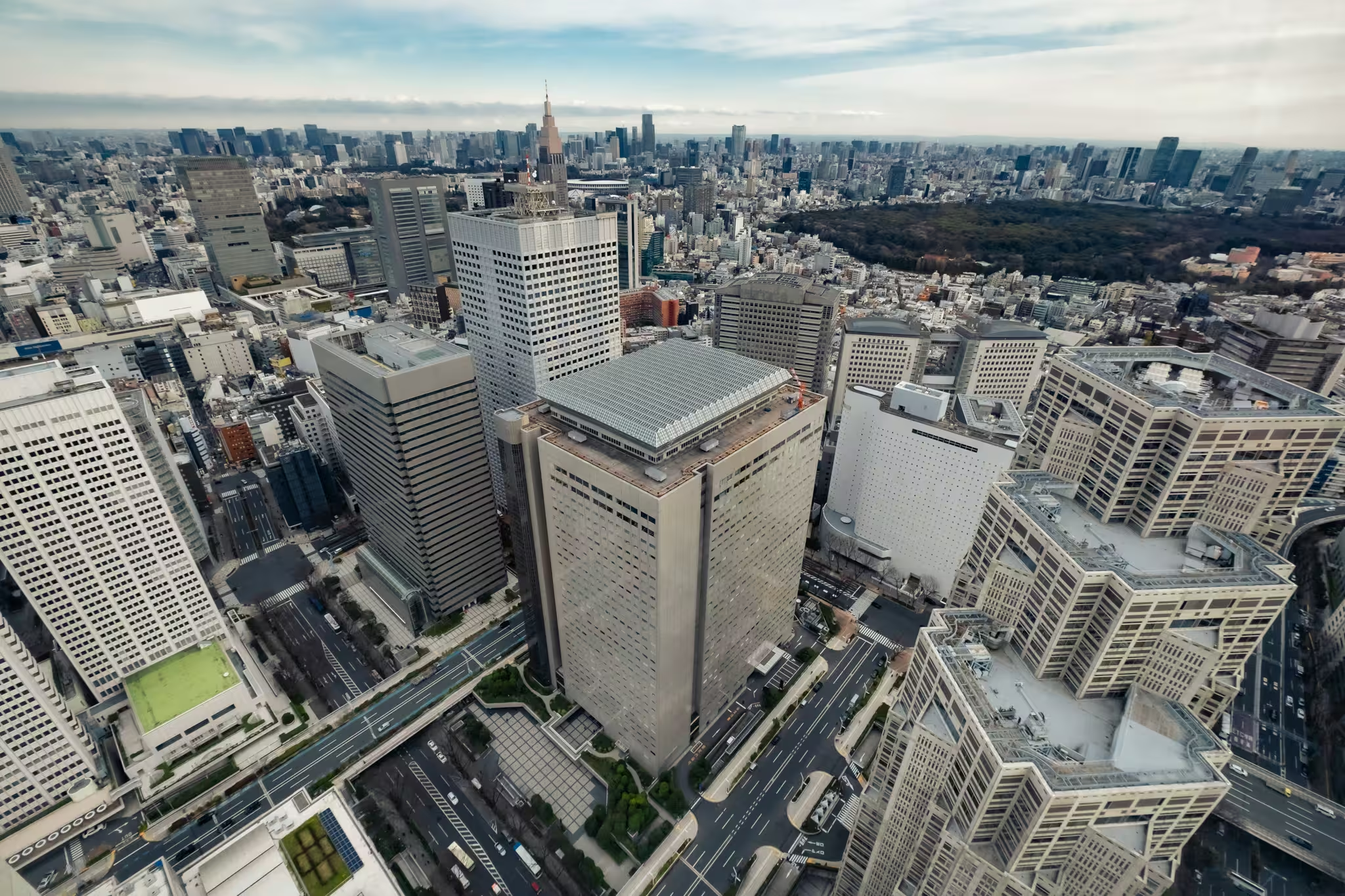
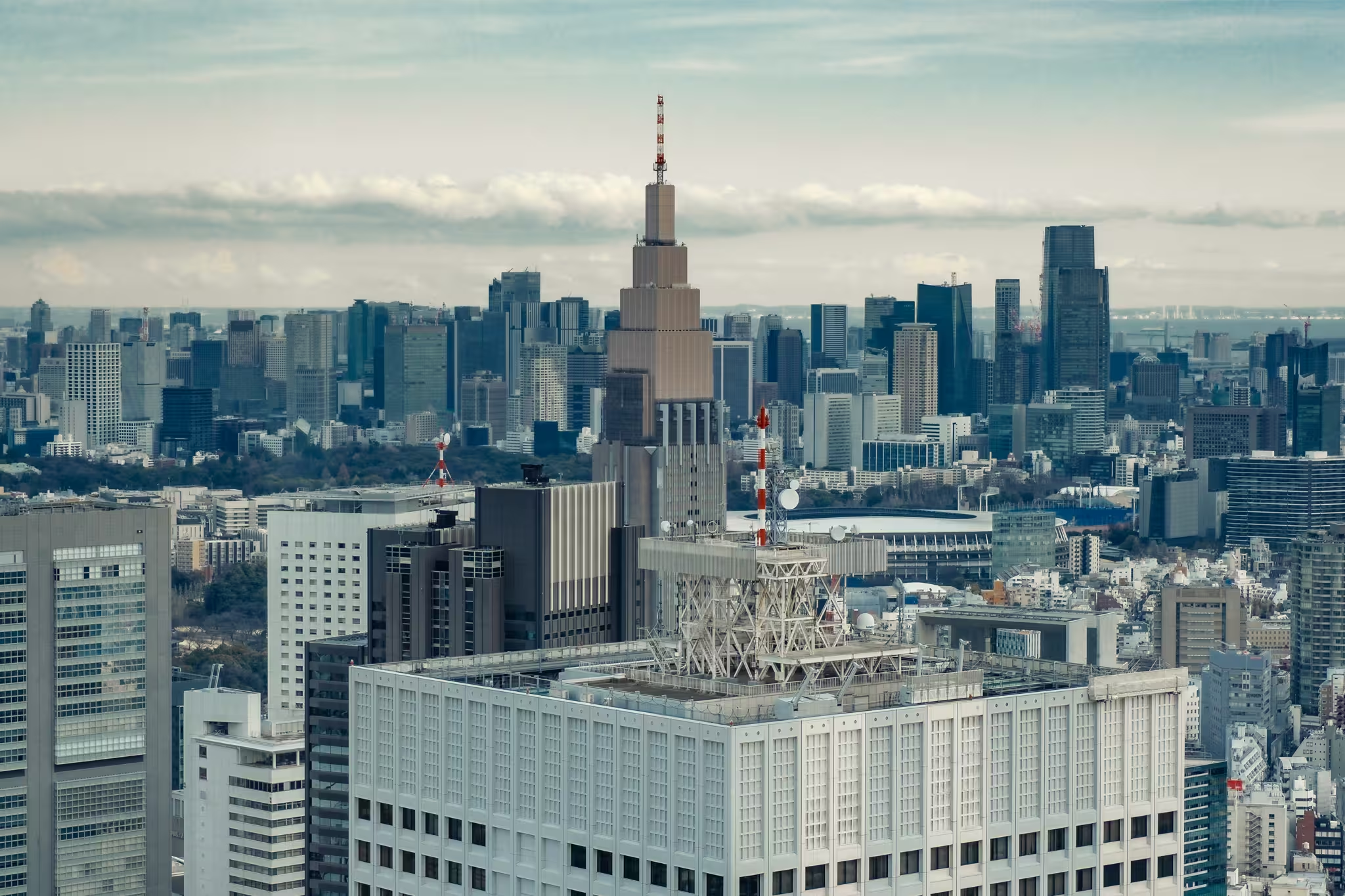
Looking down on a cluster of skyscrapers.
That green patch at the top right is Yoyogi park.

Photography at Tokyo Metropolitan Government Building

What to see from the observation deck

1. Mt. Fuji (when the weather is fine)
2. Roppongi Hills (with its Tokyo City View and Sky Deck)
3. Shinjuku Gyoen (a huge park)
4. the skyscrapers of Nishi-Shinjuku
5. Tokyo Bay
6. Tokyo Dome
7. Tokyo Gate Bridge (if you have good eyes!)
8. Tokyo Tower (mostly obscured)
9. Tokyo Skytree
10. Yoyogi Park (with Meiji Shrine)

Photography challenges & rules

1. The observation decks get crowded.
2. Tokyo Tower has almost disappeared! Over the last year, some new buildings have 3. gone up and decimated the view.
4. Tripods are not allowed. But the ledges along some windows serve almost as well. Be careful of people dropping their bags right next to your camera, though.
5. Glare from the windows can be terrible. Unfortunately, lens hoods are also banned.
6. The wait for elevators can be long. I’ve experienced 45 minutes on an especially busy day.
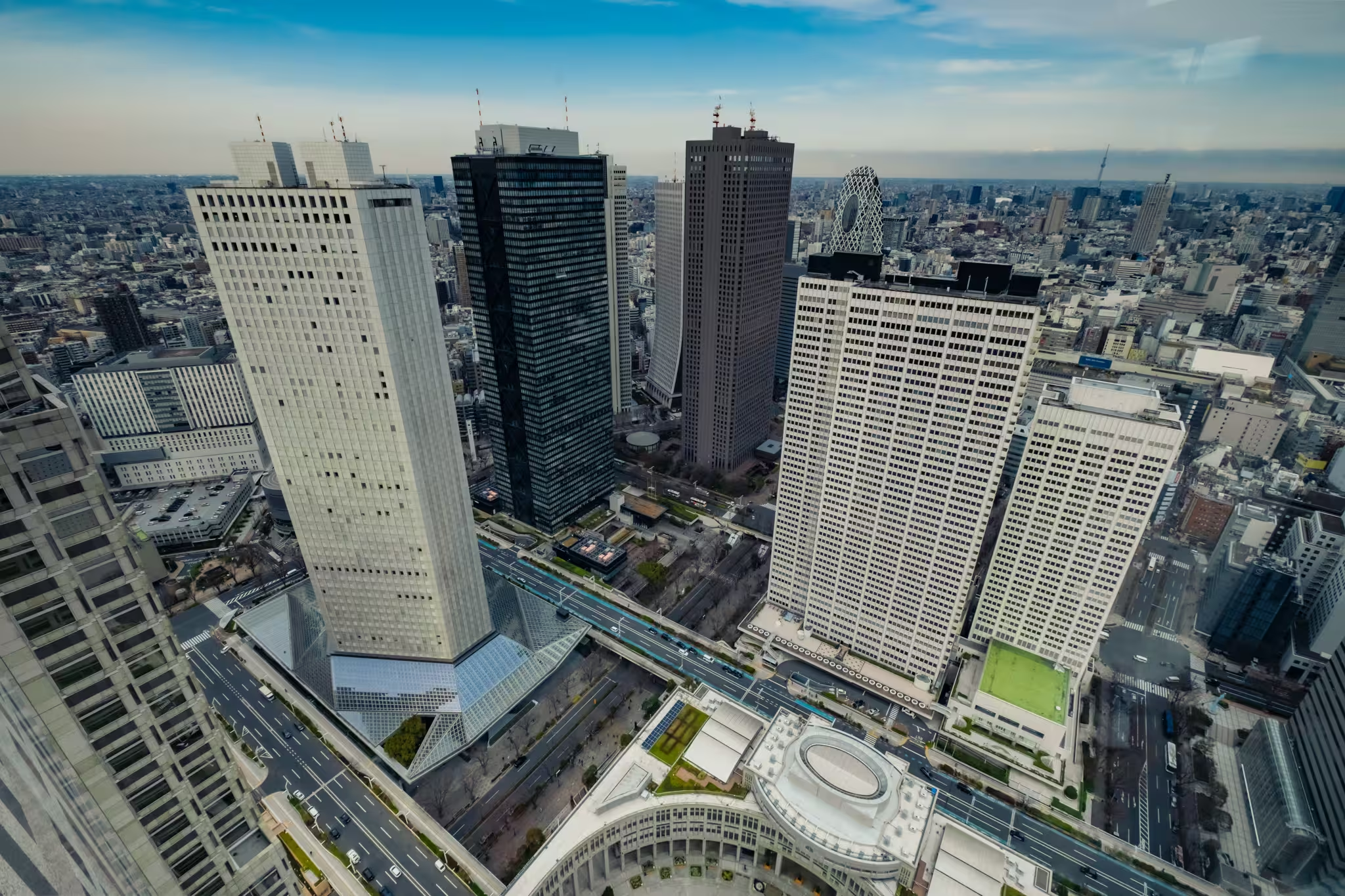
A group of skyscrapers in a city.
The skyscrapers of Nishi-Shinjuku.

Photo spots near the observatory

None of the following locations is more than 1.7 km away:

Love (artwork) in Shinjuku
Mode Gakuen Cocoon Tower (a famous skyscraper)
Shinjuku Eye (a piece of 1960s artwork)
Godzilla in Kabukicho
Shinjuku Golden Gai (drinking street)
Tokyu Kabukicho Tower (another observatory)
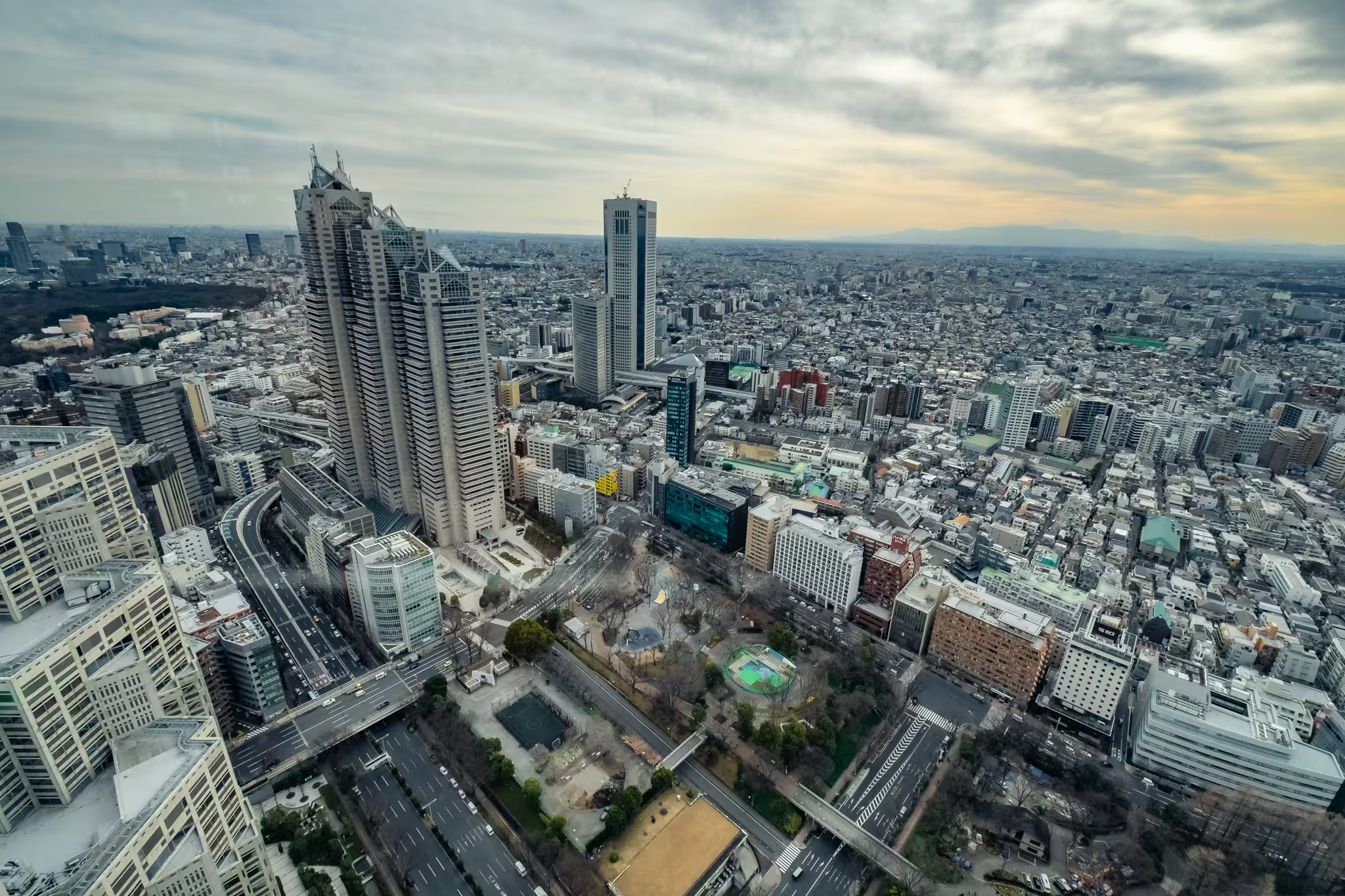
2 skyscrapers tower over the surrounding buildings.
Which of these skyscrapers was “Lost in Translation” filmed in?

Plan your visit

Where are the observatories?

They are on the 45th floors of the Tokyo Metropolitan Government Office Building (東京都庁舎) towers.
Address: 2-8-1 Nishishinjuku, Shinjuku, Tokyo

Here it is on Google Maps:

Closest train/subway stations

1. Tochomae Station (Closest):
Toei Oedo Line (Direct access from the station)

2. Shinjuku Station (10-minute walk):
JR Lines: Yamanote, Chuo, Saikyo, Shonan-Shinjuku
Subway: Marunouchi Line, Toei Shinjuku Line
Private: Odakyu, Keio

Opening hours

South Observatory
9:30 a.m. to 9:30 p.m.
Closed on the first and third Tuesday every month (or the following weekday if Tuesday is a public holiday).

North Observatory

9:30 a.m. to 5 p.m.
Closed on the second and fourth Monday every month (or the following weekday if Monday is a public holiday).
*On days when the South Observation Deck is closed, entry is possible until 9:00. p.m.

Entry fees

None

You can find the most current hours and information on the official Tokyo Metropolitan Government Building website.

More than just a view

The world’s largest projection mapping canvas

The Tokyo Metropolitan Government Building made history on February 25, 2024. Its east facade became a canvas for digital art. Guinness World Records certified it as the largest projection-mapping show in the world. Shows run nightly (unless canceled due to unforeseen circumstances). It’s become a new Tokyo tourist attraction.
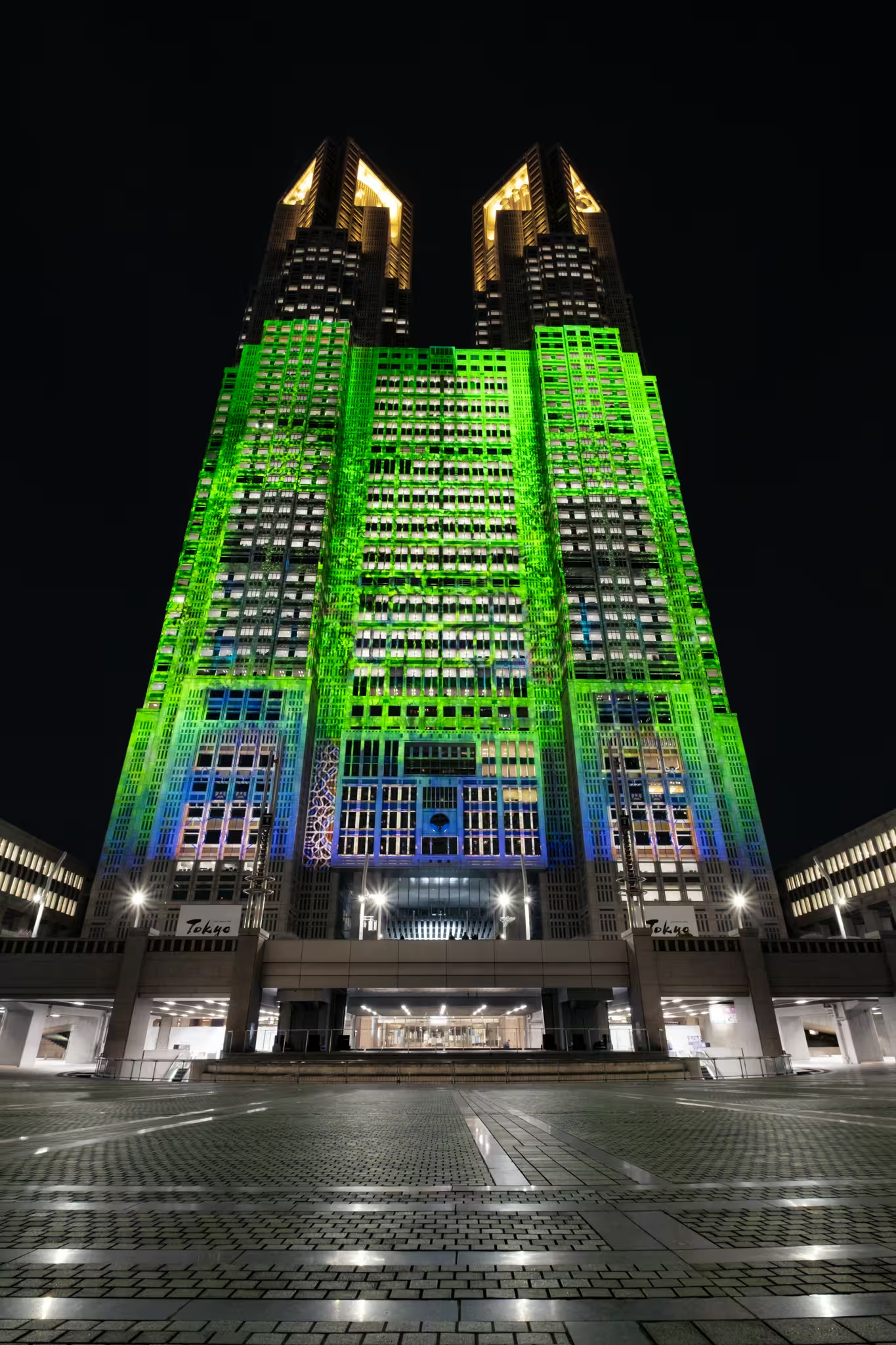
The Tokyo Metropolitan Government Building projection mapped in green.
Tokyo Metropolitan Government Building covered in green thanks to projection mapping.

Do you like dot-covered pianos?

A dot-covered piano is in the South Observation Deck. Yayoi Kusama, the famous Japanese artist, designed it. It’s free to use and popular. Join the line! Many highly skilled pianists play it.

A place for Tokyo sport

The Tokyo Marathon is held in March and the startline is in front of Tokyo Metropolitan Government Building. As it is an international event, the area will be crowded to the extreme, so plan accordingly.

Is TMG worth it?

If I had to pick a time to photograph at Tocho, I’d choose sunset, as its light makes the city beautiful. And, if the weather is good, you might luck out and get a fantastic view of Mount Fuji. But be wary of the mountain’s magic. Some people focus on it and forget about everything else!

Don’t forget to stay for the Tokyo night views. They are also spectacular. This is the time for those Blade Runner views!

The Tokyo Metropolitan Government Building is fantastic for photographers. I’m sure you’ll agree if you look at the images here or on the net. It is one of the best places to take your Japan travel pictures. And remember, it has also become a piece of digital art, so visit it at night to get both the view and the projection mapping!


Similar Posts

  • Finding a Subway Exit for Shinjuku Street Photography

    Finding a Subway Exit for Shinjuku Street Photography A solitary figure emerges from a brightly lit subway exit into the Tokyo night. Many photographers have snapped this scene. It’s one of my favorites, too. For a long time, I wondered where this Shinjuku street photo was taken. I felt an overwhelming urge to solve it….

  • |

    Tokyo Station’s Domed Ceilings: A Photographer’s Guide

    Tokyo Station’s Domed Ceilings: A Photographer’s Guide The Tokyo Station domed ceilings are two iconic octagonal rotundas located at the Marunouchi North and South exits. Restored in 2012 to their original 1914 design by architect Tatsuno Kingo, the 30-meter-high ceilings feature intricate stucco reliefs, eight zodiac signs, and majestic eagle engravings, making them a premier…

  • |

    Shinjuku Gyoen: A Photography Guide to Tokyo’s Urban Oasis

    Shinjuku Gyoen: A Photography Guide to Tokyo’s Urban Oasis Shinjuku Gyoen National Garden is one of Tokyo’s most versatile photography locations, featuring a blend of traditional Japanese, English Landscape, and French Formal garden styles. Ideal for landscape and portrait photography, the park peaks during the spring cherry blossom season and vibrant autumn foliage, offering a…

  • Nakagin Capsule Tower: A Tokyo Photography Lesson

    Nakagin Capsule Tower: A Tokyo Photography Lesson I’ve heard some photographers say photography can stop time. When you hit that shutter button, everything freezes. Do you believe that? It can’t. No way. Nothing controls time, least of all a camera. Yes, I know these people are simply misspeaking. But it annoys the heck out of…

  • Silky in Tokyo: A Lee Filters Super Stopper Review

    Silky in Tokyo: A Lee Filters Super Stopper Review In 2016, I added a new tool to my photography arsenal. I bought the Lee Filters 100mm x 100mm Super Stopper, a 15-stop neutral density (ND) filter. For those unfamiliar with this piece of gear, an ND filter is a high-quality piece of darkened glass or…

  • Hachitama Observatory: A Photographer’s Odaiba Dream

    Hachitama Observatory: A Photographer’s Odaida Dream Are you searching for the best Tokyo photo spots? The Hachitama Observatory is the place for you with superb panoramic views of Tokyo Bay, the Rainbow Bridge, and Tokyo Tower. The observatory is atop the Fuji TV headquarters building in Odaiba, and it is a dream for photographers seeking…