Japan Open-Air Folk House Museum
The Japan Open-Air Folk House Museum, known in Japanese as Nihon Minkaen (日本民家園), is a gem hiding in Kanagawa Prefecture. This is where you can find the houses that the Japanese used to build. For architectural photographers, it’s a treasure trove.
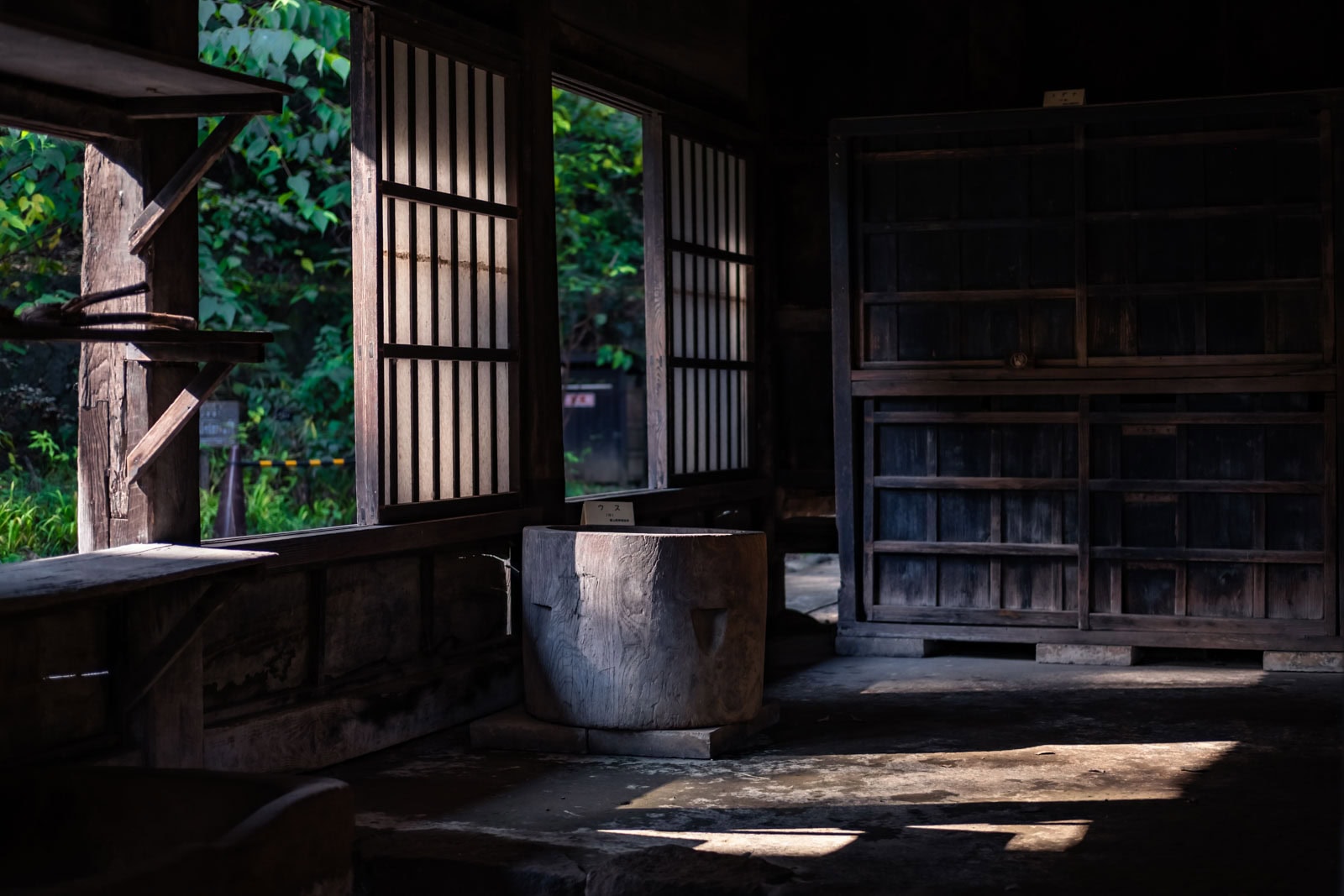
They have a chance to capture the interplay of light and shadow on century-old wood, the textures of thatched roofs, and the powerful lines of traditional architecture. You can do it all without modern distractions.
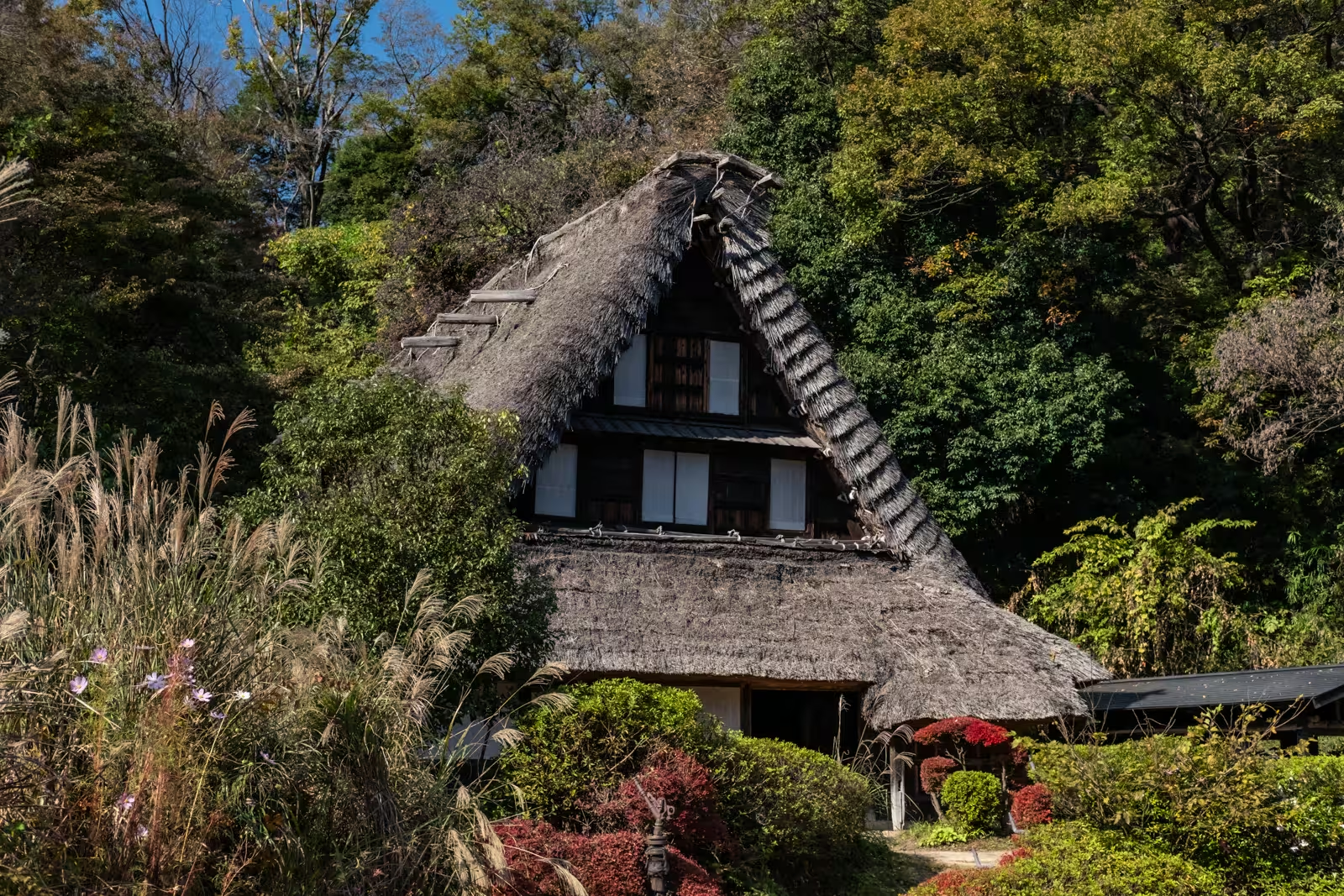
These aren’t replicas; they are the real deal. Each structure was disassembled at its original location. One comes from snowy Shirakawa-go, another from the coastal plains of Kawasaki. They come from all over Japan. Each was transported and reassembled here, keeping it for future generations.
Before you walk through the houses, pop into the main exhibition hall. It is behind the reception building. A visit here is worth it. You gain crucial context on the joinery and techniques used in traditional Japanese construction that will deepen your appreciation for the buildings.
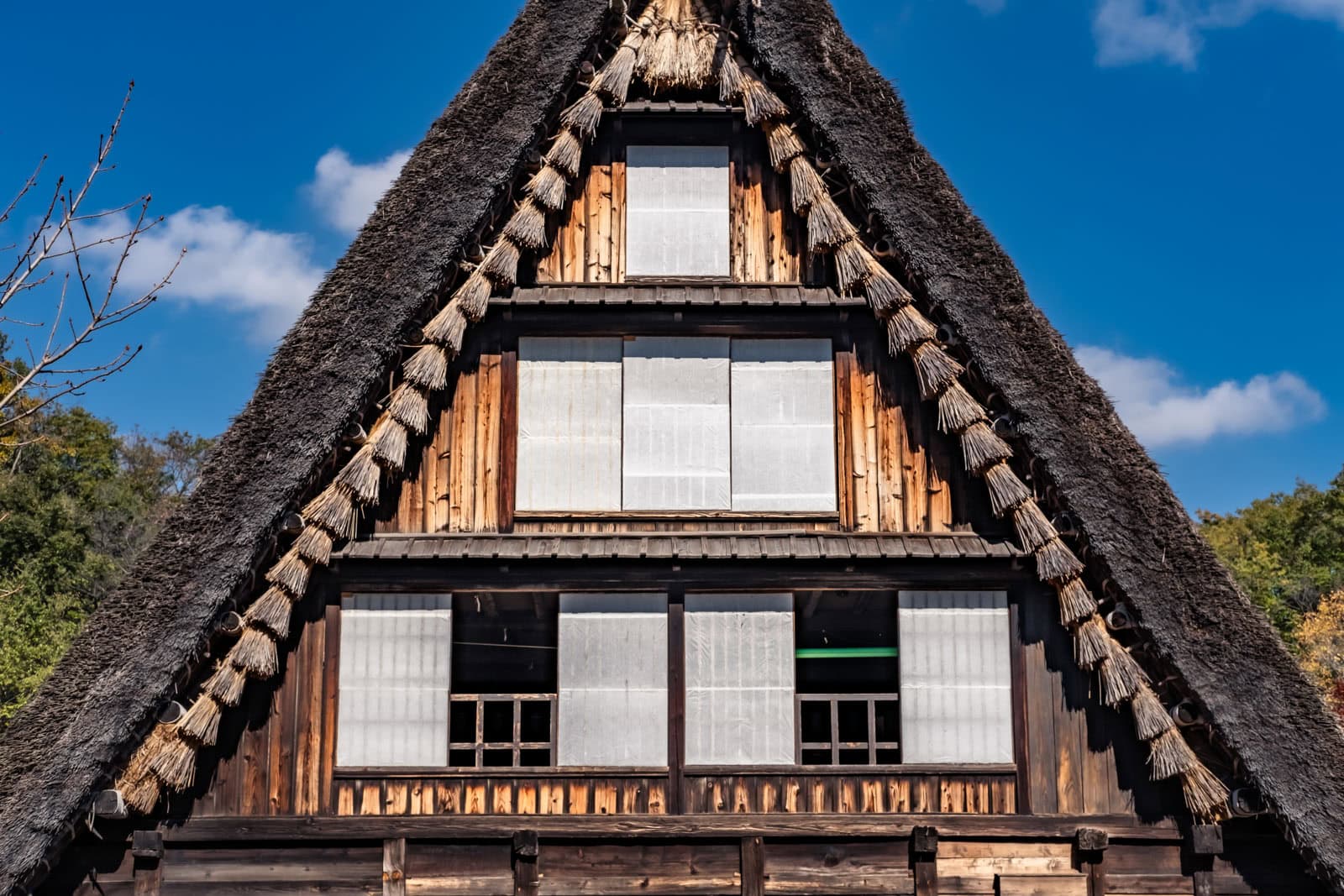
For instance, you’ll discover the genius of gassho-zukuri architecture—steeply sloped thatched roofs designed to shed the heavy snowfalls of Japan’s mountainous regions and prevent catastrophic collapse. The museum teaches that and more.
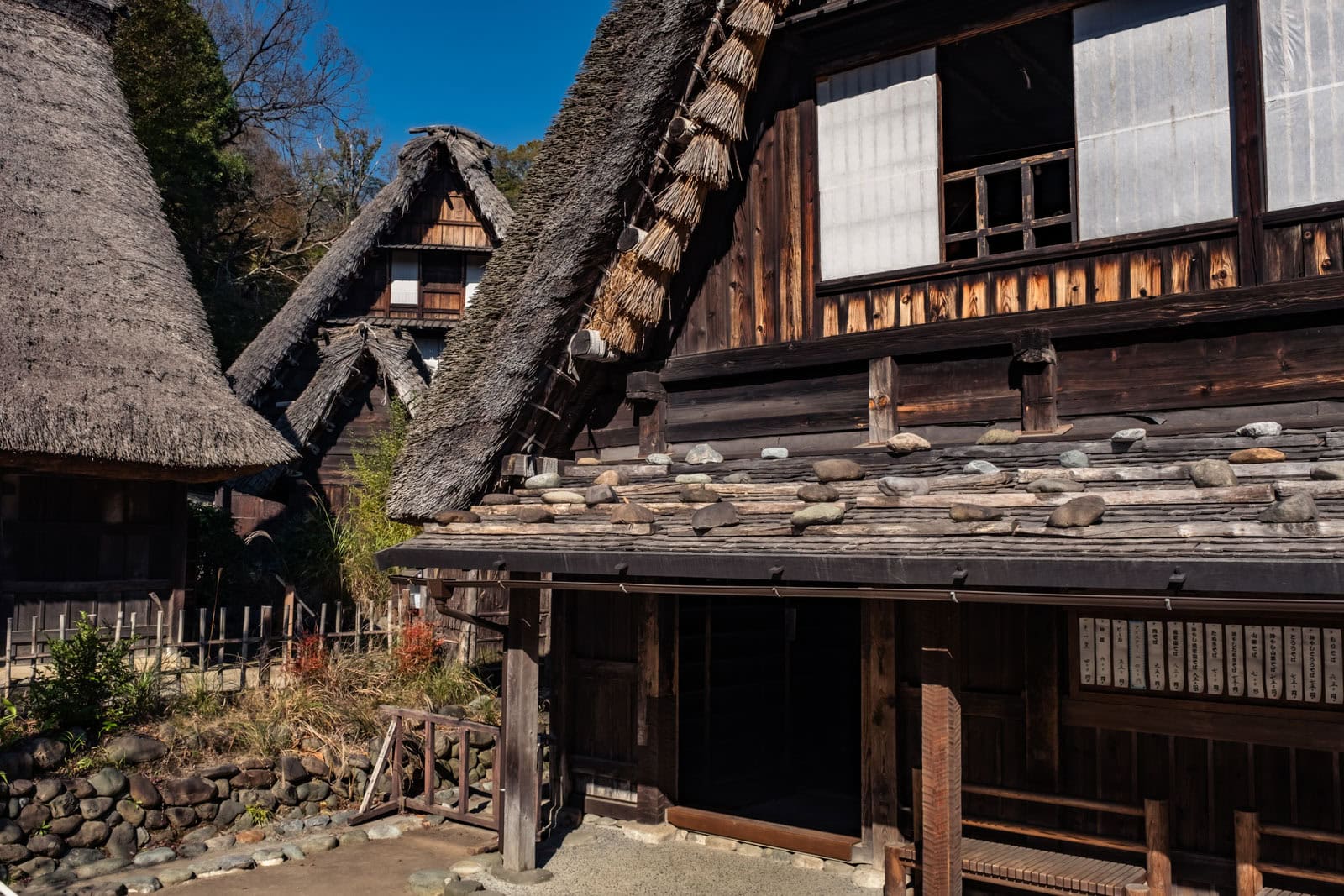
One of the museum’s highlights is its dedicated volunteers, whom you’ll often find practicing, preserving, and displaying traditional crafts. You are welcome to sit down, join them, and have a chat (some speak English). It is an interesting place where you can learn about the old days.
You could spend at least three hours walking around and photographing the museum. That might let you see everything in its entirety. Special exhibits are held throughout the year, too. One is the kabuki stage, which hosts plays (limited to 400 people). Check the museum’s homepage for full details.
What’s at the Japan Open-Air Folk House Museum
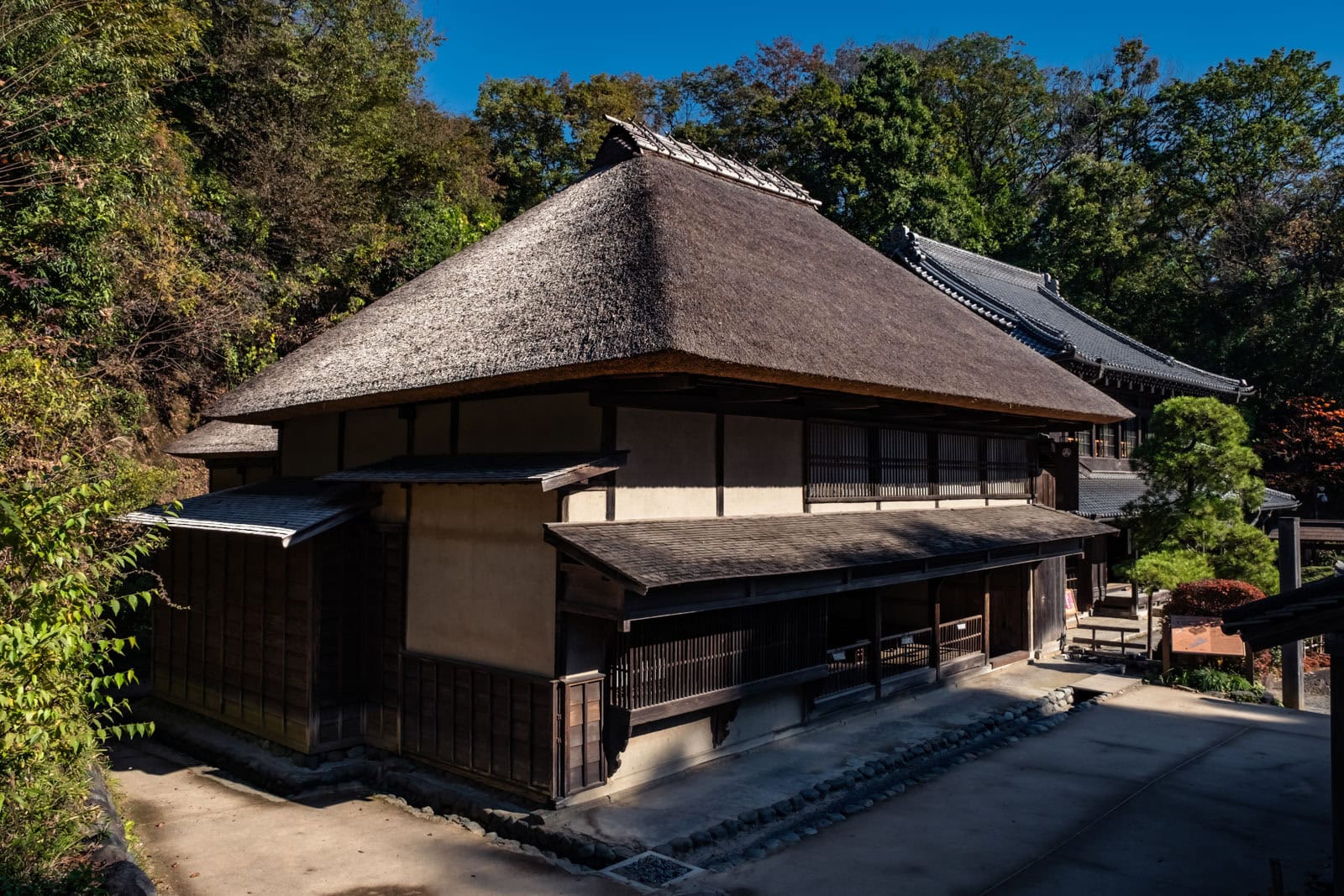
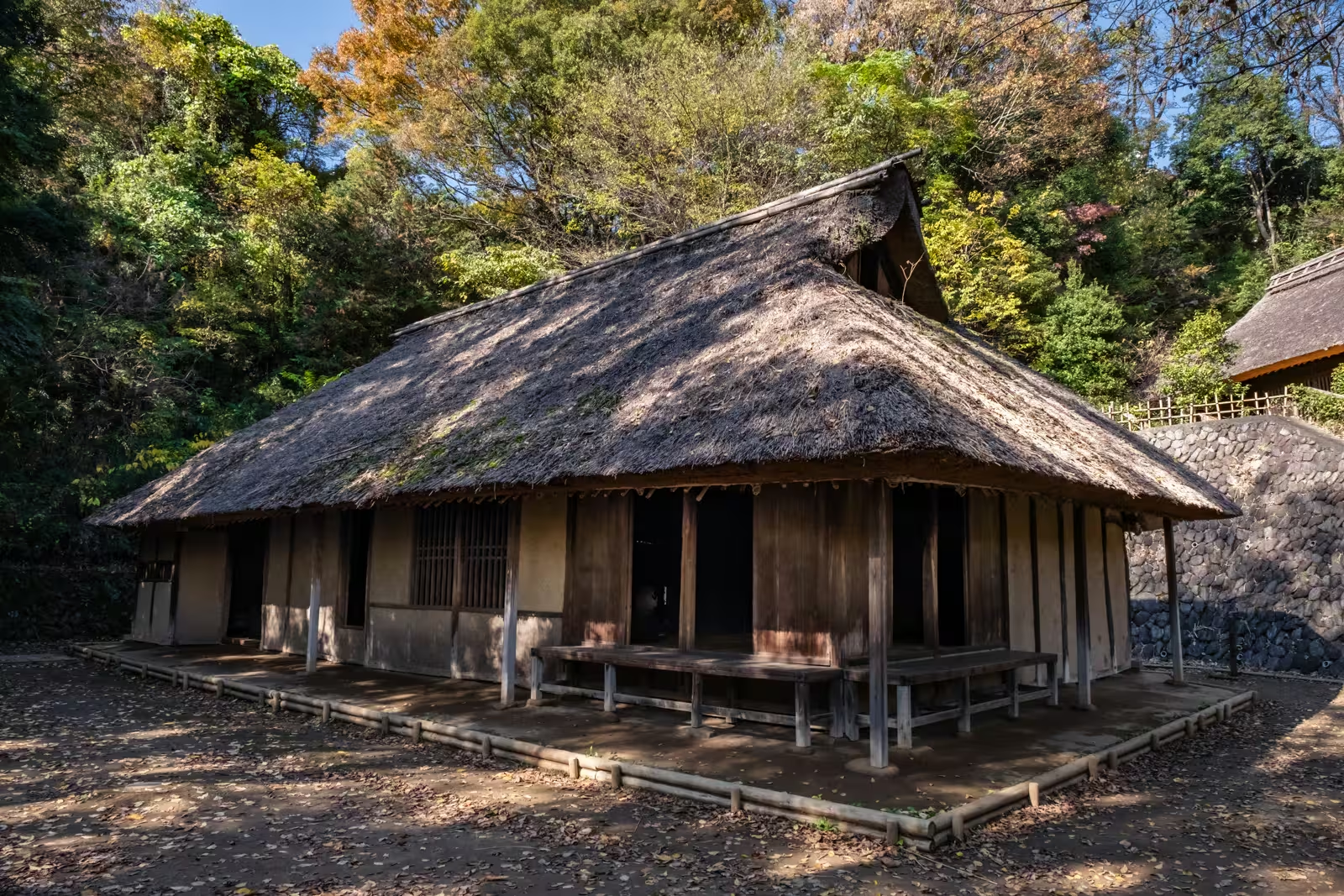
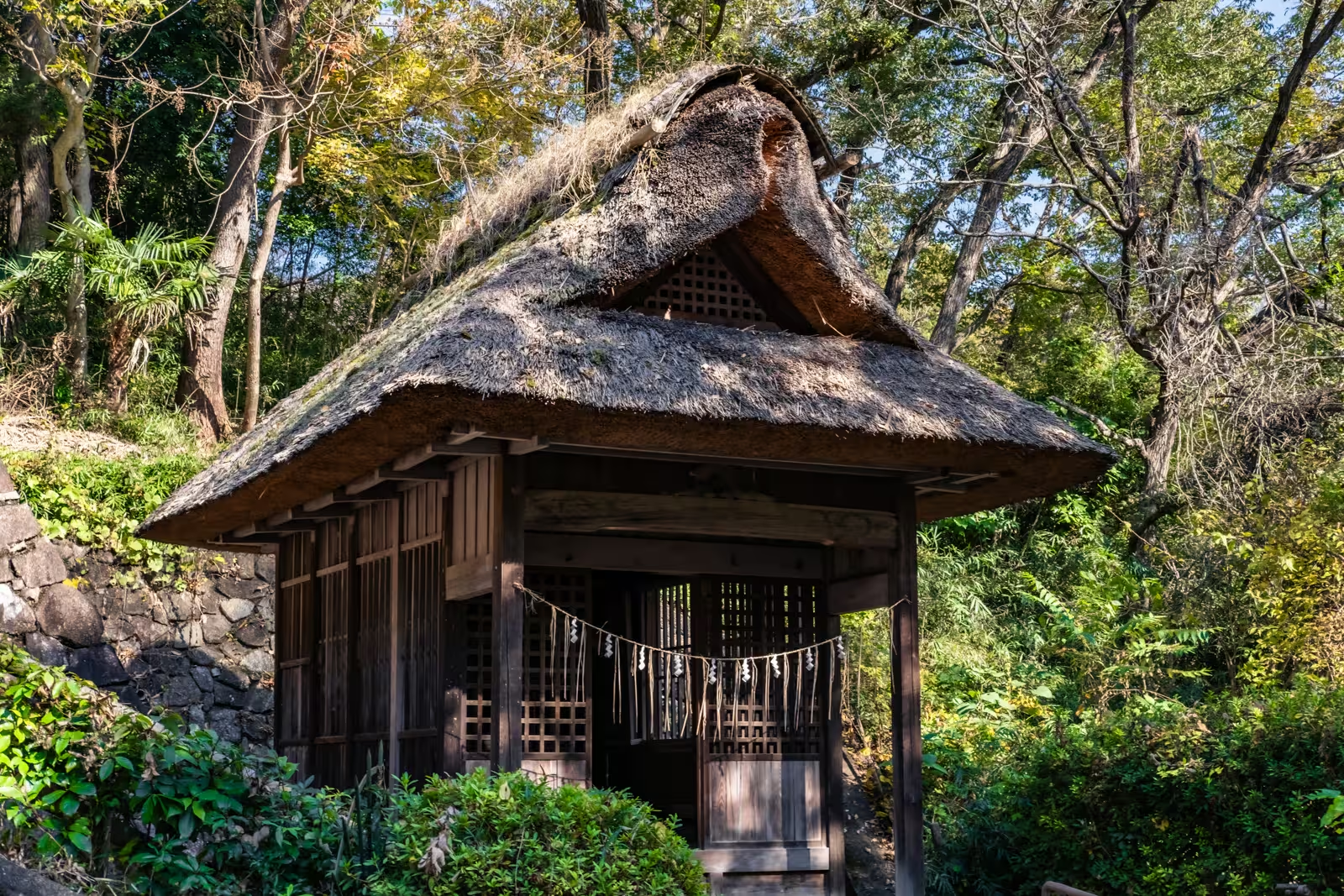
The museum has twenty-five buildings. They include a water mill, a boathouse, a storehouse, and a Kabuki stage. There are also traditional houses from Eastern Japan. Eighteen are important national, prefectural, and cultural assets. You can also see real tools and implements that people once used.
Photography tips
- Good news for photographers: cameras are welcome and encouraged throughout the museum grounds.
- Get permission from the office to use tripods.
- The museum is on a hill, with many dirt paths. Going on a rainy day might involve slipping and sliding.
- You can do commercial work, with stipulations. Click here to see the details on the website.
- The museum has plenty of flowers. Take advantage of them. Spring brings delicate cherry blossoms, while autumn sets the grounds ablaze with vibrant colors.
- Creative Tips:
- Light: The interiors are dark and atmospheric. Instead of using a harsh flash (which can ruin the mood), I recommend using a lens with a wide aperture (e.g., f/1.8 or f/2.8) or bumping up your ISO to capture the natural ambient light streaming through the windows.
- Composition: Use the strong leading lines of the wooden beams and floorboards to guide the viewer’s eye. The minimalist interiors are a fantastic exercise in negative space.
- Details: Don’t just shoot the whole house! Get close and capture the texture of the thatched straw, the grain of the dark wood, and the rust on old iron tools. A macro lens can be surprisingly useful.
- A wonderful aspect for photographers is that many interiors are minimalist. This lack of clutter allows you to focus purely on the architectural forms, the textures of the materials, and the quality of the light without modern distractions.
Visitor information
- Address: 7-1-1 Masugata, Tama Ward, Kawasaki, Kanagawa
- How to get to there: Take the Odakyu Line from Shinjuku and get off at Mukogaoka-Yuen Station (it’s a twenty-minute train ride). Then walk fifteen minutes to the museum.
- Opening hours
- From March to October, it is open from 9:30 a.m. to 5 p.m.
- From November to February, it is open from 9:30 to 4:30 p.m.
- Tickets are available up until 30 minutes before closing time.
- Closed days
- Every Monday, but open for public holidays.
- The day after Japanese national holidays (but open on Saturday and Sunday).
- Over the New Year holidays and other special closing days.
- Admission costs: ¥550
- For full information about the Japan Open-Air Folk House Museum, consult the official Japan Open-Air Folk House museum.
- Here is the museum on Google Maps:
Photo spots near the museum
- Ikuta Ryokuchi Rose Garden (Beautiful rose garden but only open in spring and autumn)
History of the museum
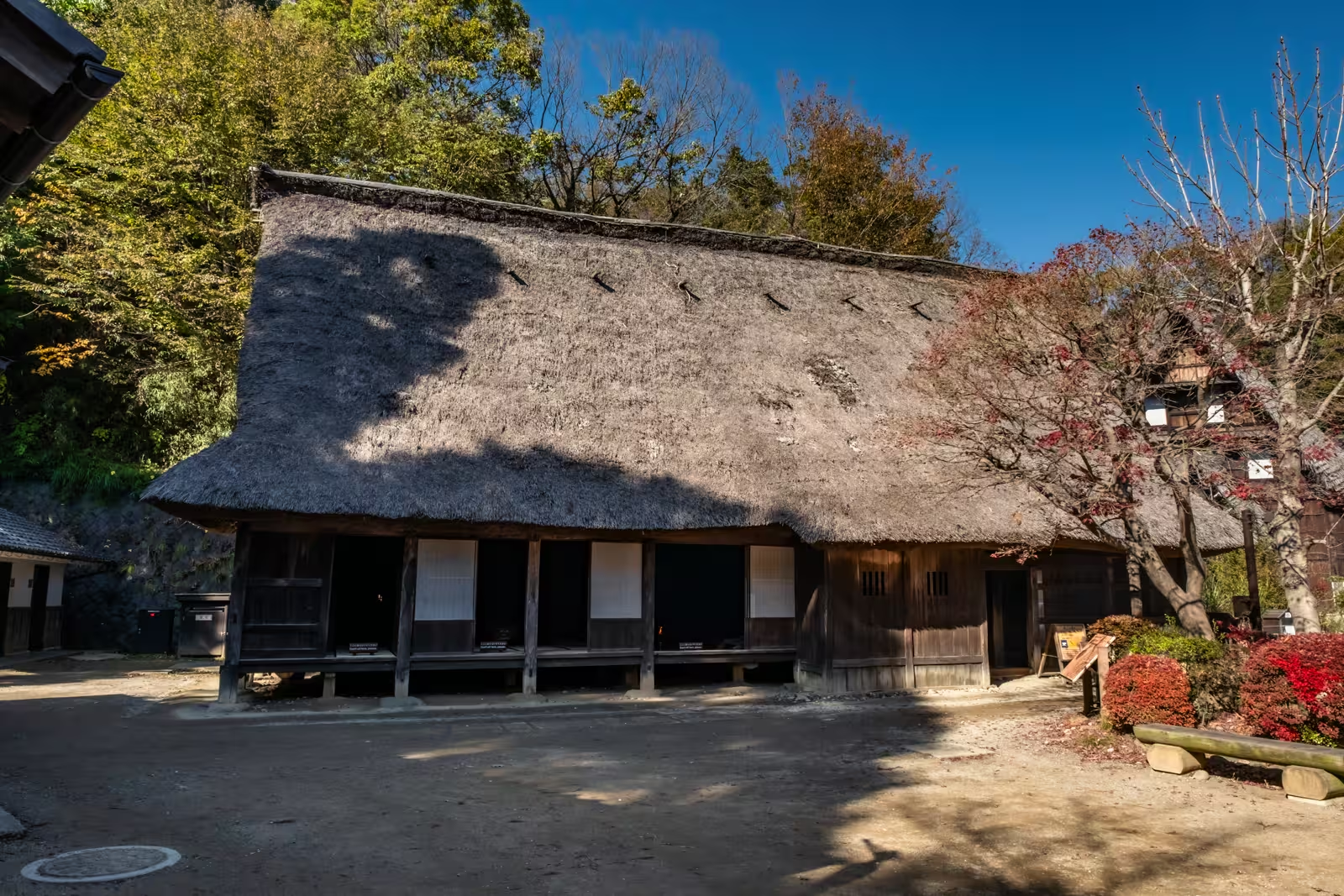
Japan modernized at a rapid pace in the Meiji Period. Many of its older buildings were torn down to make way for new ones. A massive loss of physical history and culture has occurred. That was why the museum opened in 1967, to preserve those disappearing things. People wanted to protect them for future generations.
Is the Nihon Minkaen worth visiting?
The Japan Open-Air Folk House Museum isn’t just a collection of buildings; it’s a time capsule for photographers. It offers a rare chance to capture the quiet dignity of traditional Japanese architecture and the stories embedded in its ancient wood and straw.
For anyone looking to photograph a piece of authentic Japanese history, this open-air gem should be on their travel itinerary. Have you visited this museum? Let us know your thoughts about it by leaving a comment below. If you want to see more Japanese houses, look at [Edo-Tokyo Open Air Architectural Museum].
My photography gear for this shoot
- Camera: Fujifilm X-T3
- Lenses:
- Fujifilm XF 35mm f/2 R WR
- Fujifilm XF 16-55 mm F2.8 R LM WR