Sensoji Projection Mapping 2025
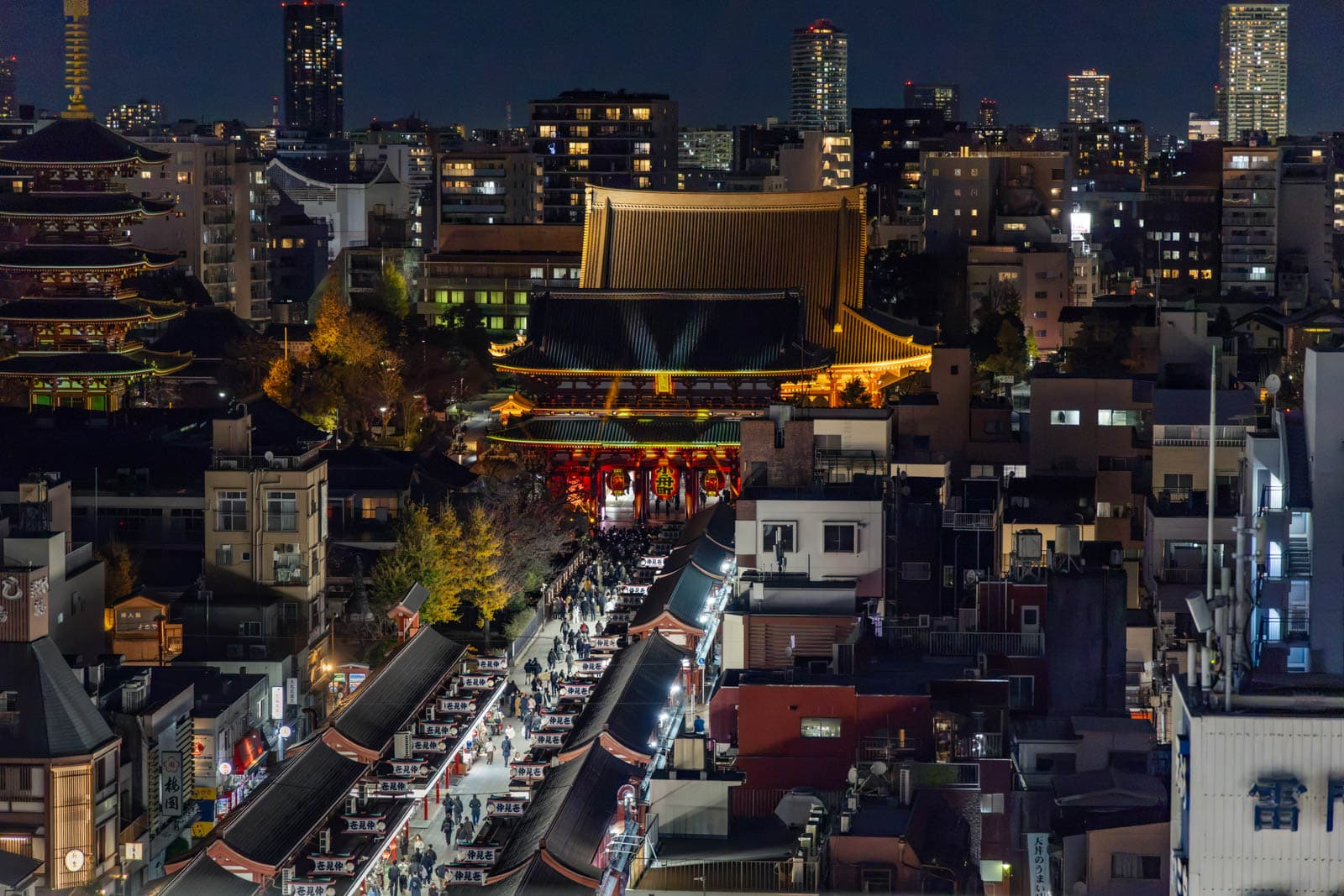
Sensoji is the undisputed guardian of “Old Tokyo.” The temple is a realm defined by heavy incense smoke, crimson lanterns, and ancient timber. Yet, for a fleeting moment, the city’s oldest temple transformed into a canvas for the future.
“Asakusa Culture & Lights 2025” was far more than a standard illumination event. It was a sophisticated projection mapping display that fused 1,400 years of history with state-of-the-art visual technology.
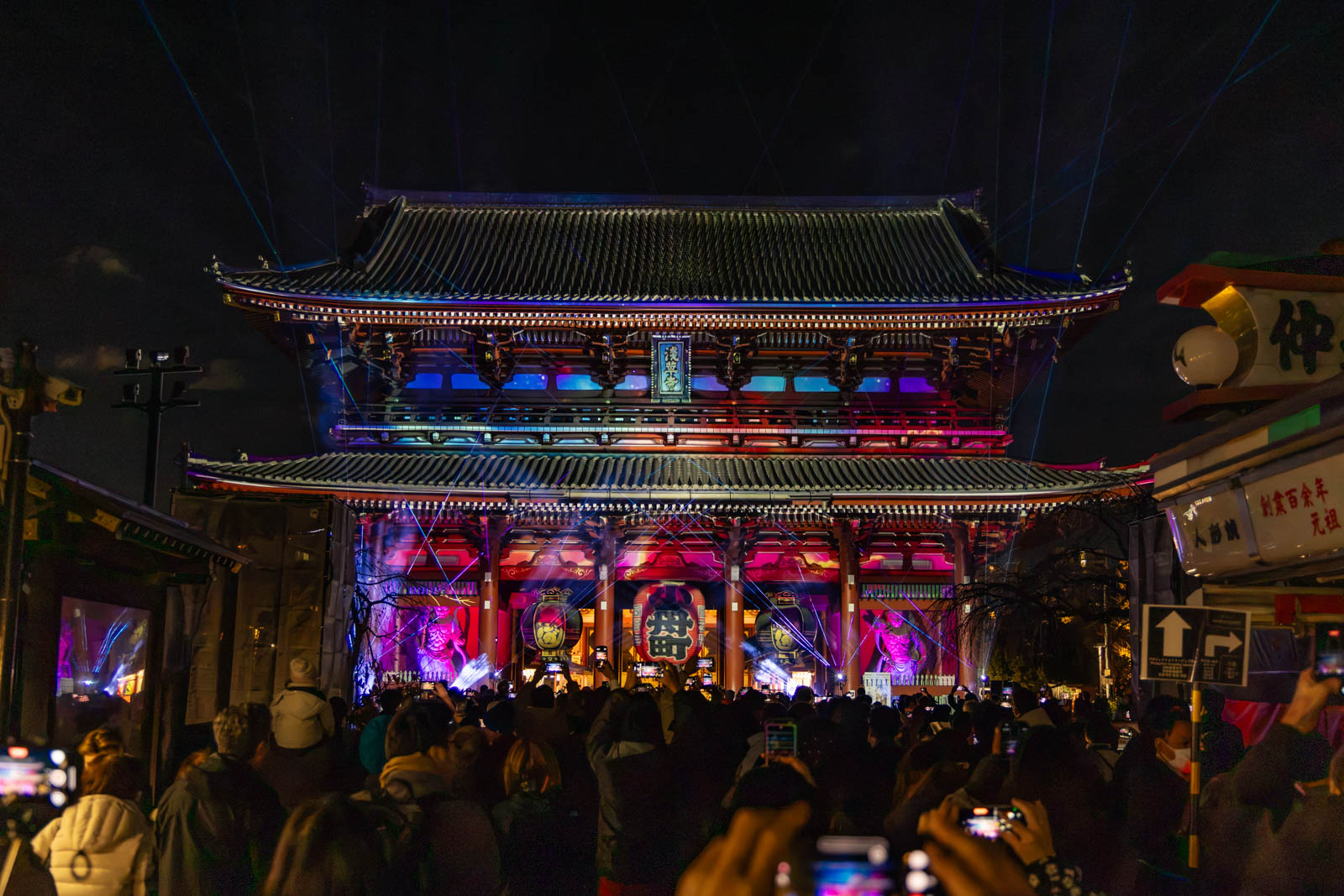
Hozomon Gate’s illumination
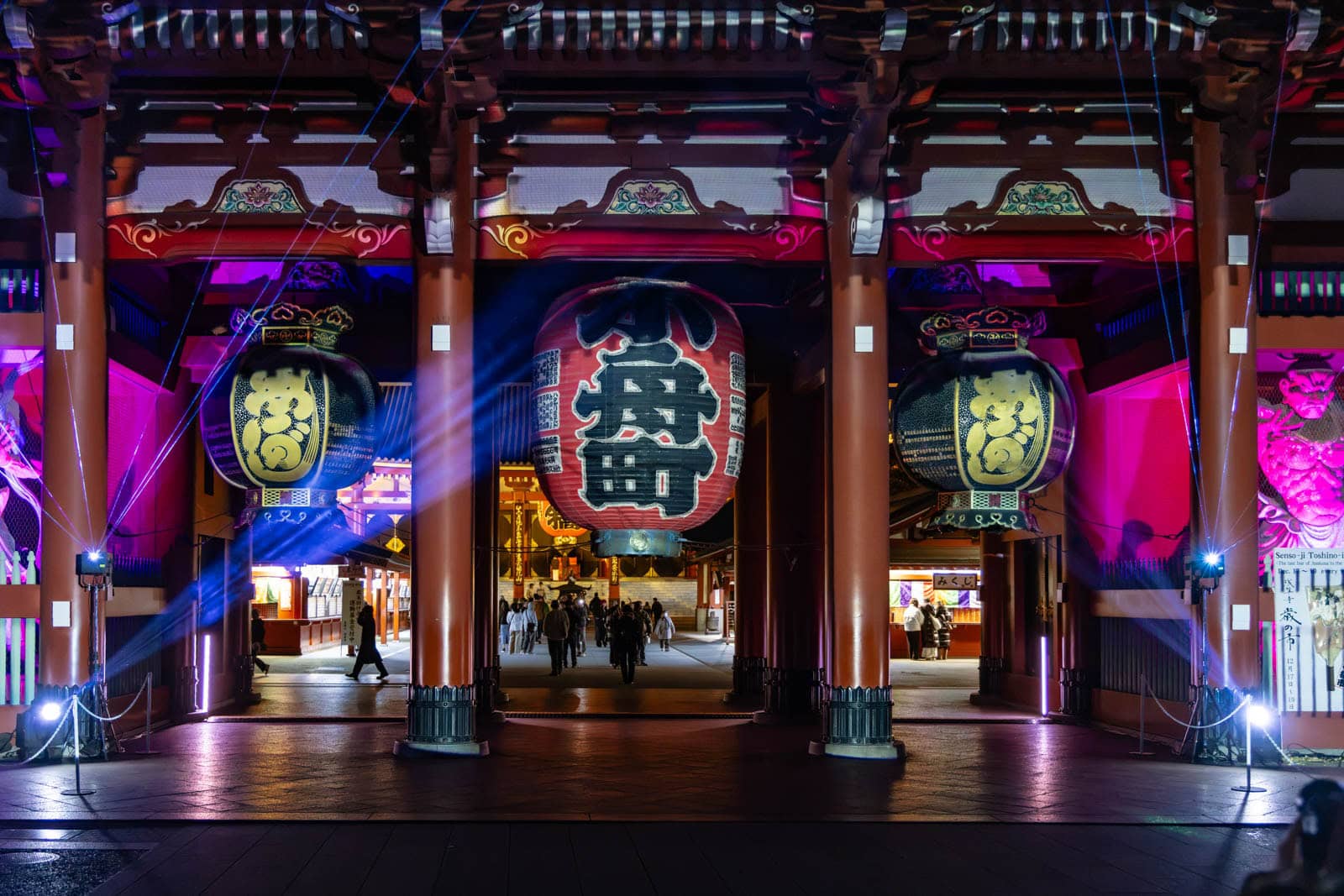
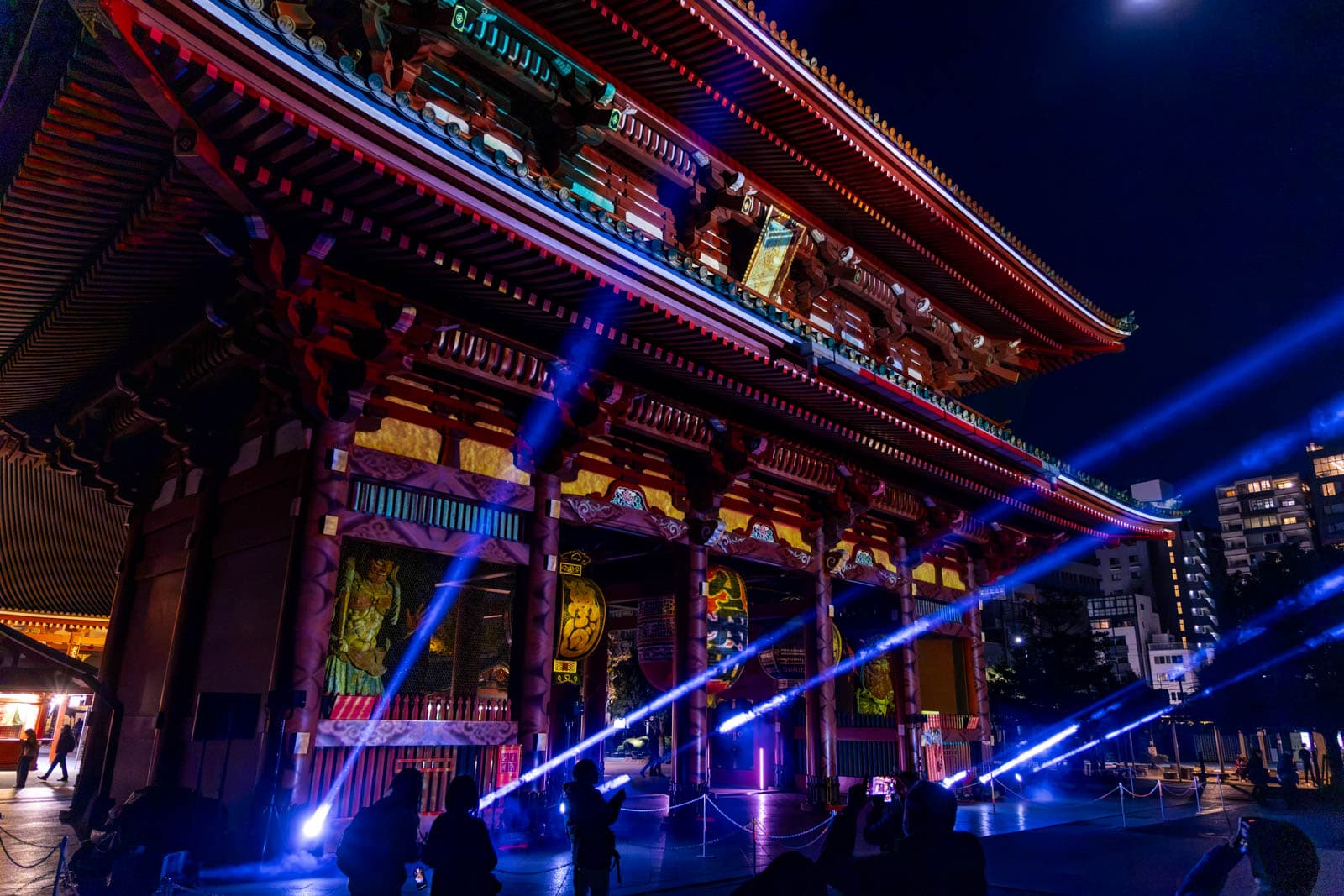
The centerpiece of the event was the majestic Hozomon Gate. Typically stoic and imposing with its giant waraji (straw sandals), but this time it was propelled into the future with laser beams.
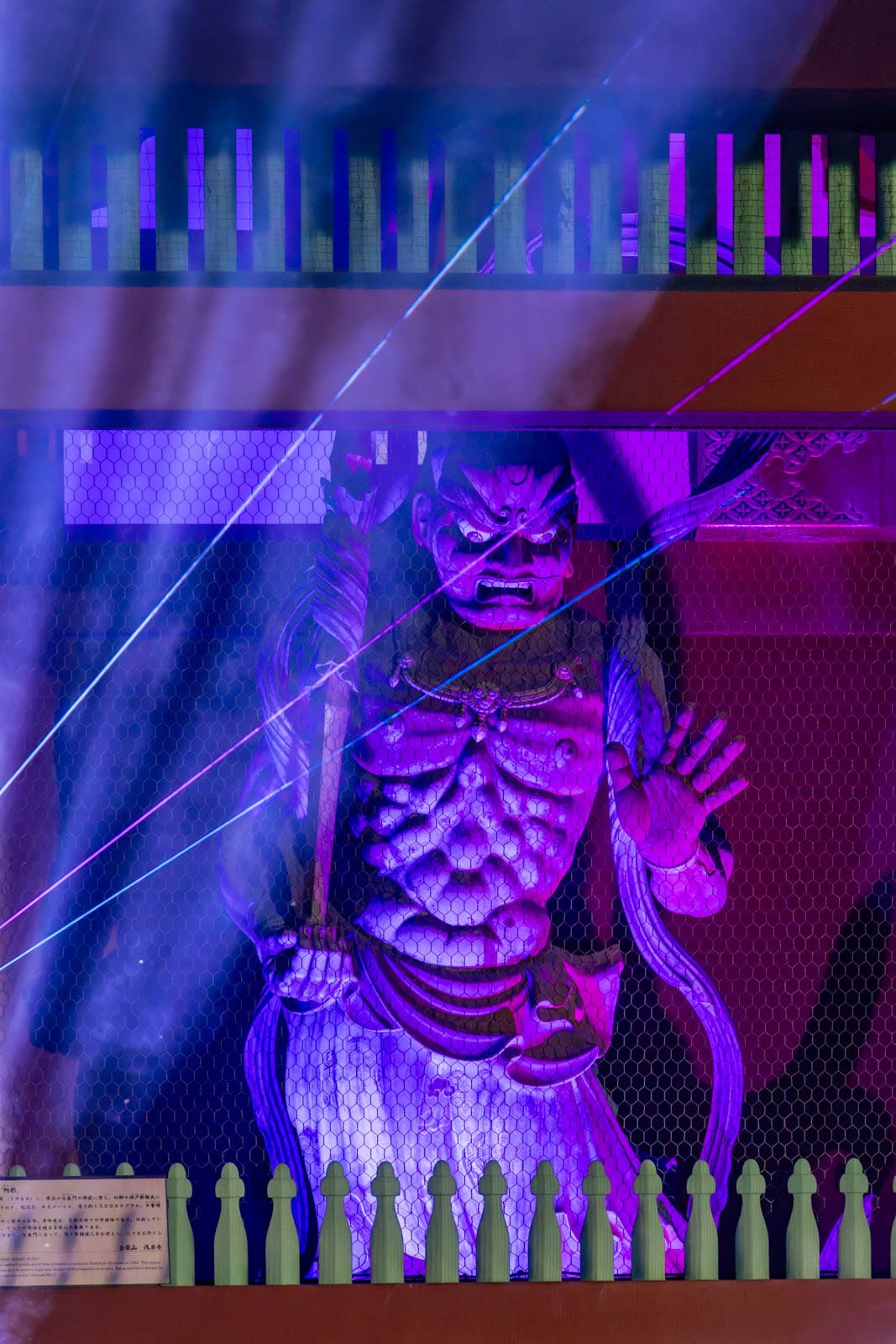
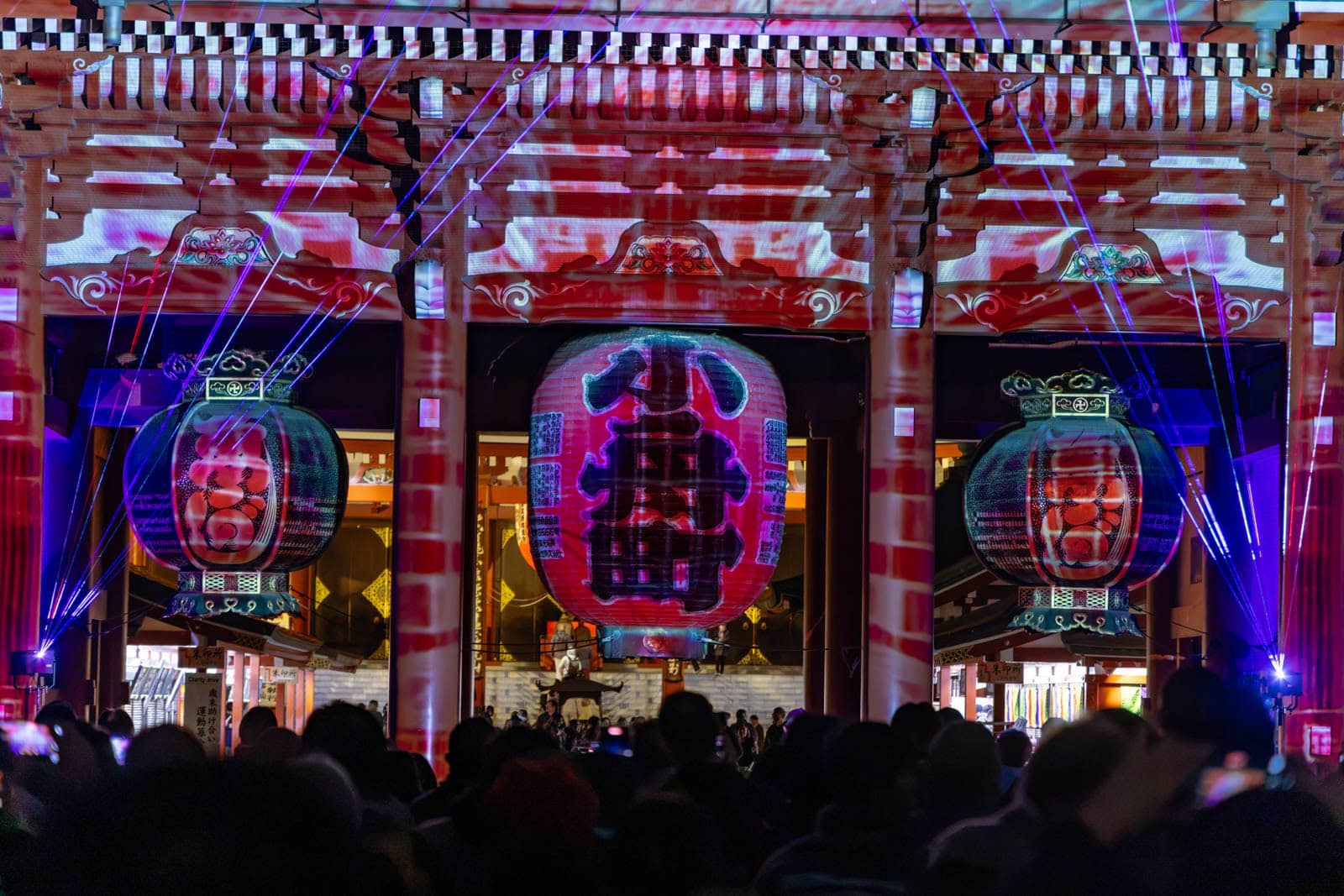
As the projection mapping began, the red lacquer served as the backdrop for a swirling kaleidoscope of Japanese iconography. We watched as digital cherry blossoms cascaded down the pillars, followed by roaring dragons that seemed to twist and coil around the gate’s architecture.
The light didn’t just rest on the gate; it interacted with it. Shadows played off the eaves, and the famous “Kobune-cho” lantern appeared to be engulfed in mystical energy while laser lights shot into the night sky.
The Five-Story Pagoda in low-light
Looking to the left of the gate, the Five-Story Pagoda pierced the darkness. For “Asakusa Culture & Lights,” the pagoda acted as a vertical storytelling device. The projections were subtle and the beams traced the intricate rooflines while colors shifted to represent the four seasons.
Colors ranged from the fresh green of spring to the cool indigo of winter. Seeing the pagoda glow, knowing the modern Tokyo Skytree stood silently behind us, created a visual harmony that perfectly summarized modern Japan.
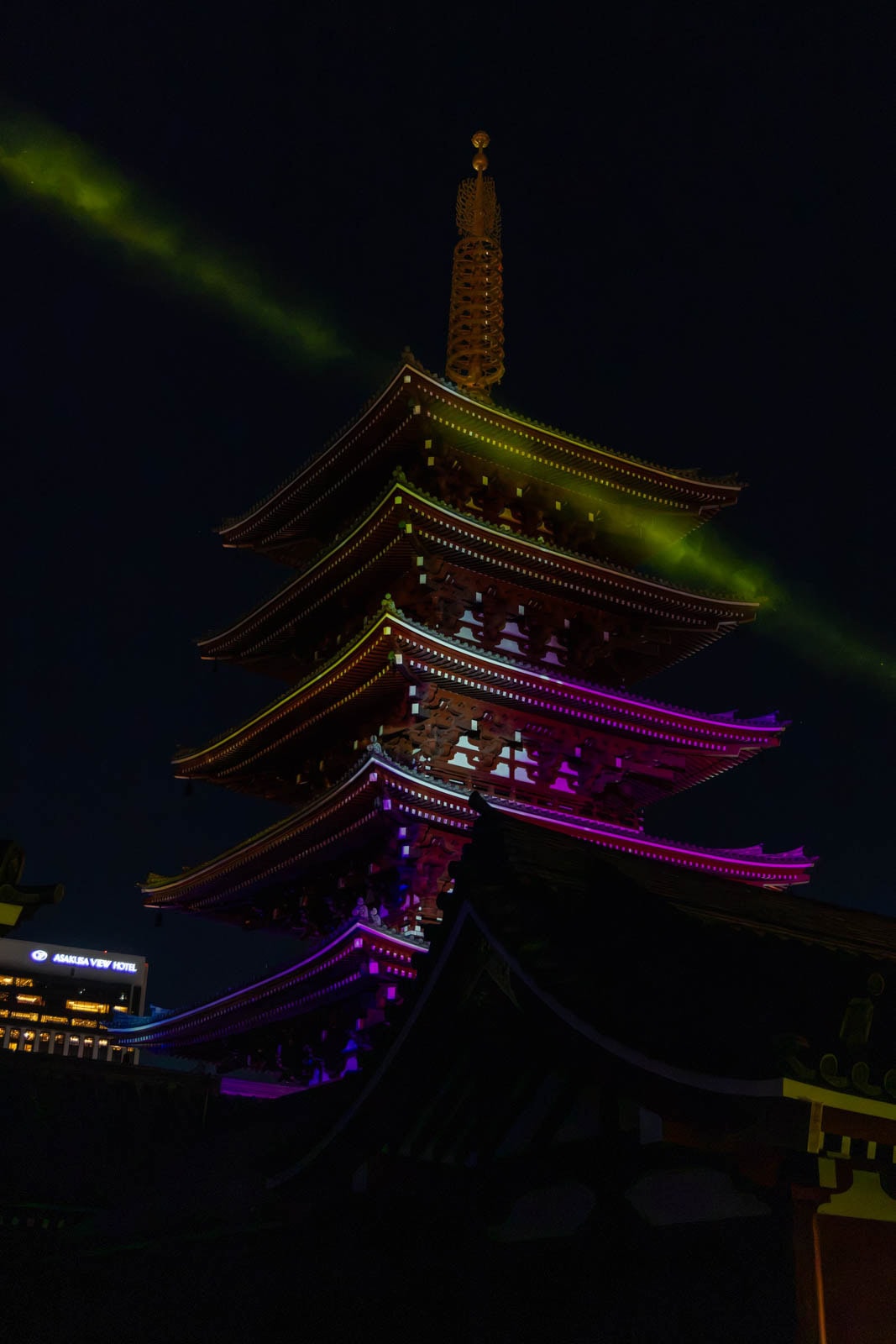
Author’s note: The pagoda was difficult to photograph. It was beautiful, but there wasn’t much light. I used ISO 6400 and shot at f/4.0 (the widest setting for my lens). There was a lot of noise, but I dealt with it by using Adobe Lightroom.
Nitenmon Gate: Tips & background clutter
While the crowds gathered at the main entrance, the event extended to the smaller, often overlooked Nitenmon Gate (an Important Cultural Property). Here, the projection mapping felt significantly more intimate.
The visuals focused on the history of the Buddhist guardians housed within. It was a quieter, atmospheric experience that allowed us to get close to the digital art without the density of the main plaza.
This display was beautiful to the eye, but photography was difficult; behind the gate lies a street with a modern fire station. It wasn’t exactly the “Old Edo” backdrop you might hope for!
Projection mapping comparison: Sensoji vs. Shinjuku
You may be familiar with the other major projection mapping event in Shinjuku, titled “Tokyo Night & Light.” Which is the superior experience? The answer depends on your preference, but here is how they compare:
Photographic style: Tradition vs. cyberpunk
- Asakusa (Senso-ji): The theme is strictly “Japanese Tradition.” Visuals utilize Ukiyo-e art styles, falling cherry blossoms, and Buddhist iconography. It feels respectful and artistic, fitting perfectly with the scent of incense and the darkness of the grounds.
- Shinjuku (Tokyo Night & Light): The theme is “Futurism and Pop Culture.” This is where you go to see Godzilla destroying a building or neon geometric shapes. It feels like stepping into a sci-fi movie or Blade Runner.
Shooting distance & scale
- Asakusa: The light maps onto specific wooden pillars, curved roof tiles, and statues. You stand relatively close, looking up at the intricate details.
- Shinjuku: The canvas is the Tokyo Metropolitan Government Building (Tocho), holding the Guinness World Record for the largest permanent architectural projection mapping. It uses the massive, flat surface of a 48-story twin tower. You stand far back in a concrete plaza to take in everything.
Audio & atmosphere
- Asakusa: Generally quieter. The soundscape mixes traditional instruments with nature sounds. It feels like a night stroll.
- Shinjuku: Loud and urban. You are surrounded by concrete and skyscrapers, with bombastic orchestral or electronic audio to match.
Tripod rules & shooting etiquette at Senso-ji
If you are planning to attend a future “Asakusa Culture & Lights,” keep these logistics in mind:
- Timing: The projections loop every few minutes. There is no need to worry about arriving in the middle; audiences flow freely.
- Respect the space: While this is a digital art festival, the grounds of Senso-ji are a sacred religious site. Please be mindful of where you stand and keep voices low.
- Photography: Turn your flash off. Flashes will dazzle other guests and wash out the projection effect.
- Equipment: Tripods are generally not allowed during the event due to crowds.
- Schedule: The 2025 event ran from December 3 to 7, between 5:30 p.m. and 9:30 p.m. Check the official Asakusa Culture & Lights website to see when it returns.
Note: For an additional fee, visitors could also enter the Denbōin Garden and Ema Hall. I plan to do this in the future, particularly to see the garden illuminated in the evening.
Suggested gear & camera settings
This event is dark, so:
- Gear: Take your fastest lenses (f/1.8 or f/1.4 if possible).
- The beams of light created some artifacts, which were problematic when editing in Adobe Lightroom.
- Crowds: The event is popular, so patience is key when waiting for a clear angle.
- In retrospect, I should have pushed the ISO past 6400. That might have gotten me better images.
Tokyo’s temples reimagined
“Asakusa Culture & Lights 2025” reminded us that tradition is never static. By wrapping these ancient structures in light, the event breathed new life into the history of Asakusa, engaging a new generation with the stories of the past. It is a fleeting, ethereal experience, and one of the most beautiful sights you will find in Tokyo.