Hatsudai Awa Odori in Black and White
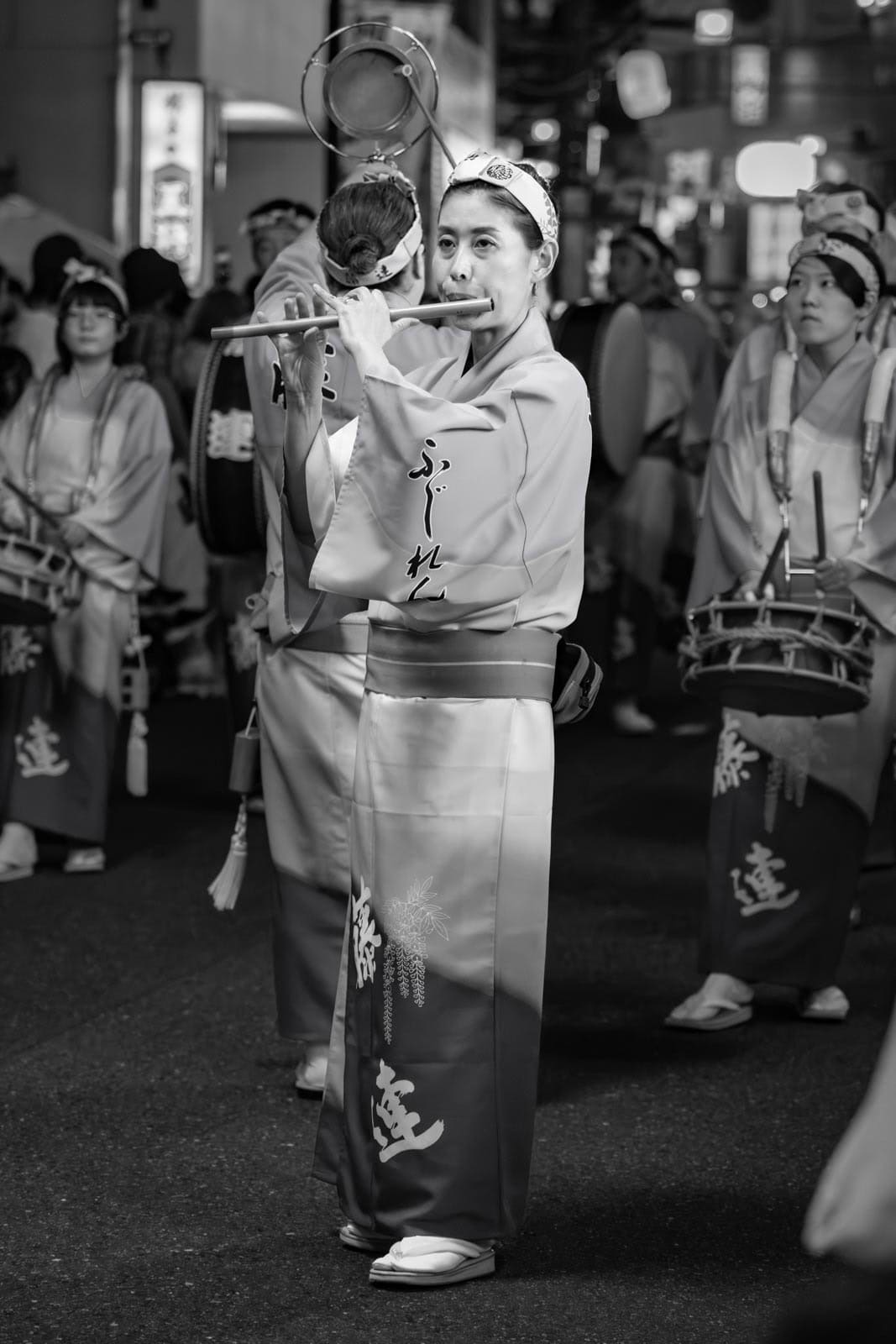
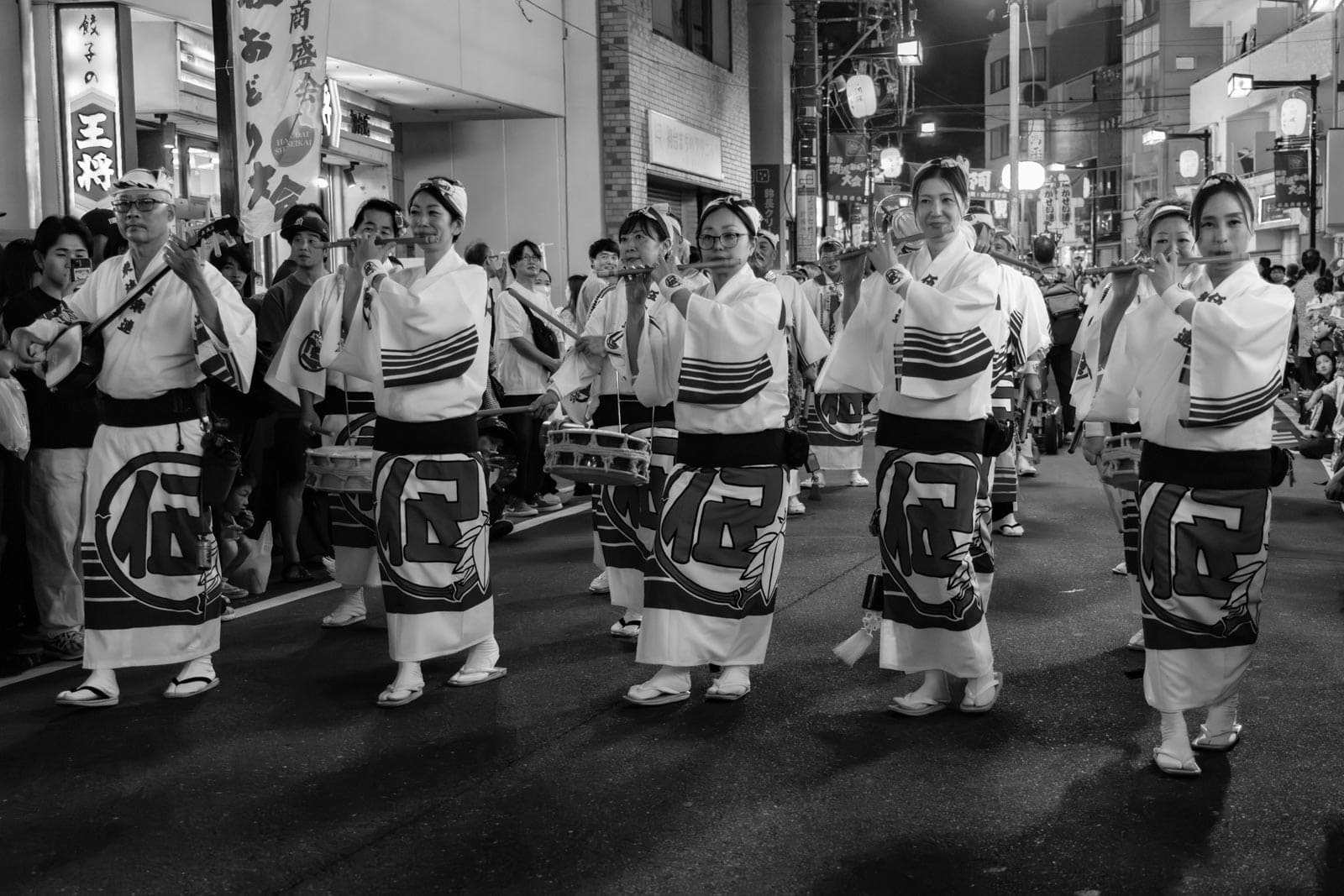
If you read my [Hatsudai Awa Odori] article from September 2026, you’ll know it’s much smaller and more intimate than the massive spectacles in Koenji or Shimokitazawa. It’s a wonderful local event. As I still have many unused images, I wanted to create a new article.
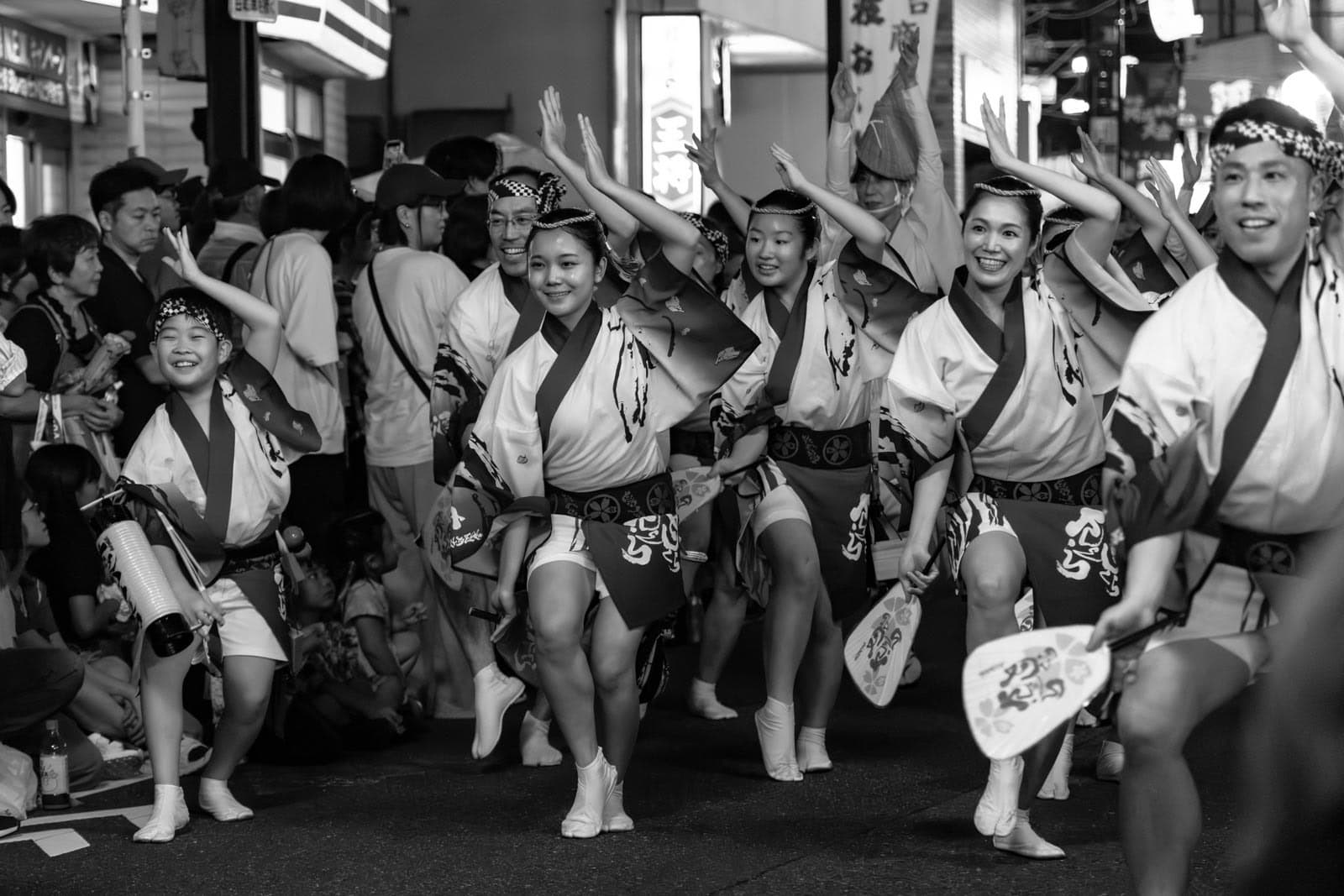
Monochrome Tokyo street photography
This time, I wanted to do something different for an article. Every image is in black and white. Why?
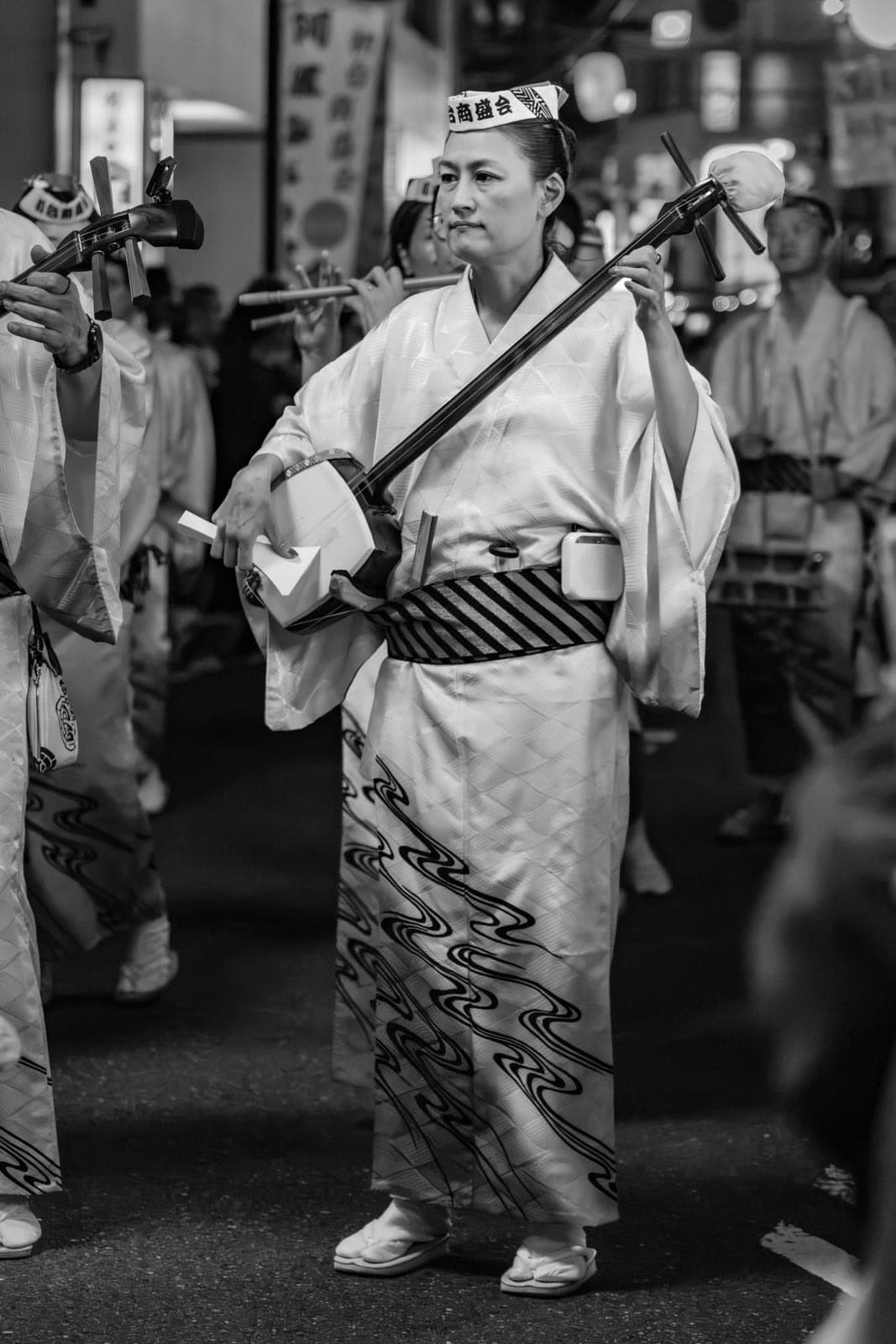
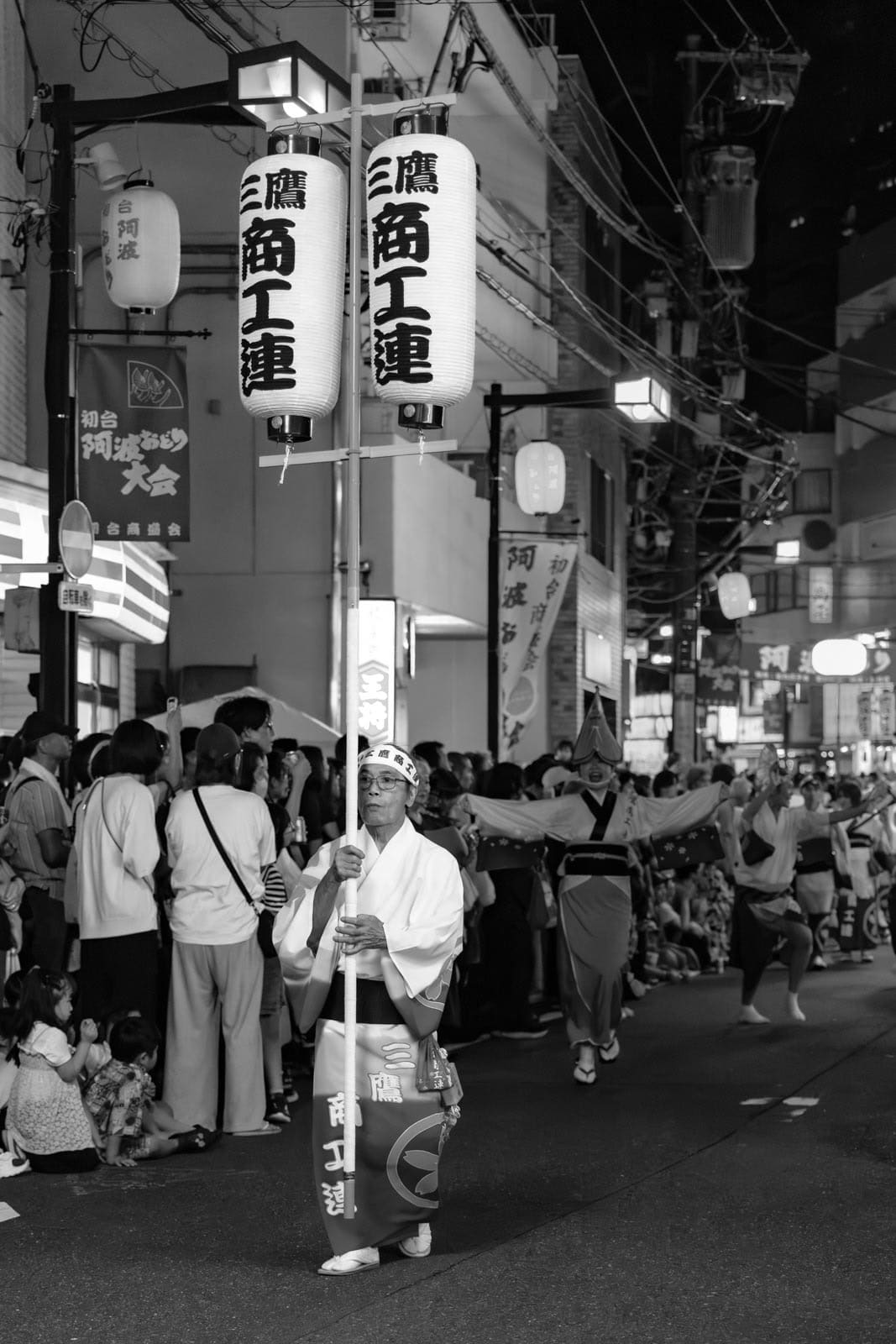
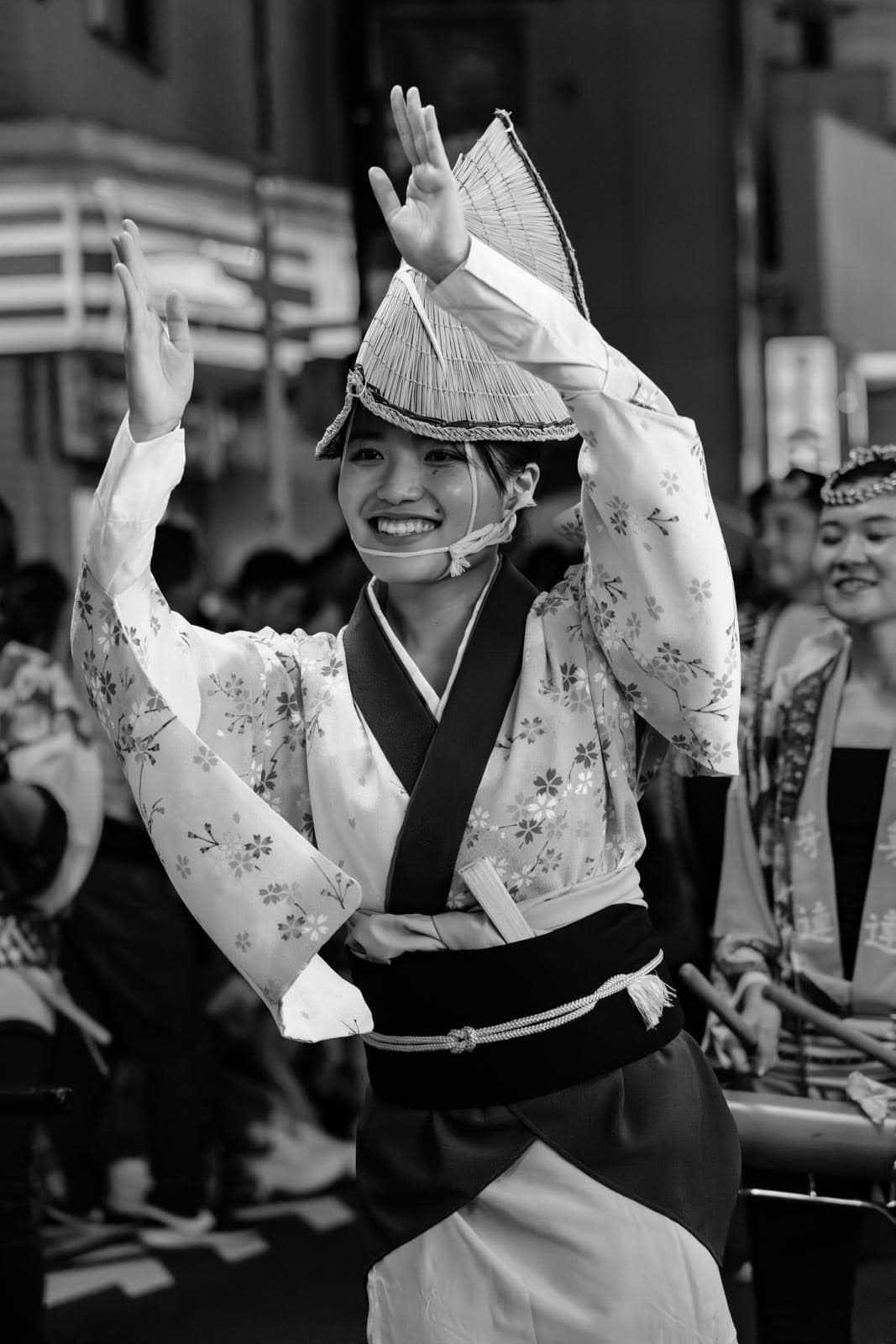
By nature, the Awa Odori is an explosion of color. The festivals I’ve attended take place at night, framed by glowing lanterns, bright lights, and performers in kimonos and heavy stage makeup. It’s easy for the eye to get distracted.
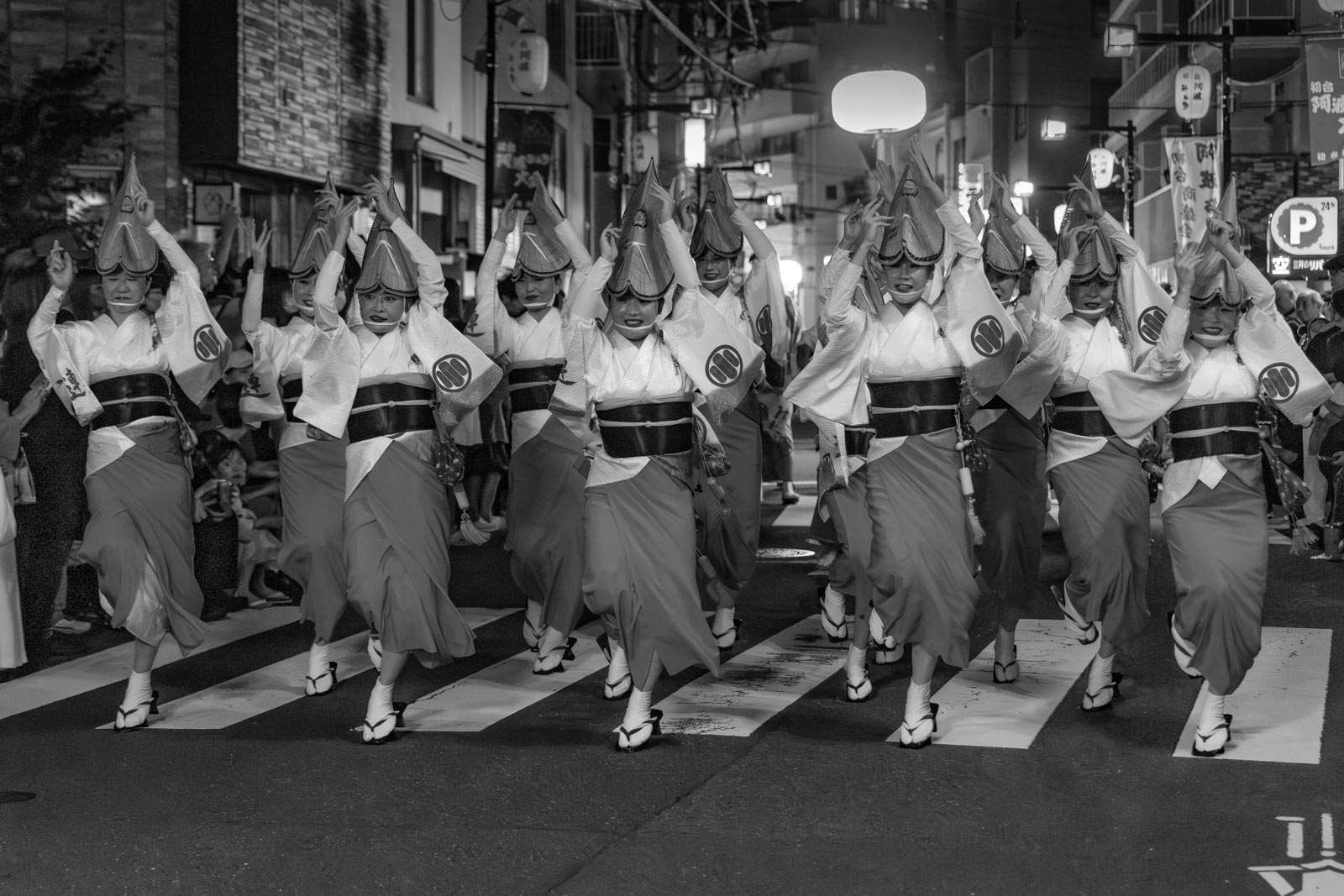
I’ve experimented with black-and-white conversions in the past, but I usually hit a preset button in Adobe Lightroom. This time, I actually did some research before touching the sliders.
Luminance’s role in black and white photos
The most fascinating thing I discovered? The role of luminance.
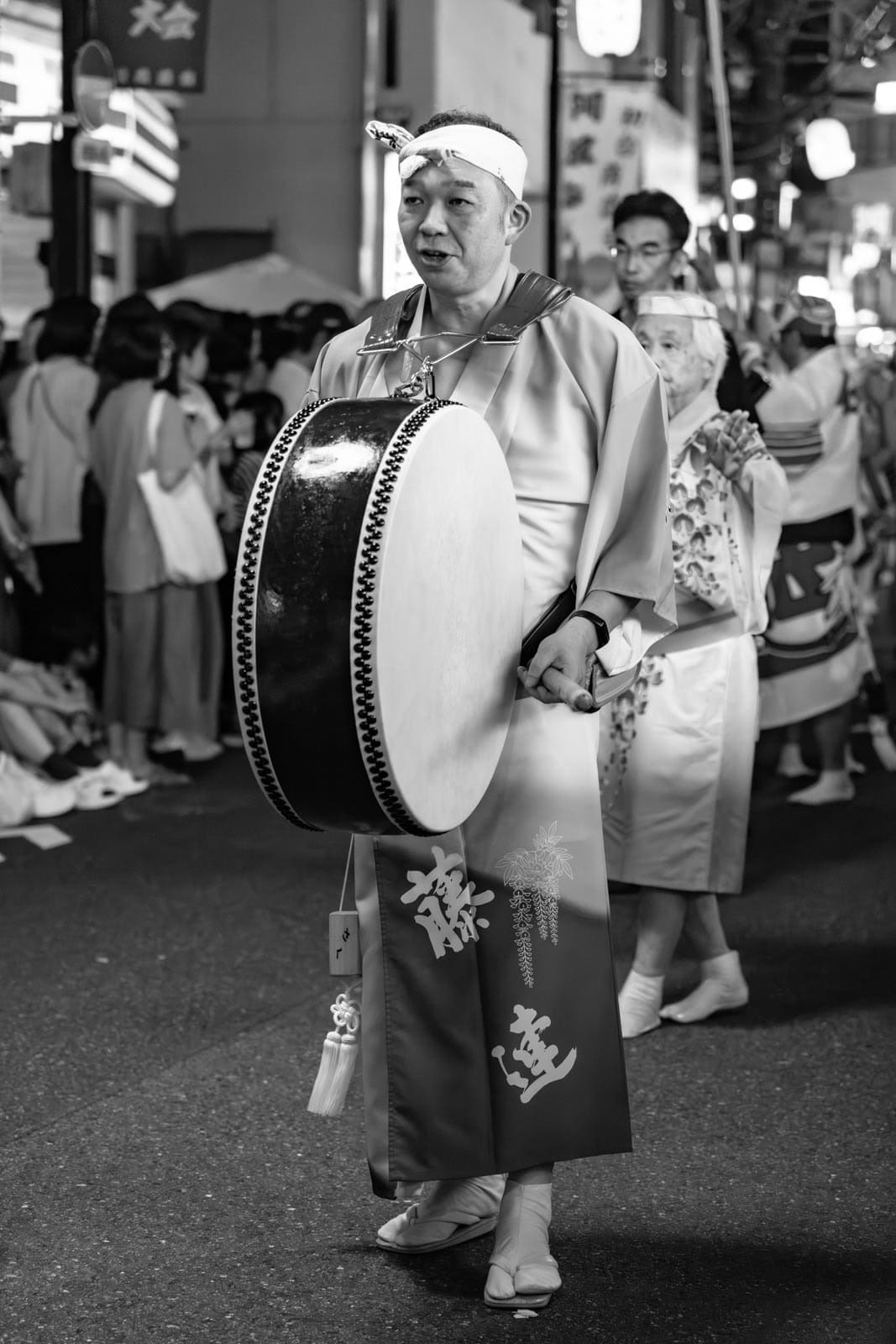
Have you ever looked at a “flat” photograph where the sun was directly behind the camera, washing out all the contours and shapes? That happens because color often masks weak tonal contrast.
Creating depth with tones
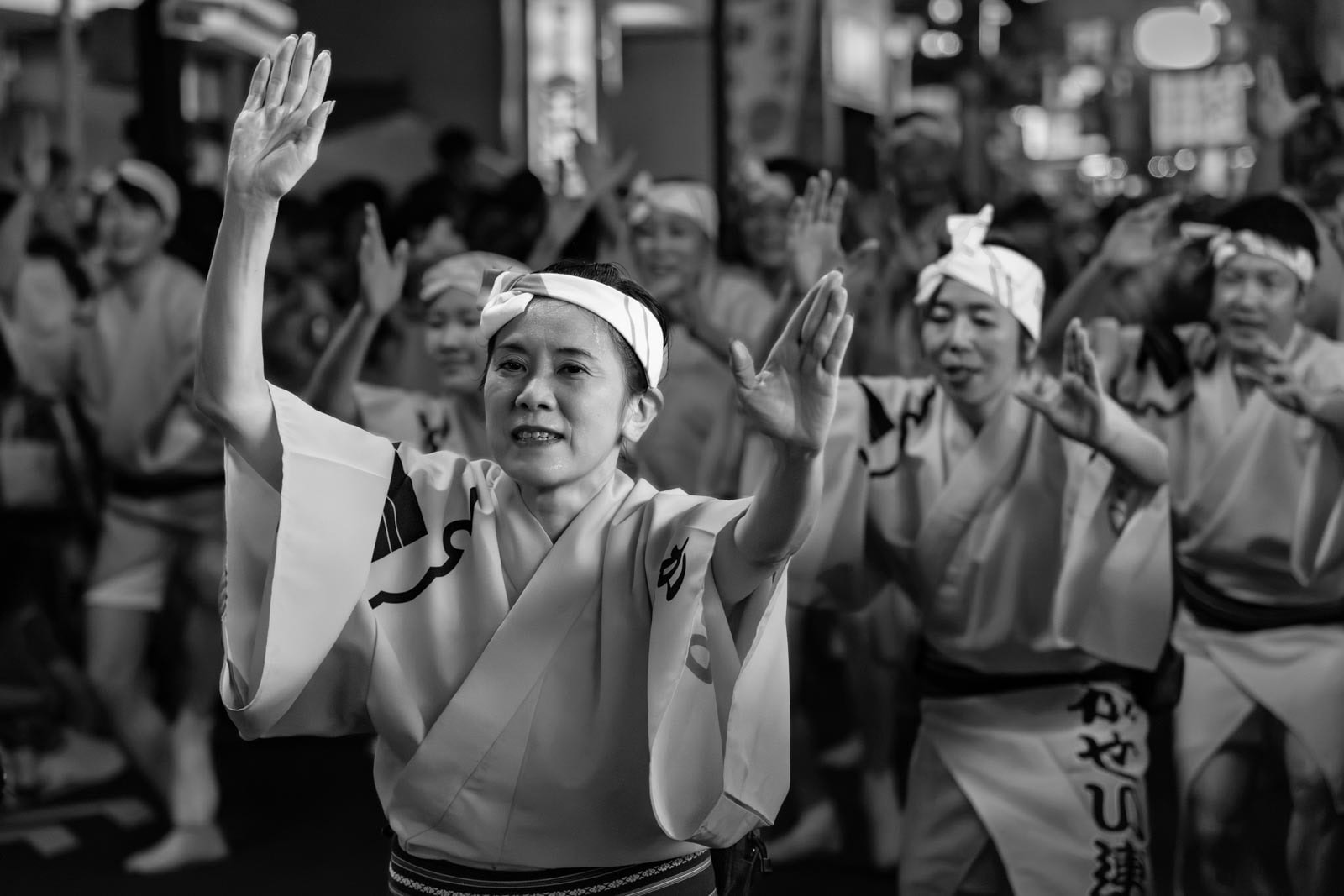
The human eye actually relies much more heavily on luminance (brightness and tonal values) than on color or hue to perceive three-dimensional space on a two-dimensional surface. By manipulating luminance values in editing, you can pull a subject forward, separate the midground, and push distracting backgrounds away.
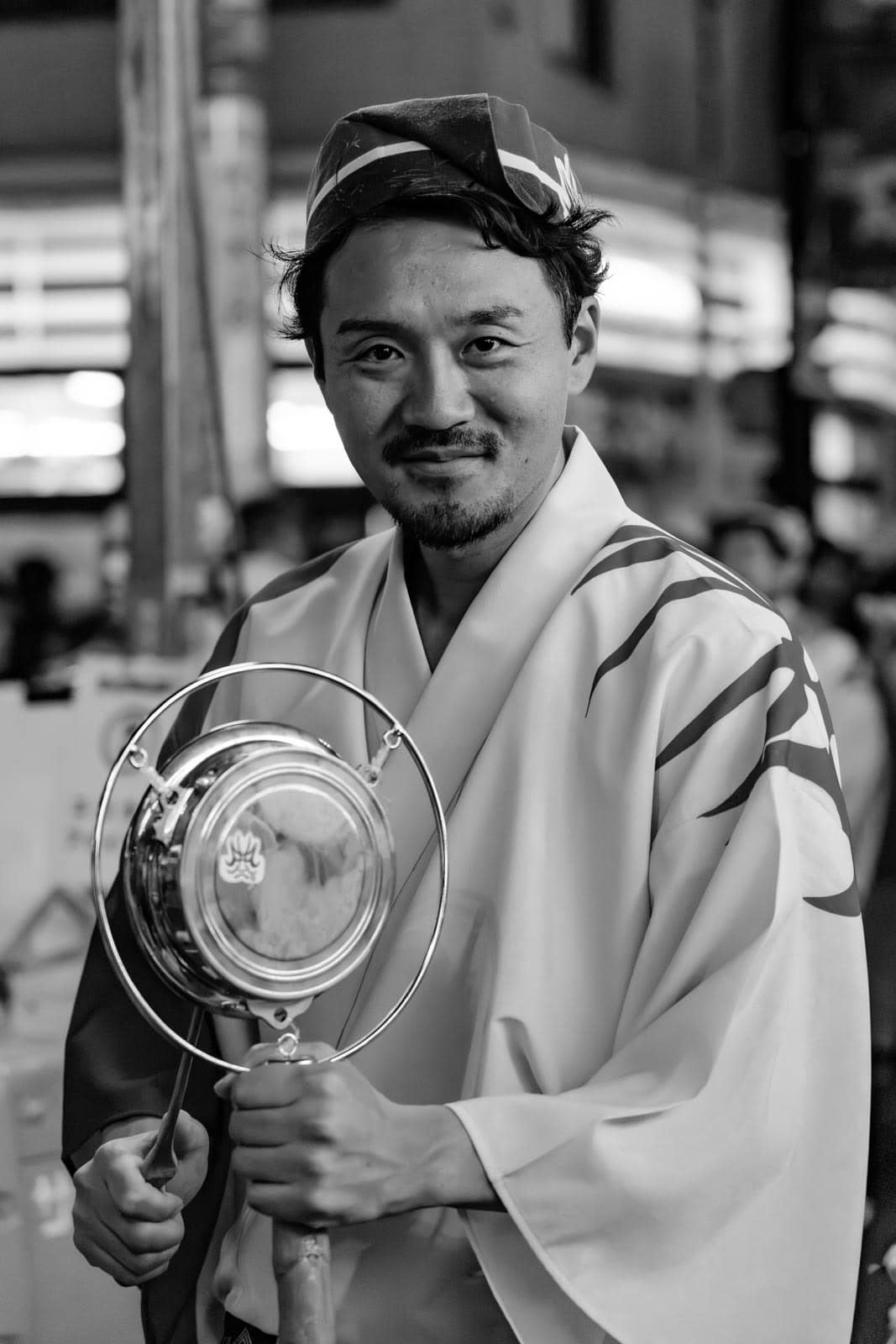
Stripping away the color made me see the festival differently. Now, when I look at the frames, my attention is more on the subject, not the clutter to the side and in the background.
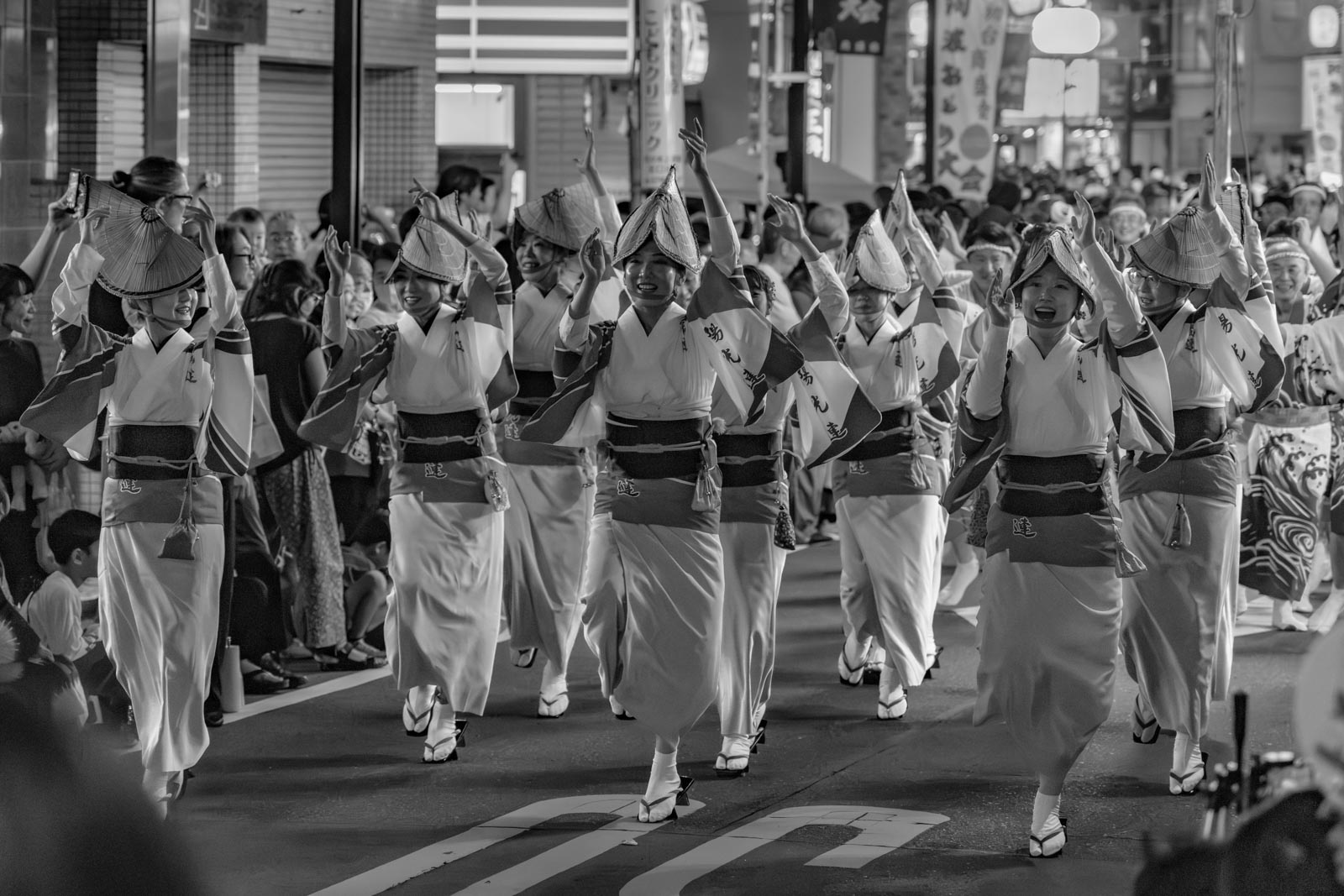
Editing results & feedback
For a first attempt at monochrome editing, I’m quite happy with how these turned out. Though I’ll admit, a few of them might still need a little fine-tuning!
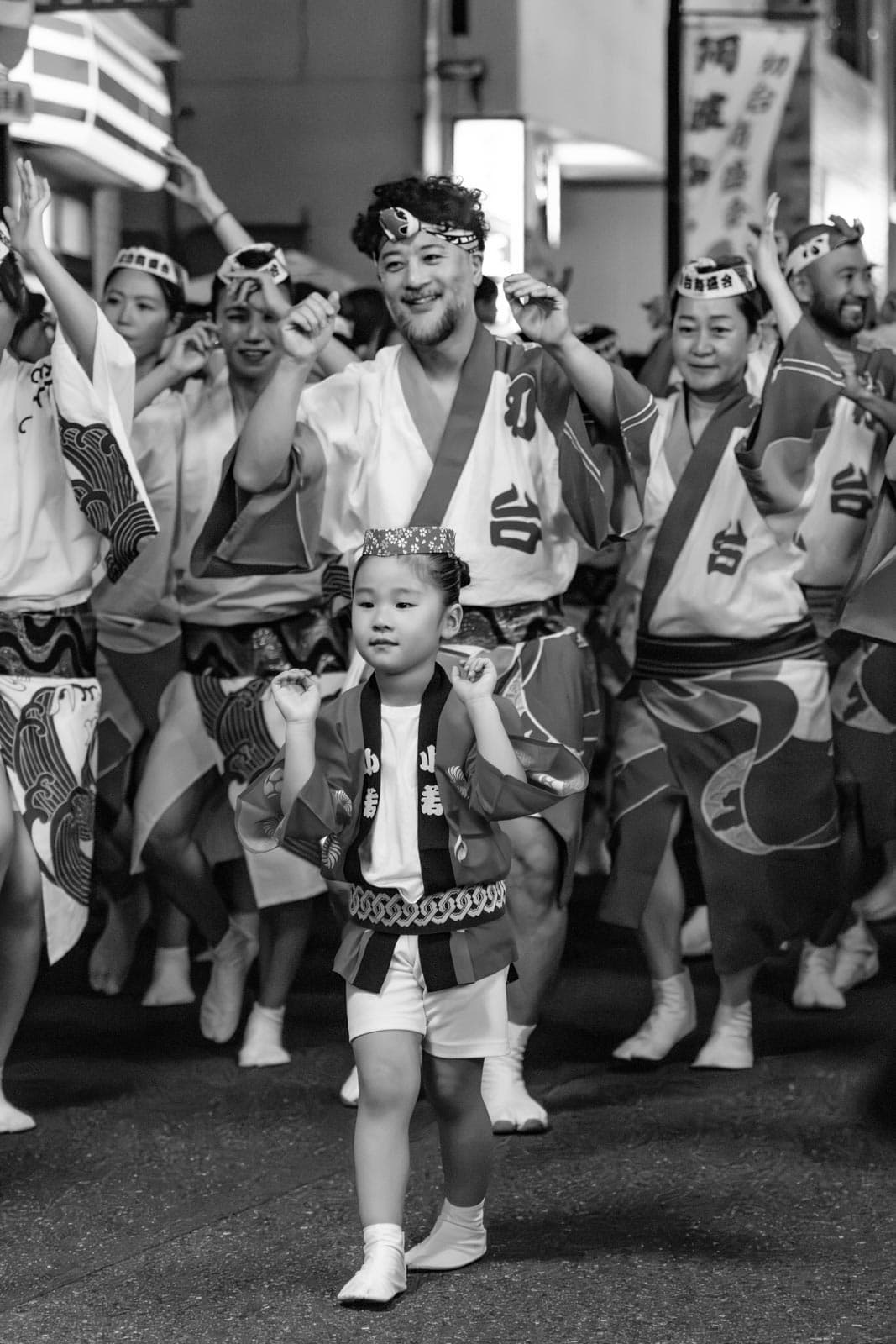
If you’re interested in seeing more black-and-white deep dives on the site, drop a comment below and let me know. And to see more Awa Odori articles, try [Koenji Awa Odori Guide].