54th Hatsudai Awa Odori (2026)
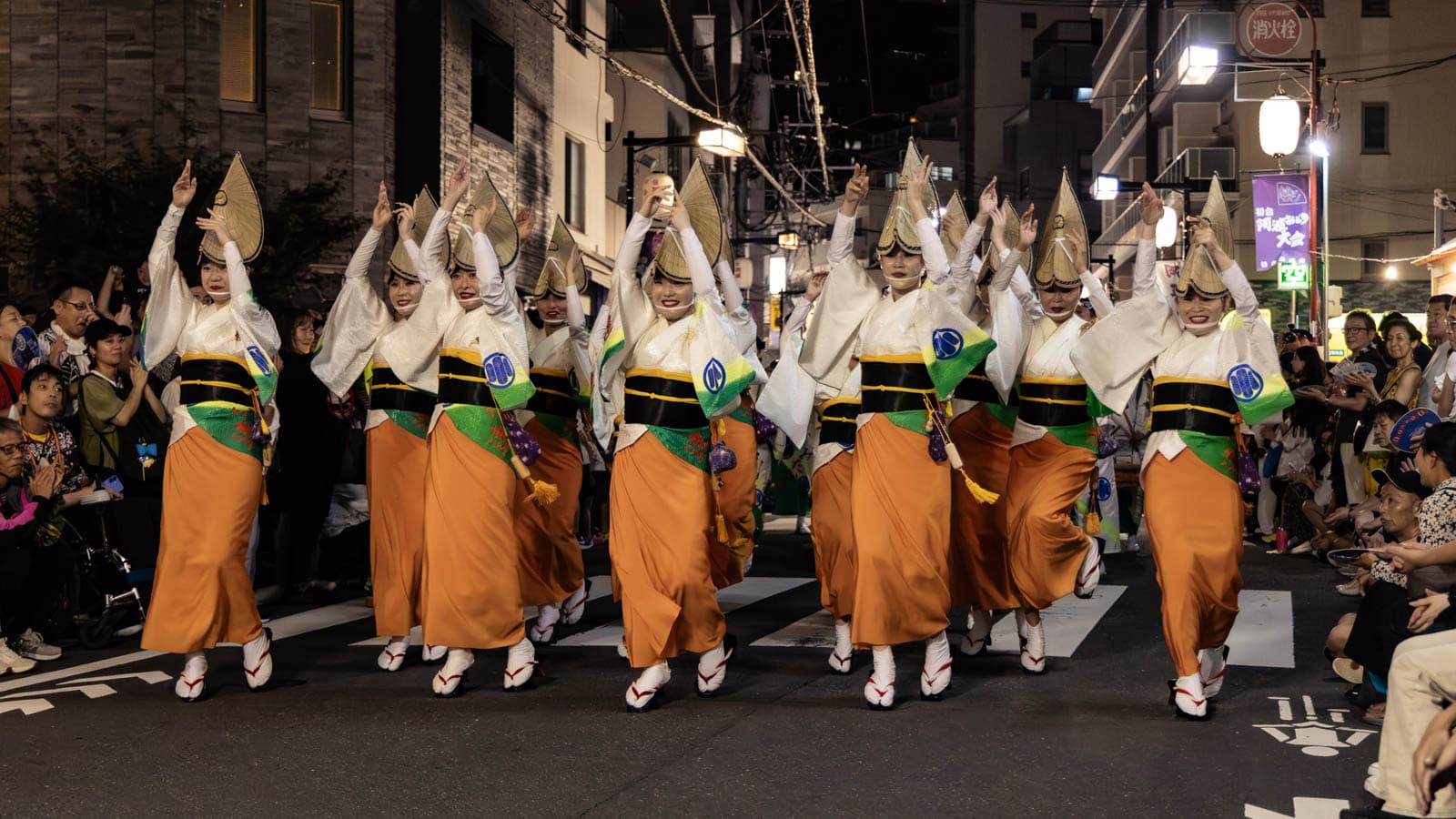
It might have been the 54th Hatsudai Awa Odori, but it was my first. I’d only ever seen images of it on the Tokyo Bling website, taken many years ago. So I was excited for this one.
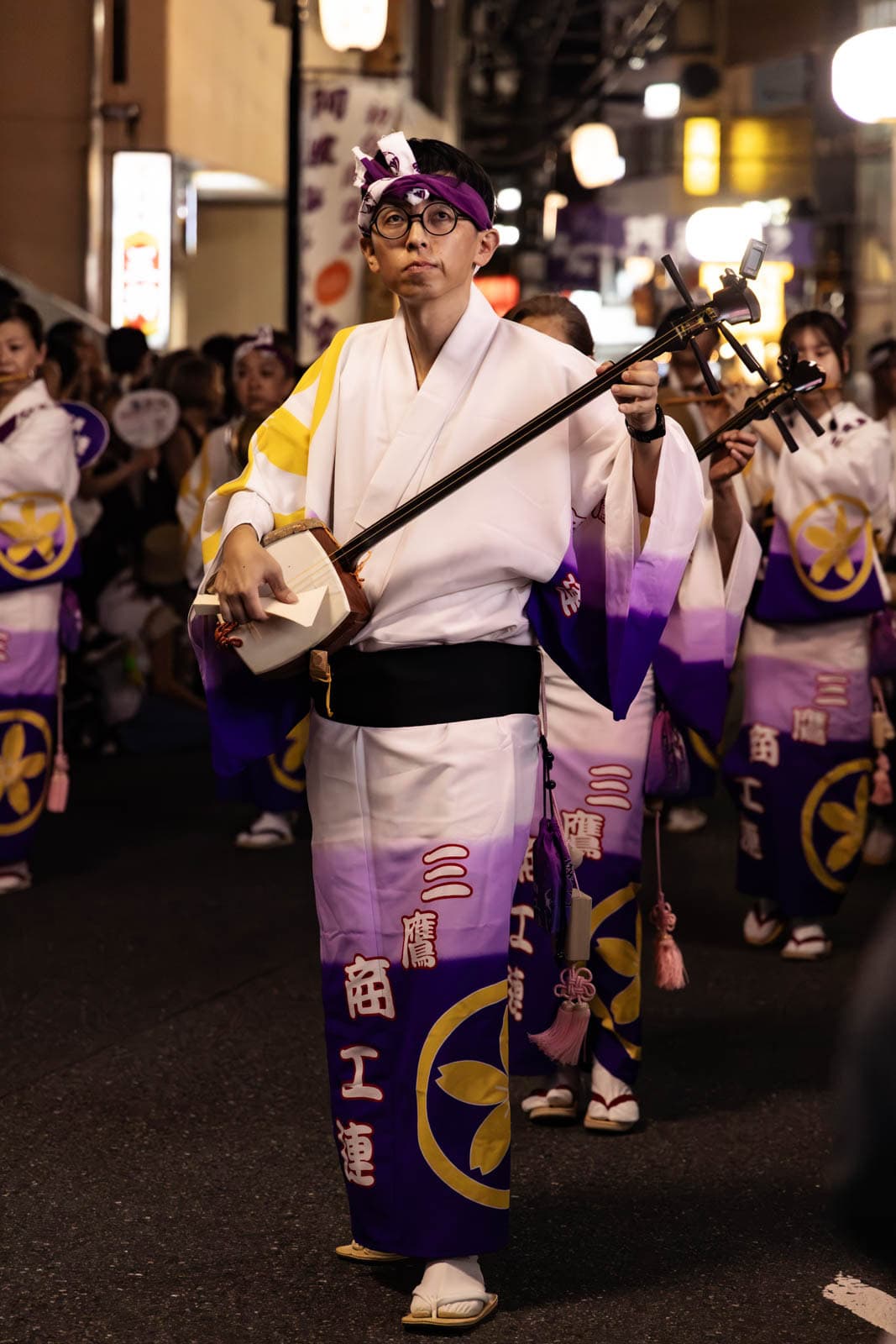
But I had no idea what to expect. From the images I’d seen I doubted it was like the Koenji event, but it looked bigger than the Shimokitazawa one.
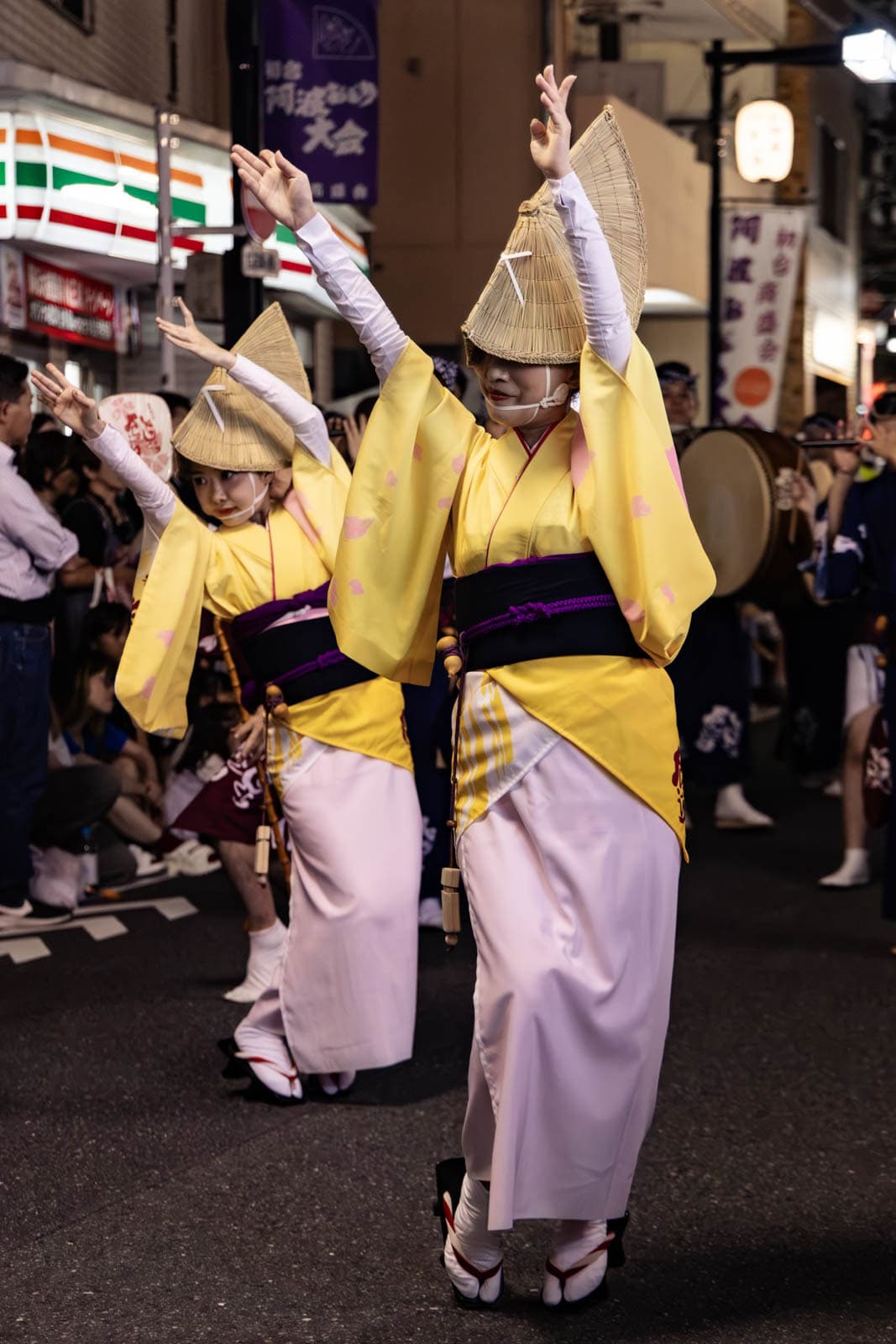
What to expect at Hatsudai Awa Odori
When I got there, my suspicions were incorrect. It was smaller than both! But the street it took place on was wider than Shimokitazawa.
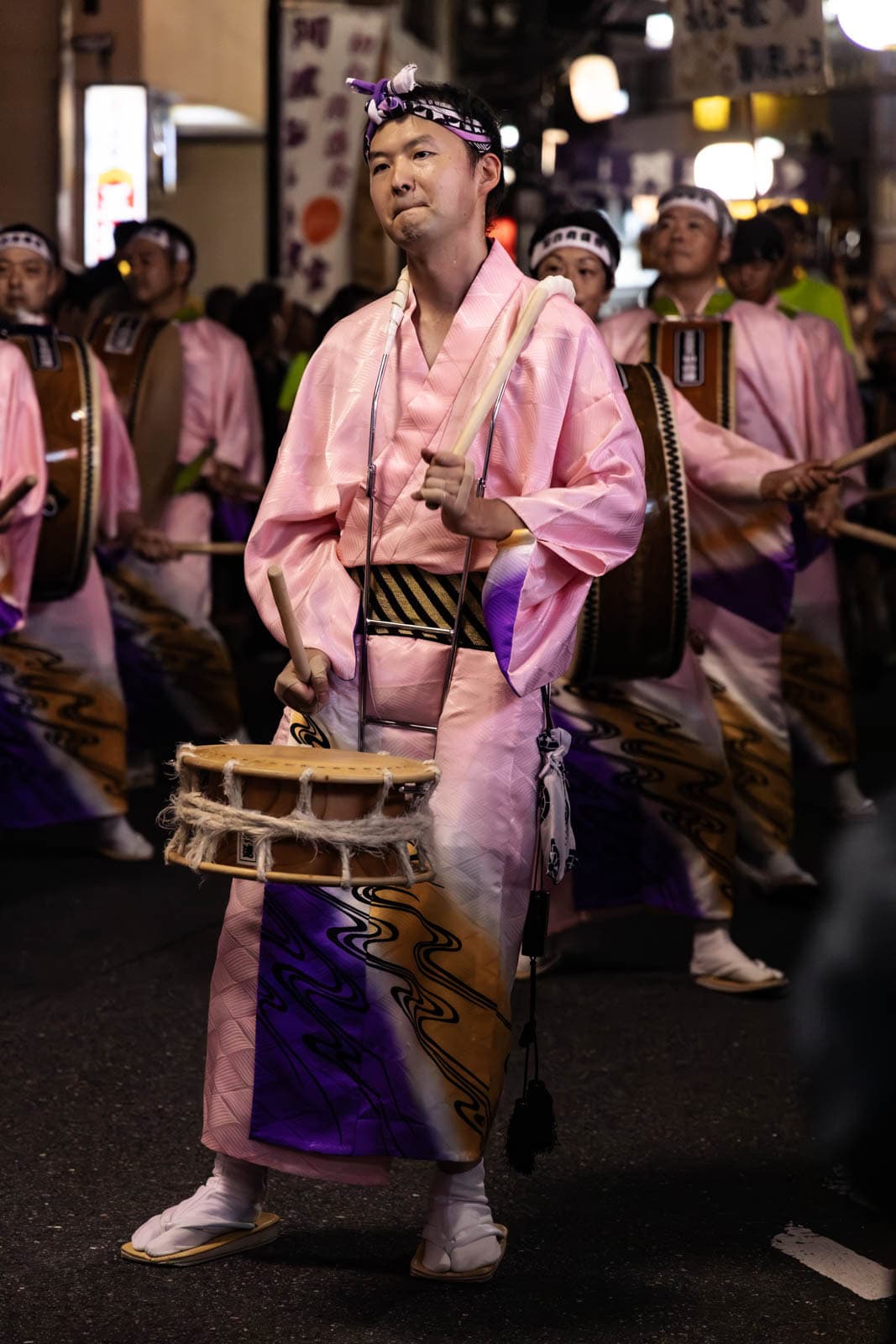
The Hatsudai event took place during Silver Week. Silver Week is a rare five-day consecutive holiday period that happens in September when a weekend aligns with two national holidays, Respect for the Aged Day and Autumnal Equinox Day.
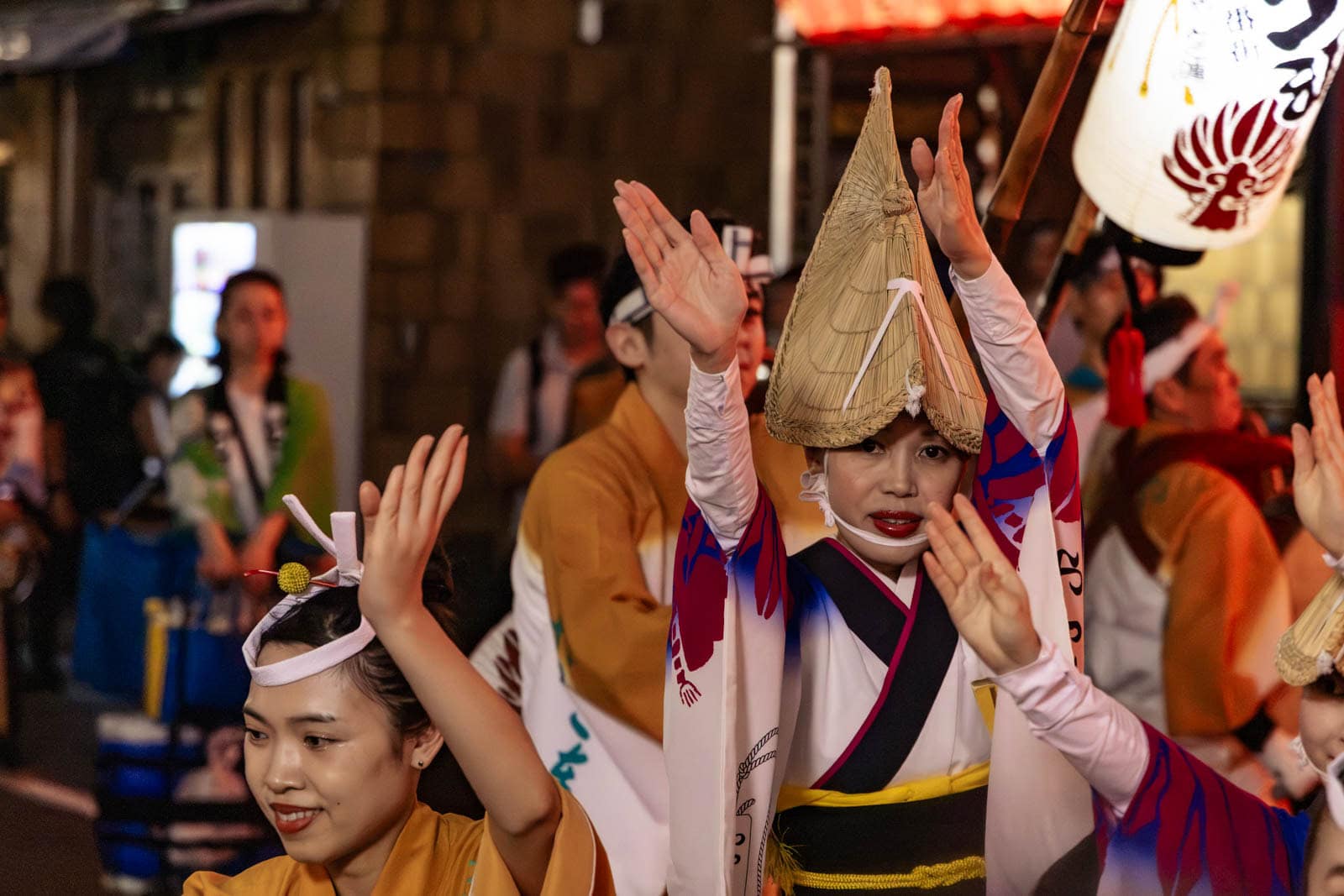
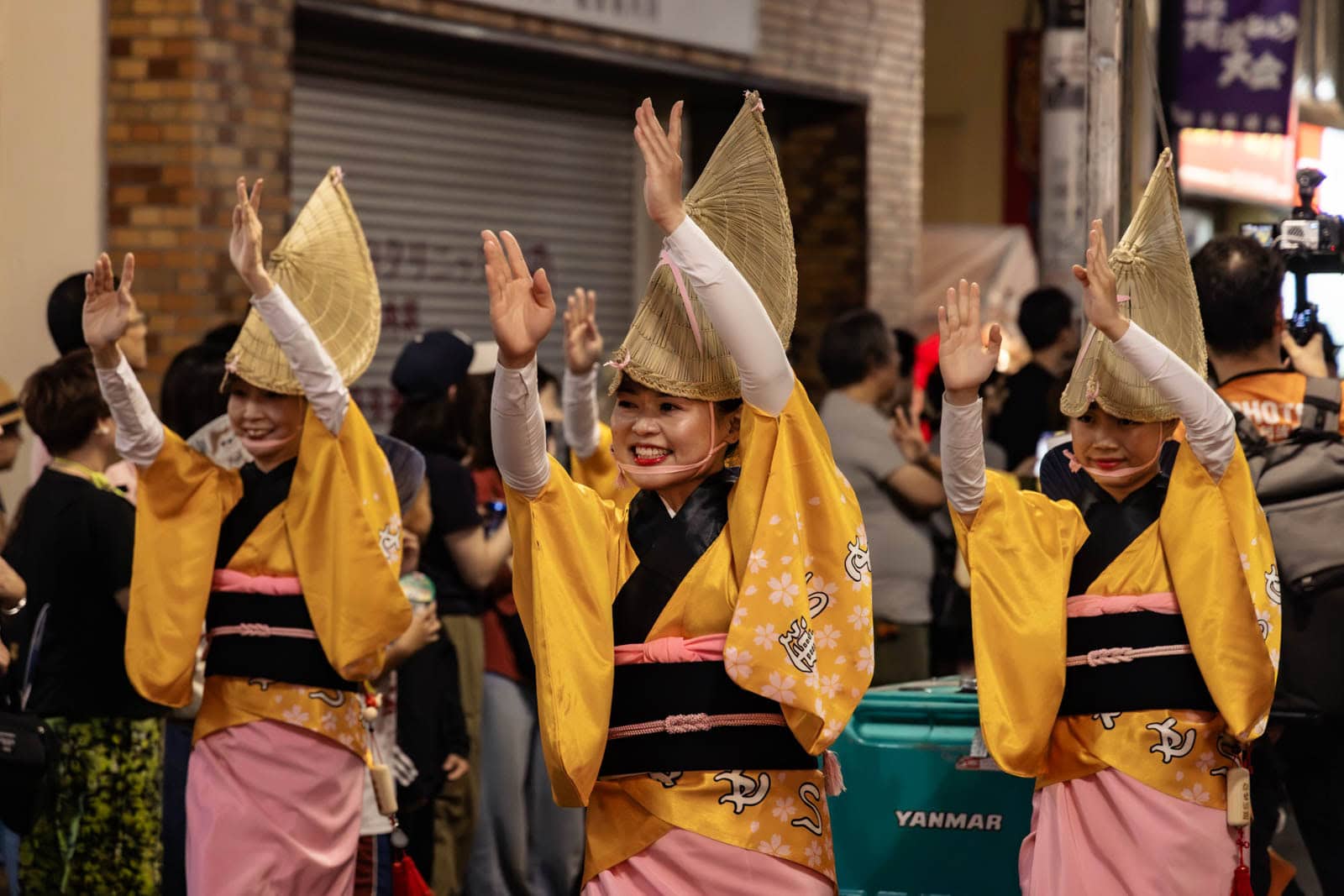
An exciting thing is that the road along which the Hatsudai Awa Odori takes place is curved. That is great for photographers who want to get head on photographs of the dancers as they approach.
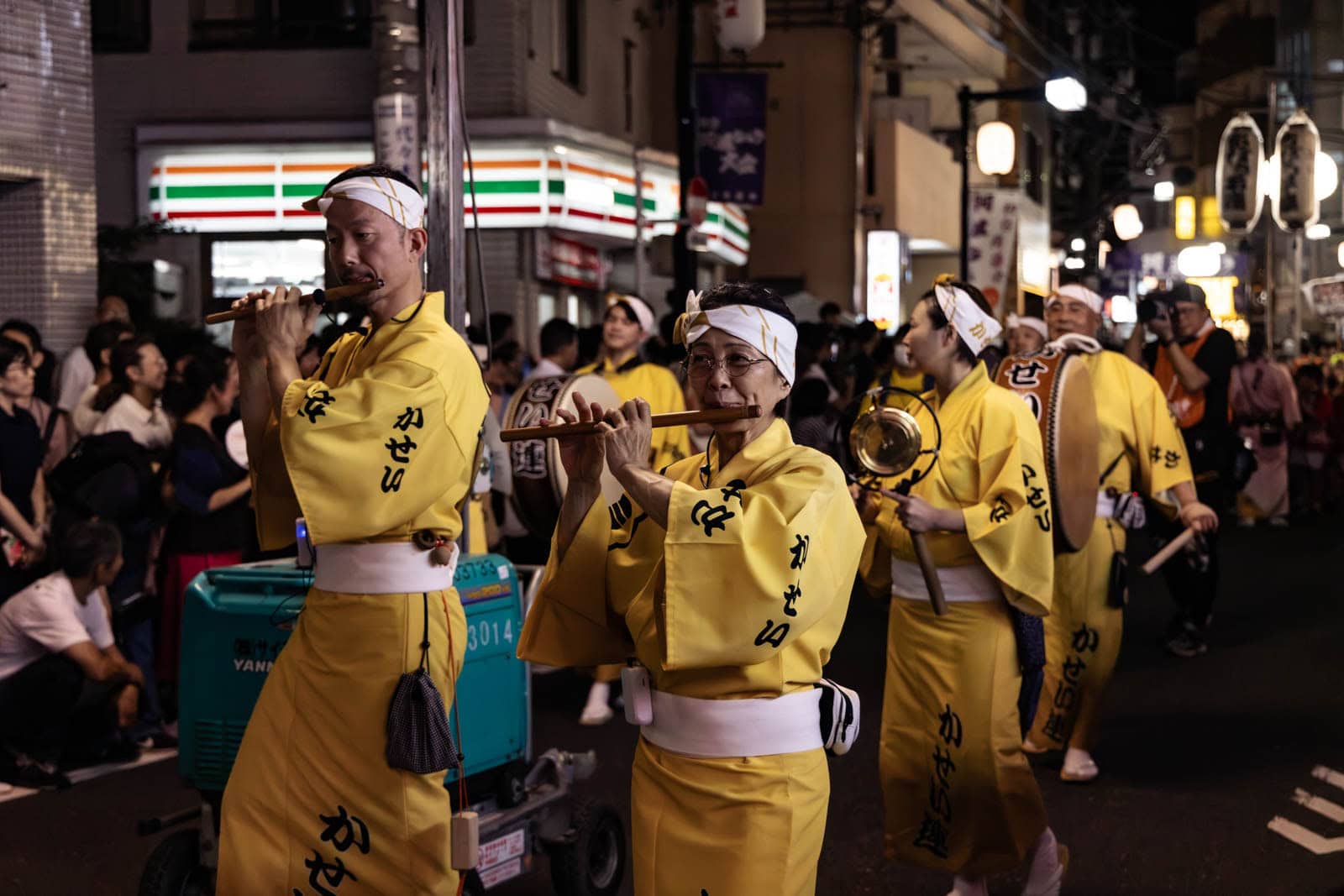
Generators provide light & obstacles
The Hatsudai Awa Odori was unique in one aspect. Along the middle of the street used by the performers, there were generators with lights atop. It was nice to get some extra light for us photographers.
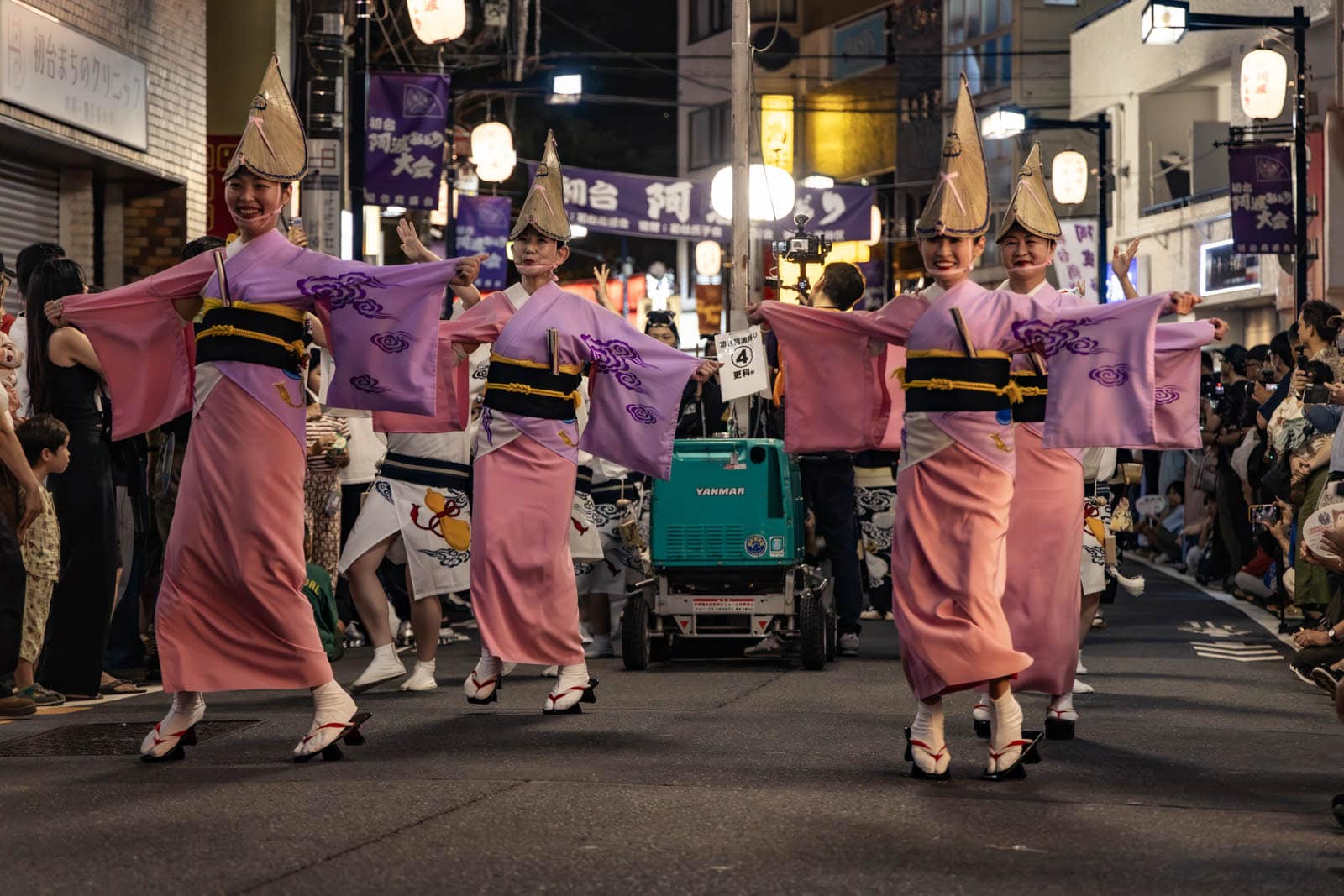
But the machines had two drawbacks. One was that they weren’t attractive. The other was they were obstacles that the performers had to navigate.
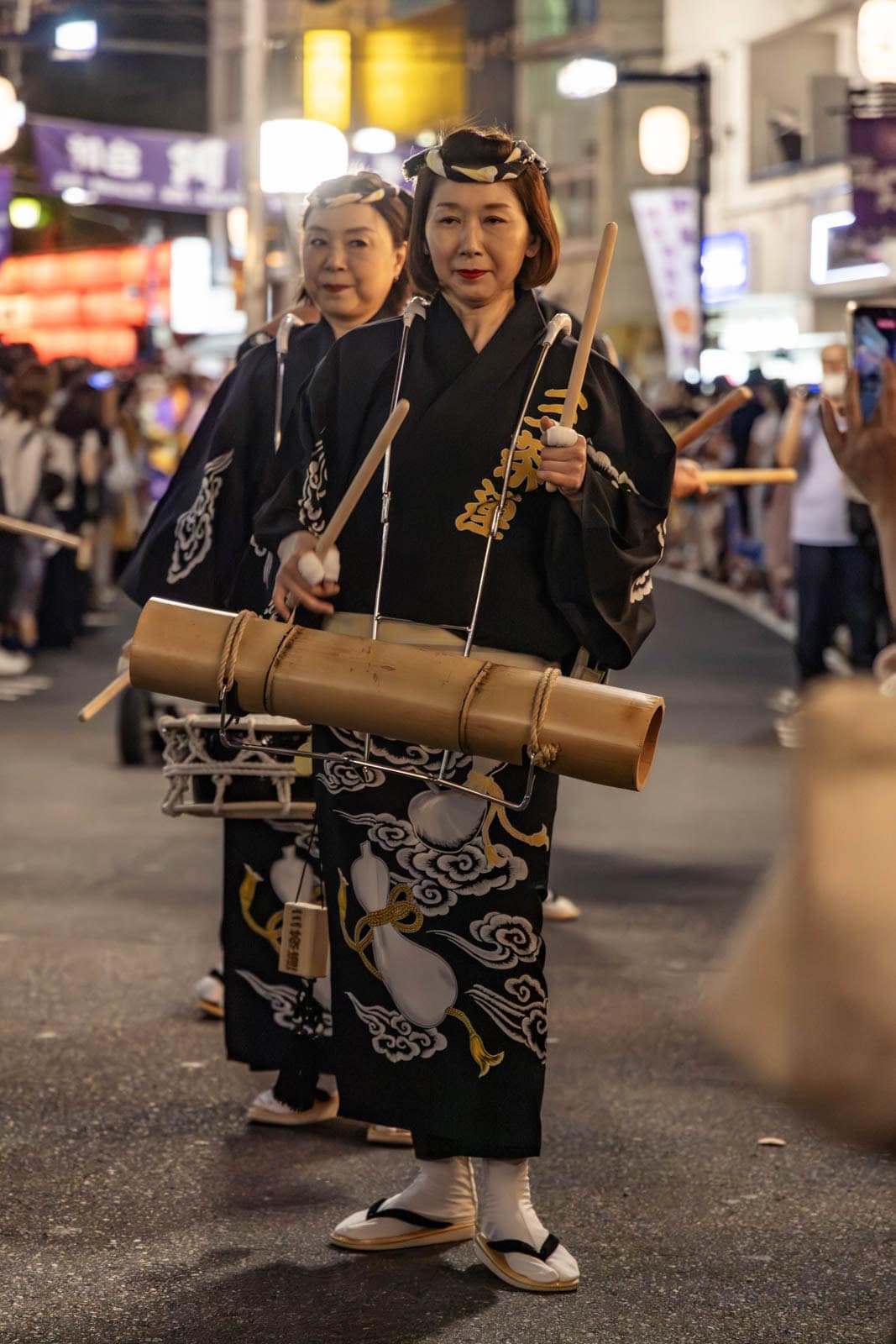
One more thing is that the shops on the street also add more light, limited as it may be. So, the further you get away from the station, the shops start to thin out. And that meant, light started to drop off. My advice is to stay closer to the station and find a spot to take photos.
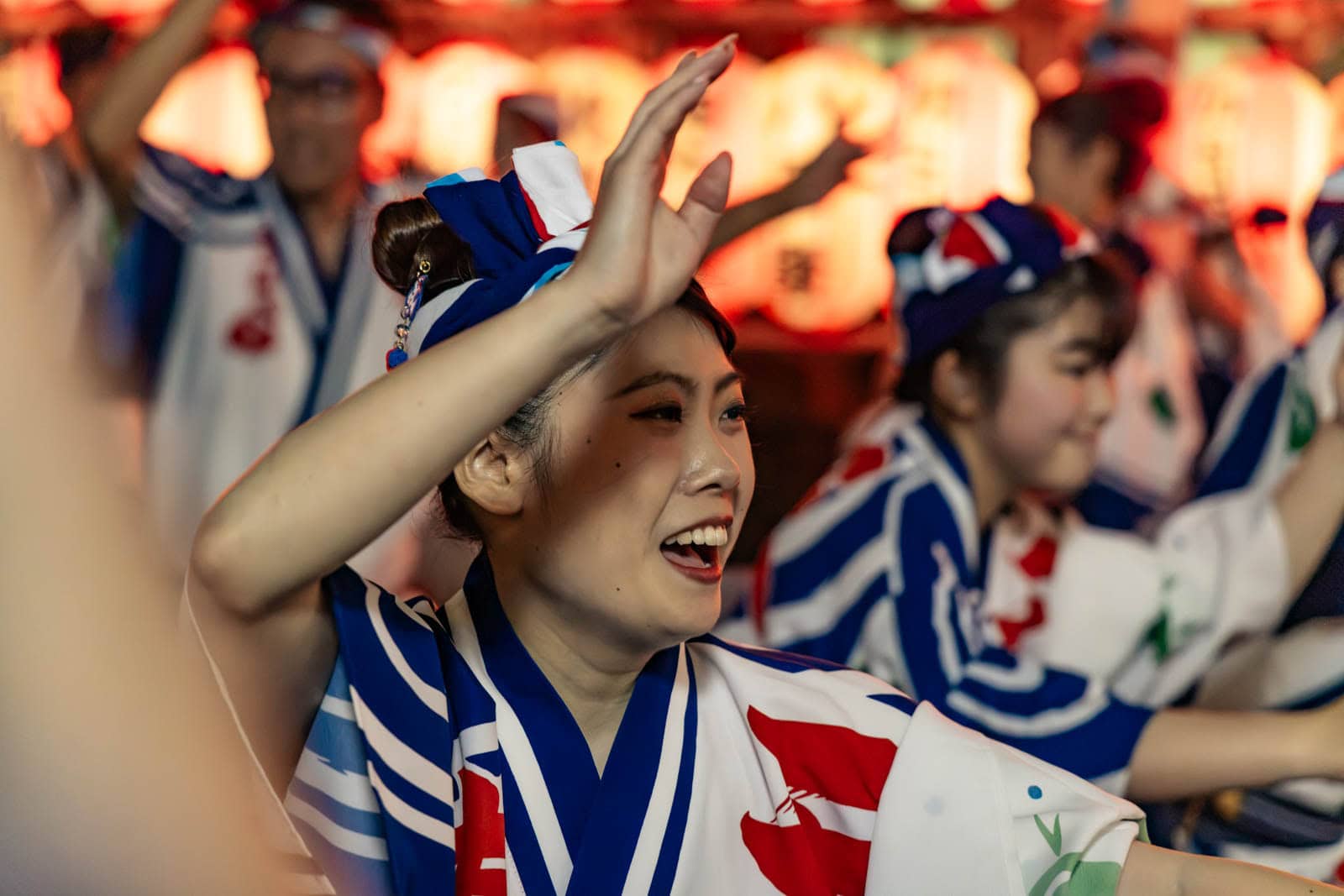
It took me a while to work things out. In the end, I photographed the performers as they passed under the generator lights where there was light. For the most part I cropped (like I explained in Shimokitazawa Awa Odori 2026) to make the machines disappear.
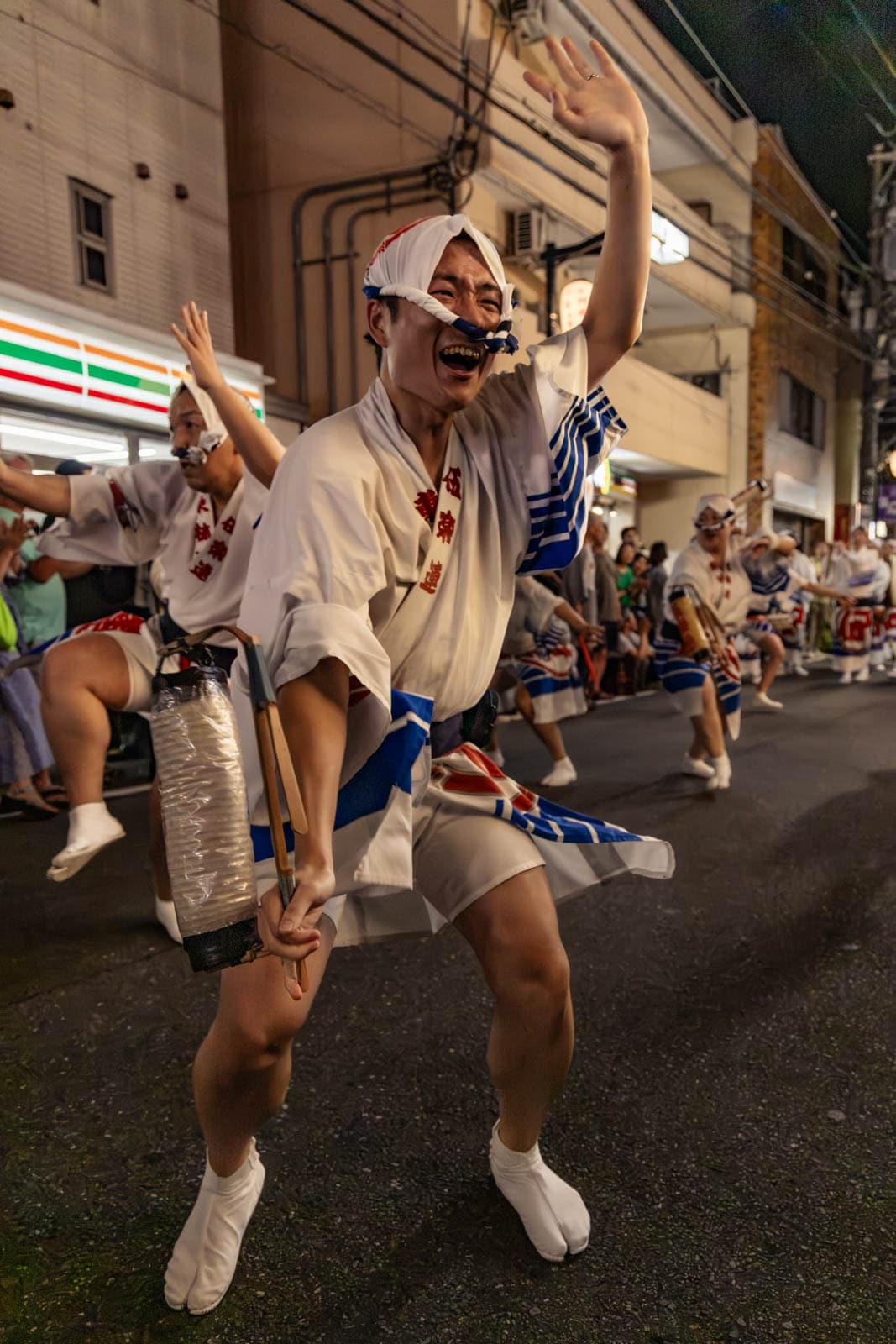
I was happy with the results. Most of the pictures show the subjects with some light on their faces. A few have people poorly exposed, but I felt those images were still worth publishing.
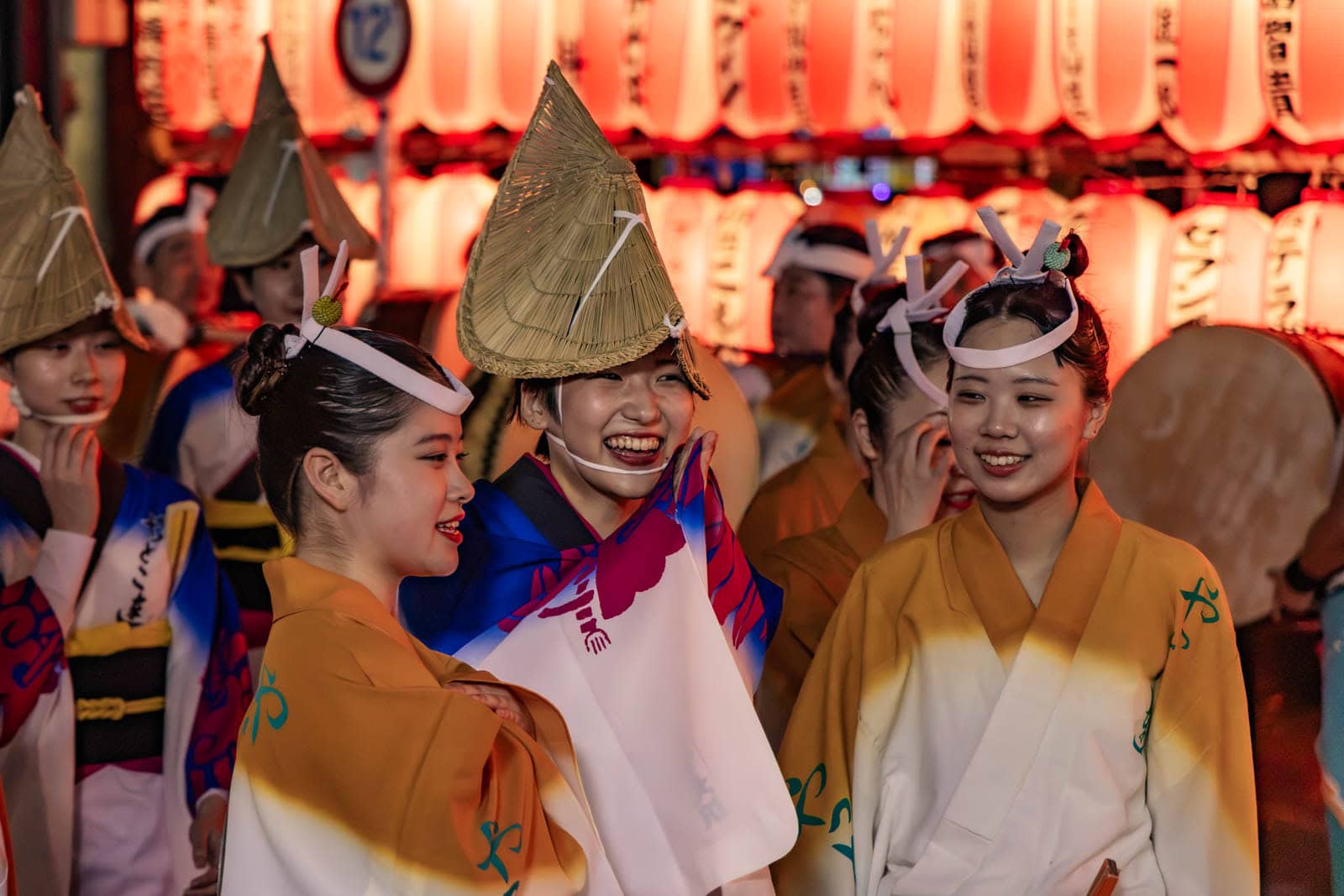
Should I buy a prime lens?
When I got home, the images on my screen made me rethink my ideas about lenses. I have used zooms for this type of event for literally forever. But I end up with an enormous amount of subjects that have been clipped at the most inopportune places.
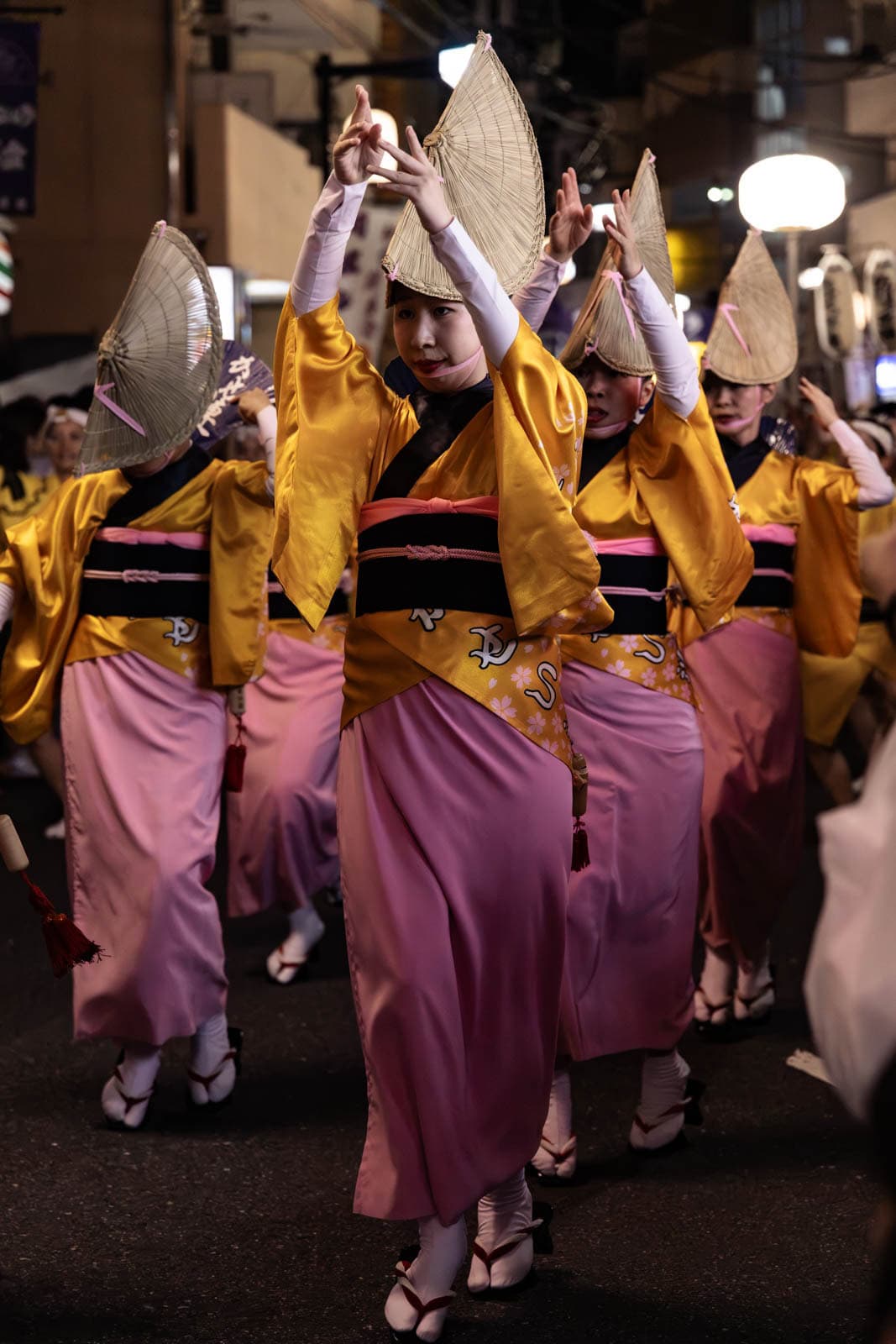
One reason is because, at the moment of pressing the shutter button, I was changing the focal length constantly. That causes problems, because the action is happening so fast, especially when shooting the performers side on.
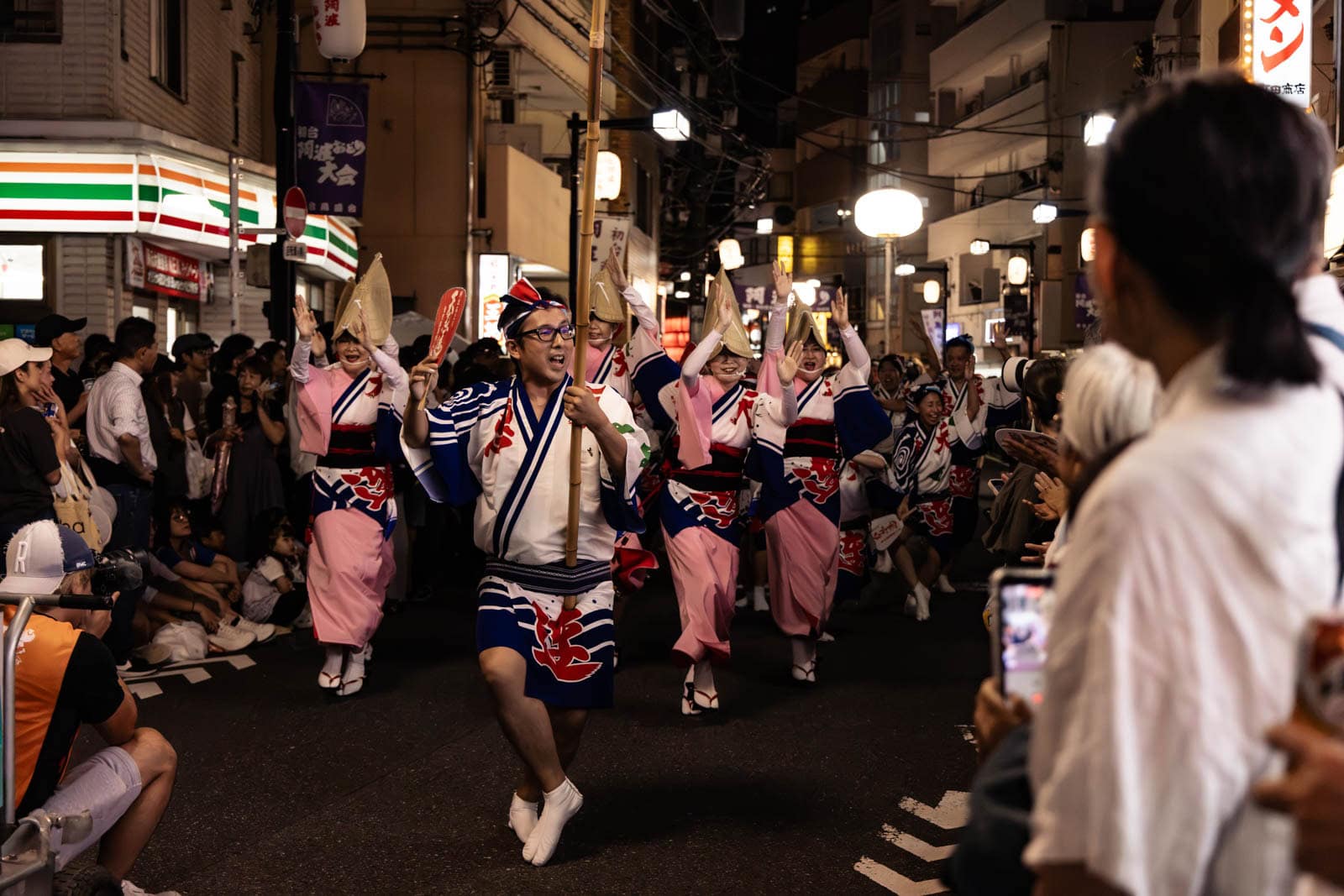
My new idea is to use a prime lens. With one of those I won’t be changing focal lengths, which might give me a few seconds to concentrate on compositions. Of course, the down side to that will be lack of reach.
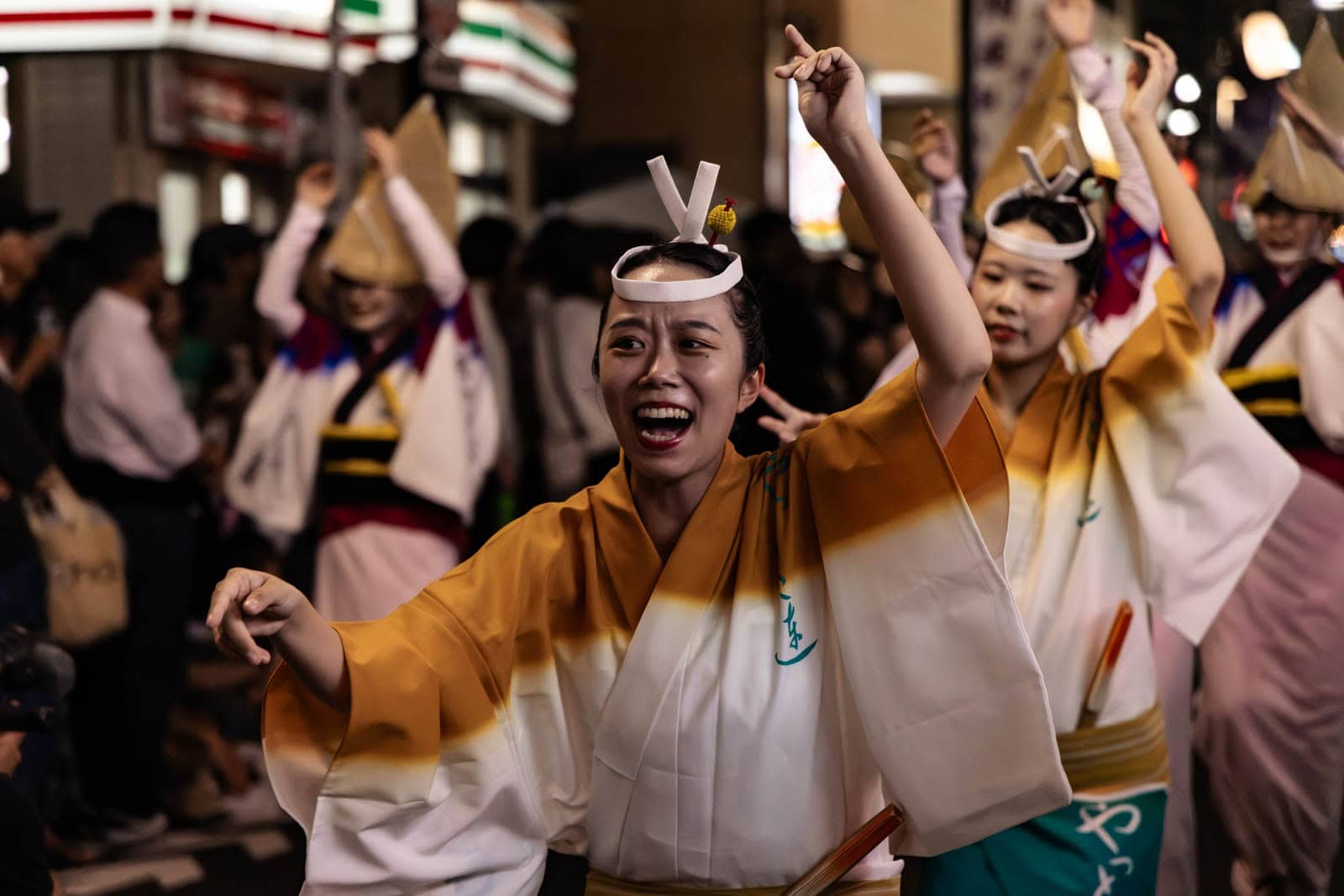
The ideal situation would be to have two camera bodies. But the price of secondhand Canon EOS R5s and more lenses makes this prohibitively expensive.
Is the Hatsudai Awa Odori worth attending?
Absolutely. If you want to experience an Awa Odori, but the crowds of the Koenji event make you anxious, head to Hatsudai. The startline is literally outside the station so you won’t need to go far to find a spot to watch the night’s performance.
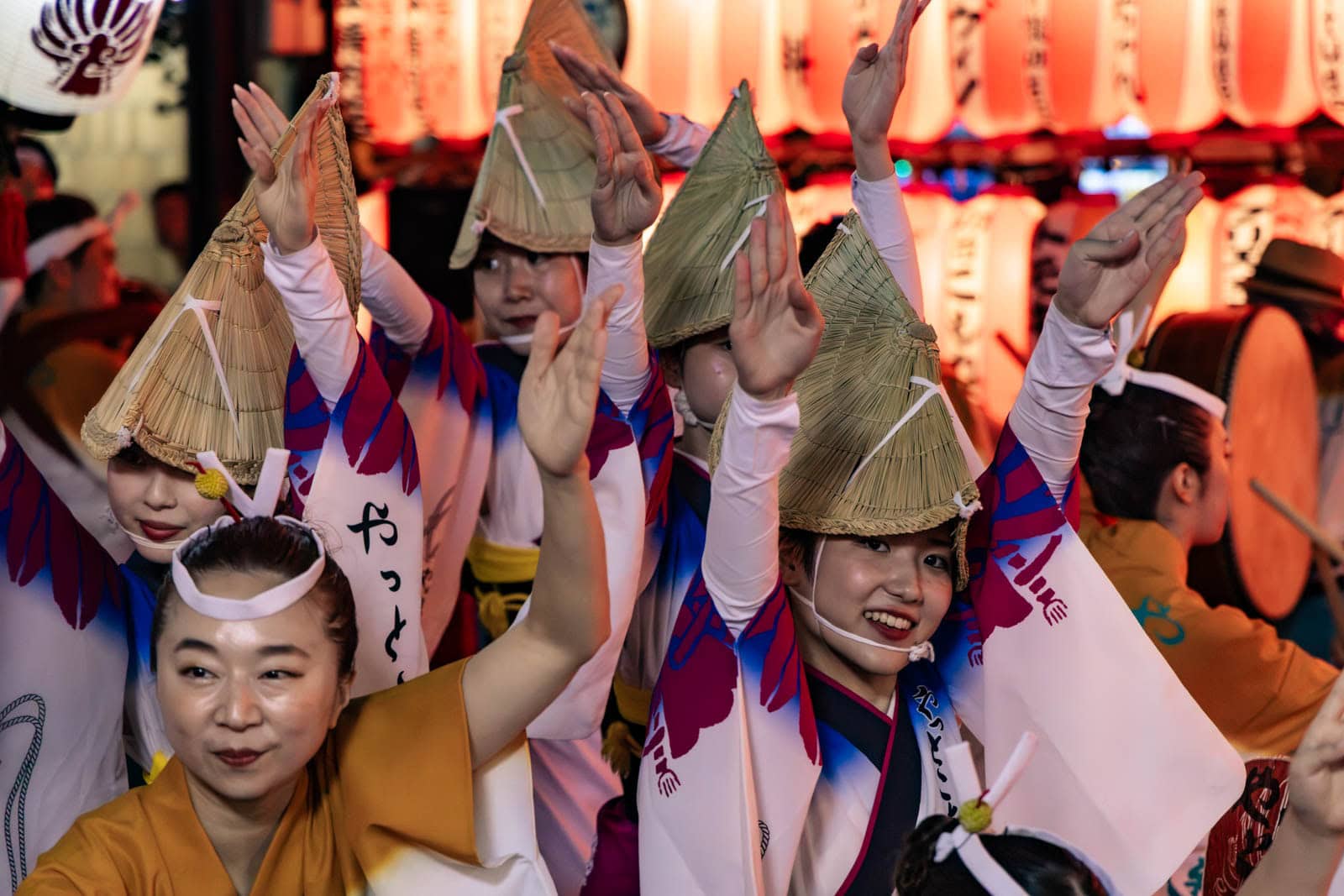
I’m pretty sure this is the end of the big Awa Odori events for Tokyo this year. I’m looking forward to 2027 and another visit to Hatsudai.
My photography gear for this event
- Camera body: Canon EOS R5
- Lens: Canon RF 24-105mm f/4 L IS USM