Nezu Shrine Azalea Festival 2017
Spring in Tokyo is synonymous with color, and few places promise a spectacle quite like the Bunkyo Azalea Festival at Nezu Shrine. However, travel photography is often a game of timing, and even the best plans can fall victim to a busy schedule. On May 1, 2017, I finally arrived at the shrine to capture the famous hillside blooms.
The festival had been running for two weeks, but work commitments had kept me away until the final stretch. I walked in expecting a sea of color. Instead, I found a disaster.
Timing is important
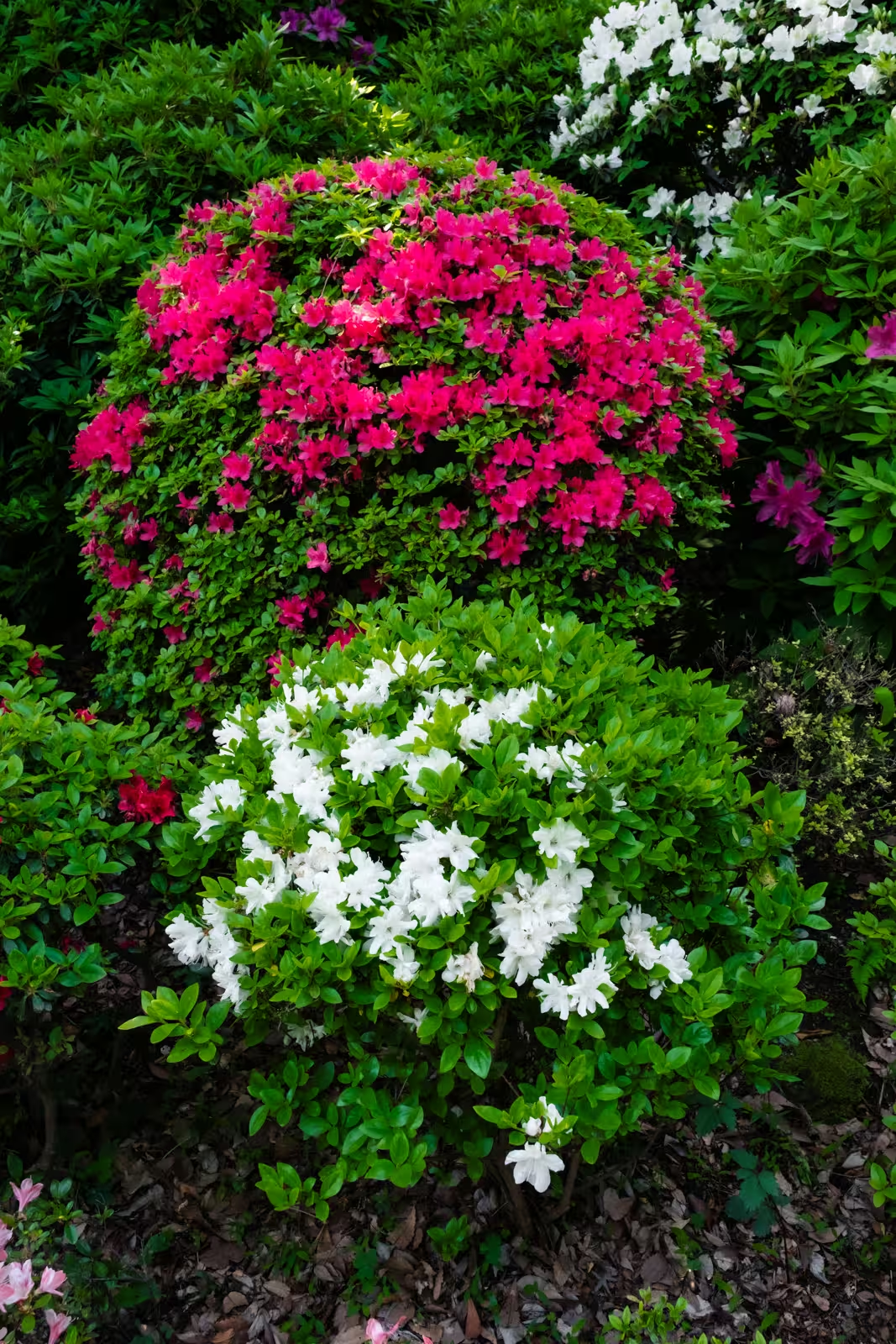
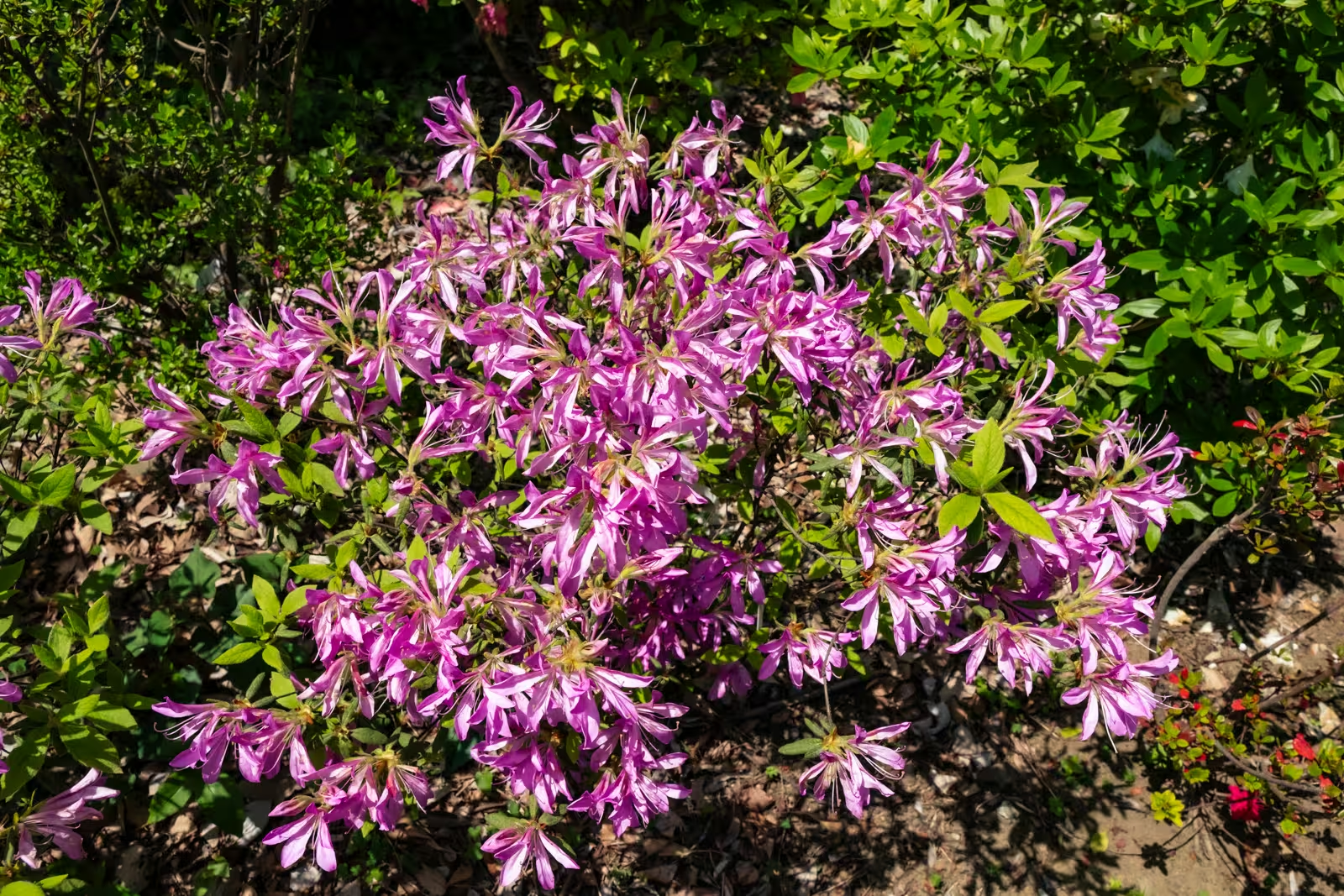
Although the festival was scheduled to continue until May 5, I quickly realized the flowers hadn’t received the memo. Many of the blooms were already dead. To make matters worse, the gardeners had meticulously removed anything less than perfect the night before my visit.
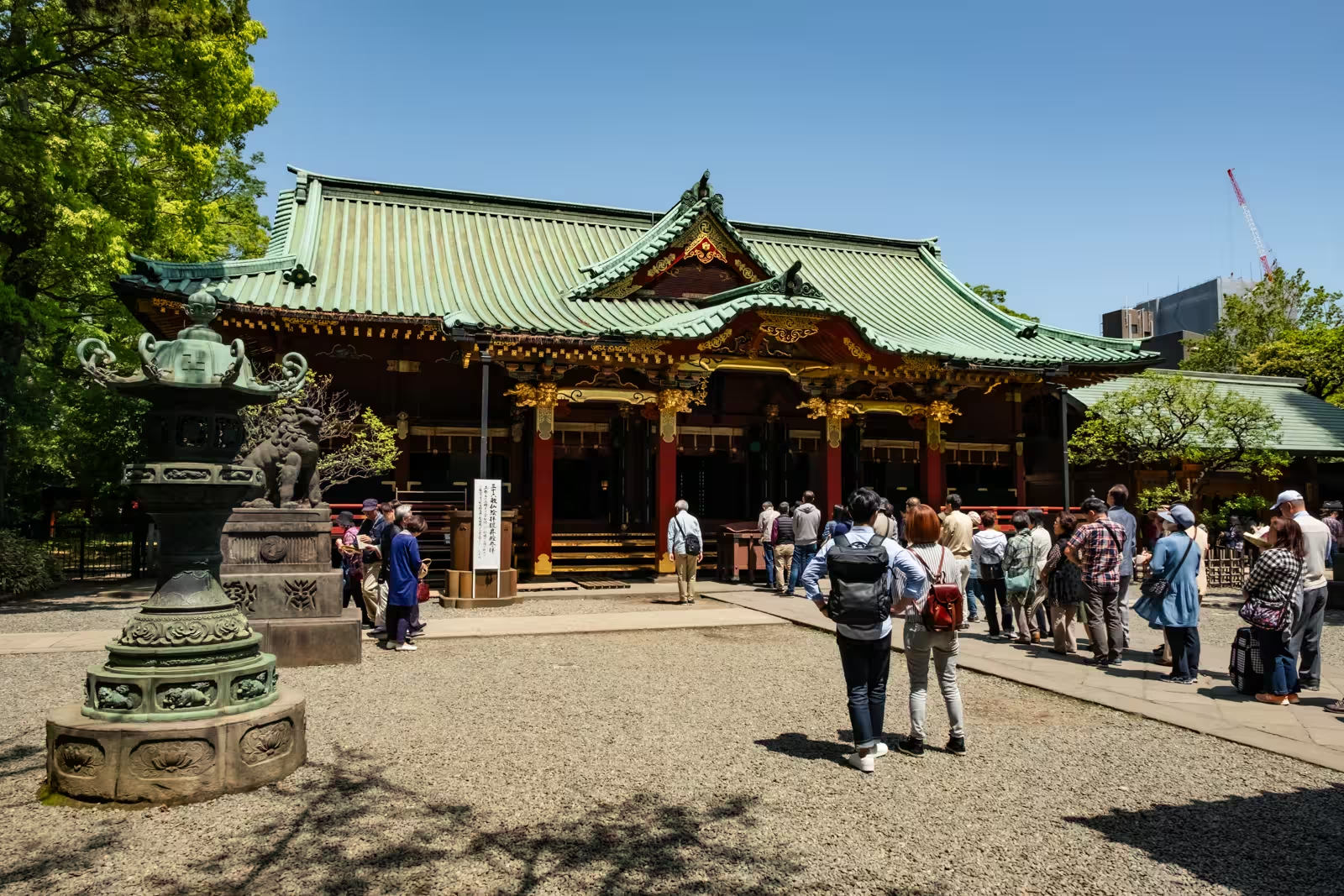
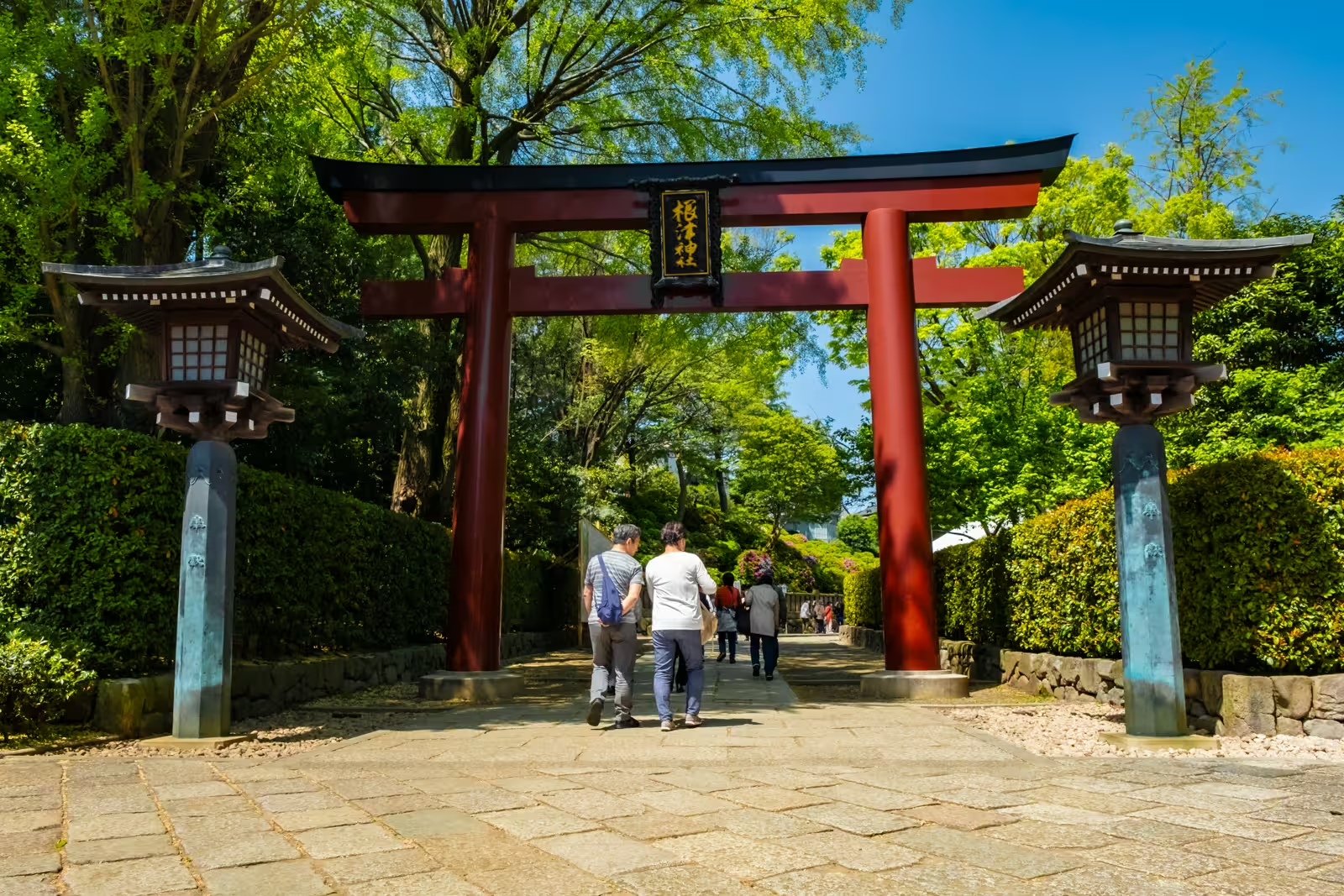
When I walked through the torii gates, there was almost nothing left to photograph. The famous hillside was predominantly green.
Of course, I should have arrived earlier. But work often takes priority. In hindsight, telephoning the shrine to ask about the condition of the flowers would have been a prudent move.
Not checking before I commuted there was a silly oversight. A simple phone call might have saved me the disappointment I suffered in the end.
Photography planning beats luck
Some of my pictures turned out acceptable, but they were far from the portfolio shots I had envisioned. Luck had been on my side during previous years; I would simply show up, and the world would look beautiful.
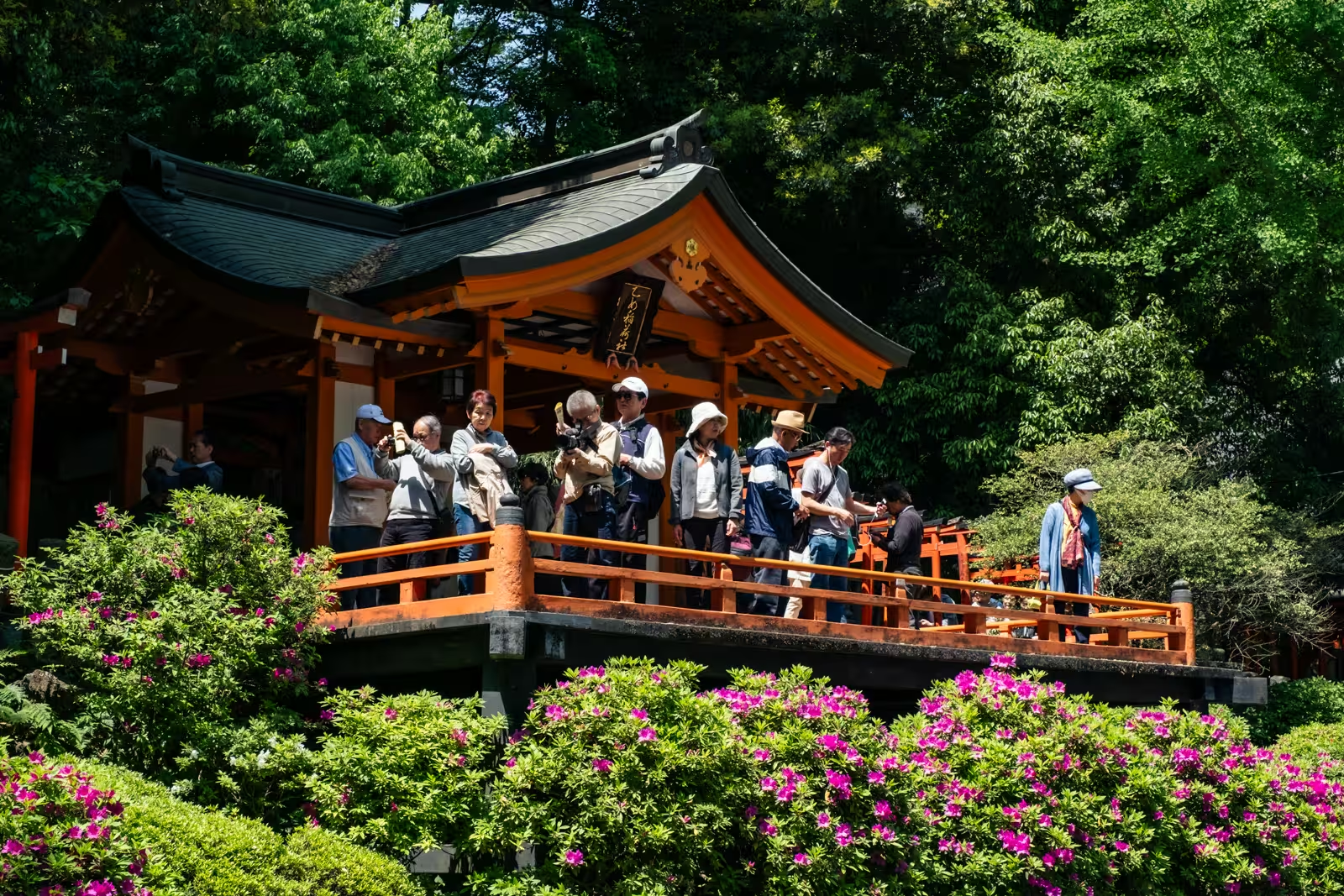
In 2017, however, the universe sent a strong message: “You got away with being lazy in years past, but you can’t rely on luck every time, mate.”
That is my mindset now. The next time I plan to cover a flower festival, I will ring in advance to ensure the plants are at their absolute peak.
Using the Fujifilm X-T2 & 16-55mm
Beyond the lack of flowers, I realized I was fighting my own equipment. I was still operating in “DSLR mode.” The Pentax cameras I relied on in the past came with built-in image stabilization (IBIS), a feature that saved me in low-light and slow-shutter-speed situations.
My new Fujifilm X-T2, paired with the 16-55 mm lens, did not have that feature. Because I wasn’t used to the camera yet, I frequently failed to check my shutter speed, leading to blurred pictures. It was a habit that took a long time to build.
While checking settings is instinctual to me now, it certainly wasn’t in those days. I realize I might be off on a tangent here, but these technical struggles were part of the day’s narrative.
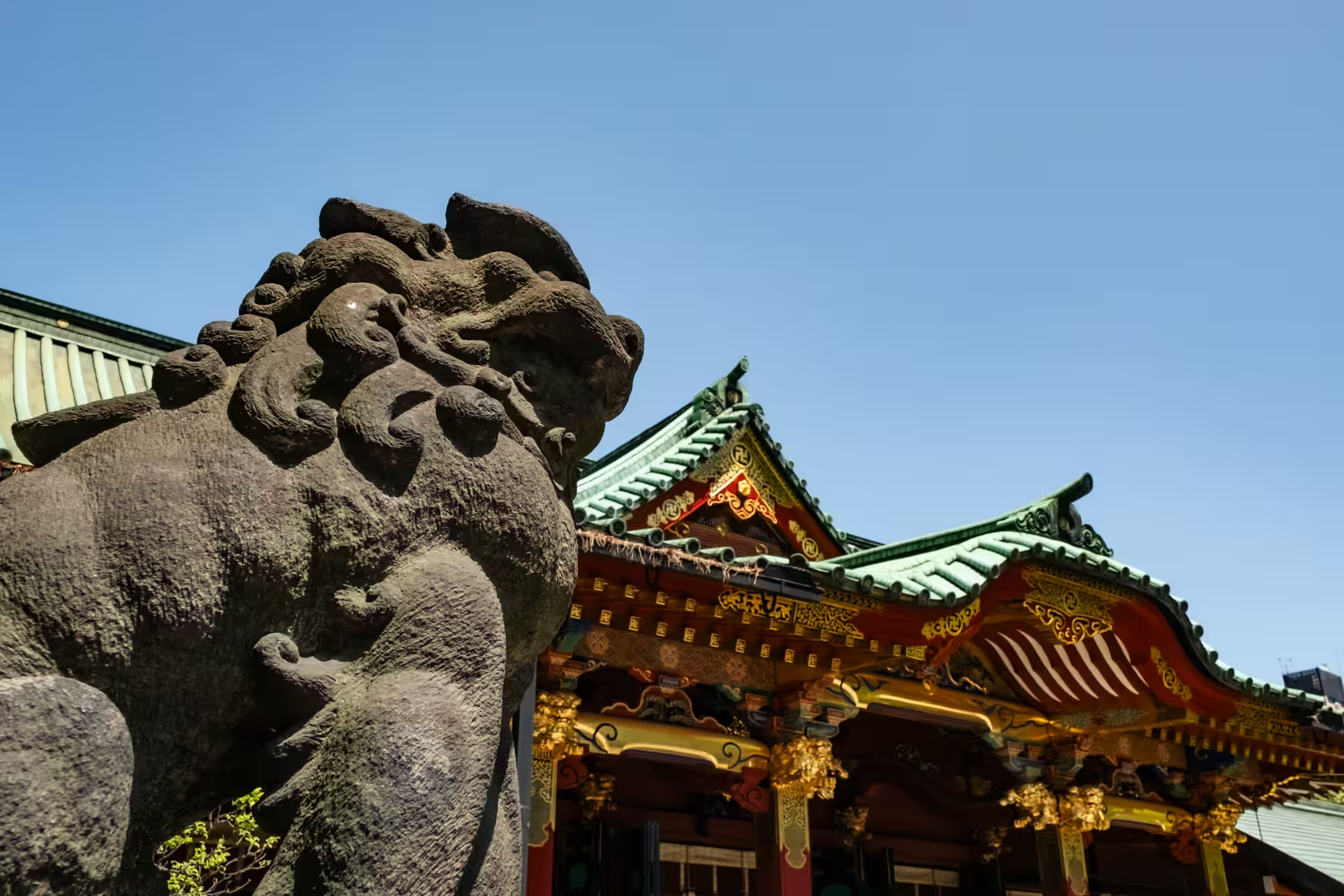
Adapting to poor conditions
Let’s get back to the matter at hand: the azaleas. In short, it was a poor day for viewing. I overheard many fellow visitors expressing how disappointed they were with the state of the flowers. Since we were there well before the official end date, their frustration was easy to understand.
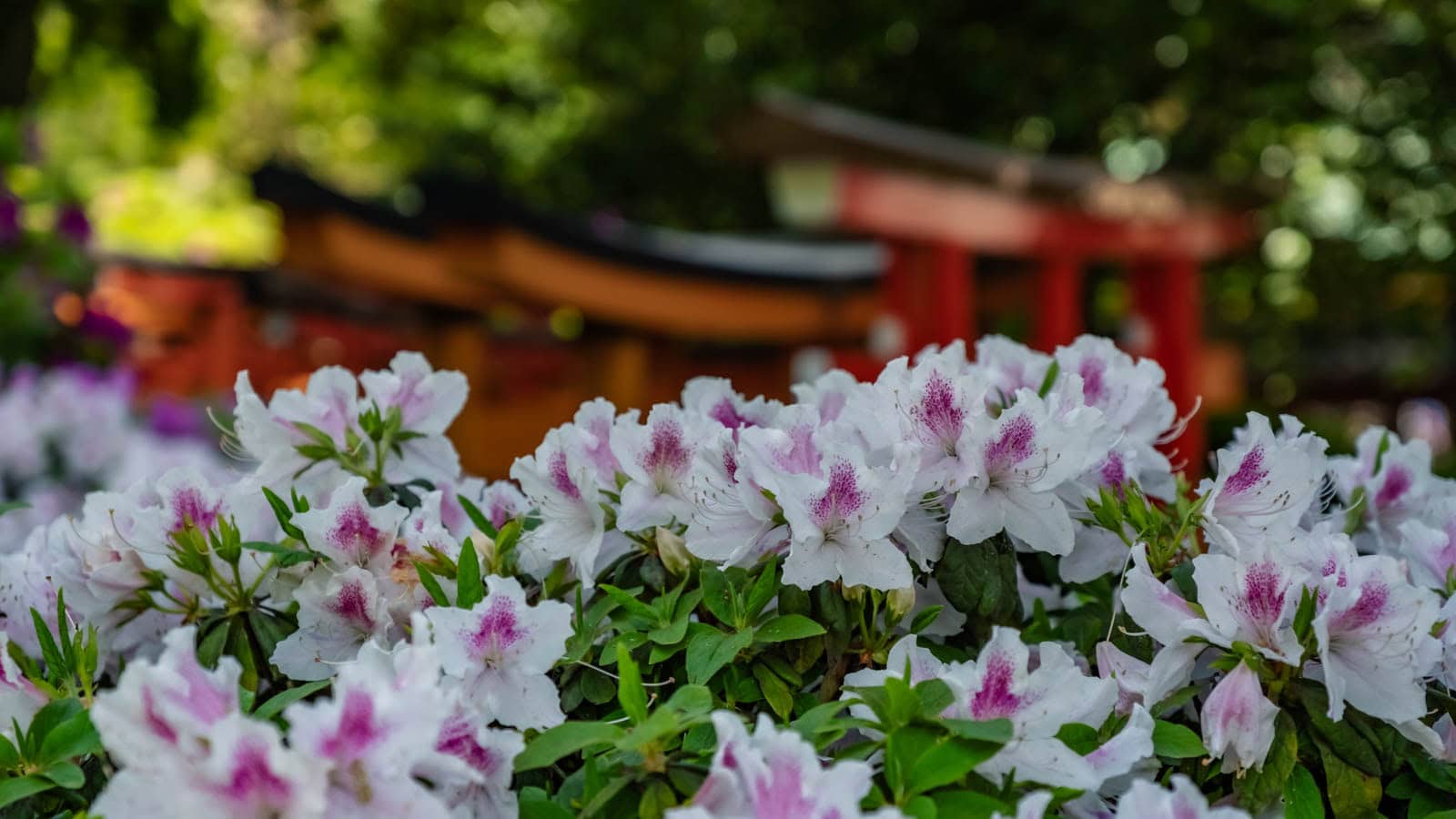
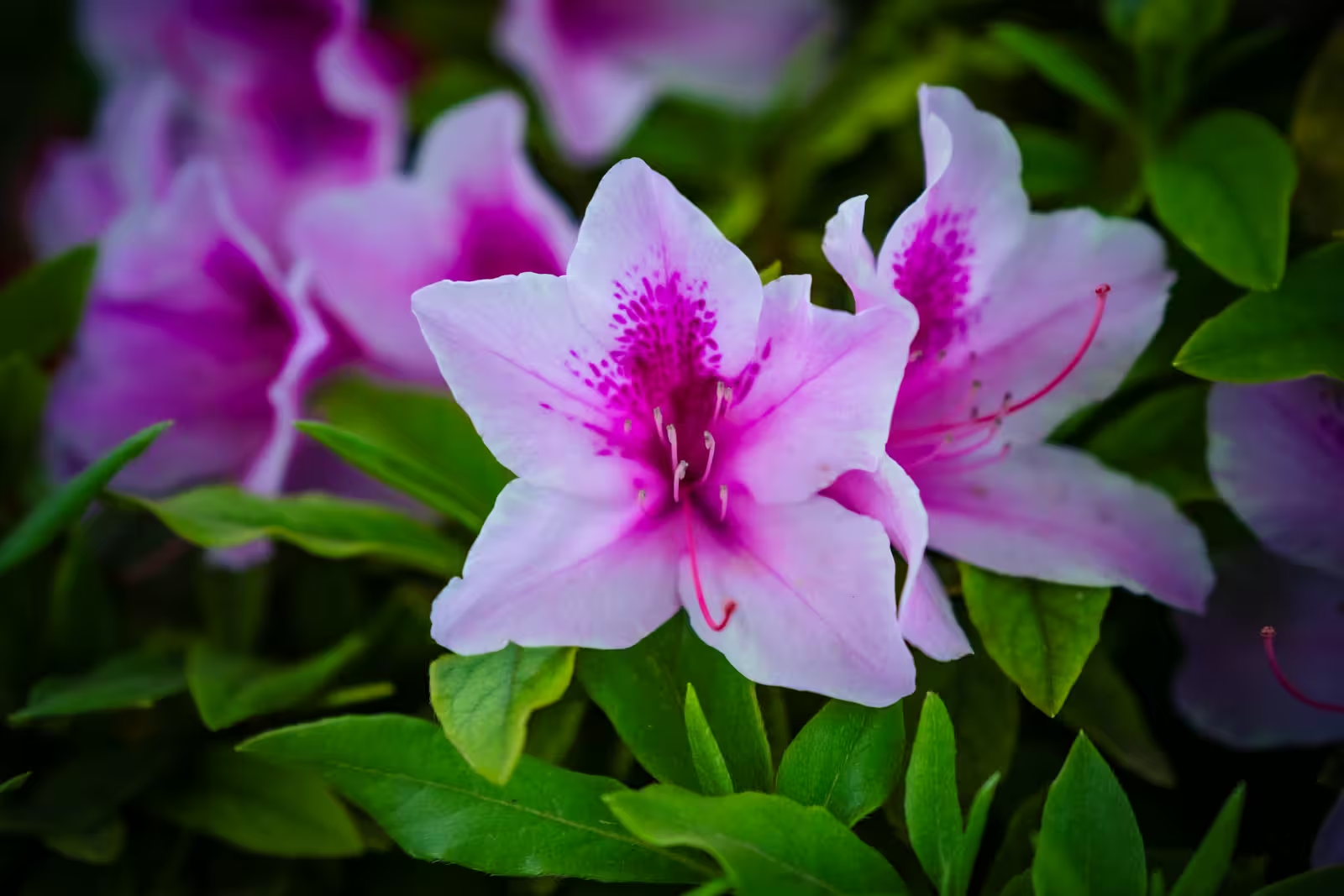
Photography at the Nezu Shrine Azalea Festival became a challenge. What was the solution? As you can see from the gallery, most of my shots were tight, utilizing heavy bokeh to blur out the lack of color in the background. The wide-angle landscape shots I had hoped for were impossible, given the condition of the flowers.
Did I make the right choices? In hindsight, I can only say, “I don’t know.” But I made do with what I had.
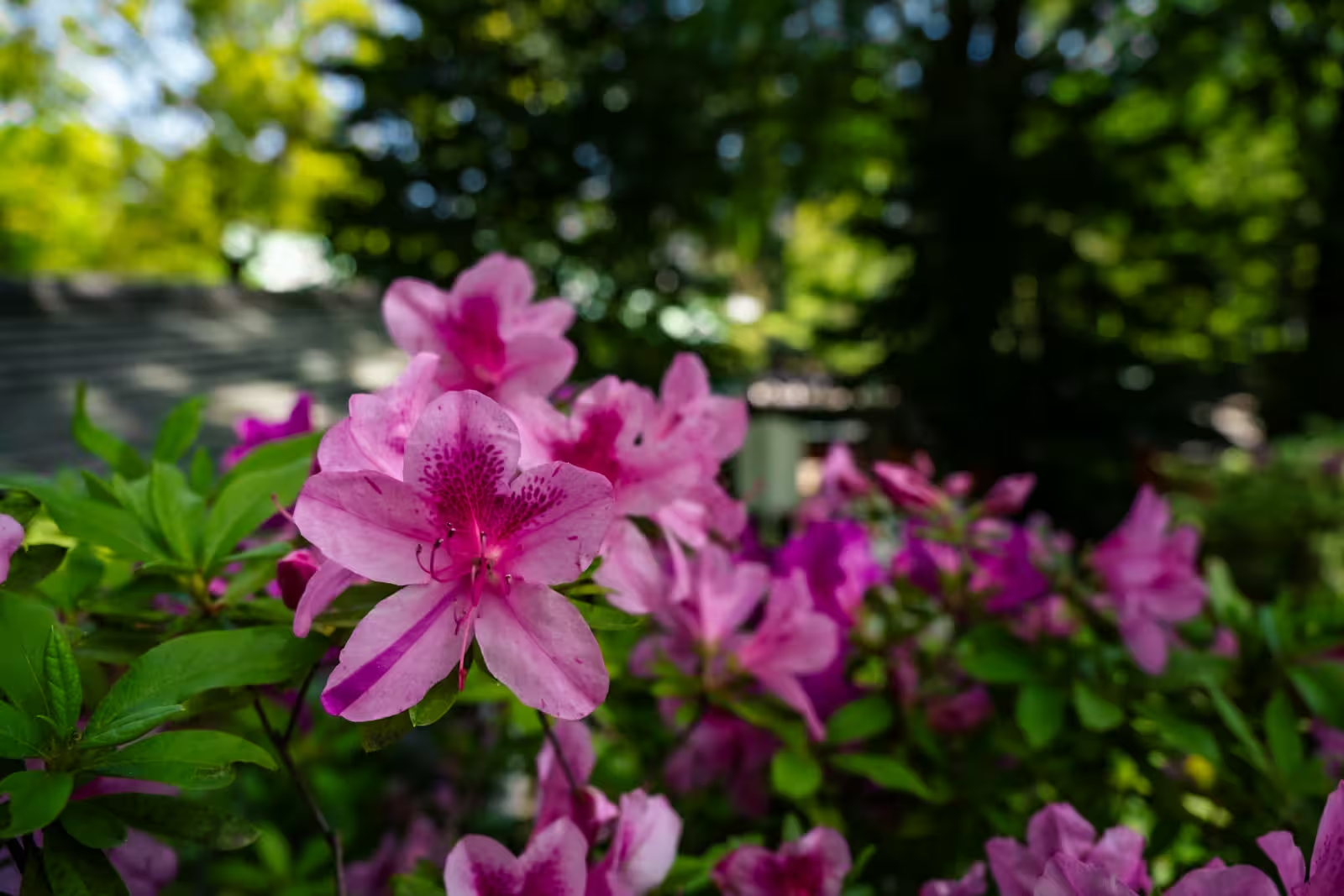
My photography gear for this shoot
- Camera body: Fujifilm X-T2
- Lens: Fujifilm XF 16-55mm F2.8 R LM WR
Nezu Shrine Azalea Festival 2017 lessons
The gist
Visiting a flower festival requires precise timing. This post chronicles a visit to the Nezu Shrine Azalea Festival near the end of the season (May 1st), resulting in missed photo opportunities and a mostly green garden.
Key takeaways
- Check conditions: Never assume flowers are blooming based on festival dates alone. Call the venue or check recent social media tags before you go. In this case, check the official Nezu Shrine website.
- Know your gear: Transitioning to non-stabilized cameras (like the Fujifilm X-T2) can require higher shutter speeds to avoid blur.
- Adaptability: When wide shots fail due to scenery, switch to tight shots and use bokeh to isolate subjects.
- There is always the next photo shoot. The future will bring us something new, and that is one of the great things about photography—there is always another chance to get the shot.
Your turn
Have you ever arrived at a famous travel spot only to find you missed the peak moment? How did you salvage the trip? Let me know in the comments below.
Are you ready to see the shrine for yourself? I’ve compiled [Nezu Shrine Photography Guide] which has all the information you need to know.