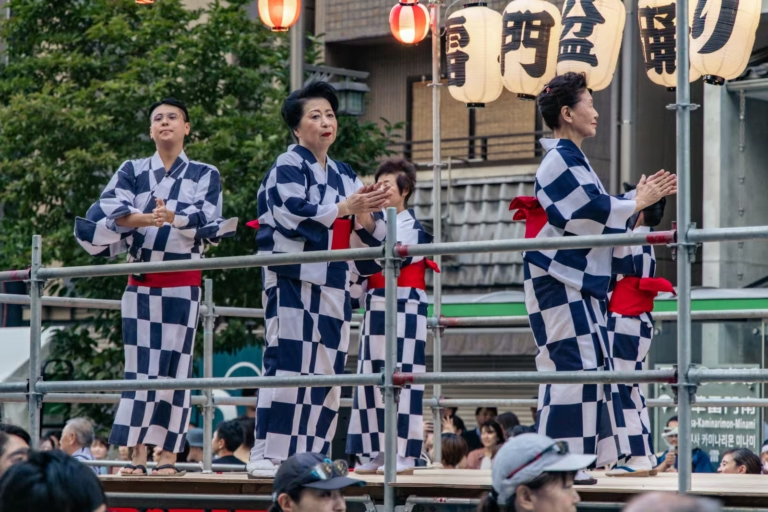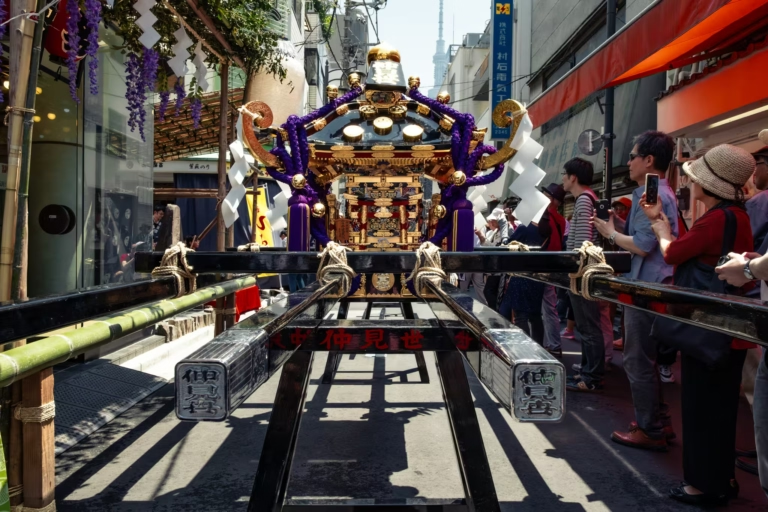
My recent visit to Okunitama Shrine’s Tori-no-Ichi festival gave me more than I expected. It wasn’t a one-dimensional event. From the moment I walked in until I left, it gave me surprise after surprise. Honestly, I got a few photos I wasn’t expecting. Other than some technical problems, it was a great night.
What is the Tori-no-Ichi Festival?
The festival originated in the mid-18th century as a thanksgiving ritual for farmers. They would present a chicken to the shrine. While doing that, they would have a market to sell their goods and produce to pay off debts.
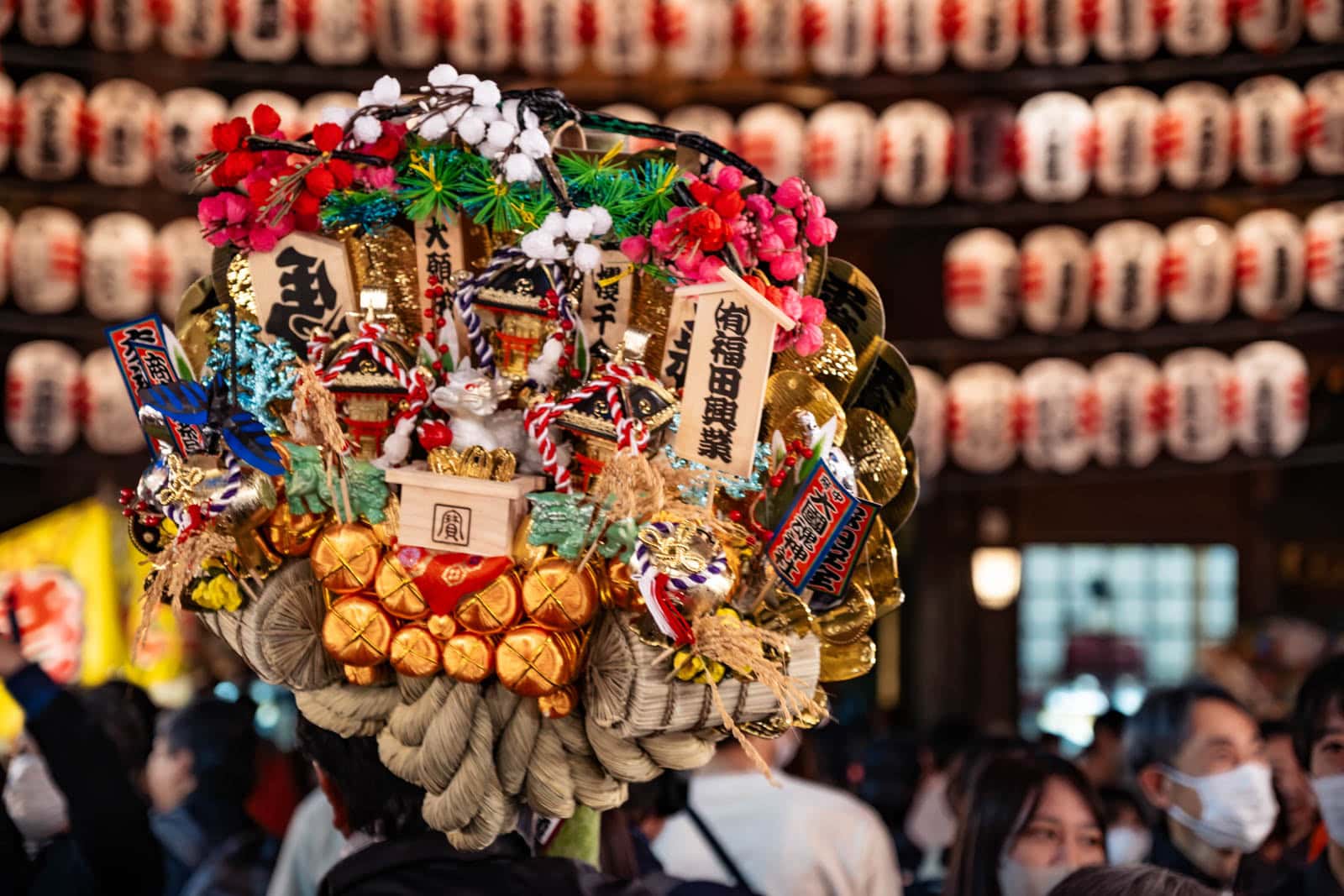
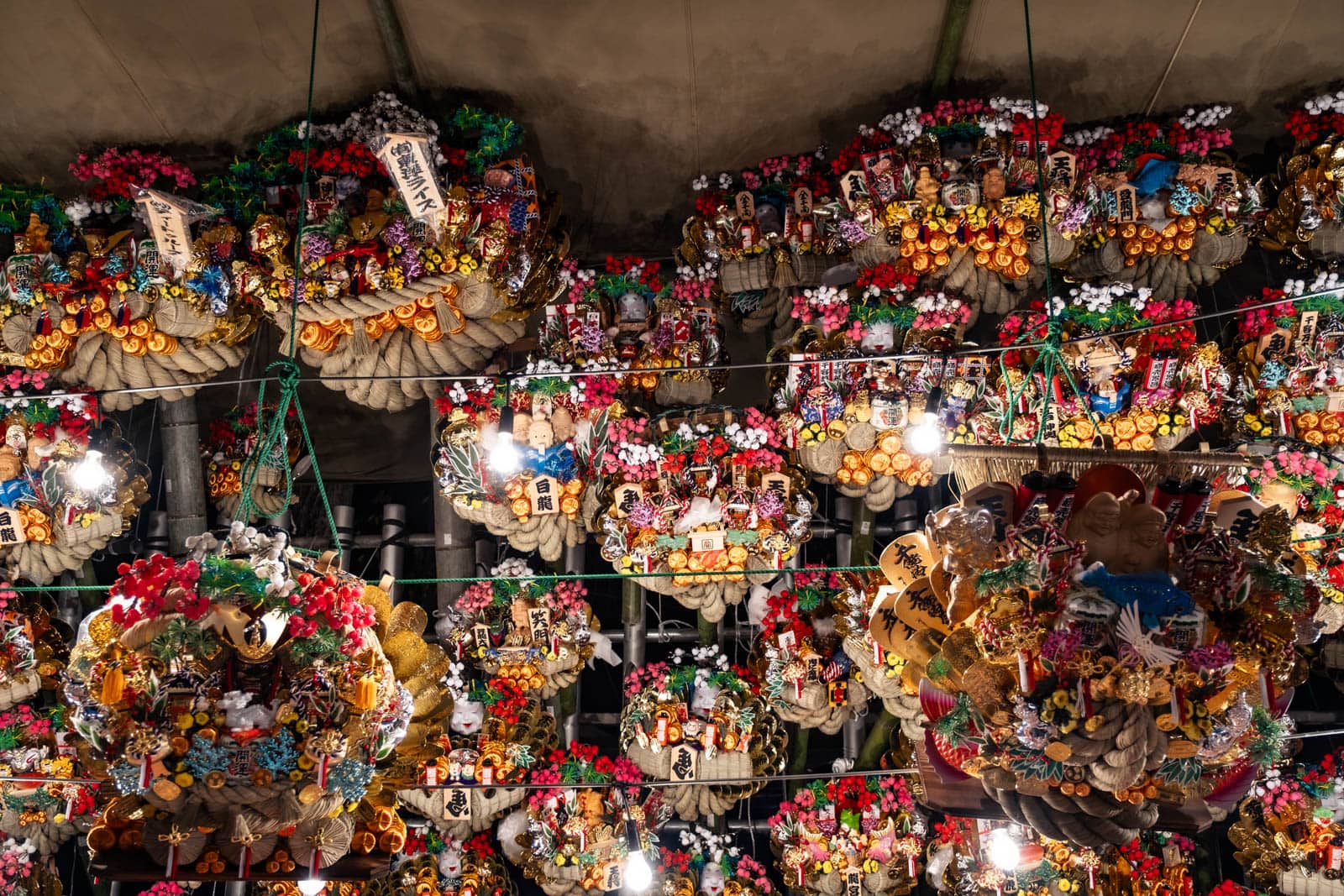
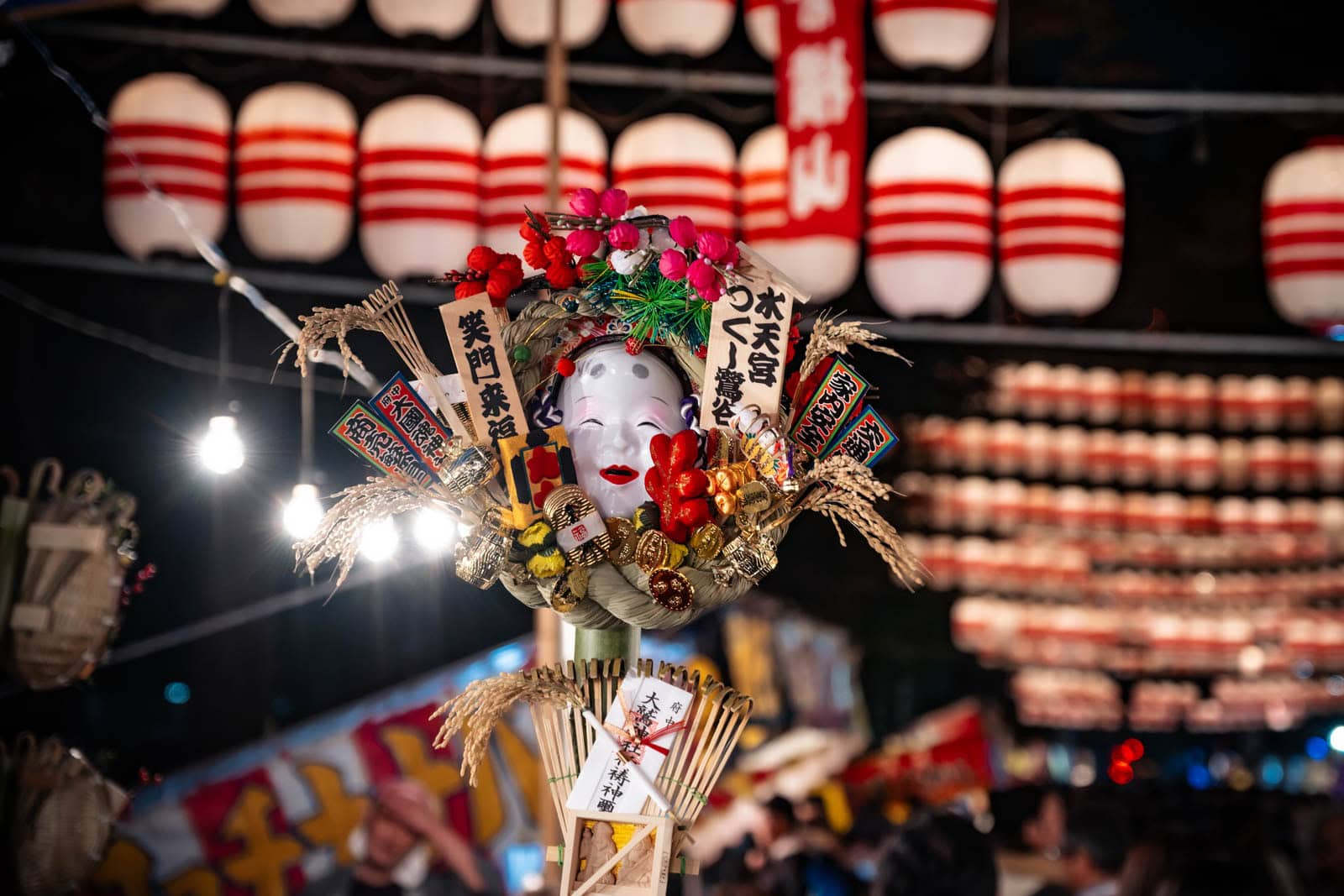
Eventually, merchants joined in to pray for business success for the following year. In the modern era, people go to buy lucky rakes.
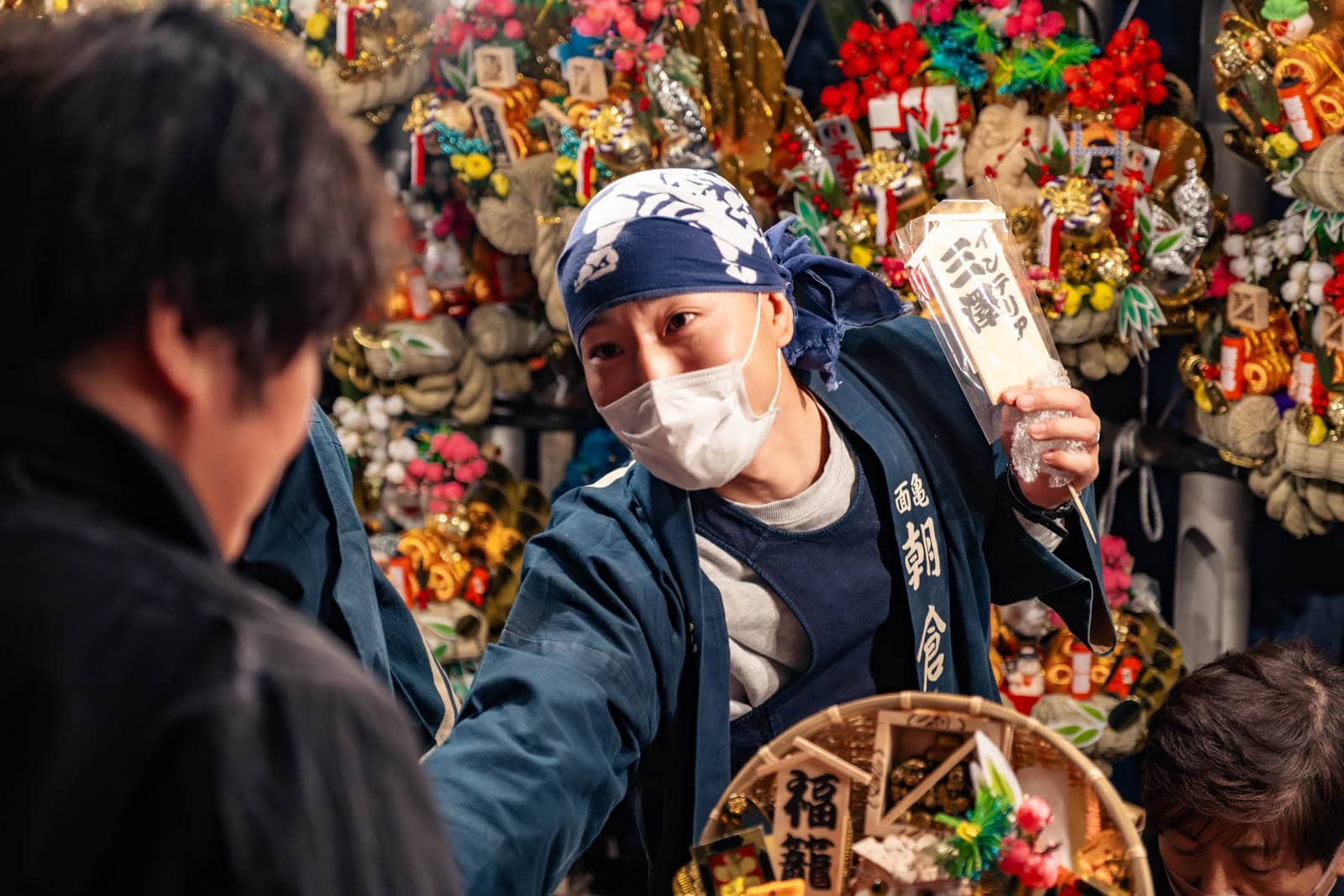
So, in that respect, it’s not unique. Okunitama Shrine’s Tori-no-Ichi festival is like many others. Yep, it is celebrated all over Japan. I’ve been to another at Hanazono Shrine in Shinjuku.
Another famous one is in Asakusa. Along with those two, Okunitama’s is considered one of the three most important Tori-no-Ichi festivals in the Kanto region.
Why Okunitama Shrine is better for photographers
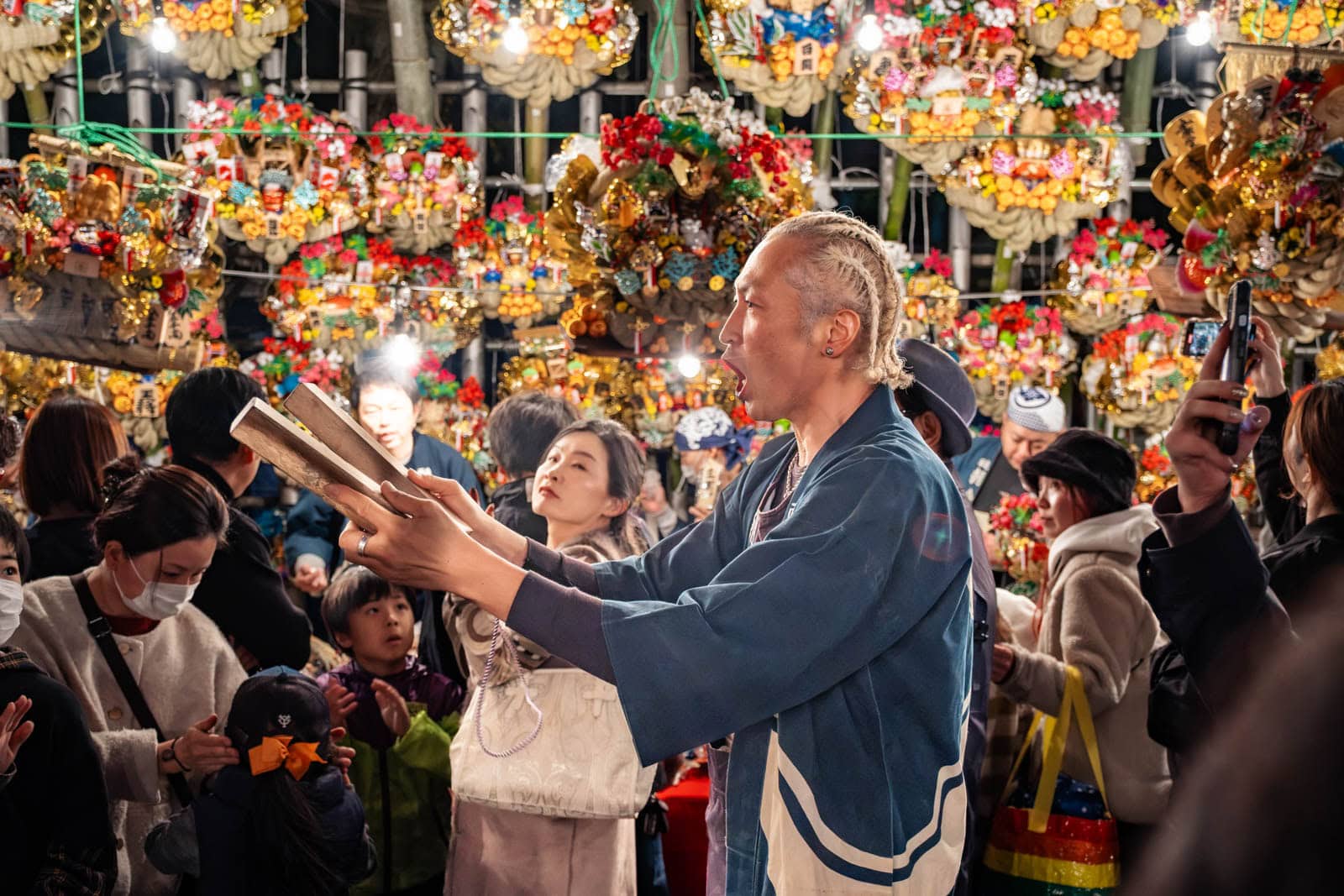
While Okunitama’s traditions are the same as others, there is a difference. This one isn’t as crowded as others. If you go there to buy a kumade, it’ll be a far more relaxing experience. Photography will be easier, too.
Unexpected festival highlights
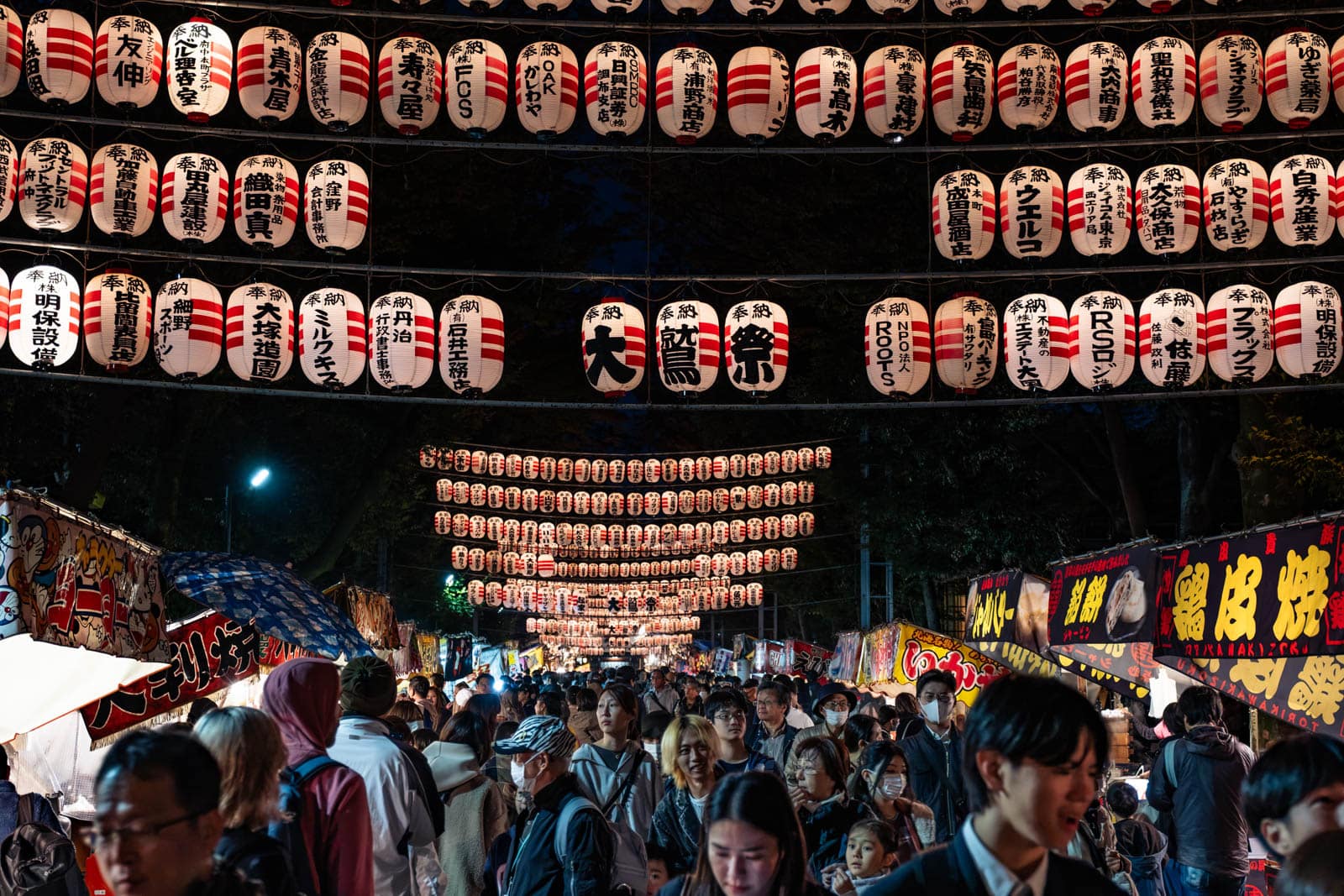
Even entering the shrine was cool. If you don’t know, Okunitama has a long path from the entrance to the main worship hall. Sets of lanterns hung over it every few meters. And on either side were plenty of food stalls. You can’t get more Japanese festival-ish than that!
On the night, I saw:
- Sales of the kumade and the staff performances when sales made
- Chrysanthemums
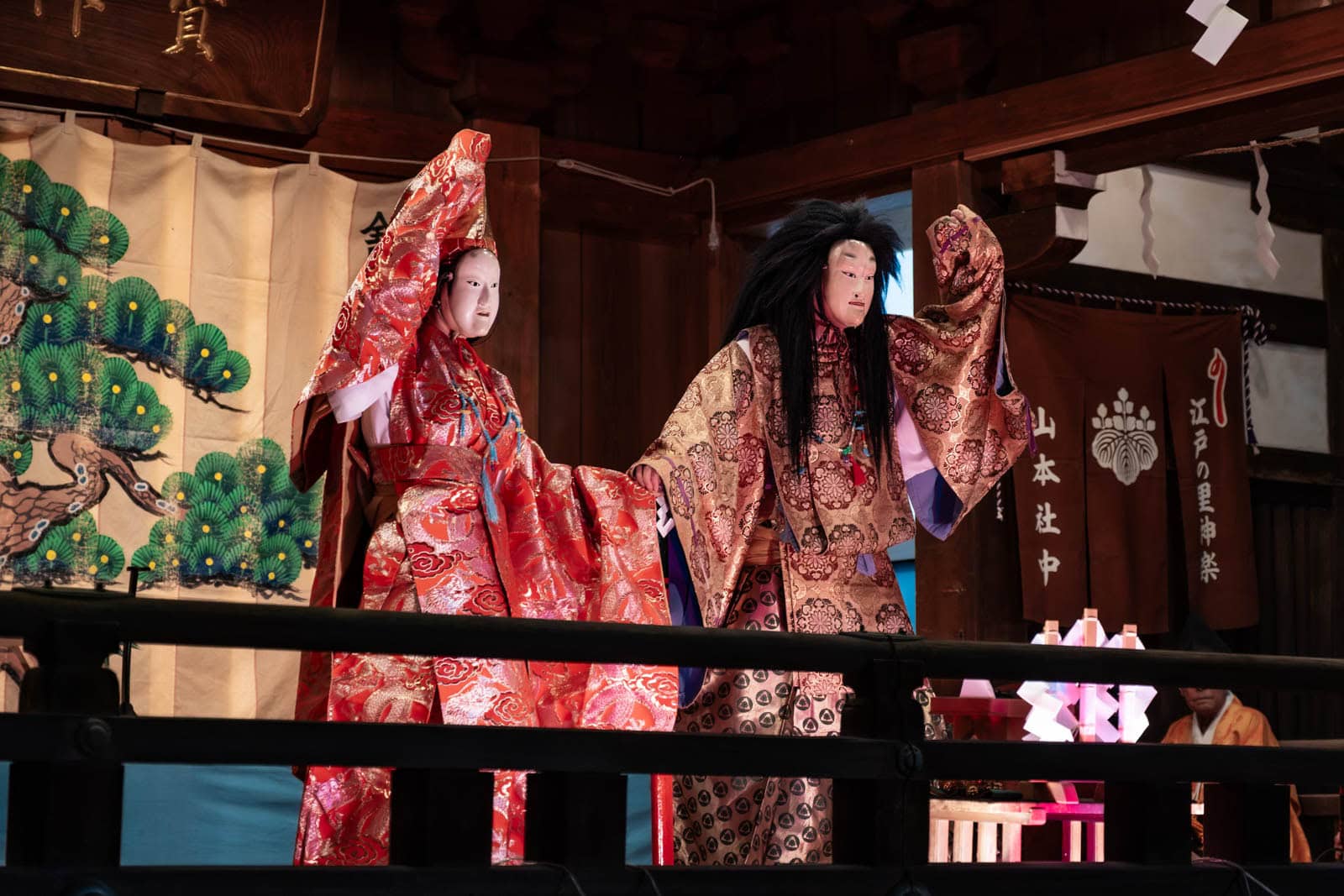
- Noh performance
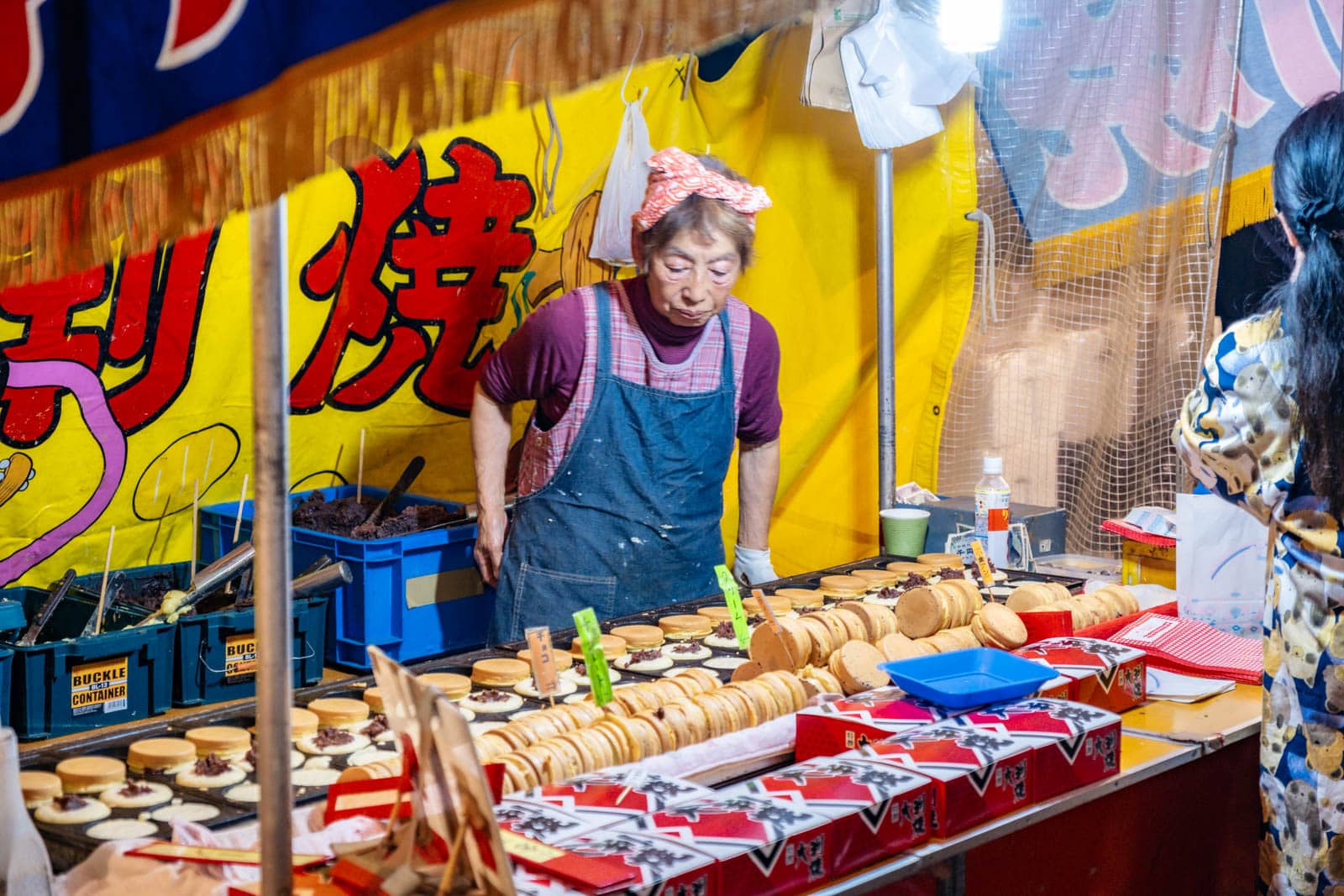
- Lots of festival food
Have you ever seen chrysanthemums at a Tori-no-Ichi event? Does any other shrine do that? Let me know if there is.
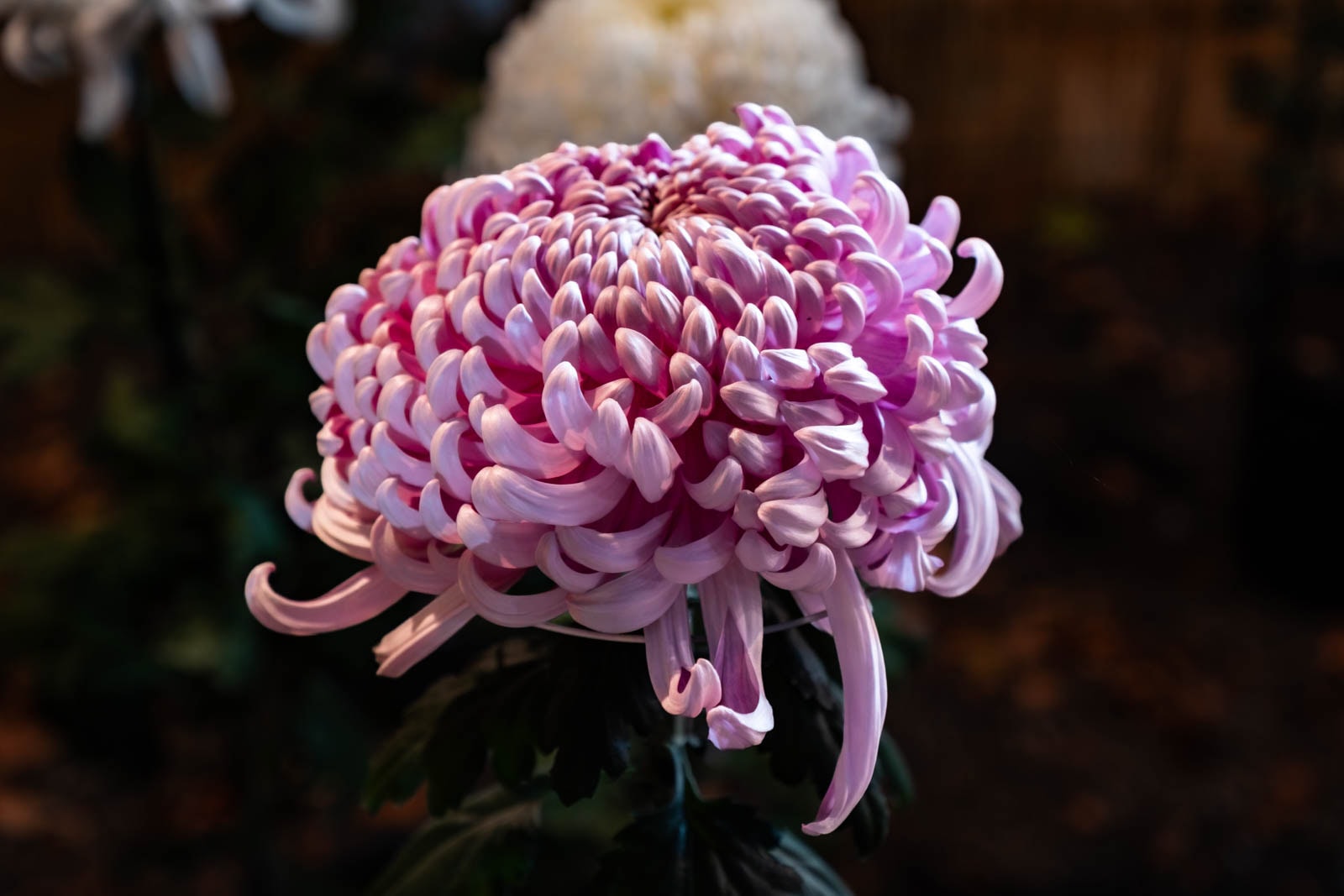
Unfortunately, the flowers had no direct light on them. They needed high ISO and post-processing. That was a pity.
While I was walking through the crowd, I was stopped by the haunting sound of a flute. To my surprise, a Noh performance was underway at the Kagura-Den (shrine building used for sacred dances). The ornate costumes and deliberate, ancient movements under the dim festival lights were completely unexpected and magical.
There was food. Food stalls were everywhere. You could get everything from taiyaki to fairy floss and takoyaki. I had a couple of sausages and they were good. But it was a festival, so prices weren’t cheap.
Photography tips for Okunitama’s Tori-no-Ichi
Photography was difficult at the festival. This time I shot with the 16-55 mm f/2.8. It’s not quite as good for night photography as the Fujifilm 35 mm f/2.0 prime lens, which I used at Hanazono on a previous visit.
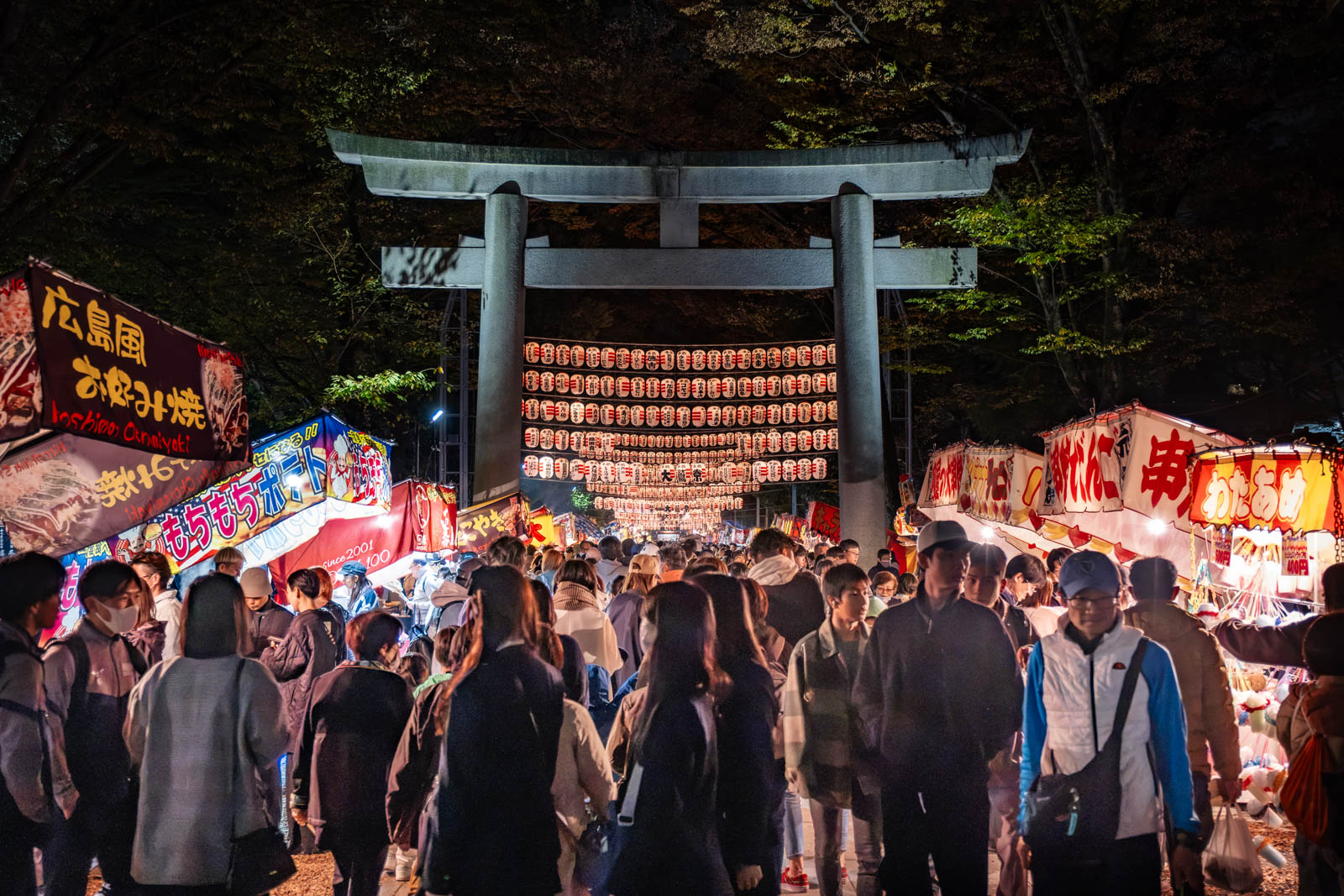
In hindsight, I should have brought that prime lens. Its faster aperture would have been a huge advantage in the low light. It was a regrettable choice, but a good lesson. For night festivals, the fastest lens is almost always your best bet.
Visitor’s guide
- When: Held on “Days of the Rooster” so consult the official Okunitama Shrine website for full details.
- Where: Okunitama Shrine, Fuchu, Tokyo.
- What to expect: Food stalls, lucky rakes, and maybe even a surprise performance.
Is this Tori-no-Ichi Festival worth visiting?
Okunitama Shrine’s Tori-no-Ichi festival is fun. It gets the nod from me over the one at Hanazono. As a photographer, crowds can be good, but I also enjoy taking my photos at a leisurely pace.
The chrysanthemums and the Noh performance were a real bonus. A little more light on them would have been nice, though. Still, they were a pleasure to see.
What’s the most surprising thing you’ve ever stumbled upon at a festival? Share your experience in the comments section. To see more Fuchu festivals, look at [Kurayami Matsuri 2026].
My camera gear for the festival
- Camera body: Fujifilm X-T3
- Lens: Fujifilm XF 16-55 mm f/2.8
Date of Photos: 11 November, 2023