San-no-Tori 2020
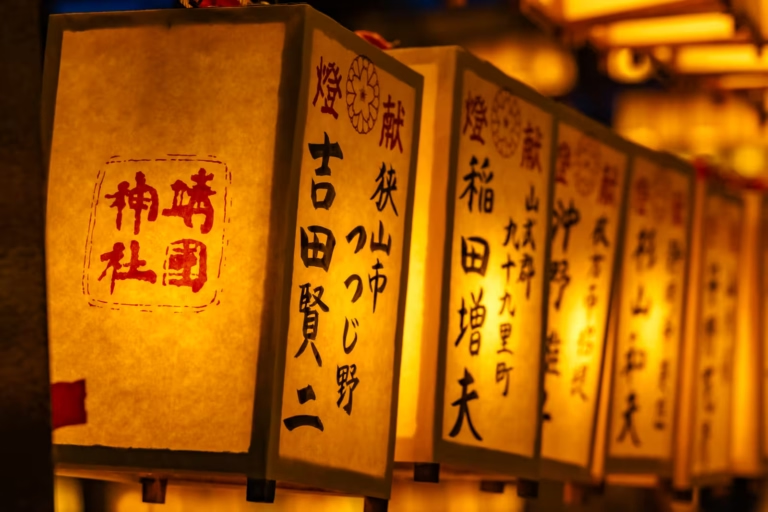
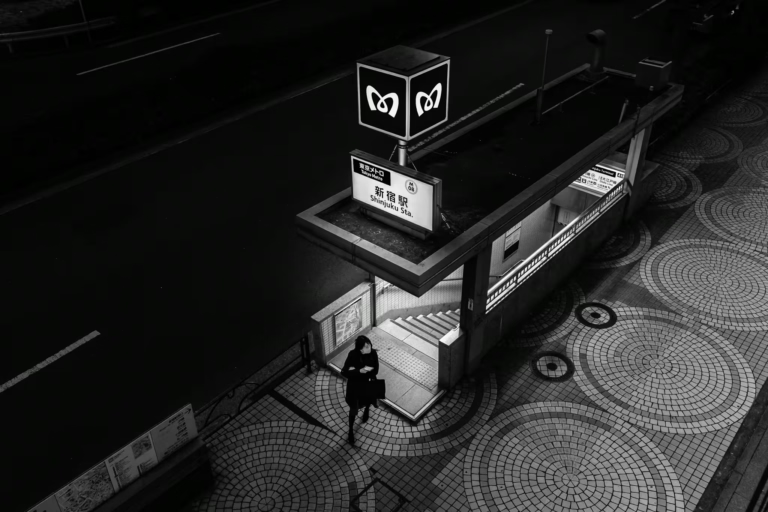
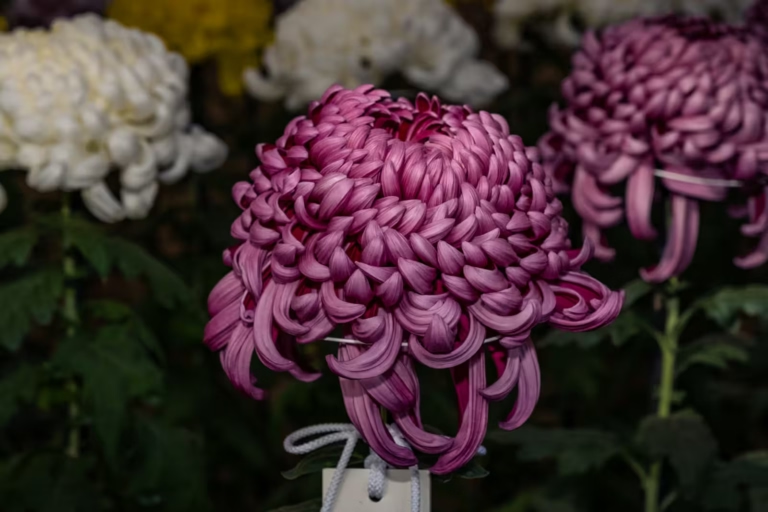
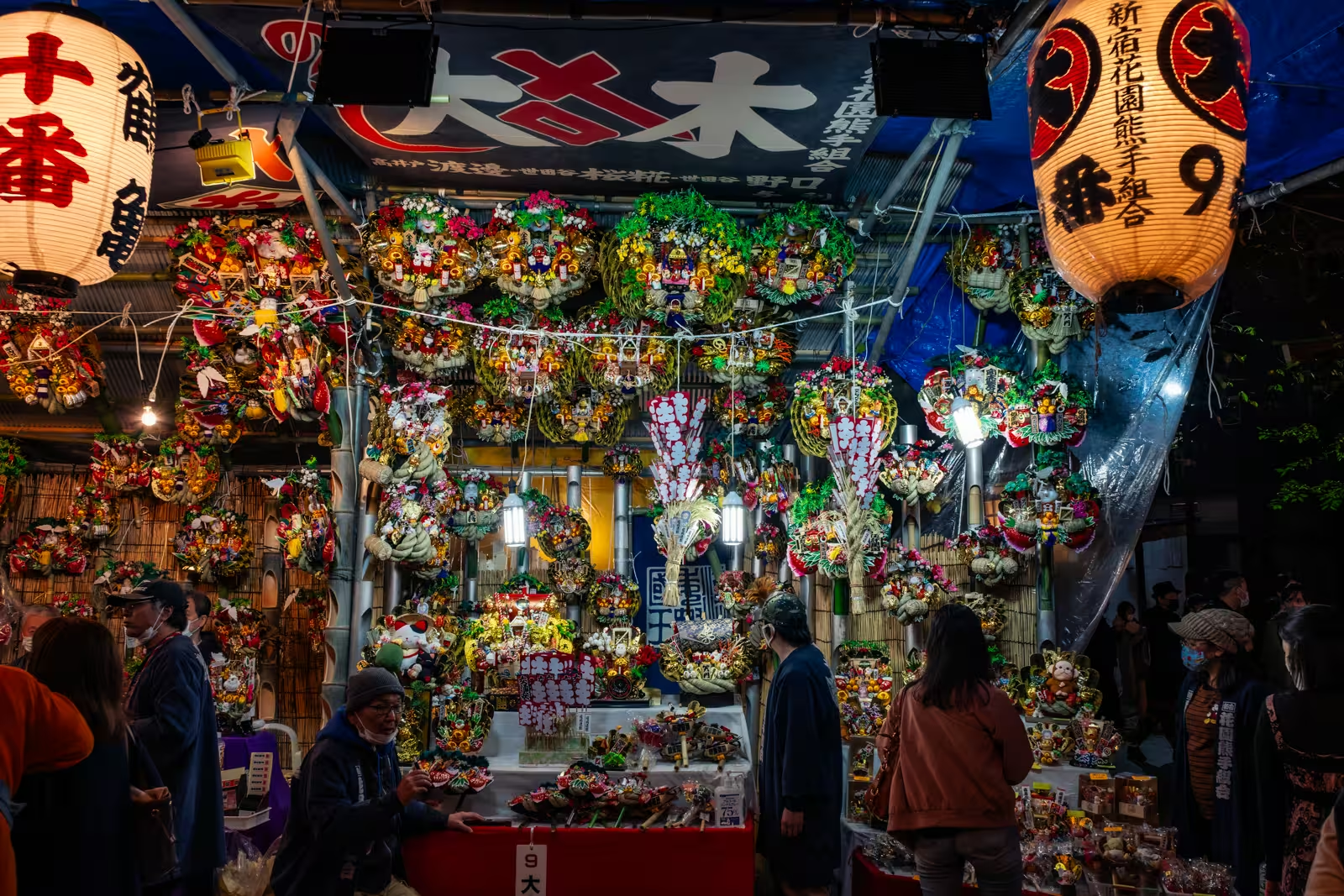
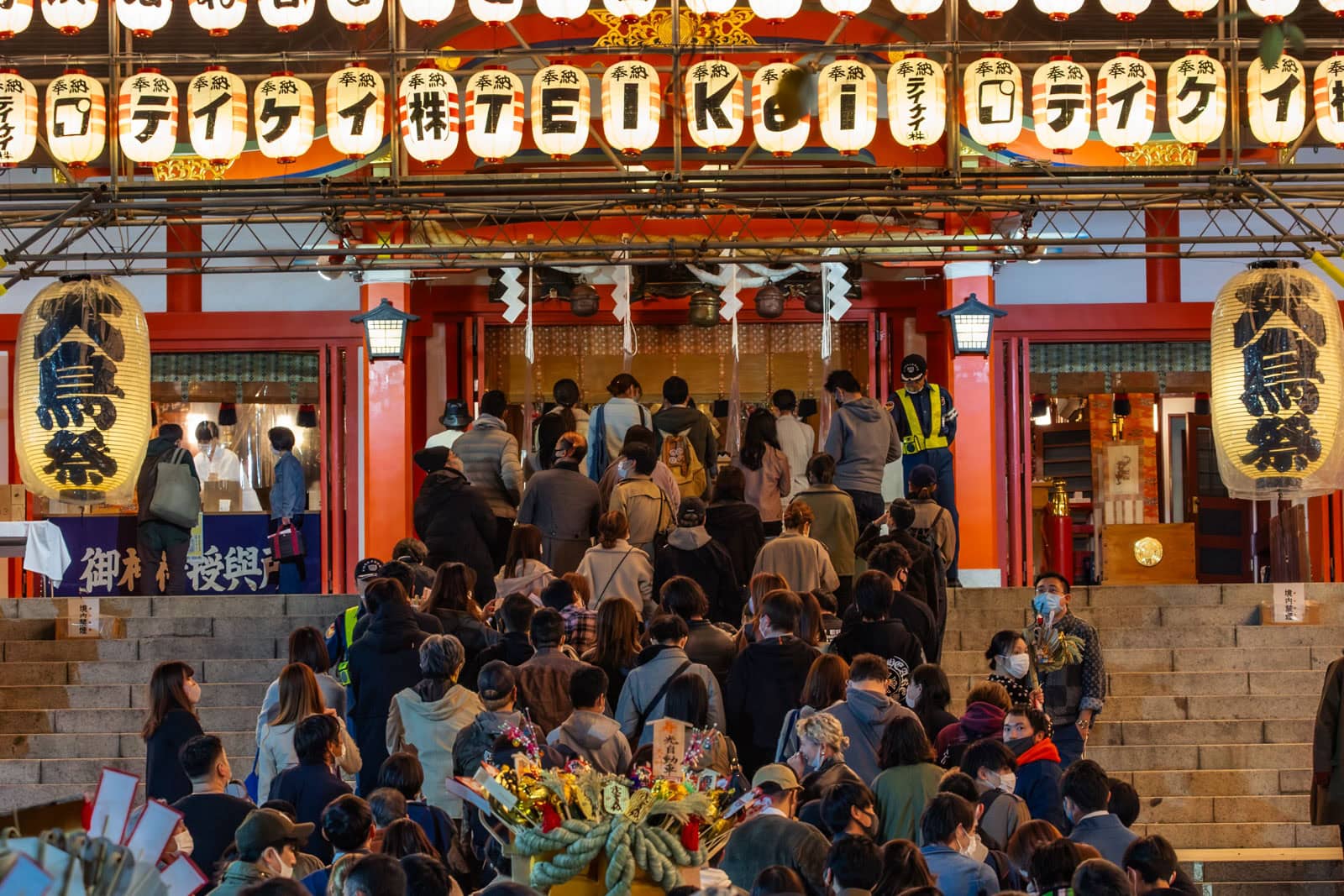
In November 2020, I visited Shinjuku’s Hanazono Shrine for my first Tori-no-Ichi, a colorful, 24-hour festival beloved by street photographers. The next time I visited it, for the photos in this article, was for its third and final night, “Rooster Day” or San-no-Tori. It was a great night festival.
About the Tori-no-Ichi Festival
What is Tori-no-Ichi?
Tori-no-Ichi is a traditional open-air fair held in November on the days of the rooster (tori) according to the Chinese zodiac. It dates from the Edo-period and features decorative bamboo rakes called kumade to pray for business prosperity, good fortune, and wealth.
Other places that celebrate the festival are Asakusa’s Ōtori Shrine (not far from Sensoji) and Shinjuku’s Hanazono Shrine (which is where I took the photos for this article).
When & where is it held?
Tori-no-Ichi festivals take place in November on the “days of the rooster” (as determined by the Chinese zodiac). The exact dates vary each year. While they are held at various shrines and temples, my visit was to the historical Hanazono Shrine in Shinjuku.
San-no-Tori is the third night of Tori-no-Ichi. But it only happens when the Chinese zodiac’s 12-day cycle places three Rooster days within the month of November, which doesn’t happen every year. But when it does, the last night is a grand finale to pray for business prosperity and good fortune.
My 2020 festival experience
From what I could tell, the core experience of the three festivals felt quite similar, though each is held on a different “day of the rooster” in November. The main purpose for the crowds of people is to secure good fortune for the coming year. This begins with waiting in long lines to pray at the shrine.
The tradition of the kumade rake
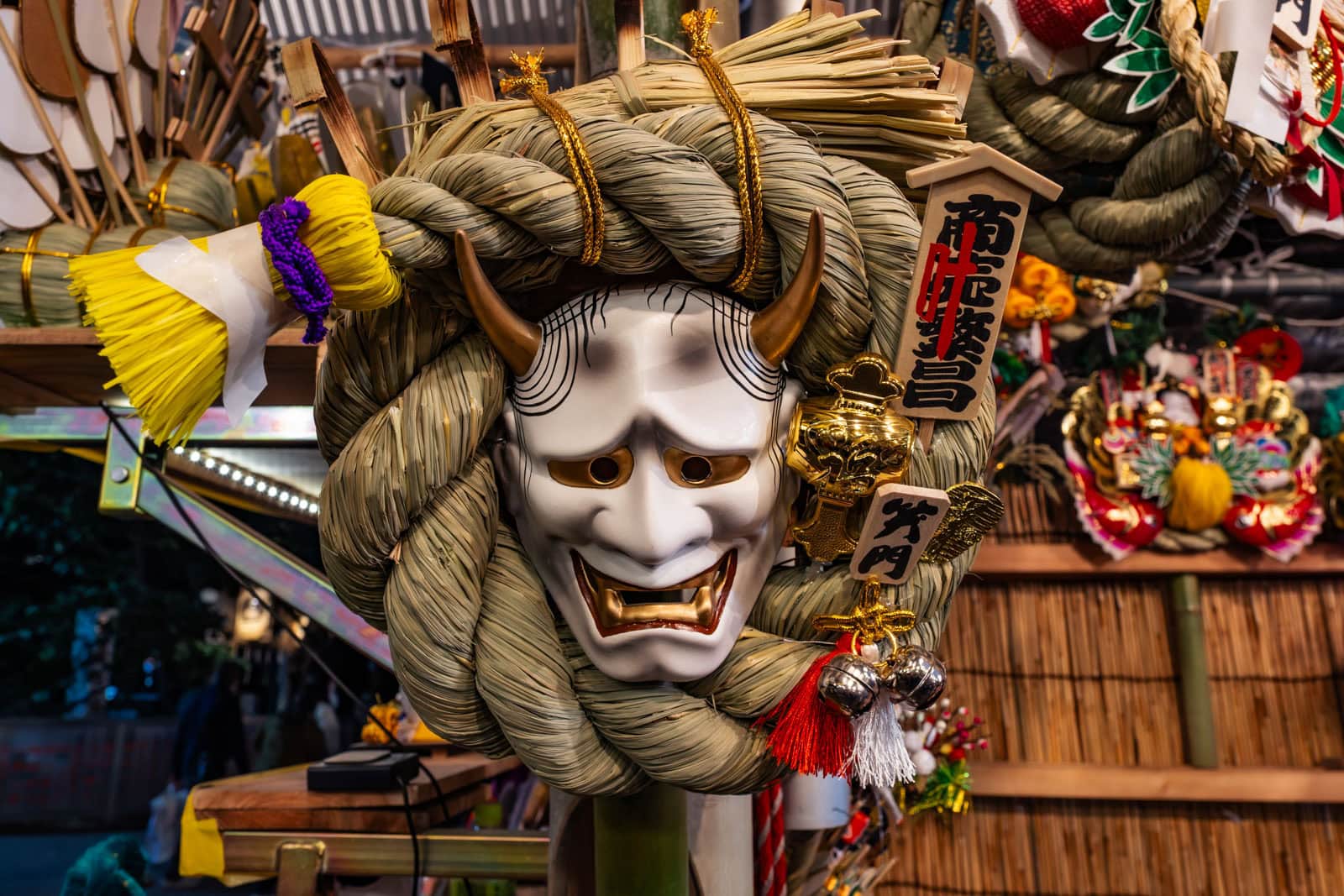
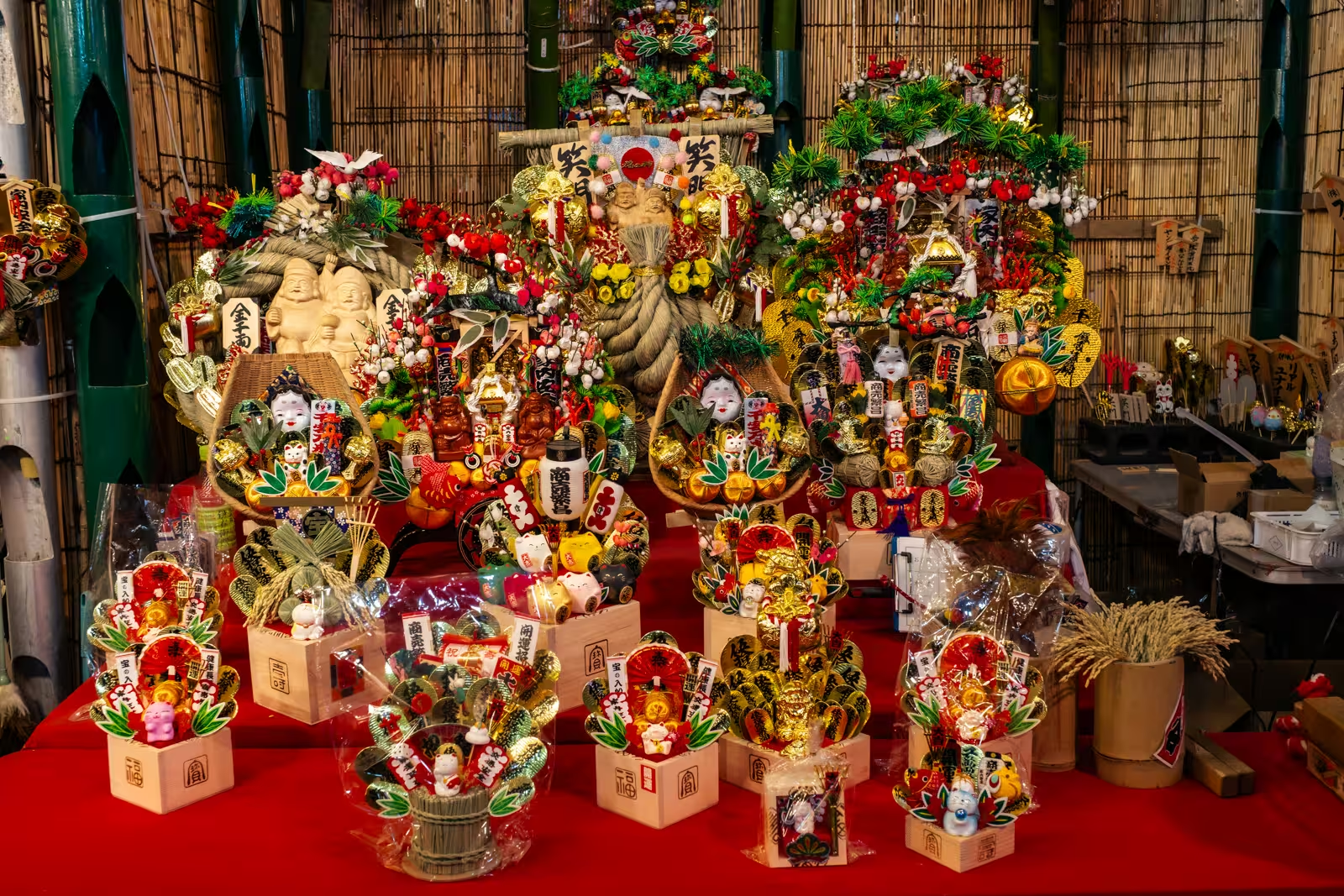
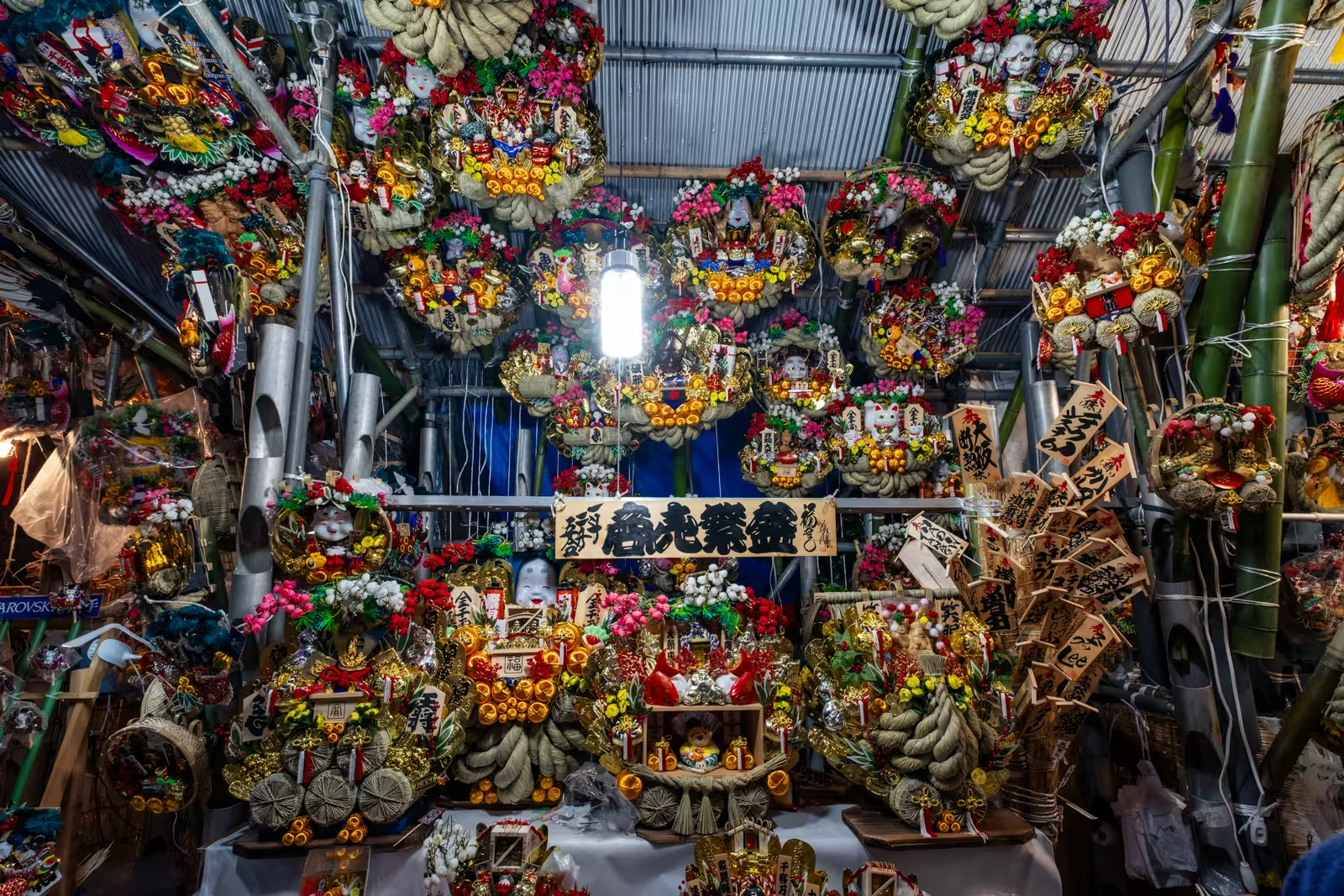
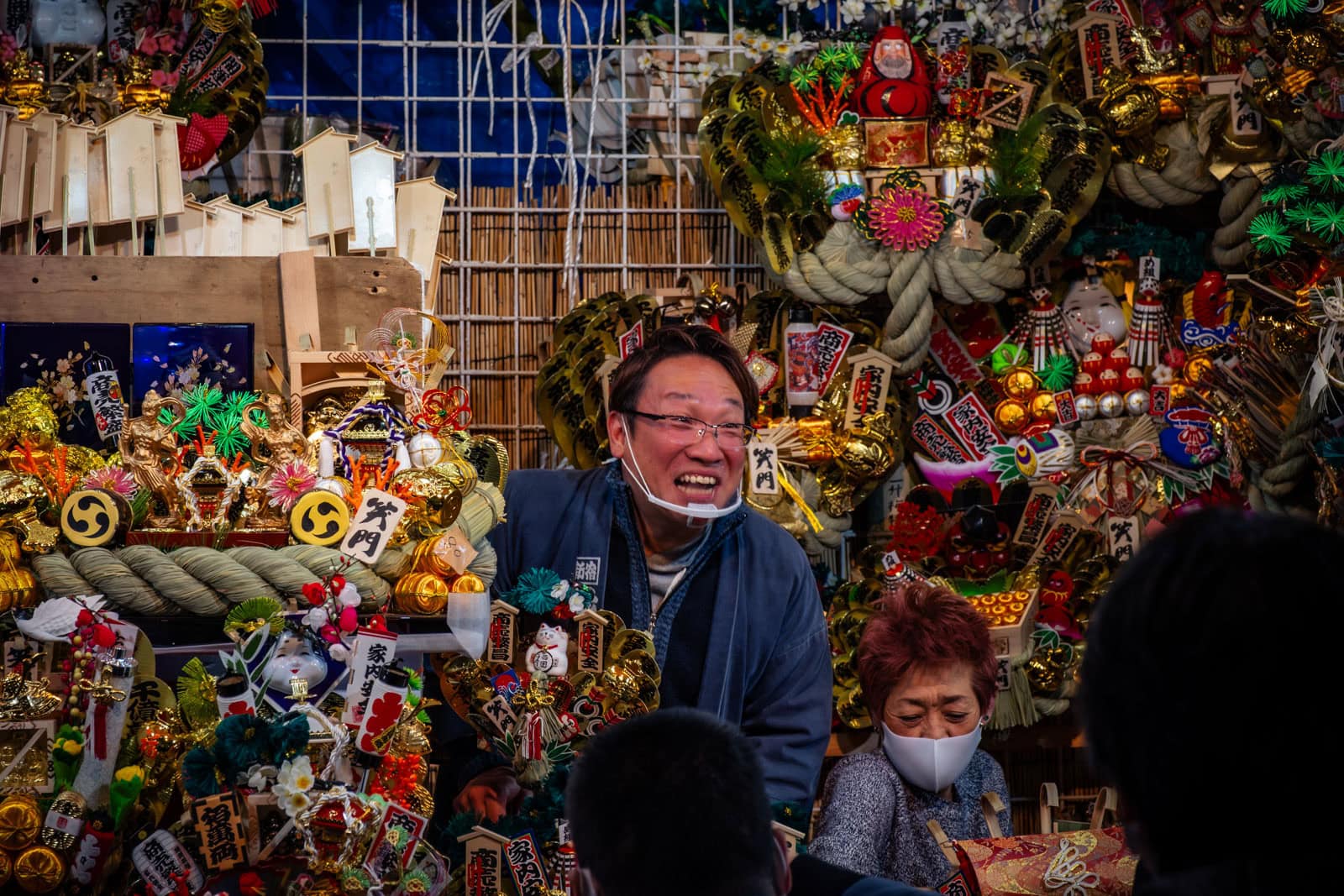
After prayers, the main event is acquiring a kumade, an ornate, brightly decorated good-luck rake. The tradition of using a rake to “rake in” luck and wealth dates back to the festival’s origins as a farmer’s market and harvest celebration. Part of the fun is the friendly haggling between customers and vendors, a lively and traditional part of the exchange.
A photographer’s view of the stalls
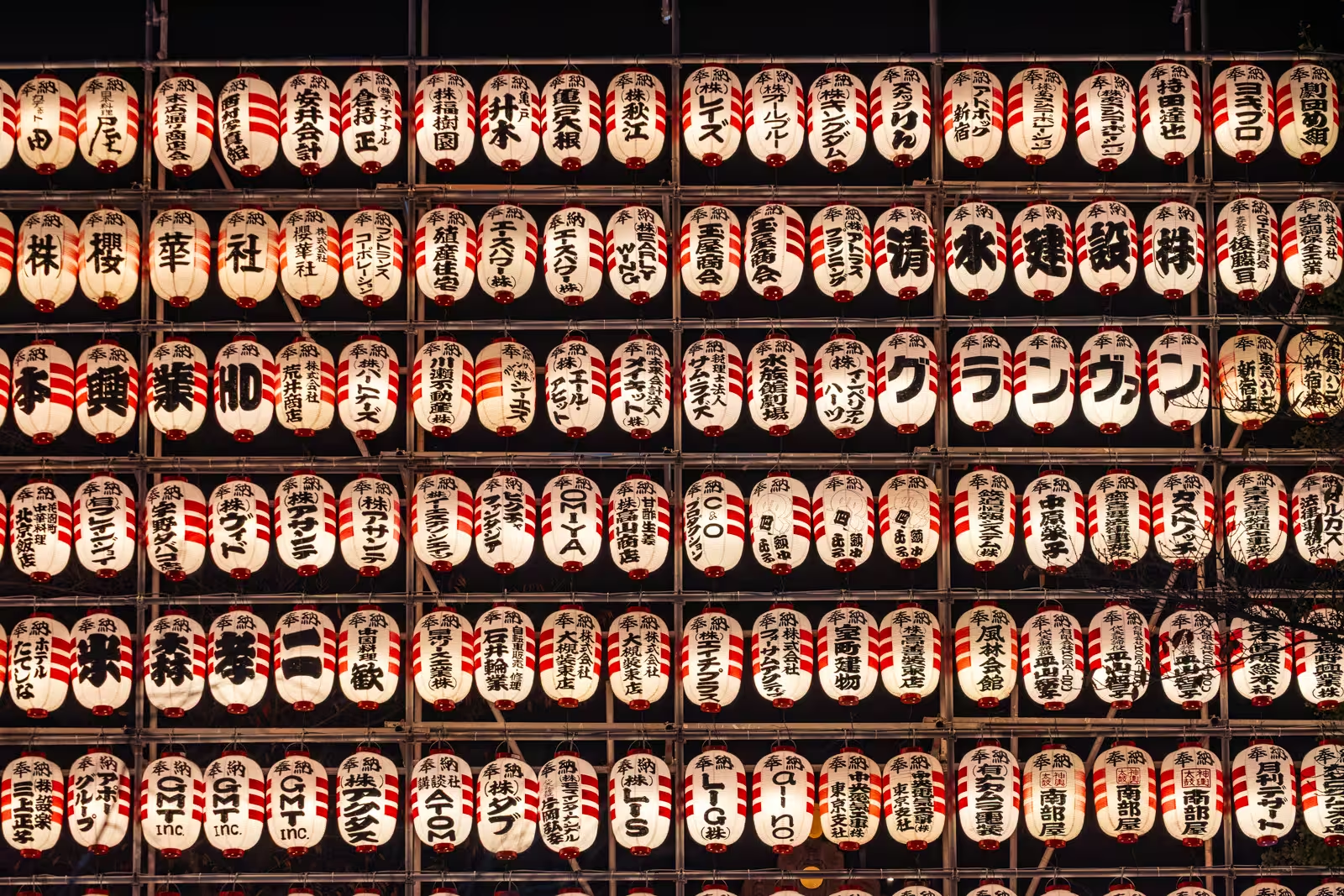
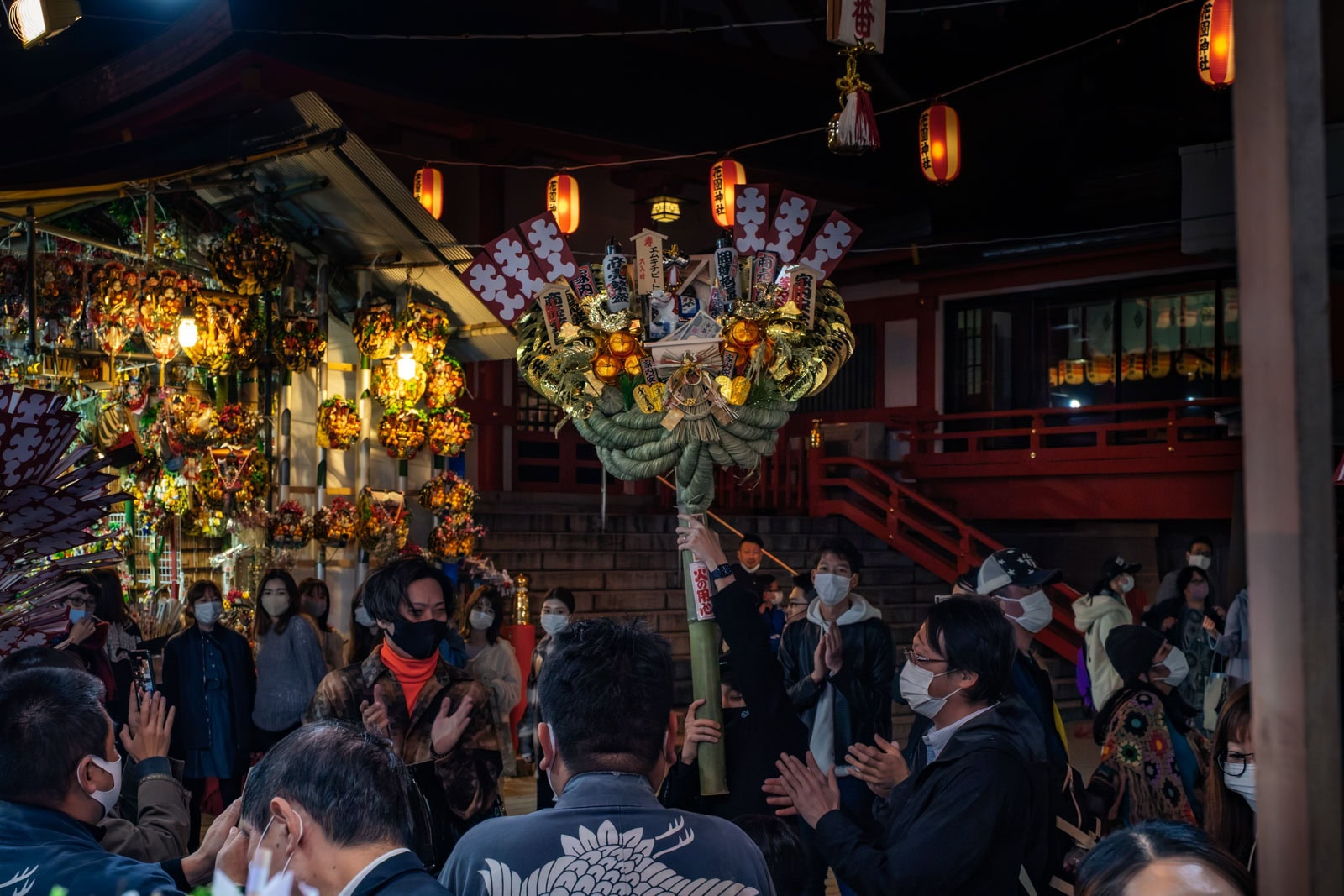
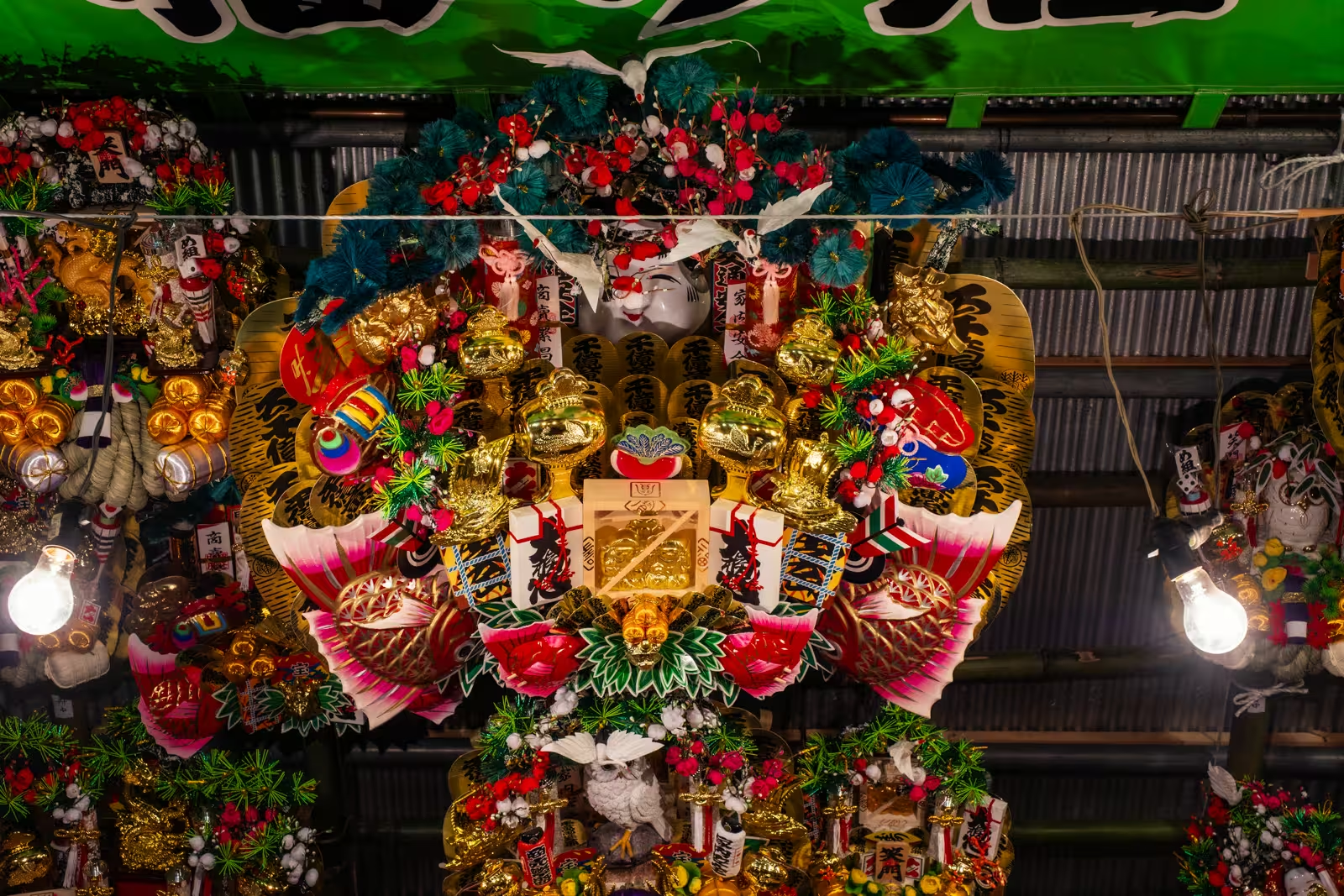
The kumade stalls themselves are a visual feast, glowing under the light of countless paper lanterns. Each rake is a work of art, adorned with symbols of fortune like the Seven Lucky Gods, golden coins, and miniature sake barrels, creating a dazzling, glitzy spectacle. For a photographer, this intersection of culture, community, and brilliant color is a compelling scene to capture.
San-no-Tori during the pandemic
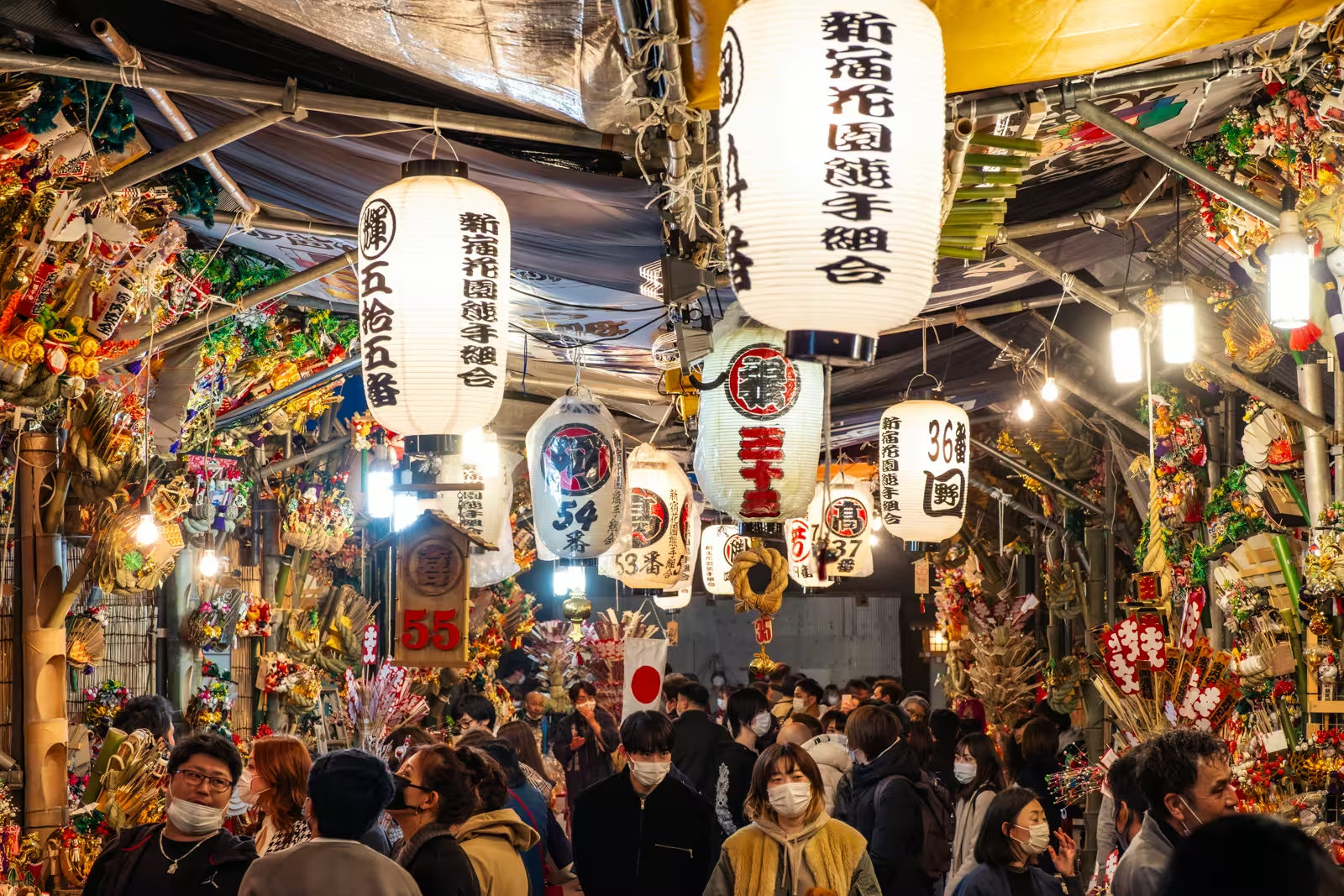
One thing firmly dated this experience to 2020, the noticeable absence of food stalls. The aroma of festival food is usually half the fun, but coronavirus restrictions meant this pleasure was sadly missing.
What struck me, however, was the crowd was immense even without the food vendors. Seeing so many people gathered, even during a pandemic, truly underscored the cultural importance of this annual ritual. For many people, the need to secure good fortune or to participate in one’s own culture was so deeply ingrained. Some traditions cannot be broken.
Photography notes
Shooting in low light
Capturing the vibrant, low-light atmosphere was a classic night photography challenge, requiring a high ISO and a wide-open aperture to freeze the lively moments.
Photography gear used for this shoot
- Camera body: Fujifilm X-T3
- Lens: Fujifilm XF 16-55mm F2.8 R LM WR
While my first San-no-Torii was unforgettable, I hope to experience the festival at its most famous location, Ohtori Shrine in Asakusa, one day. Have you ever been? I’d love to hear your thoughts and answer any questions in the comments. To learn more about Hanazono Shrine, look at the official website.
Date of Photos: 13 November 2020