Ginko Ogino and Her Grave
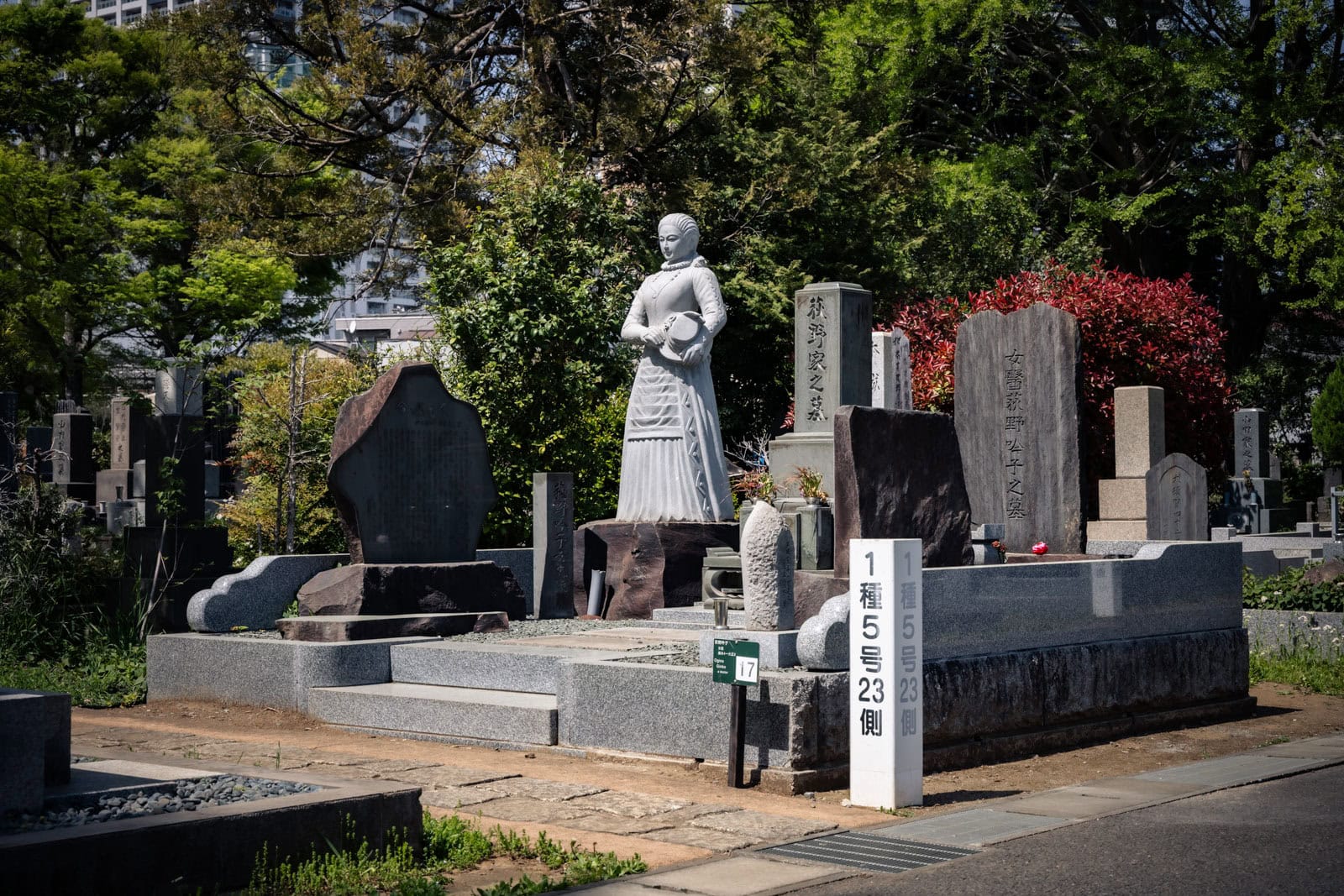
Ginko Ogino (荻野吟子), a name that stands as one of Japan’s foremost medical and feminist pioneers. While her name may not be widely known, her life was a testament to the trials and tribulations she overcame to pave the way for women in medicine.
This is the story of a woman who defied societal norms and left an indelible mark on Japanese history, now resting in the serene Zoshigaya Cemetery.
A life forged in adversity
Born on March 3, 1851, in what is now Saitama Prefecture, Ginko Ogino’s early life was hard. At the age of sixteen, she had an arranged marriage that changed her life. Her husband infected her with gonorrhea, a shameful affliction in that era, which led to their divorce.
The painful experience of being treated by male doctors for a “shameful” disease ignited in her a determination to help other women facing similar circumstances. This personal ordeal became the crucible in which her ambition to become a doctor was forged.
Breaking barriers in medicine
In a society where medicine was a field dominated by men, Ginko’s path was fraught with obstacles. After graduating from the Tokyo Women’s Normal School, she faced an uphill battle to even sit for the physician’s examination.
She persevered. In 1885, she made history by becoming the first licensed female physician to practice Western medicine in Japan.
Specializing in obstetrics and gynecology, she opened the Ogino Hospital in Yushima. It provided a safe and understanding space for her female patients. Her pioneering spirit shattered the glass ceiling for women in medicine and inspired future generations.
Her life took another turn in 1890 when she remarried a Protestant clergyman, Yukiyoshi Shikata. In 1894, she moved with him to Hokkaido, where she continued her medical practice.
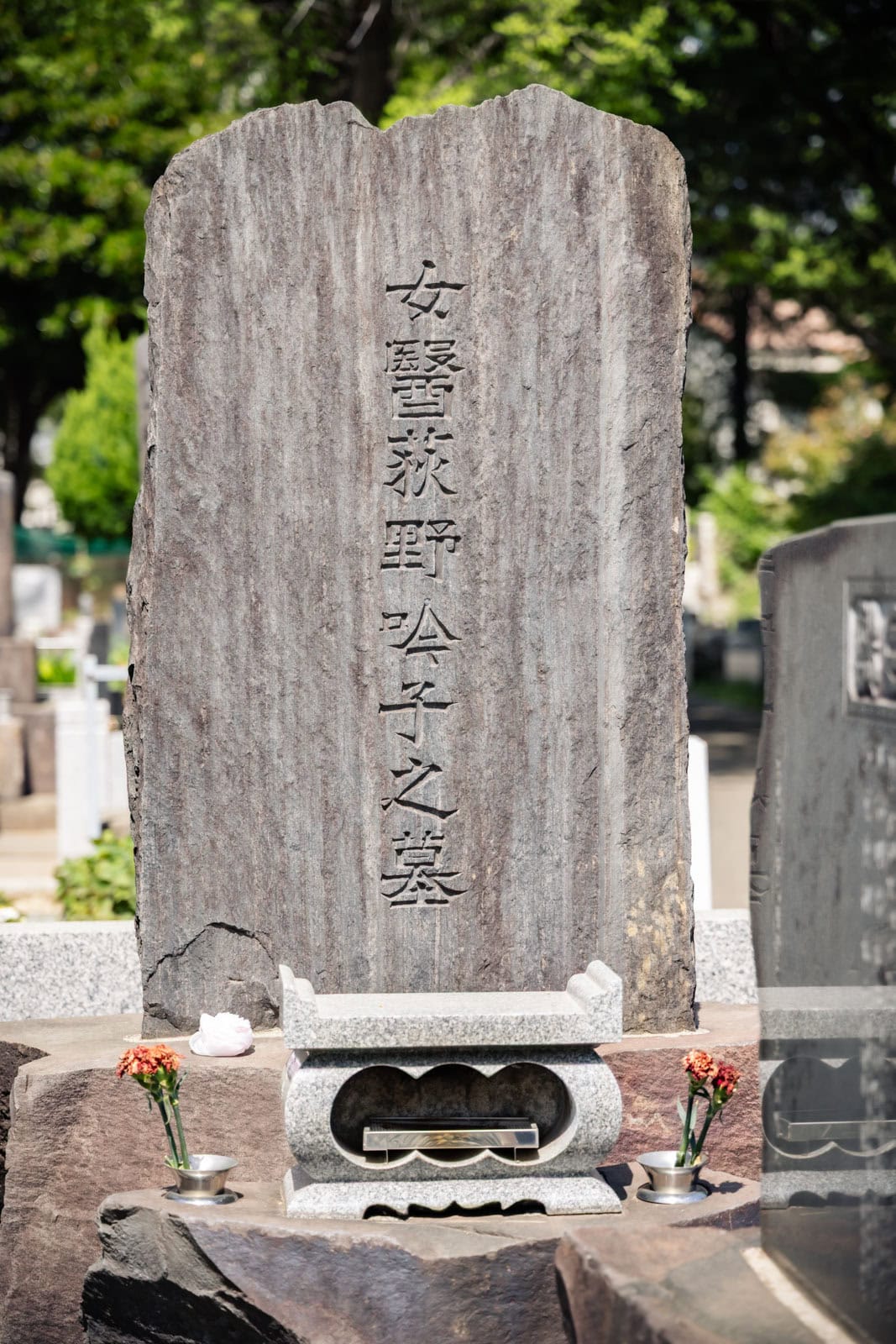
Following her husband’s death, she returned to Tokyo in 1908 to resume charge of her hospital. Ginko Ogino passed away in 1913 and was laid to rest in Zoshigaya Cemetery.
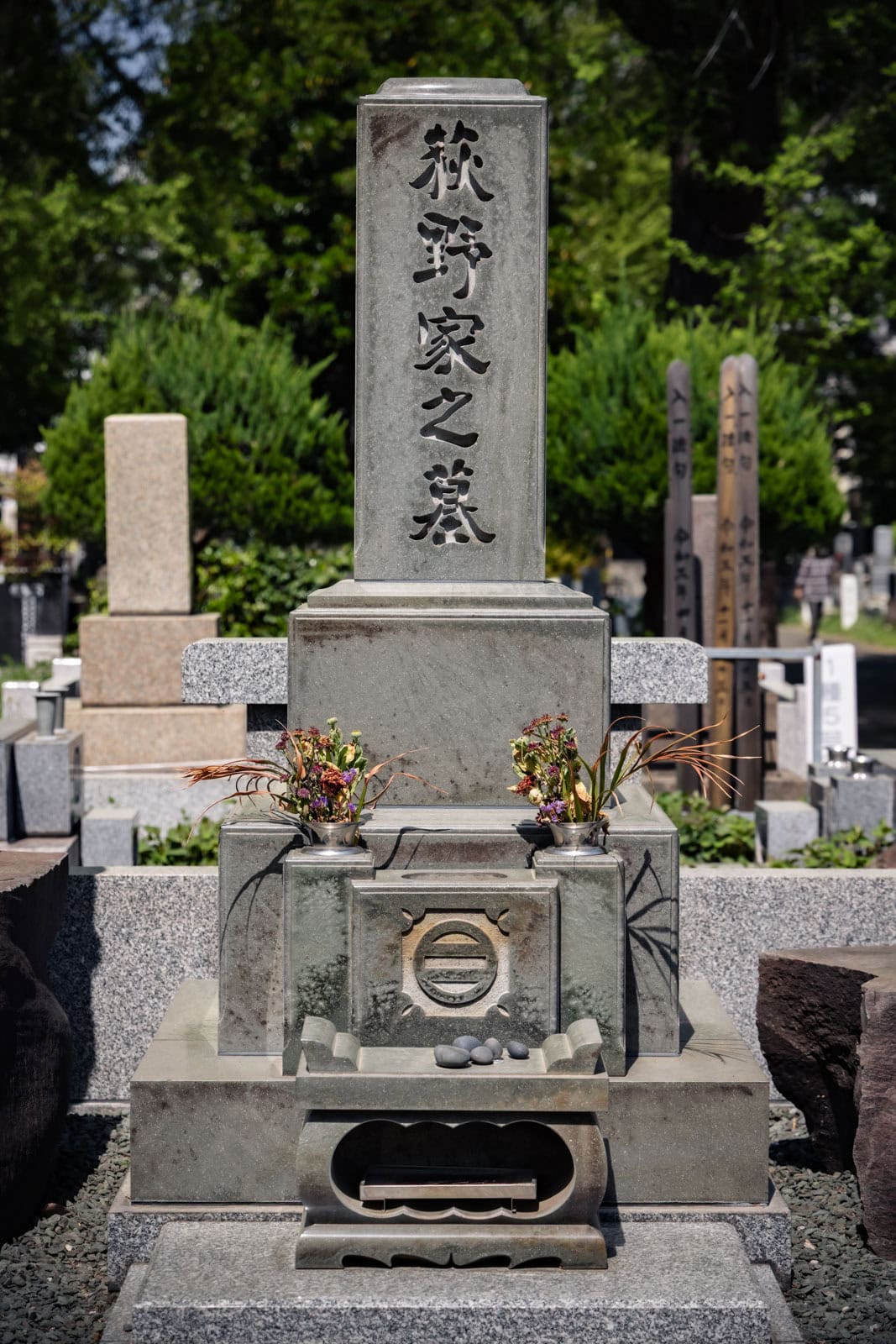
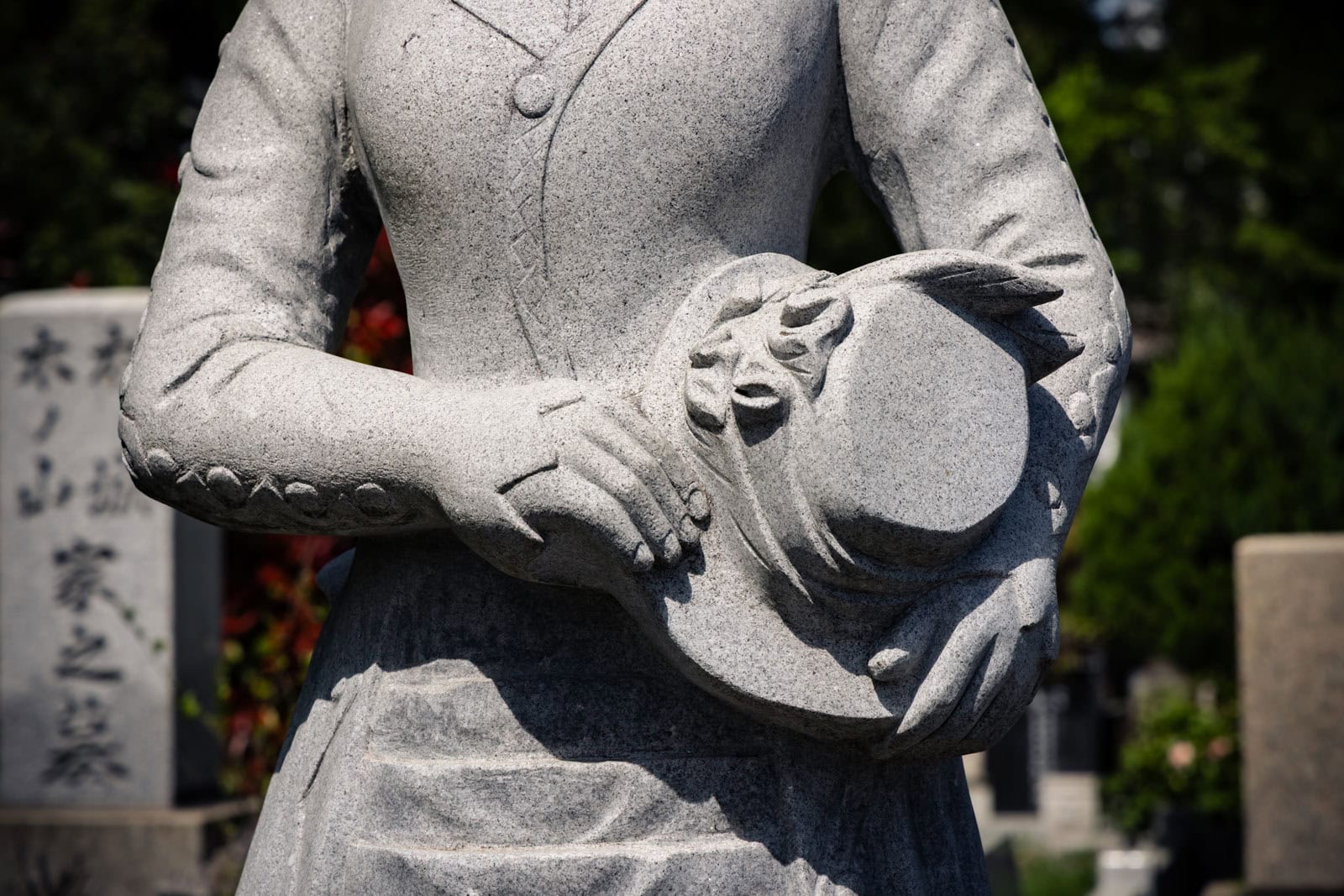
Her grave has a lifelike statue depicting her as young and in Western attire. Often adorned with fresh flowers, it serves as a tribute to a woman who remains a giant of Japanese history.
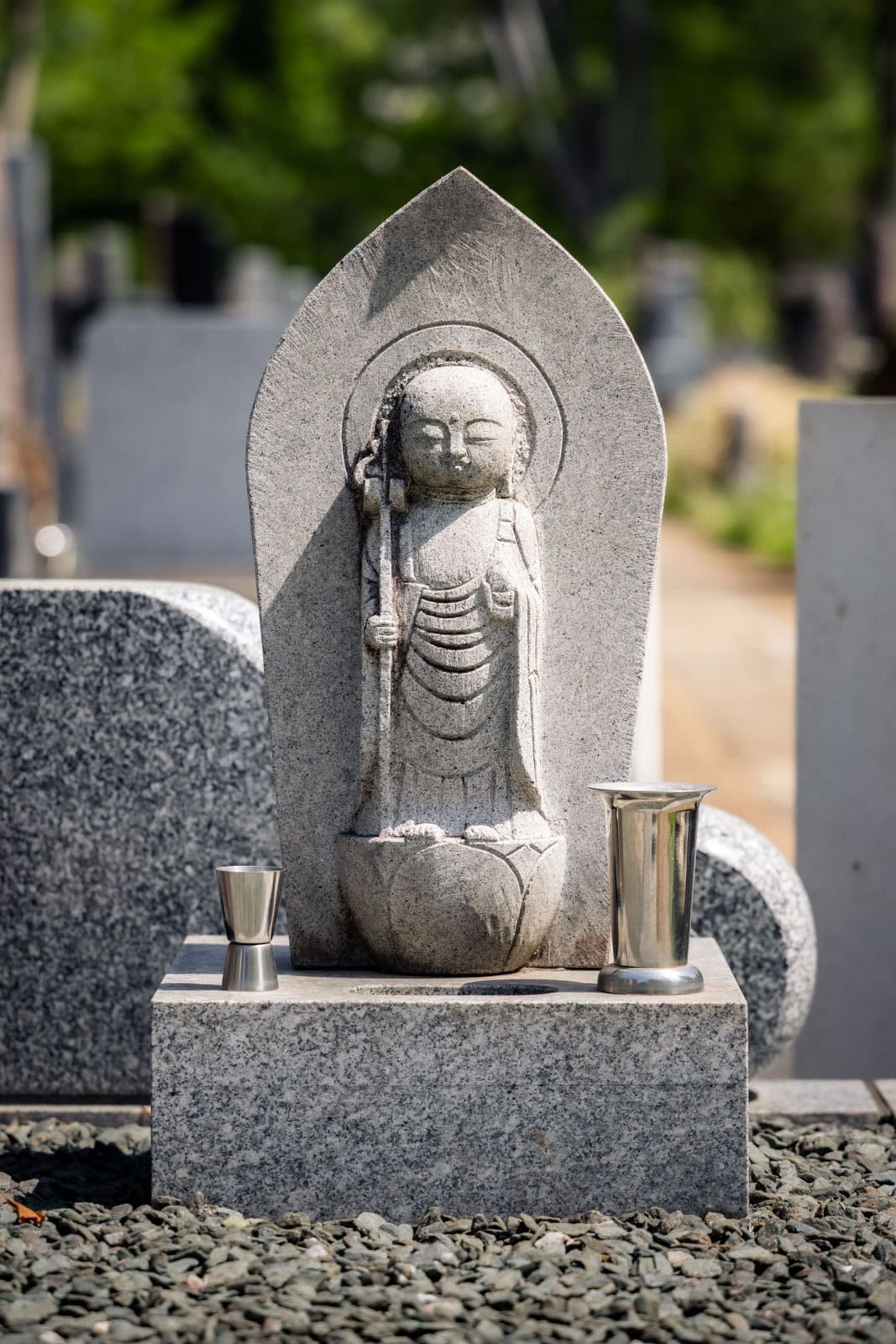
A serene final resting place
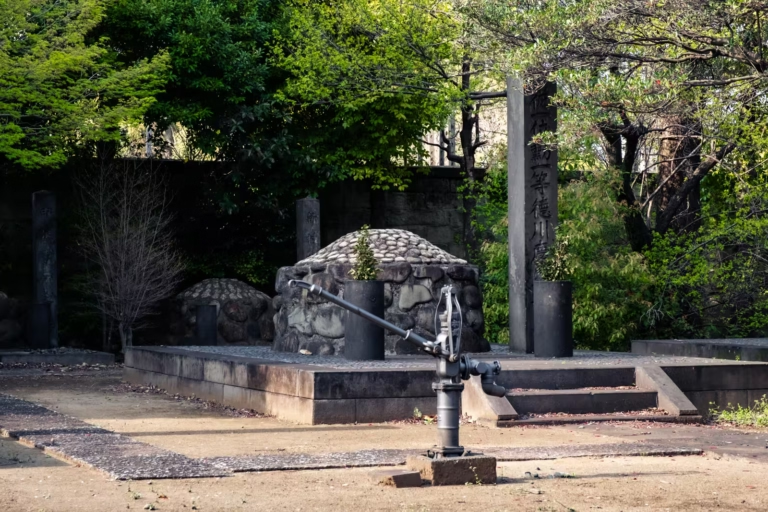
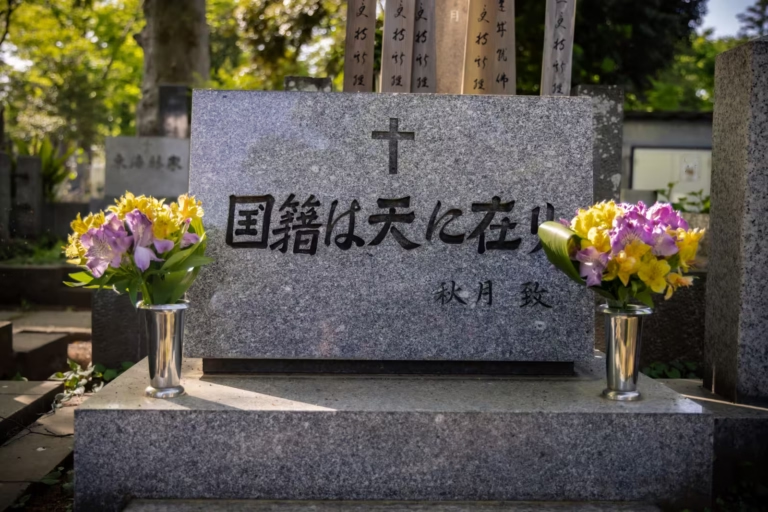
Ginko Ogino’s grave is in the peaceful and verdant Zoshigaya Cemetery, an oasis of tranquility near Ikebukuro. It’s the resting place for many notable figures such as Natsume Soseki and Lafcadio Hearn.
Finding Ginko Ogino’s grave
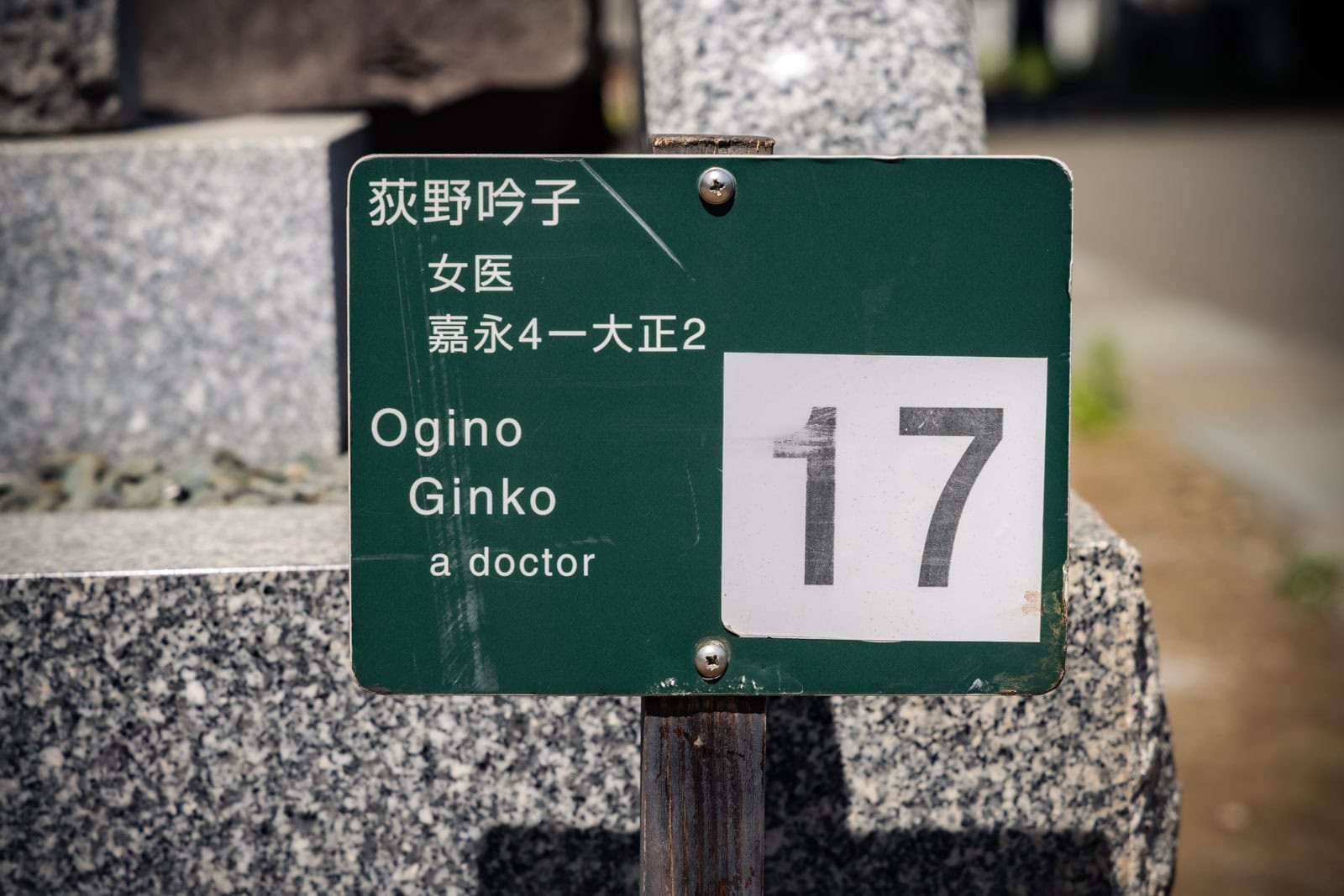
Navigating the maze-like paths of Zoshigaya Cemetery can be a challenge, with its varied grave sizes and abundant trees. While the official plot number for Ginko Ogino’s grave is 1-1-5-23, this can be difficult to use on its own.
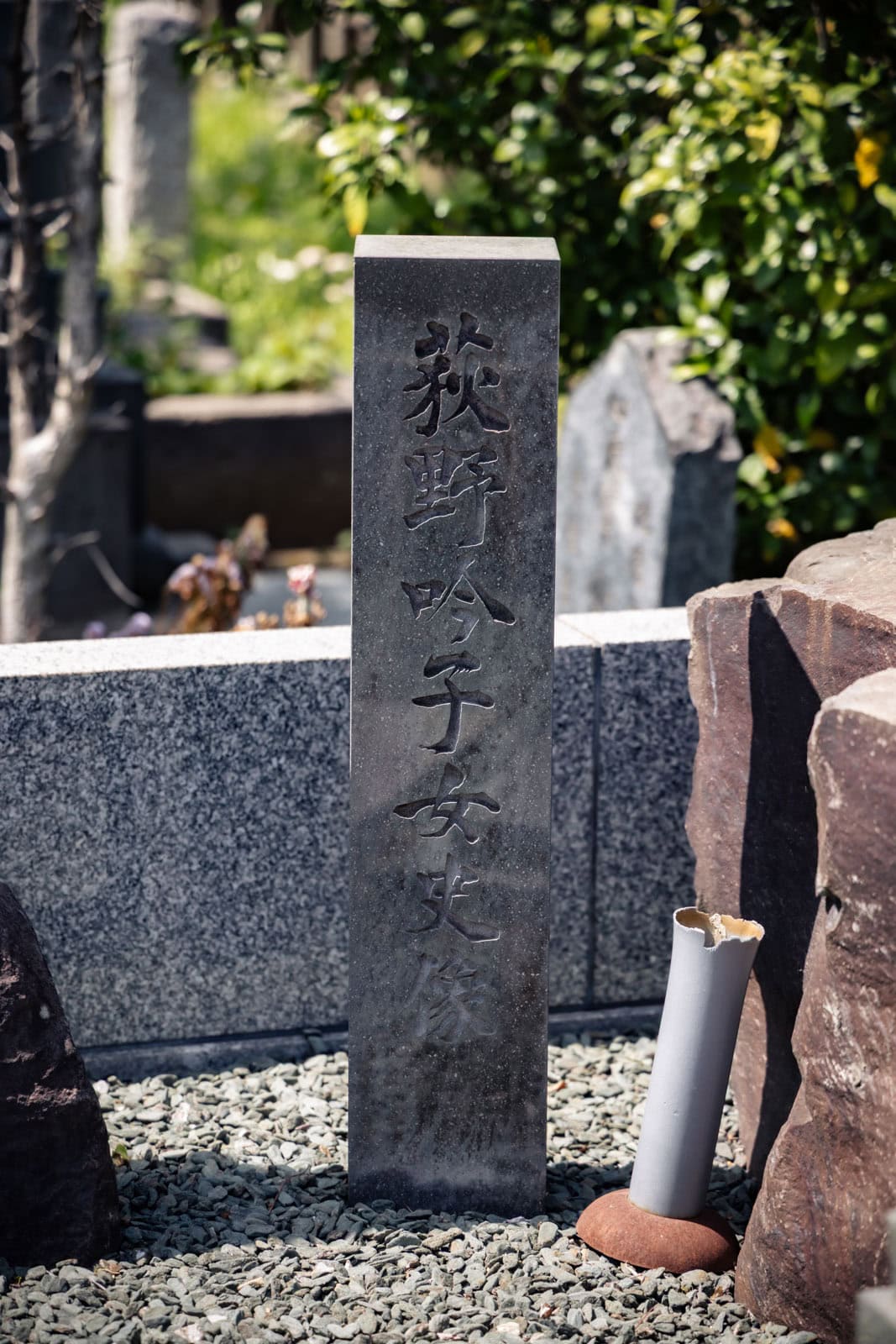
For a much simpler way to find her, pick up a map at the cemetery’s administration building. On this map, her grave is marked as number 17.
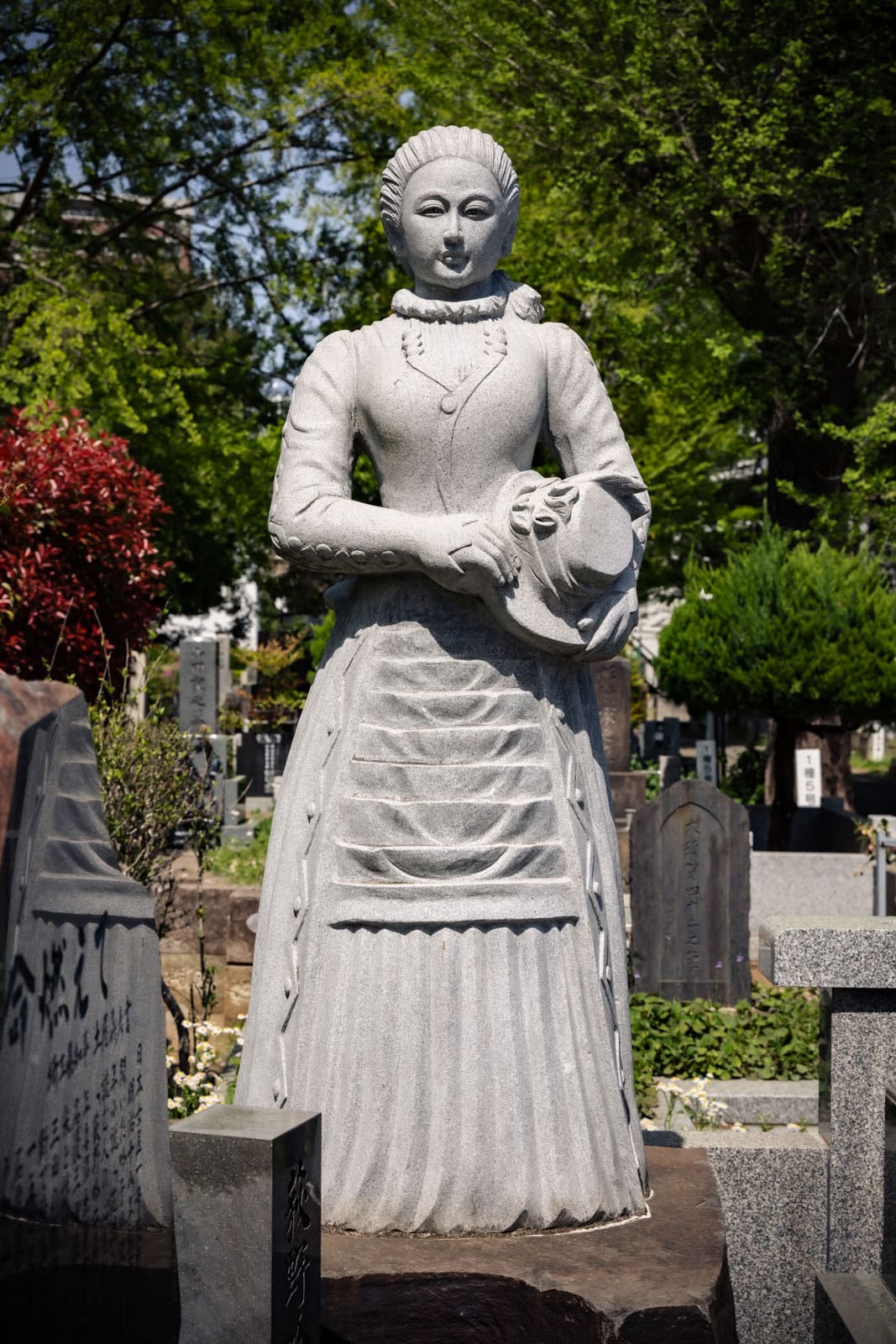
You’ll see her statue, depicting a young Ginko in Western clothes, when you close. To learn more about Tokyo’s graveyards and how to find tombs in them, read [Tokyo Cemetery Guide].