A Photo Walk Through Zoshigaya Cemetery

As an Amazon Associate I earn from qualifying purchases. See my full disclosure here.

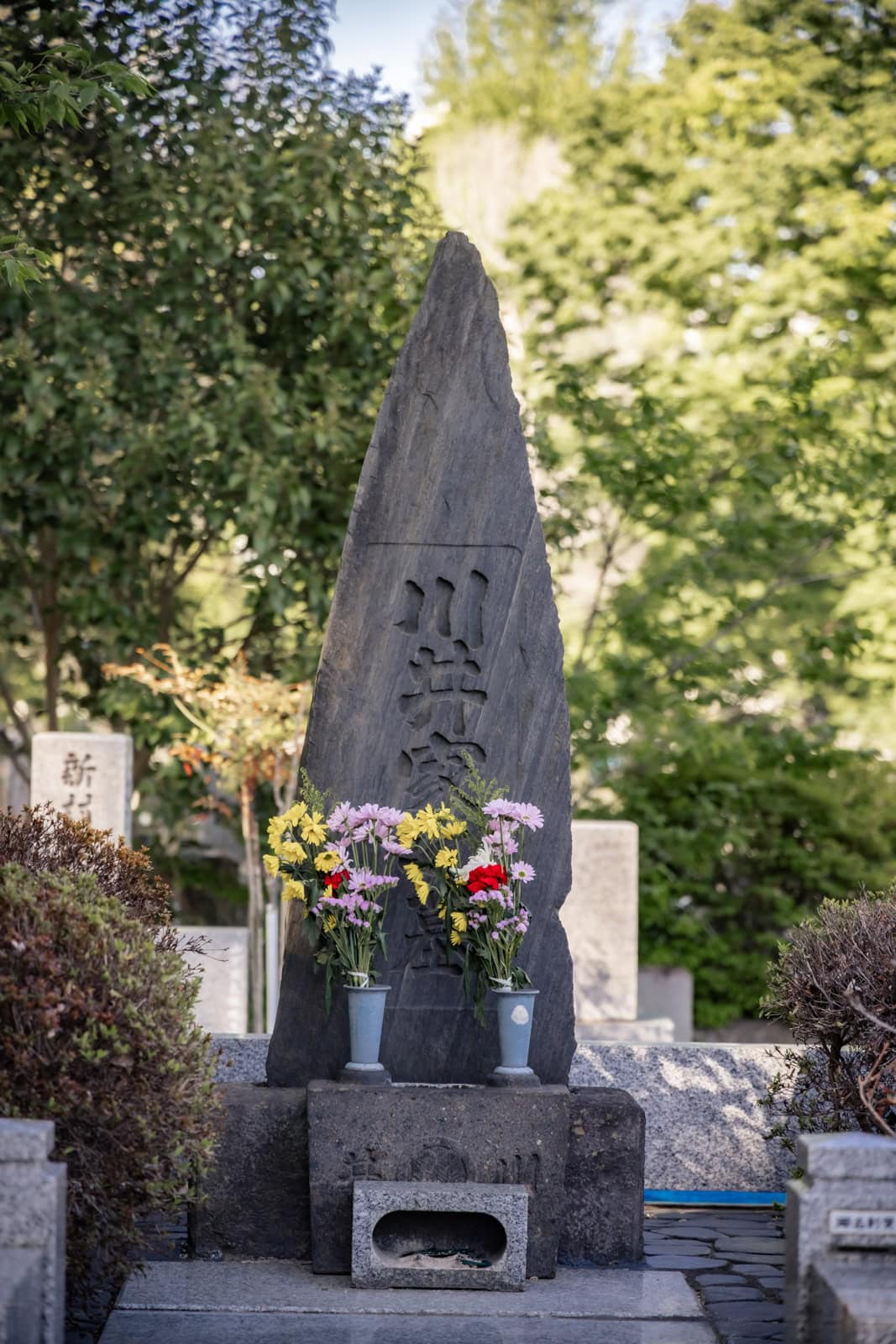
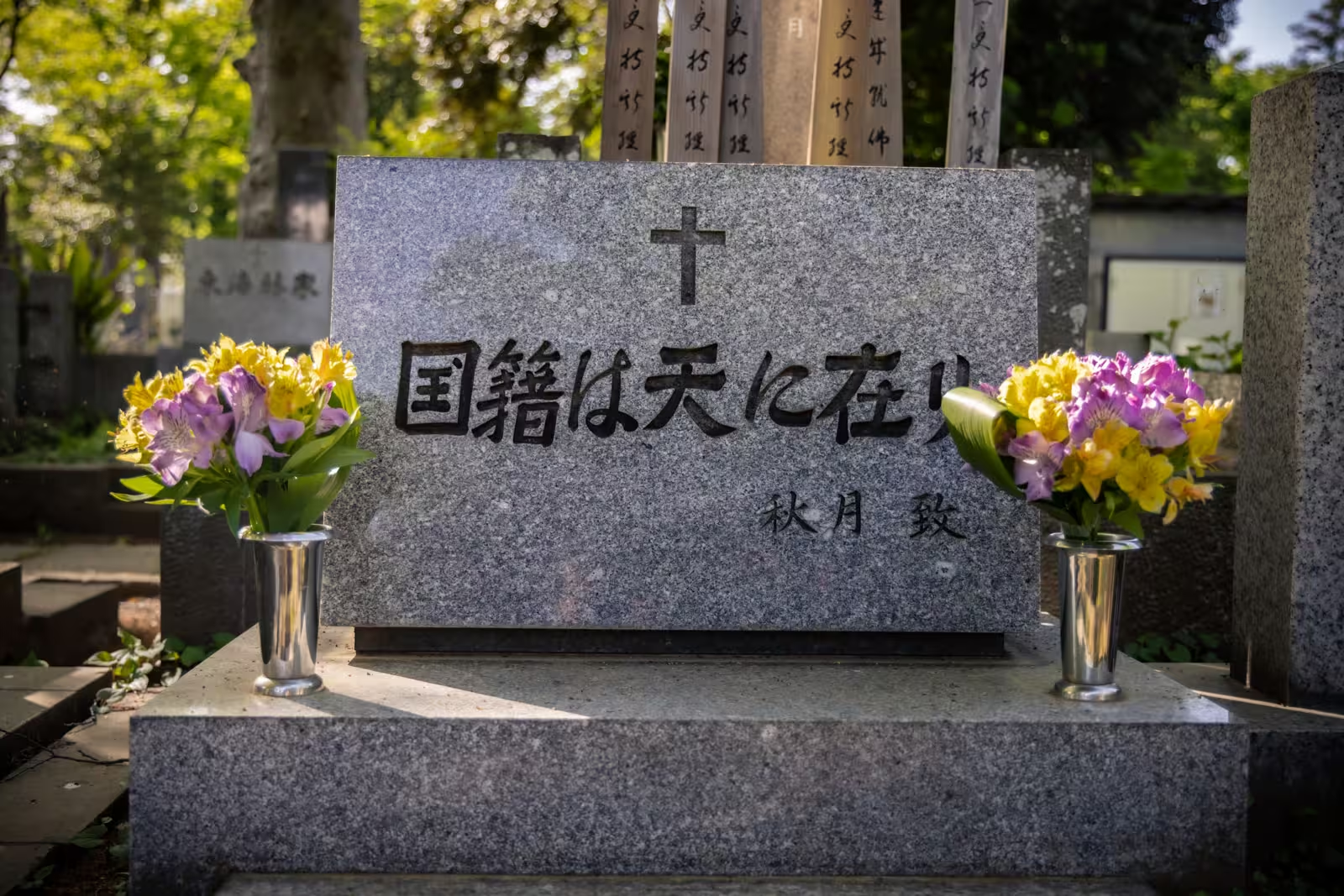
Headstone of Akitsuki Itaru with a cross and Japanese text, adorned with yellow and purple flowers in a cemetery.
“My nationality lies in heaven”

Zoshigaya Cemetery is an unusual Tokyo photo spot. Some might think it a rather morbid place, but not me. The forest-like atmosphere and fascinating tombstone architecture bring the place alive. It’s perfect for a walk or photography. Great photos and history await you. Many of the people who rest there contributed to the making of modern Japan.
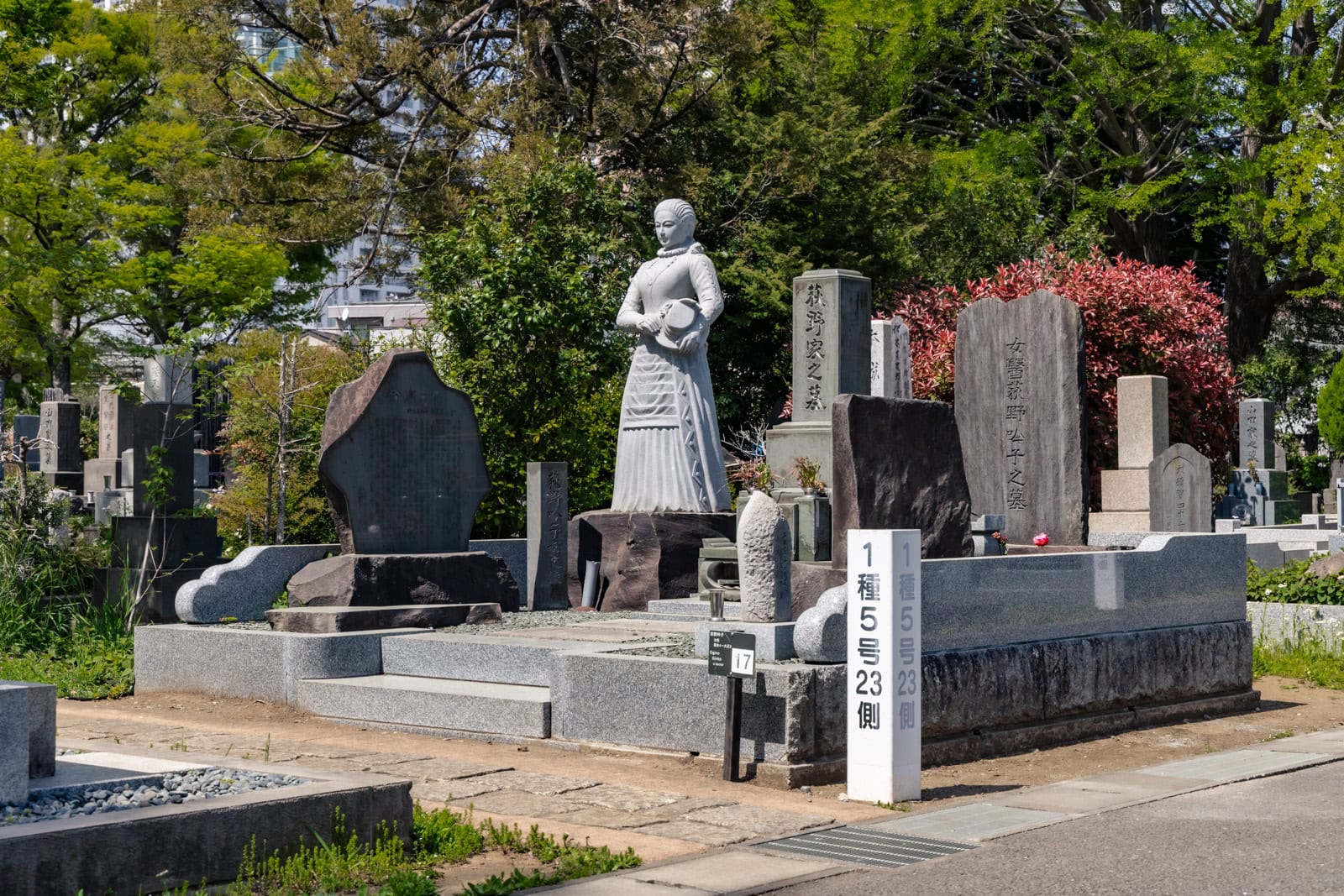
Ginko Ogino's statue stands among several stone grave markers and lush trees at Zoshigaya Cemetery.
The grave and statue of Japan’s first licensed female physician practicing Western medicine, Ginko Ogino.

Zoshigaya Cemetery’s unique atmosphere

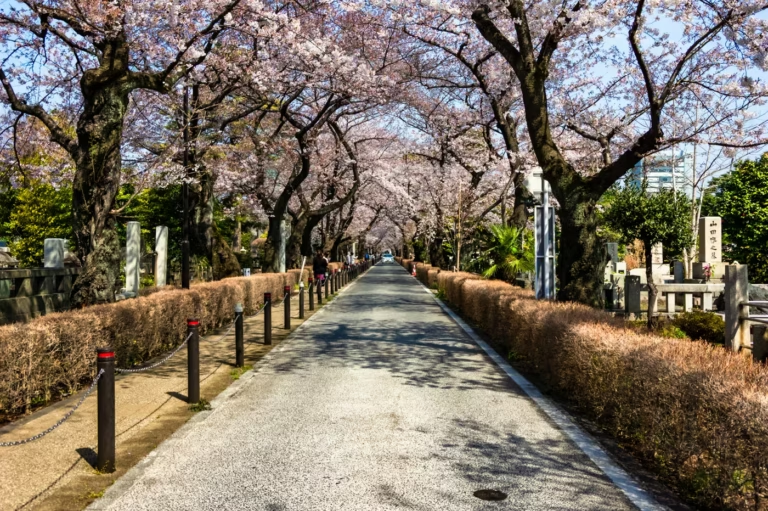
The grounds are spacious and peaceful. Tall trees cover most of its ten acres. The skyscrapers of Ikebukuro fill the gaps between their trunks. Close to one another are these two opposites: one vibrant with life, the other its demise.
Look at it on a map. Everything appears in neat rows. But from ground level, from my eye at least, clutter is everywhere. Yes, the graves are in rows, but the size and shape of each can vary. Walking through a jigsaw puzzle might be a suitable analogy.

Did someone think a forest was a good place for graves? Maybe. They certainly didn’t worry about the design or future expansion needs. Possibly that was how they did things a long time ago. Aoyama and Yanaka cemeteries are similar.
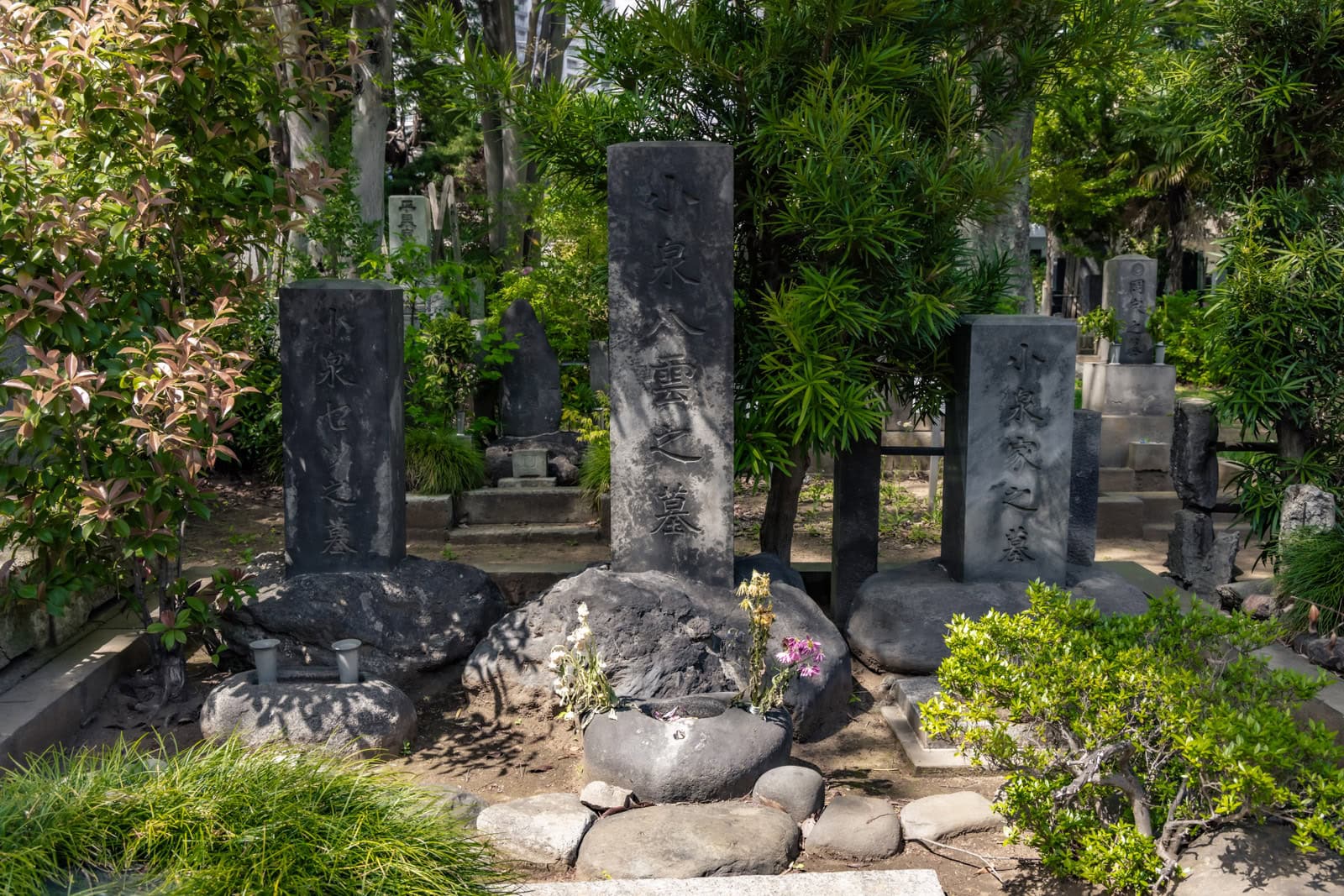
Lafcadio Hearn family dark stone grave markers with Japanese inscriptions, surrounded by lush greenery at Zoshigaya Cemetery.
Lafcadio Hearn and his family.

These cemeteries opened in the 1870s. A proper city plan didn’t exist in those days. What we see now might be a reflection of those times. Even Tama Cemetery, which opened later, is the same.

I love Zoshigaya’s graves! Some have a simple, sculpted rock. Tall rectangular granite gravestones are on others. A few are dome-shaped. The sky is the limit for Japanese grave design! There is much variation. You could spend hours browsing or photographing them.

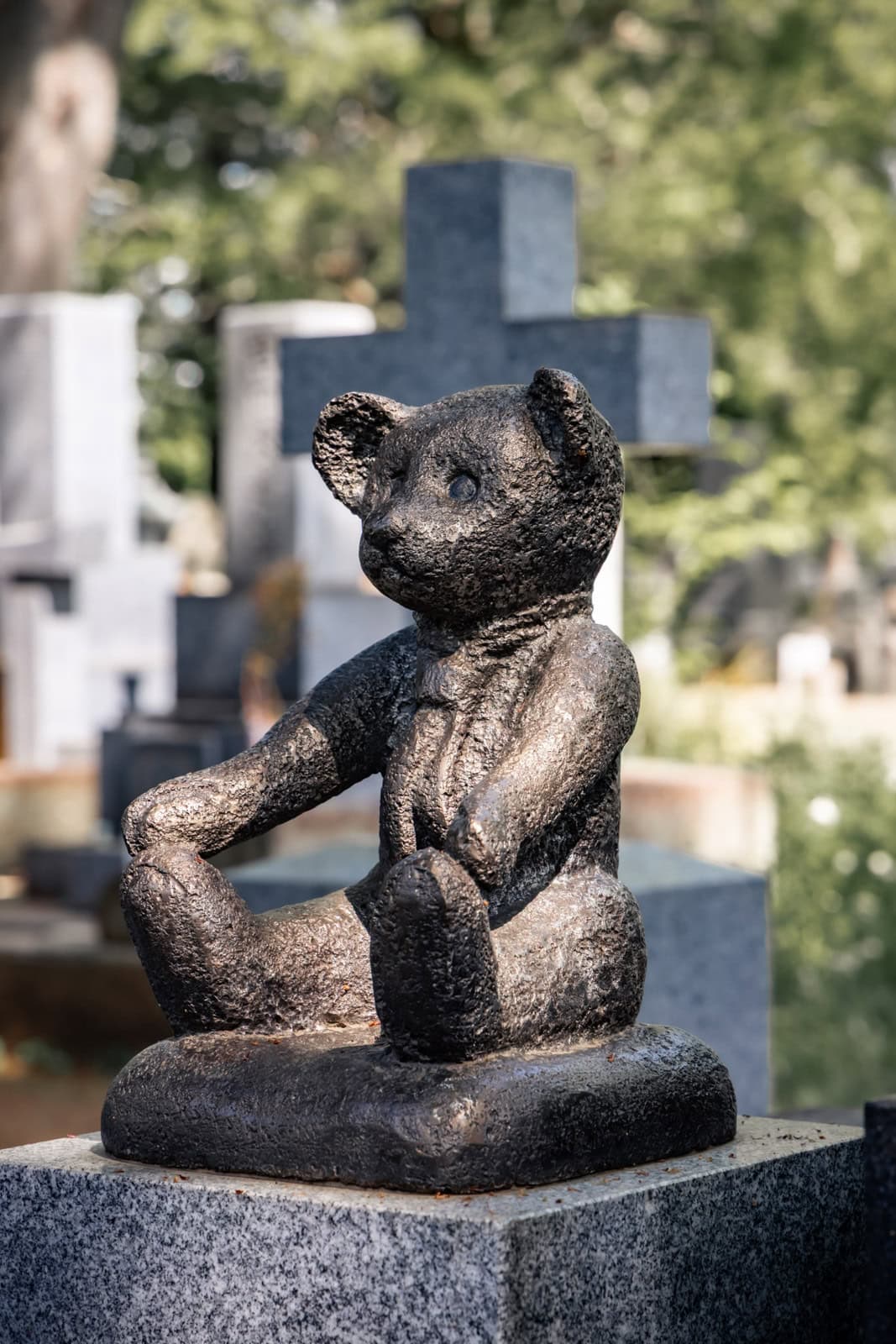
Some people made theirs unique. For example, I’ve seen the Japanese character for “love” on their tombstone. A few have something witty written in English. One is made of white marble tombstone with pink cherry blossom petals carved into it. Ornamental lanterns, pagodas, angels, and even a teddy bear sprinkle the grounds. They are great for photos.
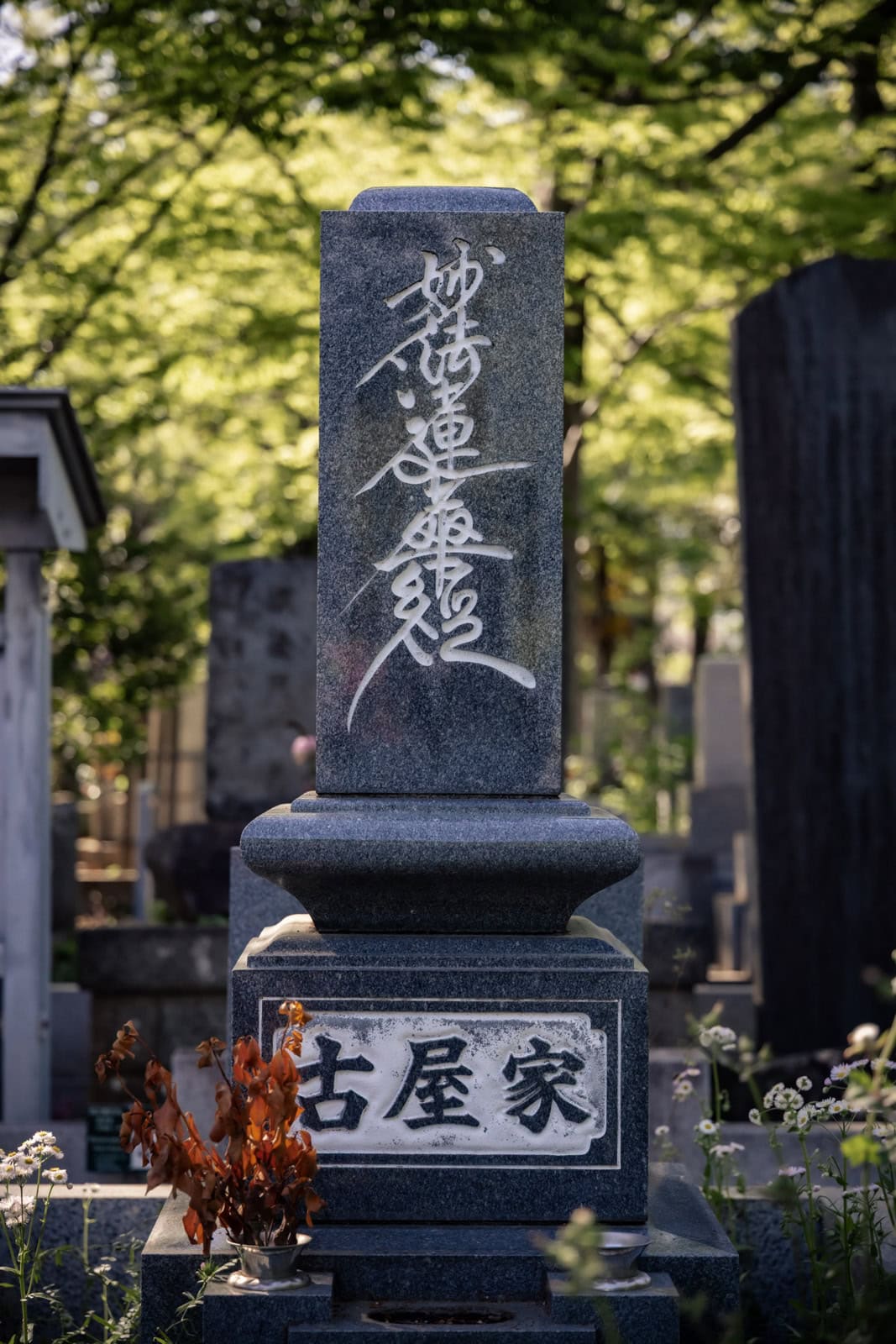
A piece of trivia for you! Some graves at Japanese cemeteries, such as Zoshigaya, have a little postbox. Visitors can place their business cards in them to let the deceased’s family know who came. Do they get used often? I have no idea, but they’re there!
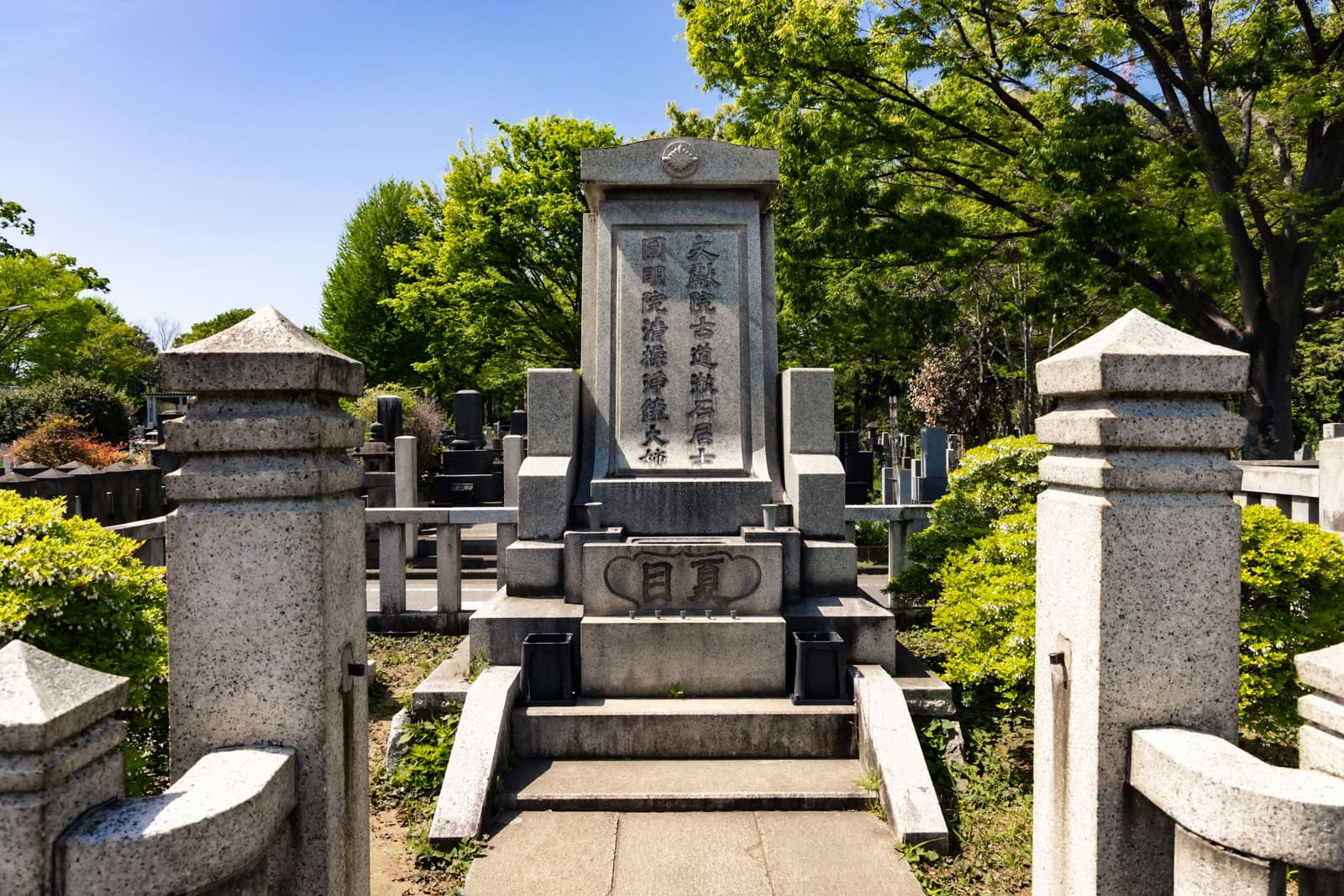
Natsume Soseki's tombstone with Japanese calligraphy, framed by stone pillars in a peaceful cemetery with lush trees.
Natsume Soseki’s chair-shaped tombstone

Famous people buried at Zoshigaya Cemetery

Many of the people contributed to Japanese history. Some of them are:

  • Lafcadio Hearn – an English writer. His collection of Japanese legends and ghost stories is world-famous. He became a naturalized citizen of Japan, and his wife, Setsu, lies next to him. His gravestone carries his Japanese name, “Yakumo Koizumi.”
  • Kikunae Ikeda – Japanese chemist who discovered the chemistry behind umami. He was a co-founder of Ajinomoto.
  • John Manjiro – real name, Manjiro Nakahama. He was one of the first Japanese to visit the United States and was later an important translator.
  • Soseki Natsume – if you are into Japanese literature, visit this tomb. Zoshigaya Cemetery is in his book Kokoro (1914).
  • Ginko Ogino – Japan’s first Western-trained female doctor. Her grave is one of my favorites. The statue is tremendous.
  • Hideki Tojo – the 40th Prime Minister of Japan and army general. He was executed at Sugamo Prison, which was in nearby Ikebukuro.
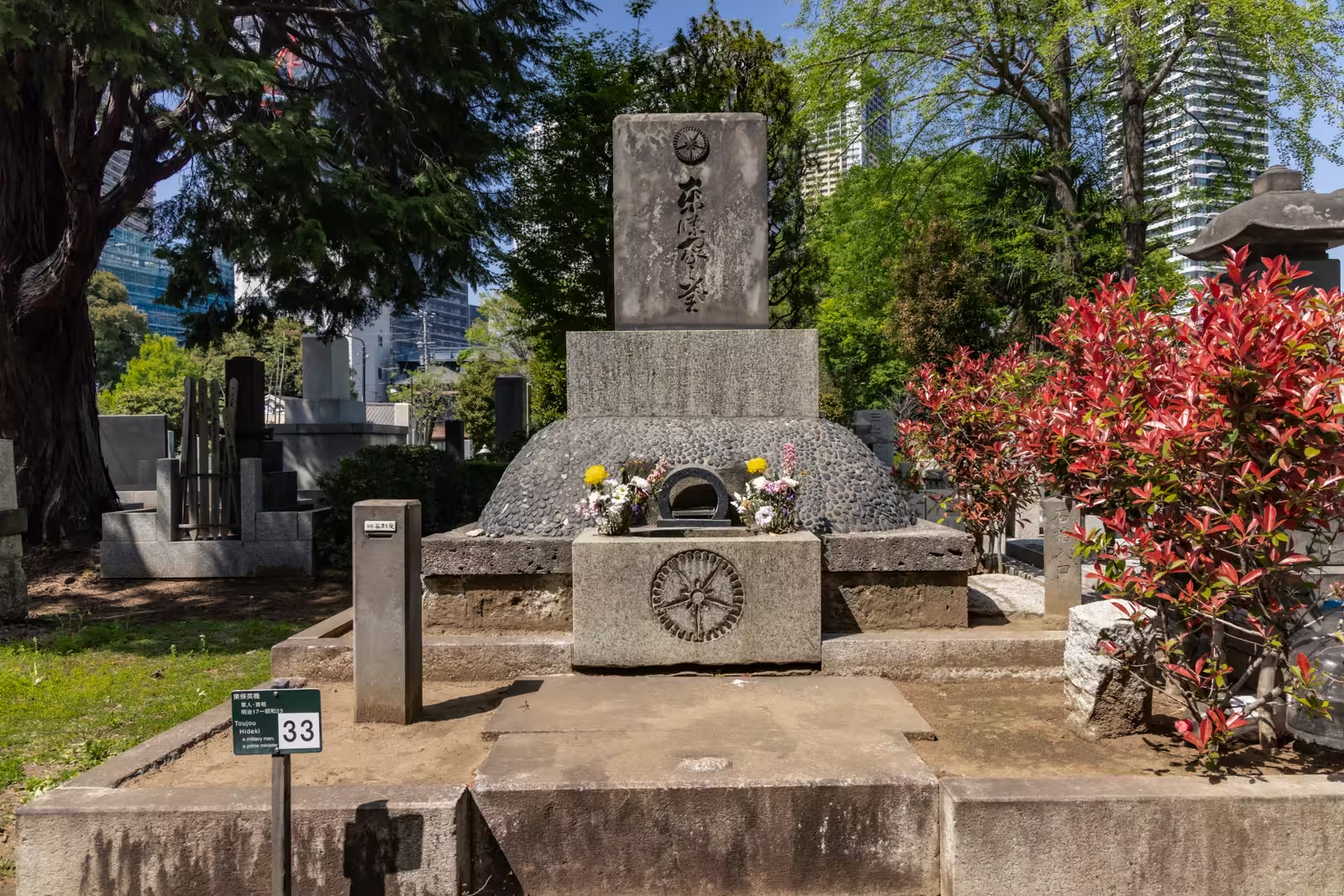
Hideki Tojo's grave with flowers, set against lush trees and distant skyscrapers in a peaceful cemetery.
Hideki Tojo’s grave

How to find the graves

There are two ways. One is to go to the administration building and pick up a map. They are in English and Japanese. The graves of fifty (50) people are on it, some of whom are ultra-famous and some are not.
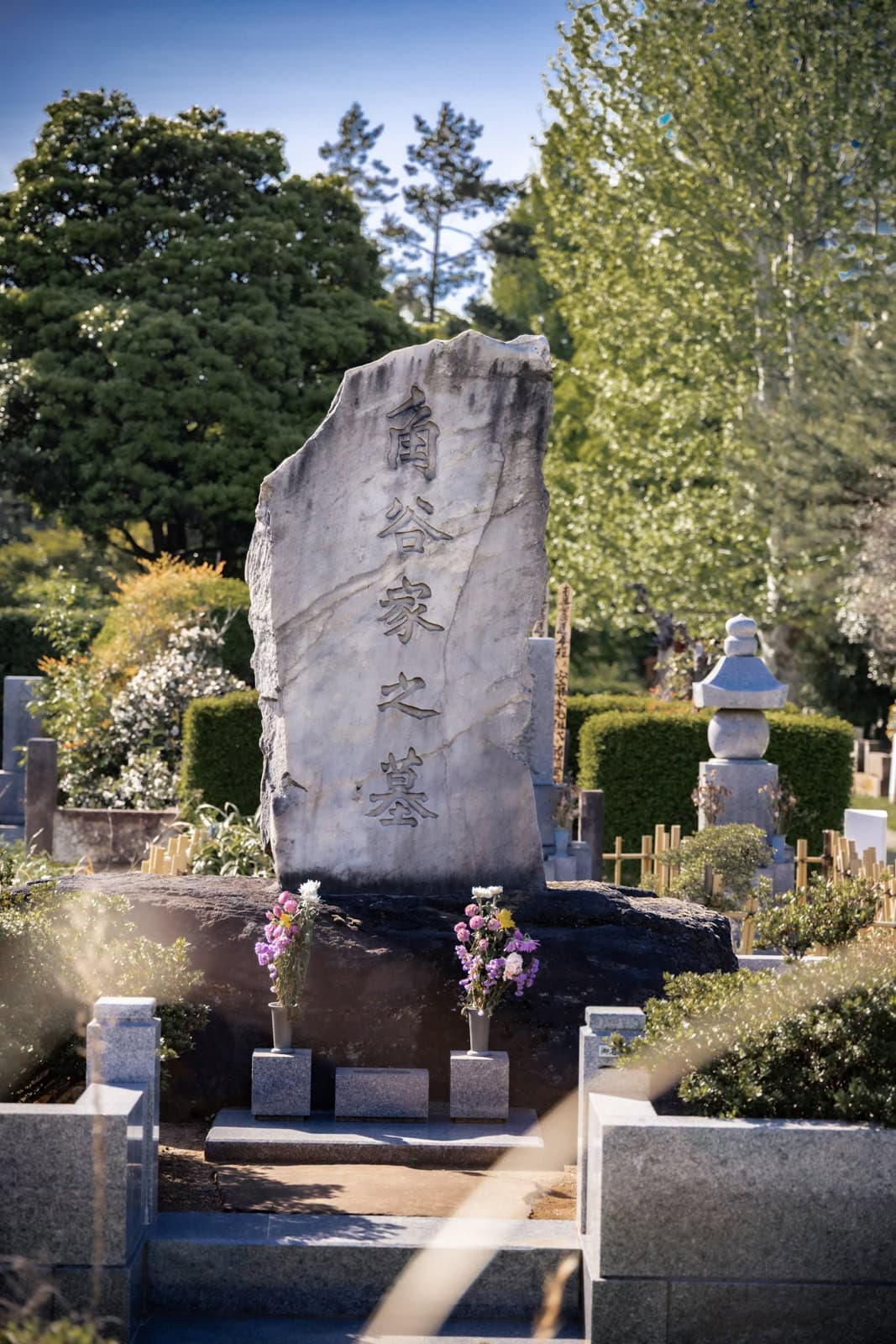
You can also walk around the cemetery and look for nameplates. Of course, not every grave has one, but the more famous ones do. They are green and fixed to a stake. On them is the name of the person and their occupation in English and Japanese. Unfortunately, this method relies on luck.
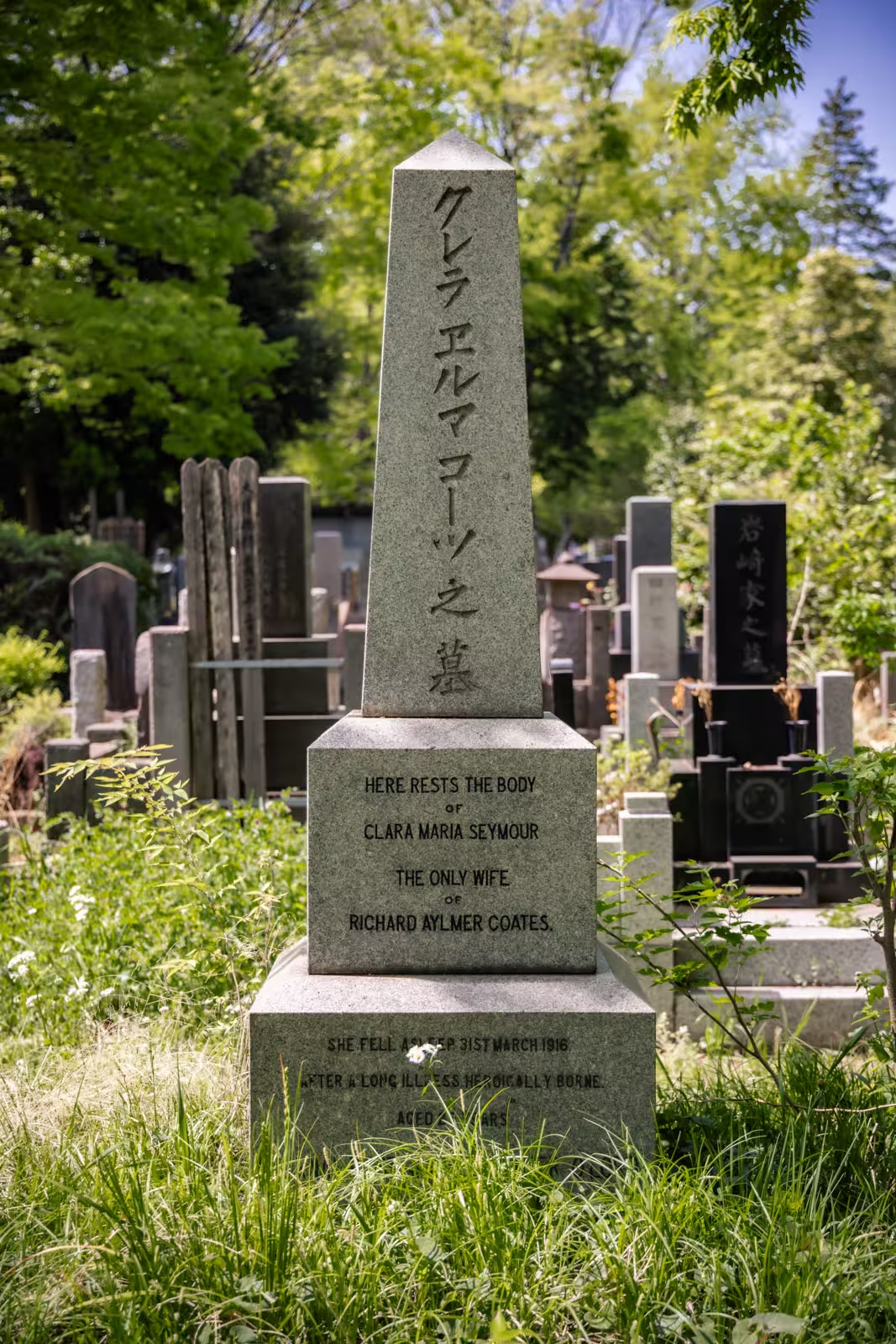
Obelisk headstone for Clara Maria Seymour with Japanese and English text, set in a lush, green cemetery.

Nearby photo spots

  • Gokokuji (an Edo-period temple)
  • Higo Hosokawa Garden (an Edo-period park)
  • Saint Mary’s Cathedral (a stainless steel church, home of Tokyo’s Roman Catholic community)
  • Sunshine 60 Observatory Tenbou Park in Ikebukuro
Visitor information: Location, hours, and costs

Where is Zoshigaya Cemetery?

  • Address:4-25-1 Minami-Ikebukuro, Toshima City, Tokyo
  • Here is the cemetery on Google Maps:

Closest train stations

  • Toden-Zoshigaya on the Toden Awaraka Line. You can see the cemetery from the platform.
  • Zoshigaya on the Fukutoshin Line. Leave via Exit 1.

Opening hours

  • The grounds are open 24 hours a day.
  • The administration office is open from 8:30 am to 5:30 pm. It’s closed from December 29 to January 3.

Admission costs

None

For the most up-to-date information, consult the official Zoshigaya Cemetery (Japanese) website.

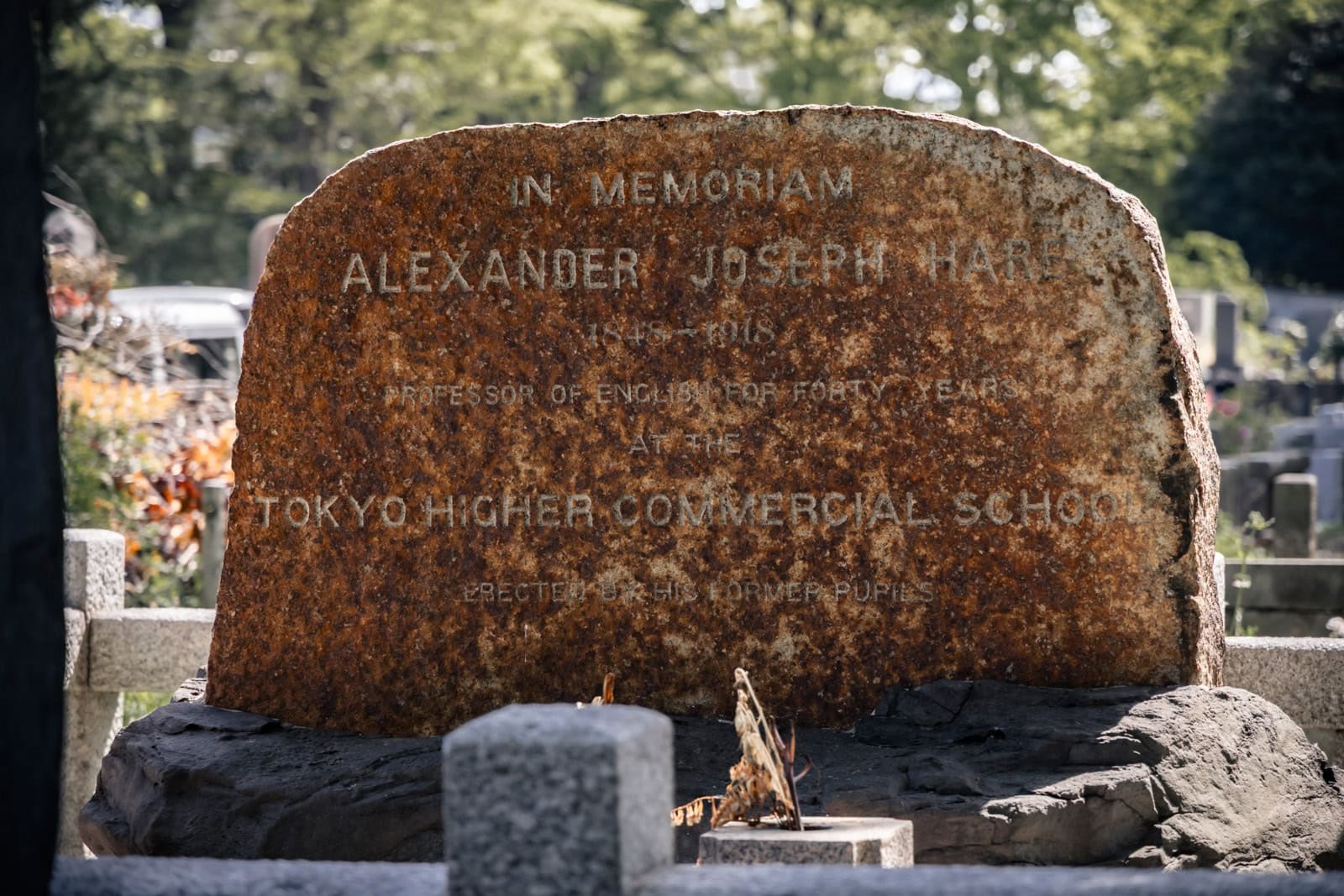
Weathered stone grave marker of Alexander Joseph Hare with English text at Zoshigaya Cemetery.
Alexander Joseph Hare must have been a great teacher.

Is Zoshigaya Cemetery worth it?

If you are into the niche genre of cemetery photography, add Zoshigaya to your Tokyo itinerary. You’ll document the resting places of important historic personages in a serene nature with the skyscrapers of Ikebukuro as a backdrop. The photos you take will stand out, telling a deeper story than the usual tourist spots.

Do you want to see more of Tokyo’s graveyards? Check out [The Photographer’s Guide to Tokyo’s Historic Cemeteries]. It will give you all the information you need to know.

I trust Sandisk 128GB Extreme PRO SDXC UHS-I Memory Cards when capturing my images.

Similar Posts

  • |

    Aoyama Cemetery Photo Guide

    Aoyama Cemetery Photo Guide Aoyama Cemetery is Tokyo’s oldest public burial ground, located in the heart of Minato City. It is a premier destination for history buffs visiting the graves of icons like Hachiko, and for photographers capturing the famous ‘sakura tunnel.’ This guide explores the cemetery’s unique architecture, notable residents, and seasonal cherry blossom…

  • JGSDF Public Information Center: Japan’s Modern Military

    JGSDF Public Information Center: Japan’s Modern Military For military hardware enthusiasts and photographers visiting Japan, there’s a hidden gem just outside Tokyo that you cannot miss: The Japan Ground Self-Defense Force (JGSDF) Public Information Center. The information center, often called “Rikkun Land,” is a unique opportunity to get up close and personal with the tanks,…

  • Nakagin Capsule Tower: A Tokyo Photography Lesson

    Nakagin Capsule Tower: A Tokyo Photography Lesson I’ve heard some photographers say photography can stop time. When you hit that shutter button, everything freezes. Do you believe that? It can’t. No way. Nothing controls time, least of all a camera. Yes, I know these people are simply misspeaking. But it annoys the heck out of…

  • |

    Yasukuni Shrine Photo Guide

    Yasukuni Shrine Photo Guide Located in the heart of Chiyoda, Yasukuni Shrine carries a gravity that few other places in Tokyo can match. Founded by Emperor Meiji in 1869, it serves as a memorial for those who gave their lives for Japan, spanning from the Boshin War through World War II. Today, it draws five…

  • Memorial Battleship Mikasa Photo Guide

    Memorial Battleship Mikasa Photo Guide Just a short trip from Tokyo, within sight of the active Yokosuka Naval Base, rests a time capsule of naval history: the memorial warship Mikasa. This legendary pre-dreadnought battleship, a hero of the Russo-Japanese War, is now a must-see museum in the park that shares her name. For any military…

  • Tama Cemetery Photo Guide: Tokyo’s Resting Place of Giants

    Tama Cemetery Photo Guide: Tokyo’s Resting Place of Giants As an Amazon Associate I earn from qualifying purchases. See my full disclosure here. My first visit to Tama Cemetery was an eye-opener. A mere forty-minute train ride from the electric chaos of Shinjuku, I found myself in a sprawling, 128-hectare kingdom of silence. Here, beneath…