Red Spider Lily: Japan’s Iconic Afterlife Flower
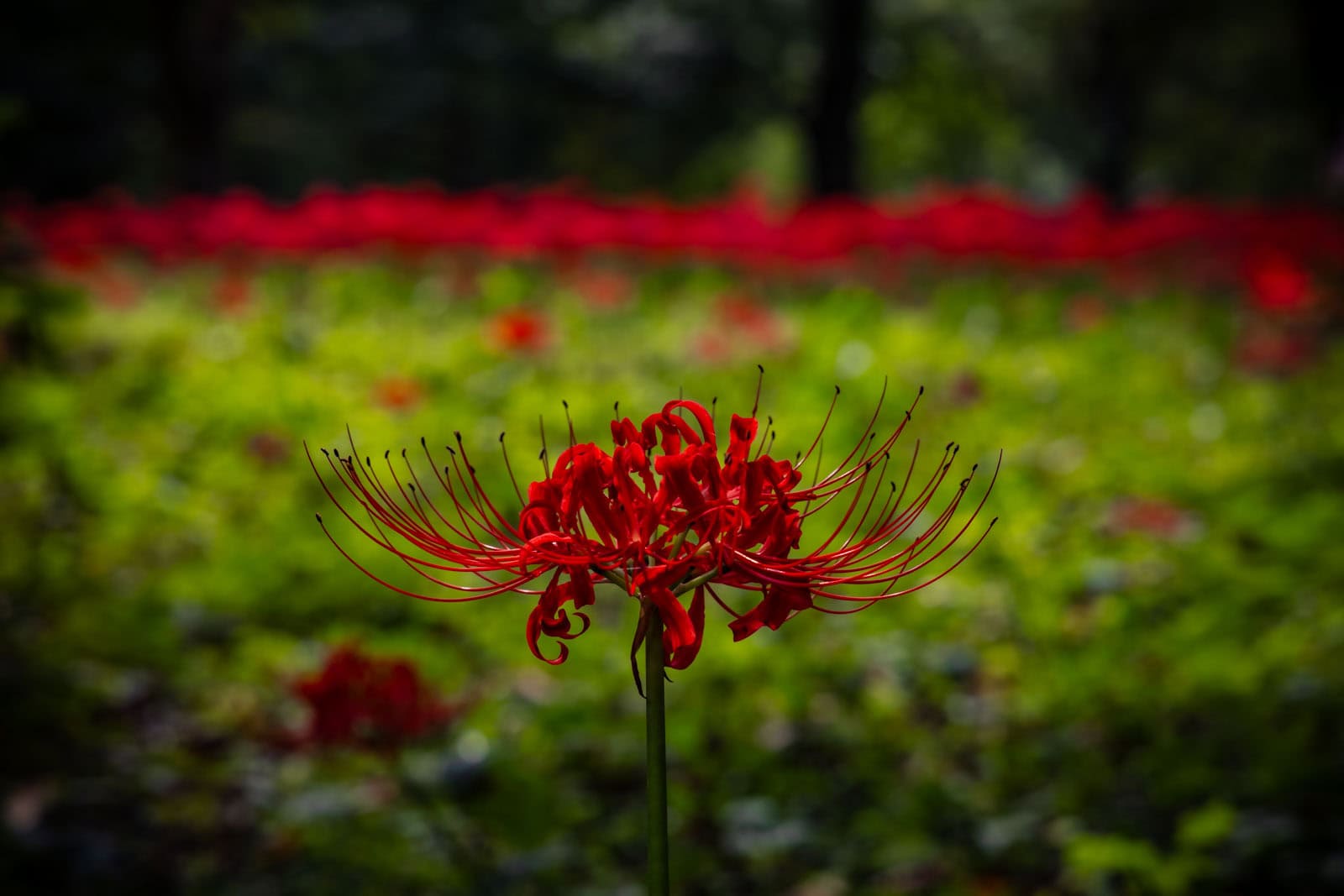
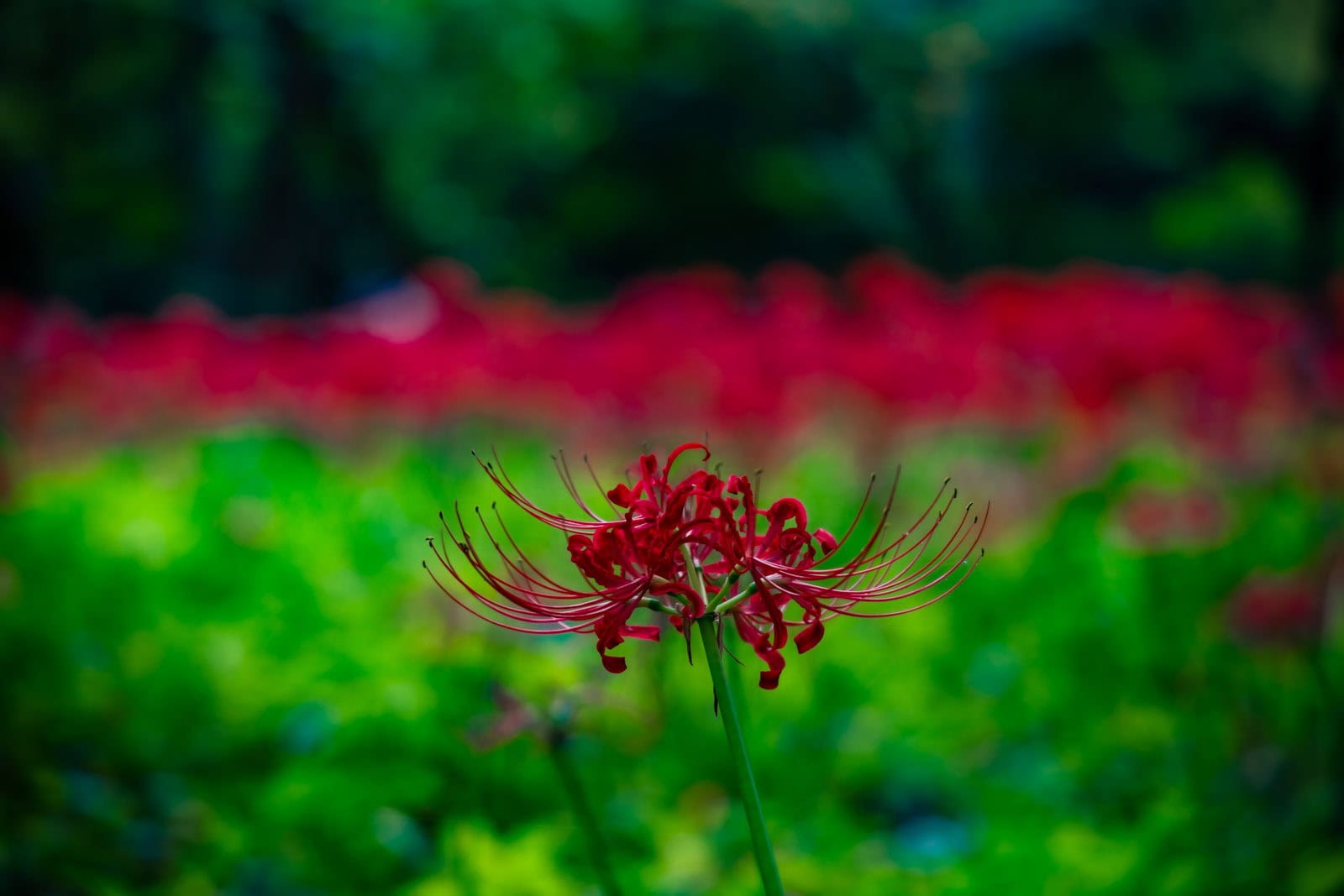
Appearing in a sudden, brilliant flash of fiery red, the spider lily is a flower of dramatic beauty. Its delicate, spidery petals curl back from long, sweeping stamens, creating an unforgettable silhouette against the early autumn landscape.
But behind this stunning appearance lies a deep and somber cultural significance, particularly in Japan and China, where it is known as a flower of death, farewells, and the afterlife.
Higanbana meaning & symbolism
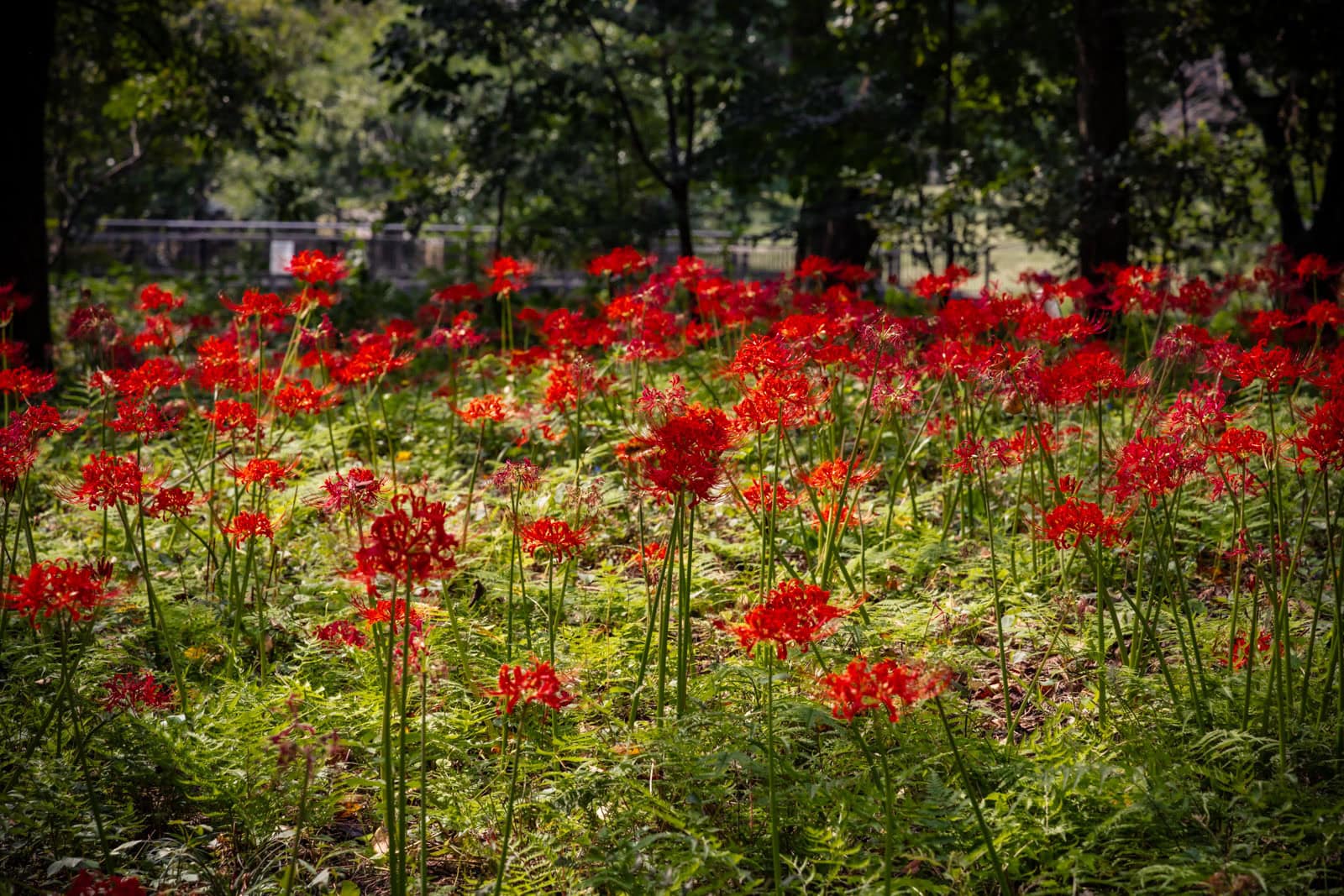
The red spider lily’s strongest association is with mortality. In Japan, it is called Higanbana (彼岸花), the “flower of Higan,” directly linking it to the Buddhist holiday of Higan, which occurs around the autumnal equinox.
This is a time when families visit the graves of their ancestors to pay their respects. The Higanbana are in full bloom, lining the paths to cemeteries as if to welcome them.
The red spider lily’s association with death
The path to the underworld
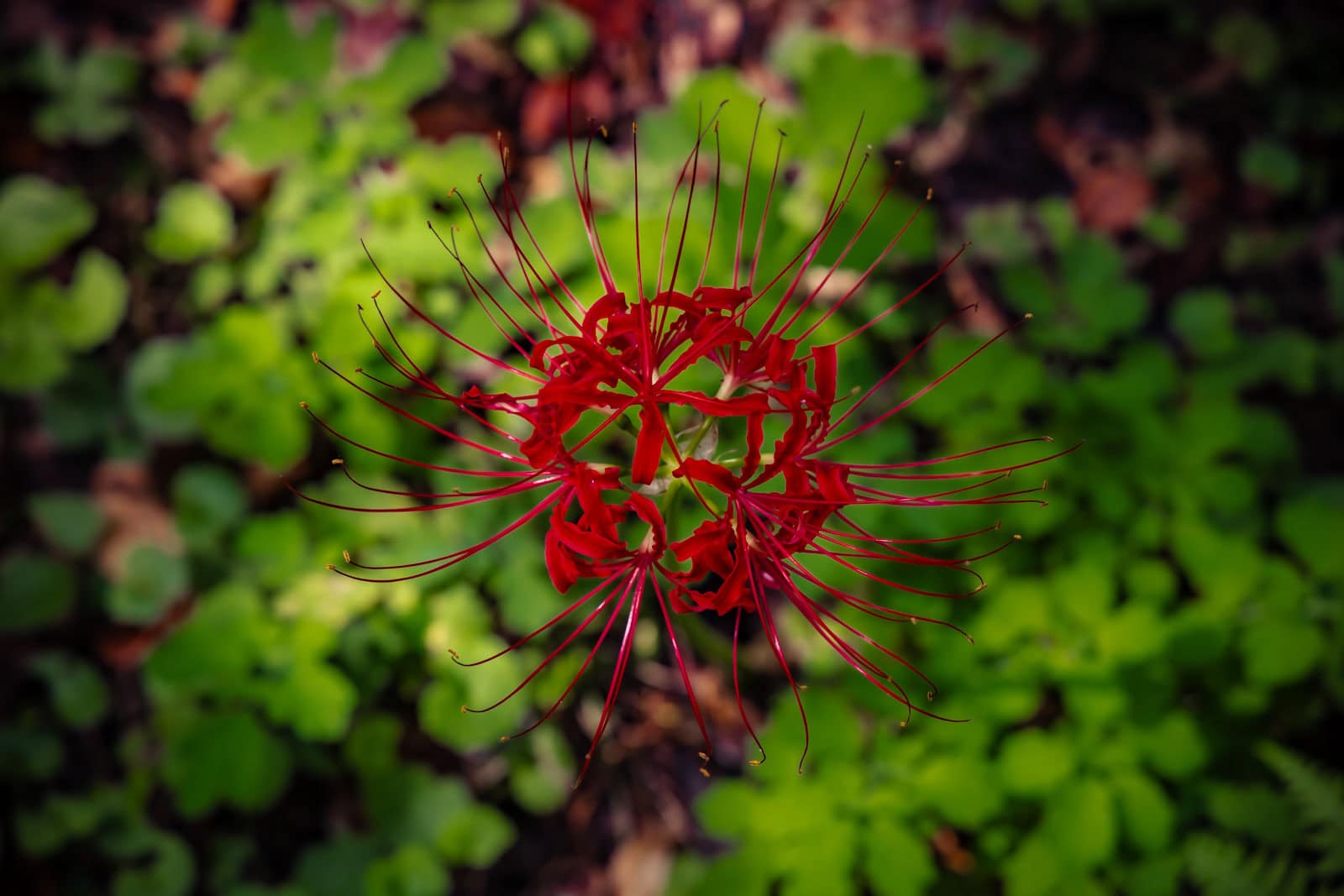
Legends say these flowers grow along the path to the afterlife, marking the border between the living and the dead and guiding souls on their final journey. For this reason, it’s sometimes called the “hell flower.”
A flower’s poisonous protection
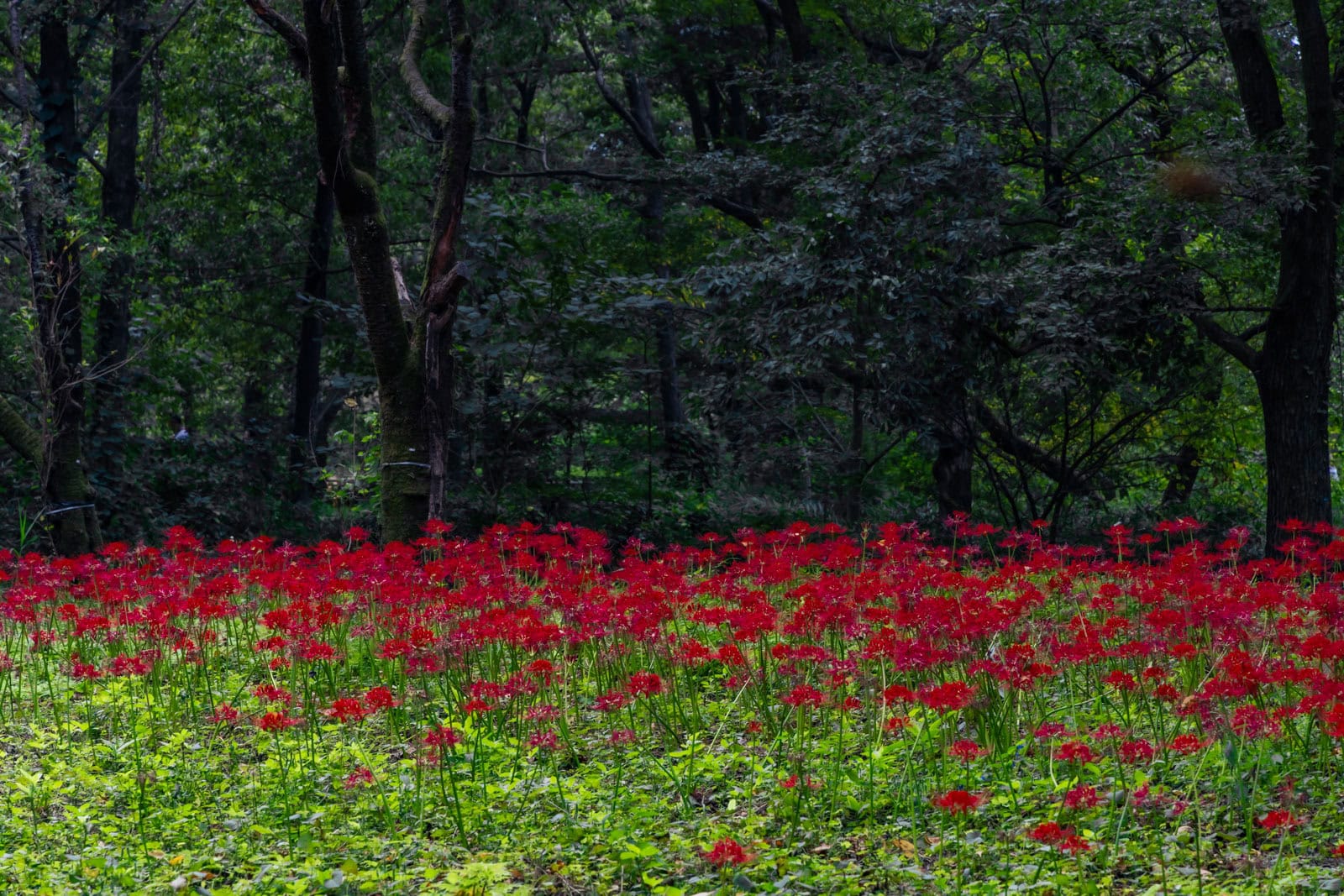
The flower’s bulbs are poisonous. For centuries, they were intentionally planted around graves and rice paddies to keep scavenging animals and pests away, physically cementing their presence in places of death and remembrance.
A symbol of parting and higan
Because of these ties, the flower symbolizes final goodbyes. It is often used in funeral rites and placed on family graves during the higan (Autumnal Equinox), a week dedicated to honoring ancestral spirits.
Red spider lily of rebirth
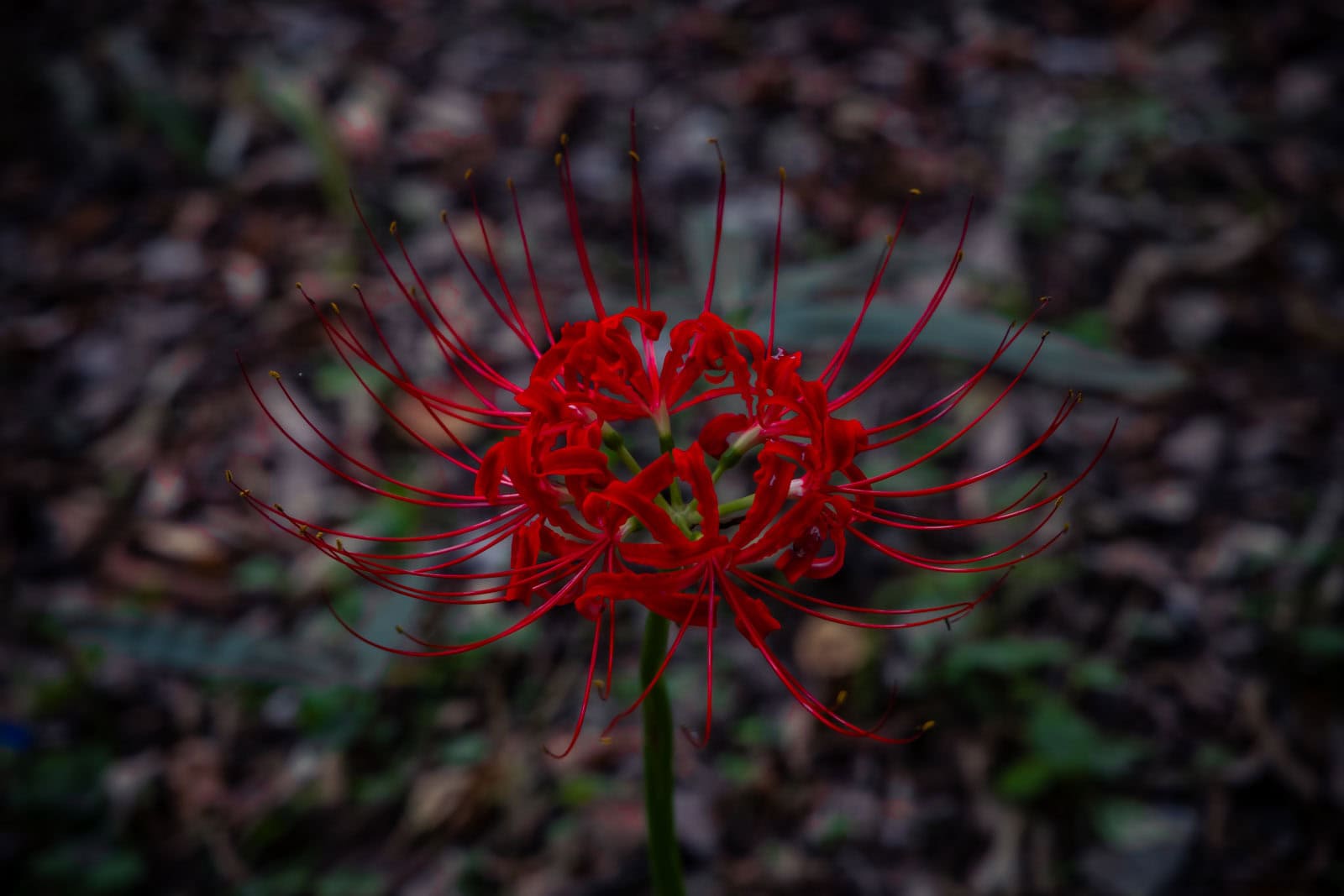
Despite its somber reputation, the red spider lily also carries a message of renewal. It has a unique life cycle where the flowers bloom and die before the leaves ever appear. This powerful act of blooming in a time of transition, the shift from summer to autumn, makes it a symbol of reincarnation and new beginnings.
While it guides the dead, it also speaks to the cycle of life continuing. In some contexts, its bold, passionate color has even led it to be associated with love.
Uses in traditional chinese medicine
Beyond its symbolism, the red spider lily also has a history in traditional Chinese medicine. The bulbs contain alkaloids that have been used for their anti-inflammatory and pain-relieving properties.
From a mythological guide for spirits to a practical tool for protection and a symbol of life’s endless cycle, the red spider lily is far more than just a beautiful flower. It is a beloved, poignant reminder of the connection between farewells and new beginnings, making it one of the most culturally significant flowers in the world.
Where to photograph red spider lilies?
The photos accompanying this article were taken at Nogawa Park (野川公園) in Mitaka, a local park where you can find a sprawling carpet of fiery higanbana in its Nature Observation Garden. If you’d like to plan your own visit, read more details in my full guide.
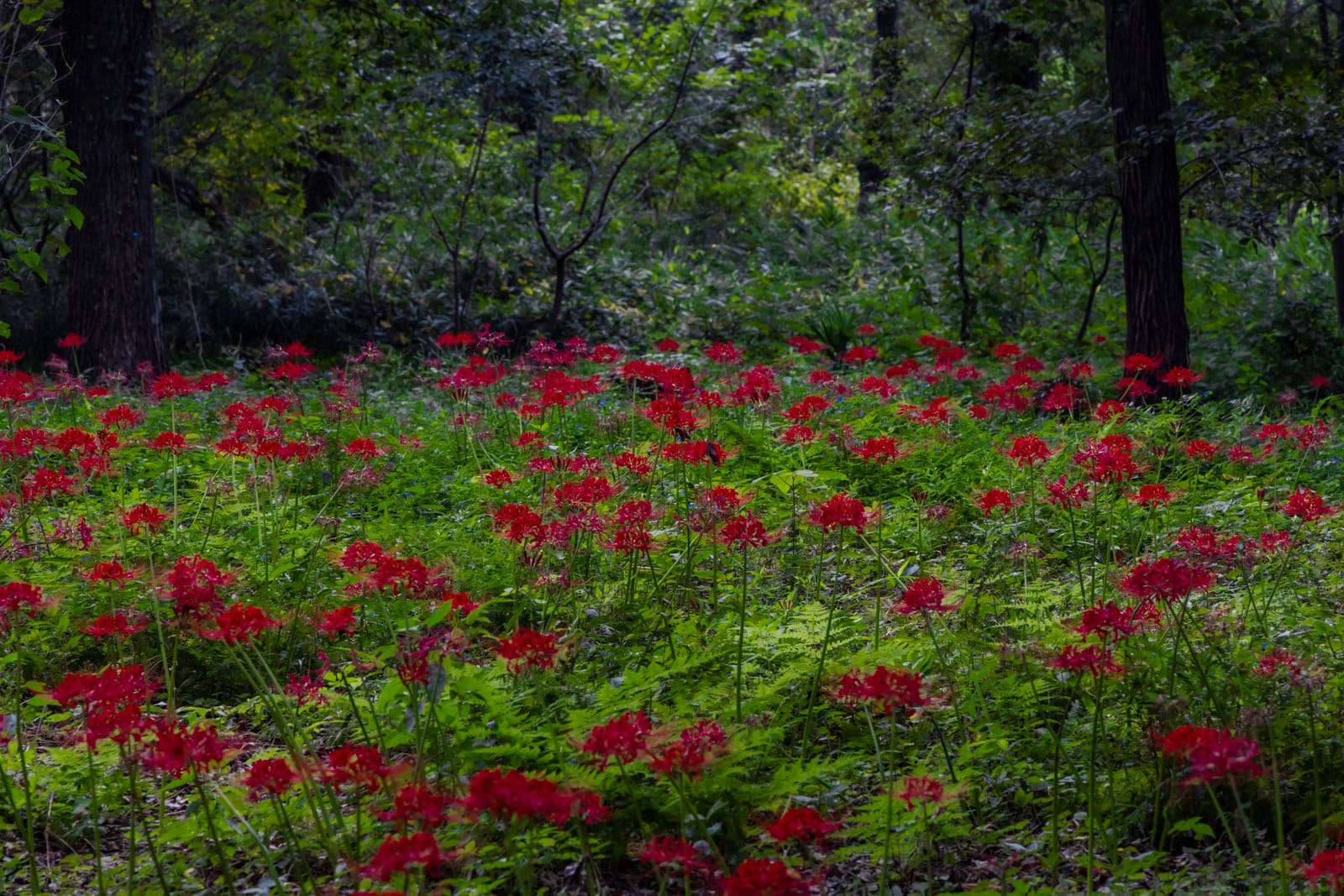
For those looking to explore other locations, some of the most famous spots in and around Tokyo to see red spider lilies include:
- Kinchakuda Manjushage Park (巾着田曼珠沙華公園): Located in Saitama, this is arguably the most famous spot, boasting an incredible 5 million lilies that create a breathtaking “red carpet” effect.
- Kenei Gongendo Park (権現堂公園): Also in Saitama, this park features over 3 million red spider lilies, often creating a beautiful contrast with the green embankments.
- Showa Kinen Park (昭和記念公園): A large national park in Tachikawa where you can find beautiful clusters of lilies, especially in the recreated 1950s rural landscape of Komorebi Village.
Do you know any other flowers with supernatural connections? Tell us about them in the comments below.