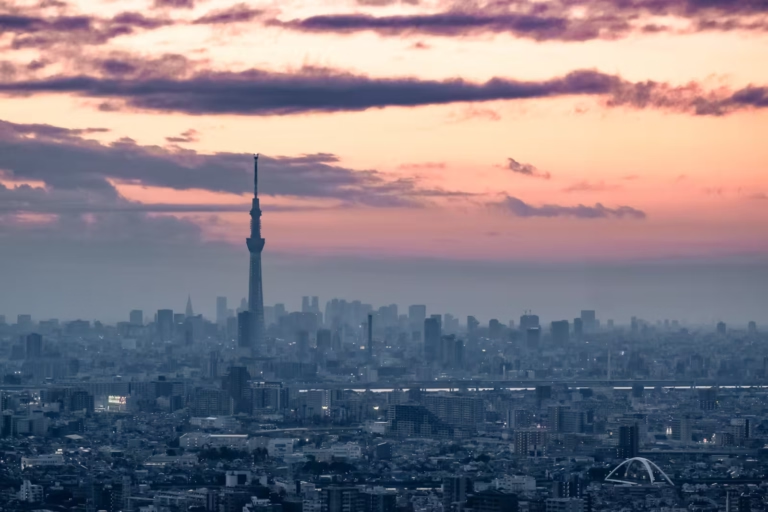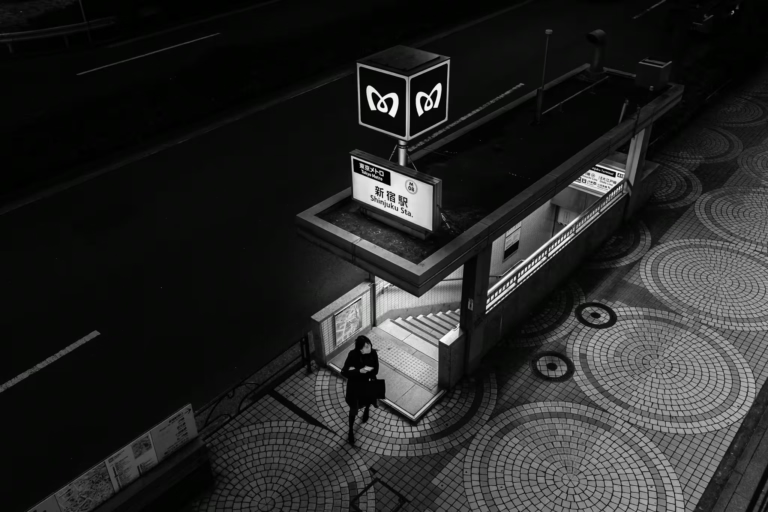
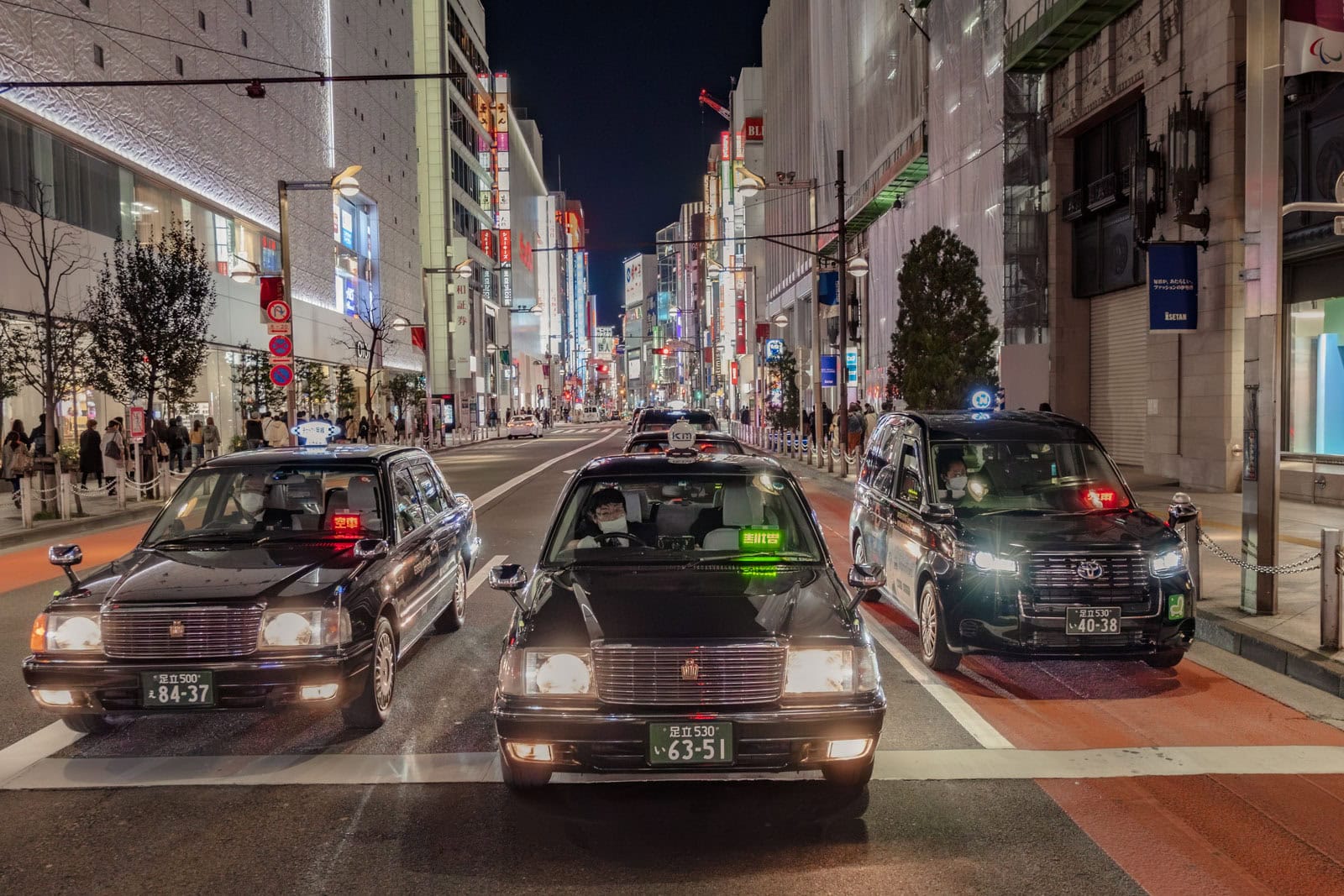
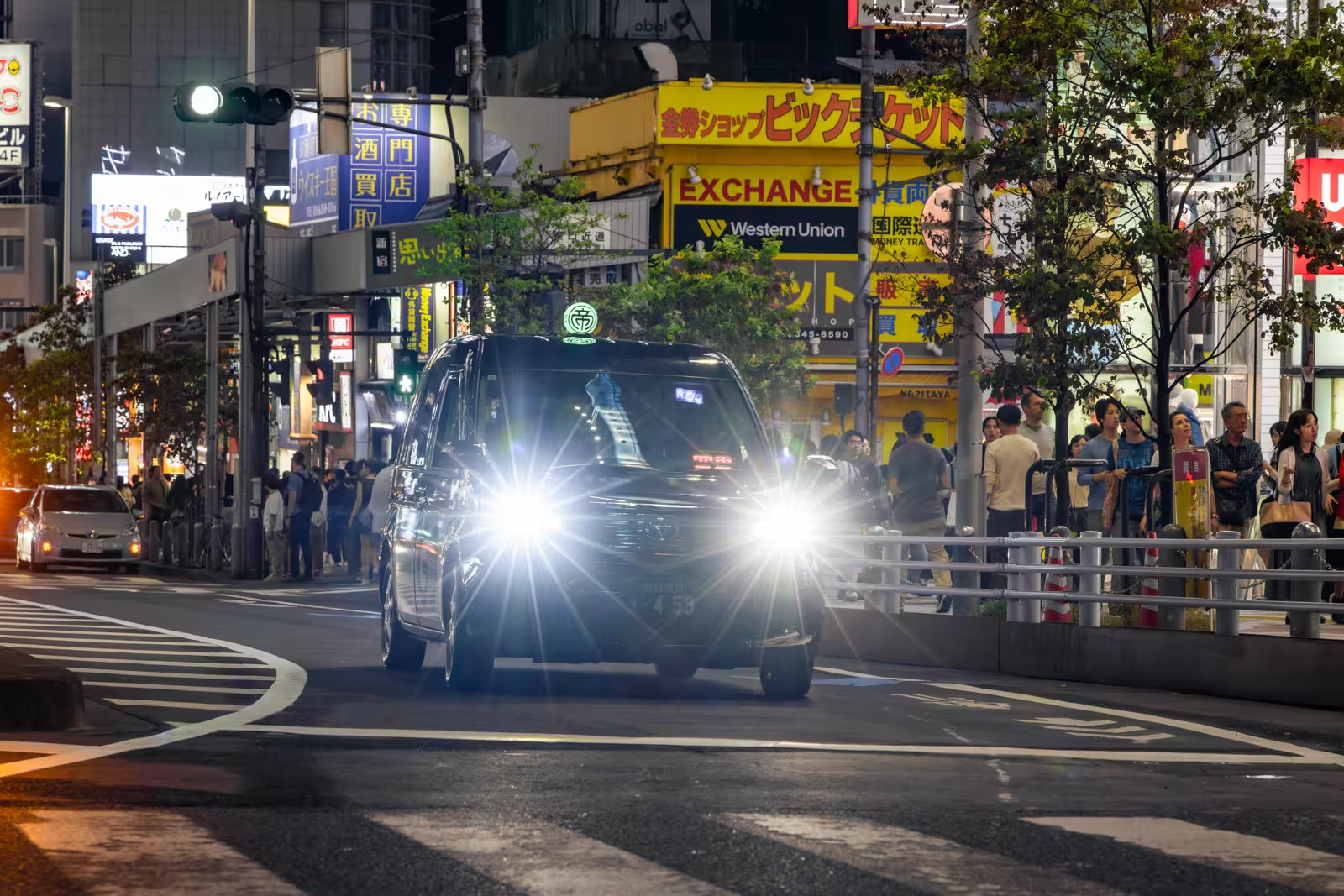
As dusk settles over Tokyo, the Shinjuku district undergoes a breathtaking metamorphosis. A symphony of neon ignites the sky, and the city’s pulse quickens. People are on the move. Amidst this chaos, one element reigns supreme: the ubiquitous taxi.
With tens of thousands of cabs navigating the sprawling metropolis, they are an undeniable and essential feature of Shinjuku’s nocturnal landscape. Their headlights carve rivers of light through the streets.
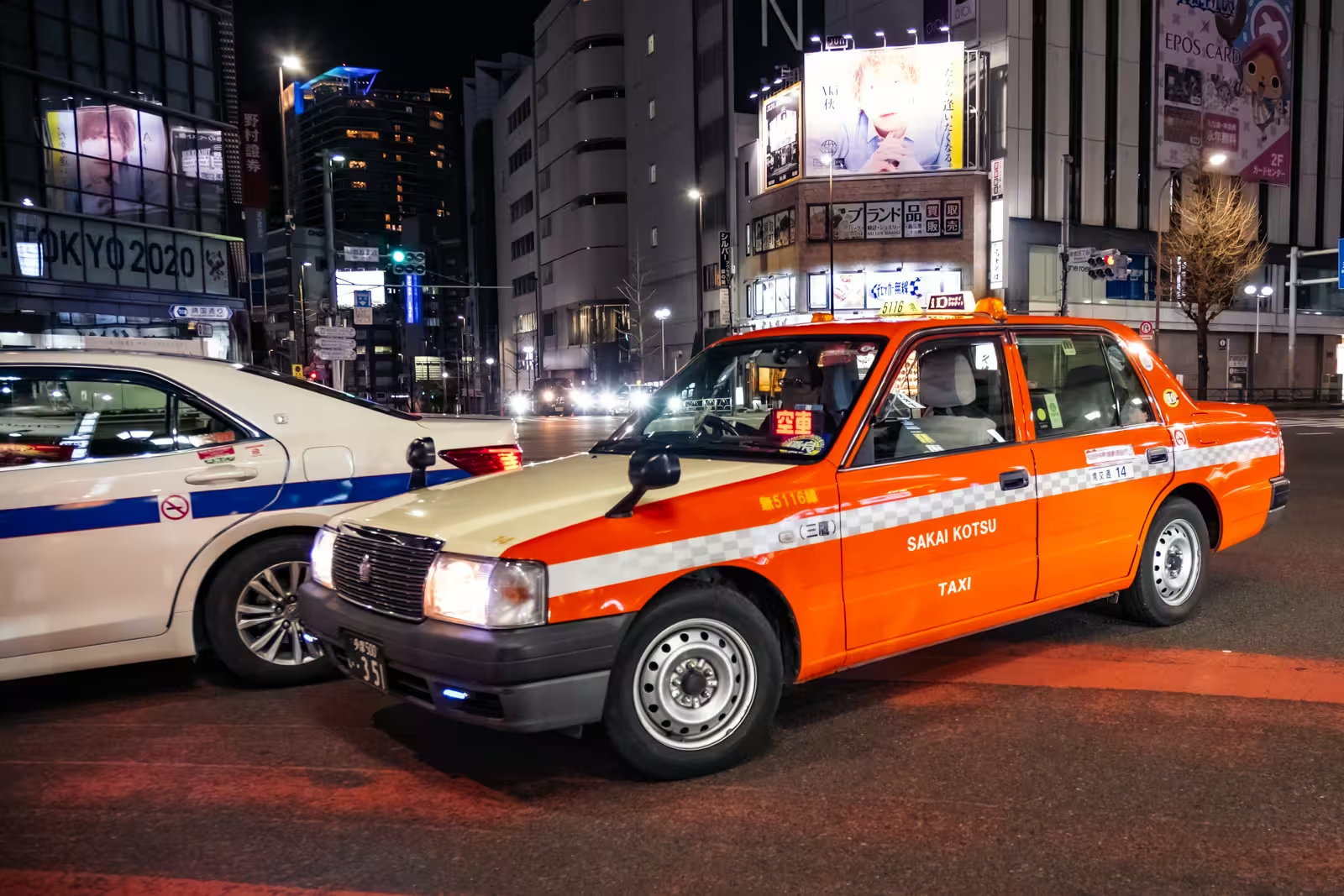
Shinjuku Station’s iconic taxi ranks
Around the colossal Shinjuku Station, the world’s busiest railway station, massive taxi ranks snake for hundreds of meters. This organized system operates like a well-oiled machine.
Drivers patiently wait in line, inching forward as each cab ahead picks up a fare and merges back into the city’s flow. It’s a continuous, rhythmic cycle that repeats itself endlessly throughout the night.
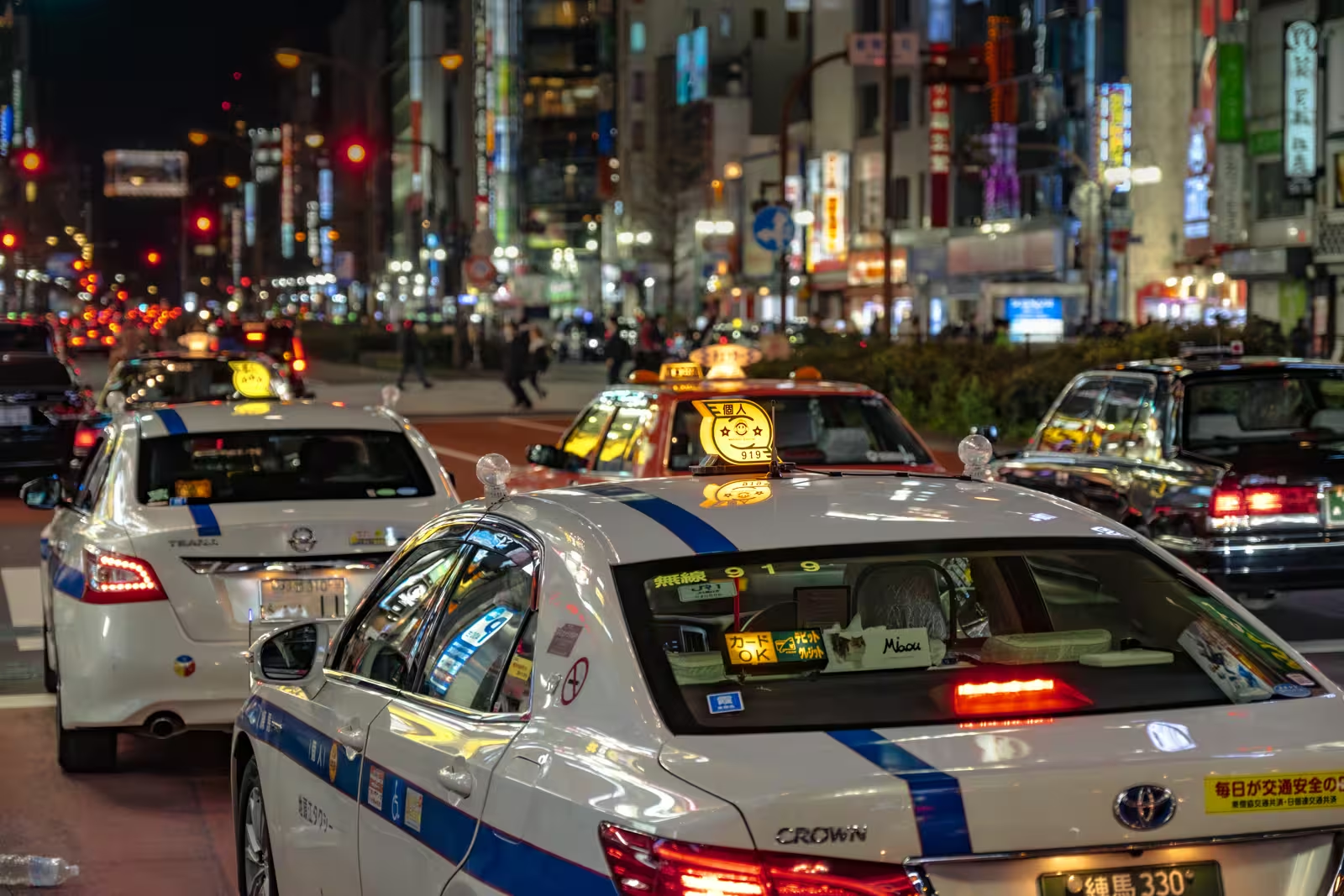
During lulls in business, drivers find moments of respite. Some step out for a quick smoke, others lose themselves in a book, while many seize the opportunity for a brief nap. These quiet interludes offer a stark contrast to the constant motion that defines their profession.
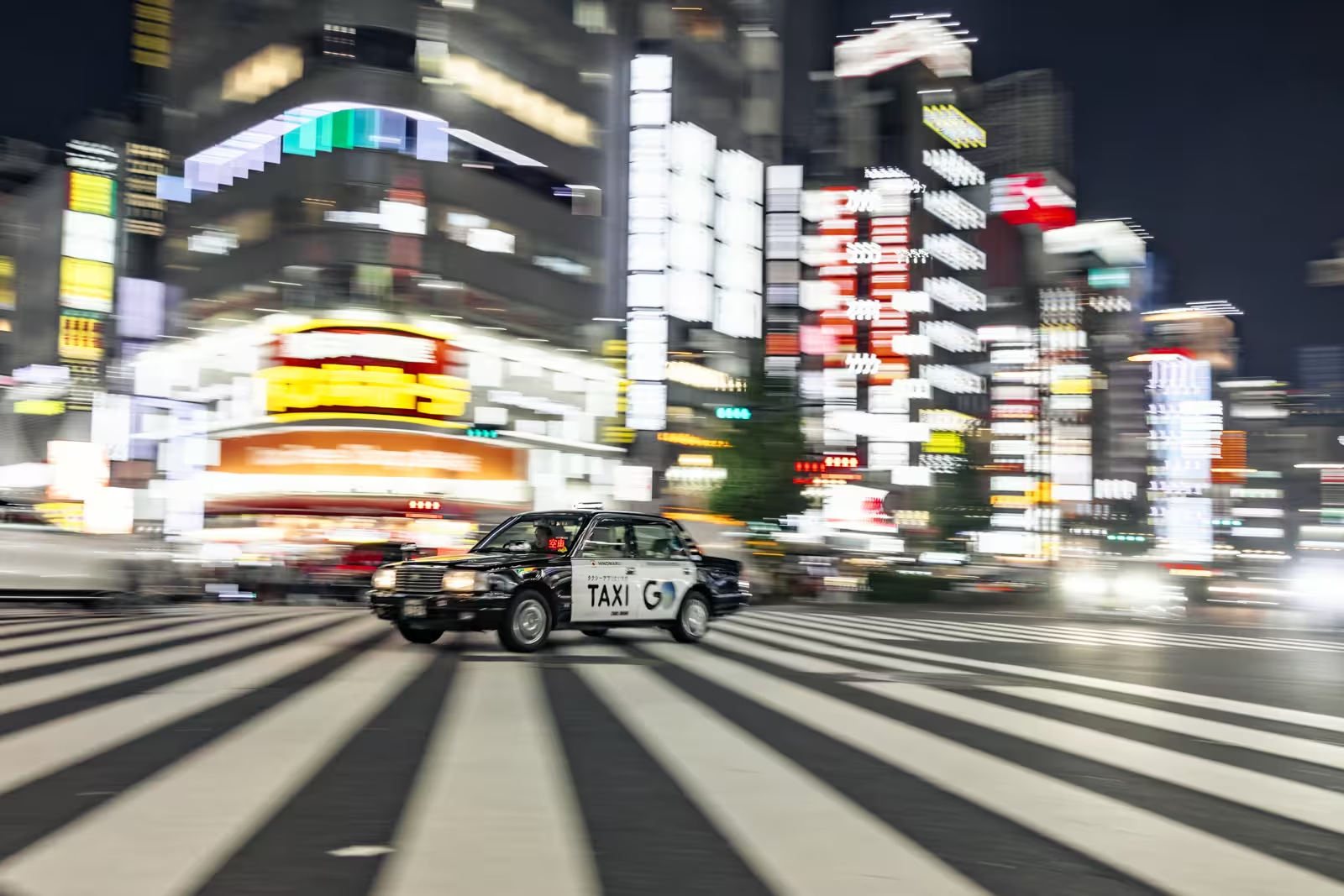
Taxis are vital after midnight
The passengers taxis serve are as diverse as the city itself. Weary office workers, finally liberated from a long day of overtime, are a frequent sight. They share the backseats with part-time employees, students, and revelers drawn to Shinjuku’s electrifying nightlife.
In the entertainment district of Kabukicho, hosts and hostesses rely on taxis for a safe and convenient journey home after a demanding shift.
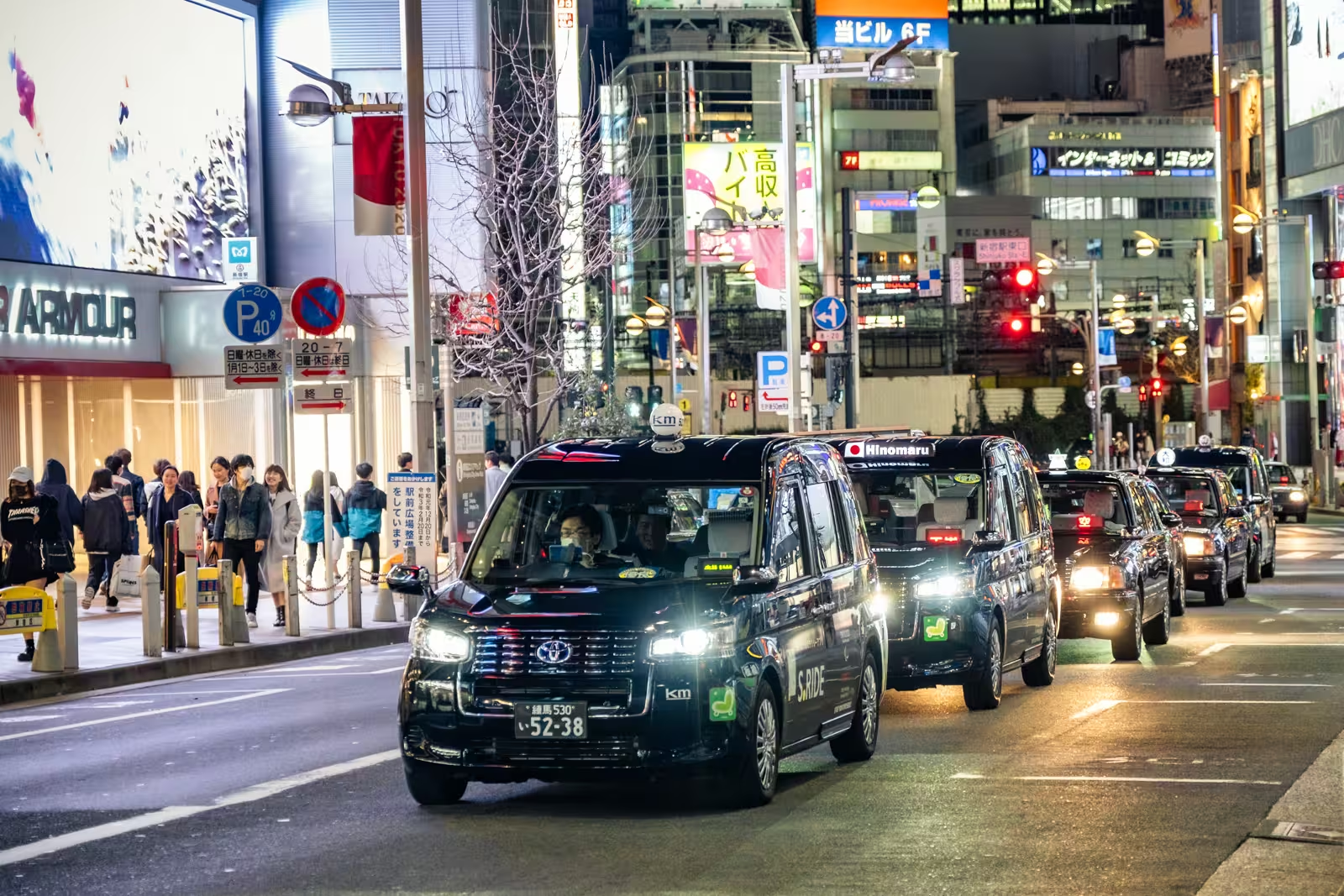
For many, the choice of a taxi over the city’s extensive public transport network is a conscious decision. The last trains from Shinjuku typically depart around midnight, yet the city’s heart beats long into the early hours.
After a grueling workday, the prospect of navigating a crowded train for an hour or more to a distant station in Saitama is daunting. The serene, private sanctuary of a taxi becomes a necessity rather than a luxury.
Taxi vs. car economics in Tokyo
This dependence on taxis is deeply intertwined with the economic realities of life in Tokyo. While car ownership is common in rural Japan, it is a significant financial burden in the capital.
The cost of owning a vehicle in the city is substantial, with monthly parking fees in central areas reaching as high as ¥80,000. Add to this the mandatory biennial vehicle inspections, known as “shaken,” which can cost up to ¥300,000.
It’s clear why private cars are an unaffordable luxury for many. For those on modest incomes, taxis are the more practical and economical choice.
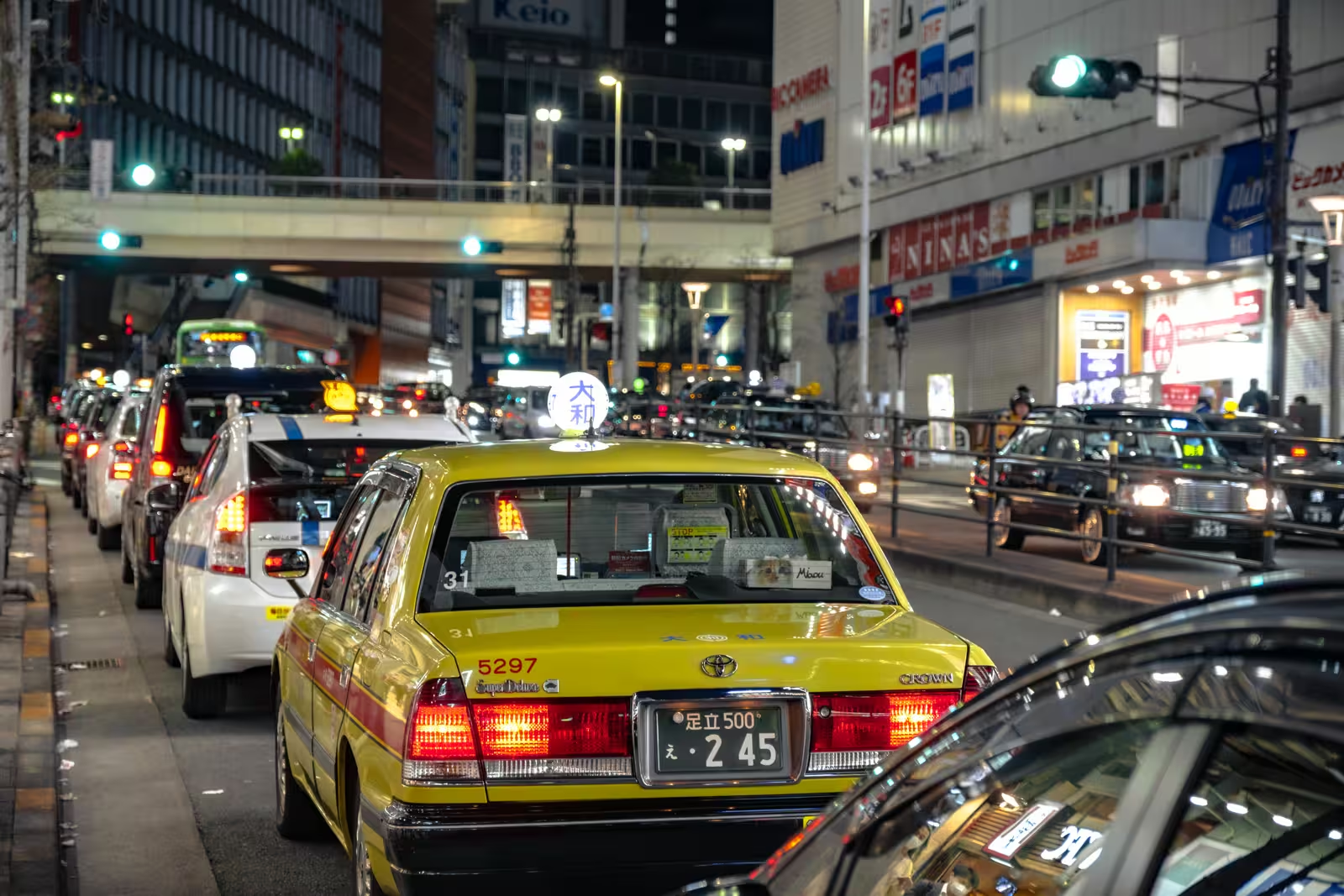
Shinjuku’s after dark atmosphere
Without this fleet of vehicles for hire, Shinjuku’s nightlife would unravel. The shimmering rivers of light would vanish, leaving the towering skyscrapers to stand in quiet darkness. The city’s rhythm would slow.
For many of its inhabitants, the tourists, the office workers, the students, and the hospitality staff, the journey home would become an insurmountable challenge.
Observing the ceaseless flow of traffic from the overpasses above Shinjuku Station at night, one doesn’t just see cars. One witnesses a promise fulfilled. In this city of perpetual motion, a ride home is always available, no matter the hour or the destination.
Taxis are the silent, steadfast current that flows beneath the neon glow, an indispensable force that defines the Shinjuku spirit. If you’re planning to navigate the city after the last train, safety tips and fare information is on the [Tokyo Taxi Association’s official guide].
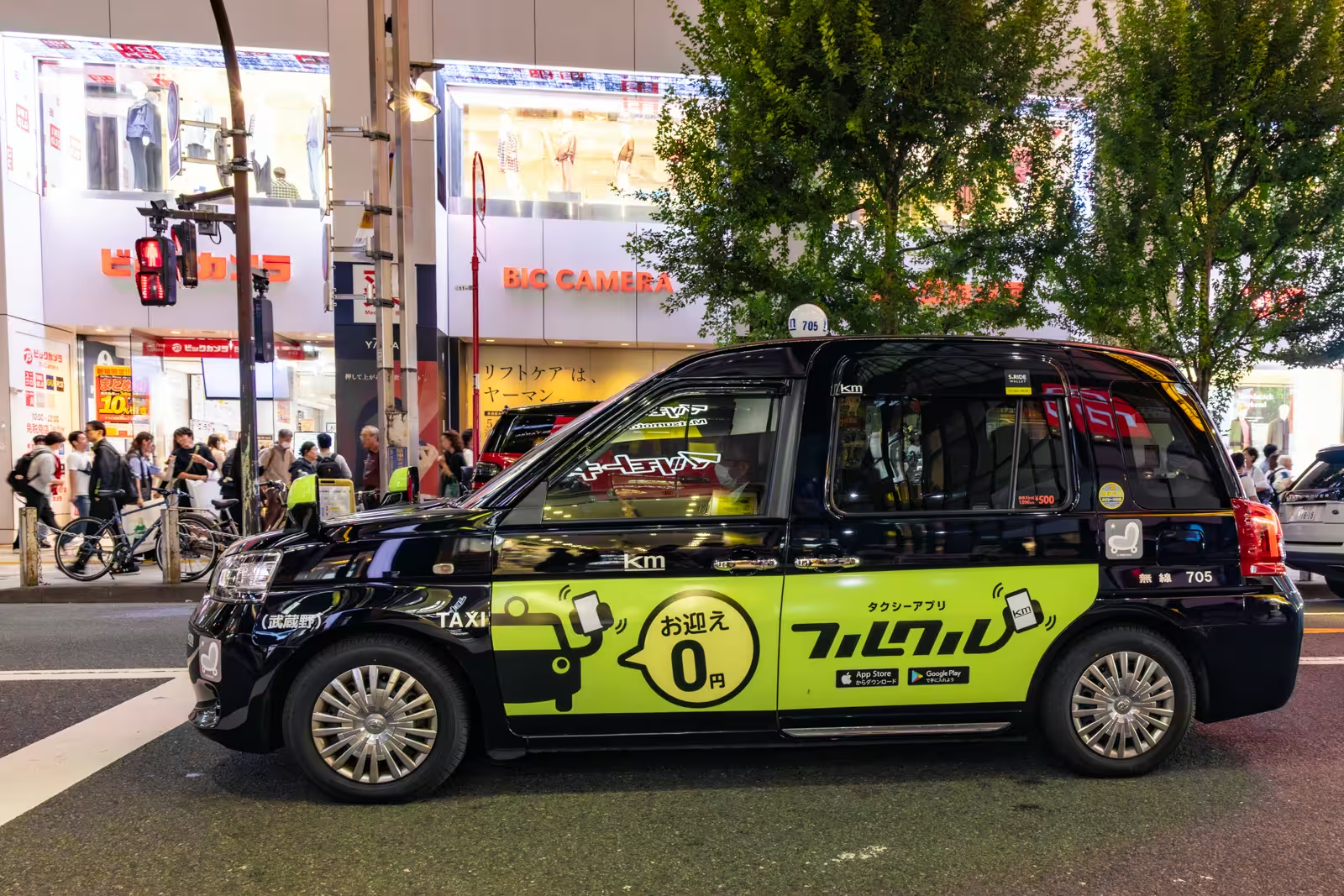
A different Shinjuku view
Once you are finished with the taxis you should get above them to see another side of the city. Head to the free Tokyo Metropolitan Government Building observatories on the 45th floor to enjoy the spectacular night views.
My photography gear for this shoot
- Camera body: Fujifilm X-T2
- Lens: Fujinon XF 16-55mm F2.8 R LM WR