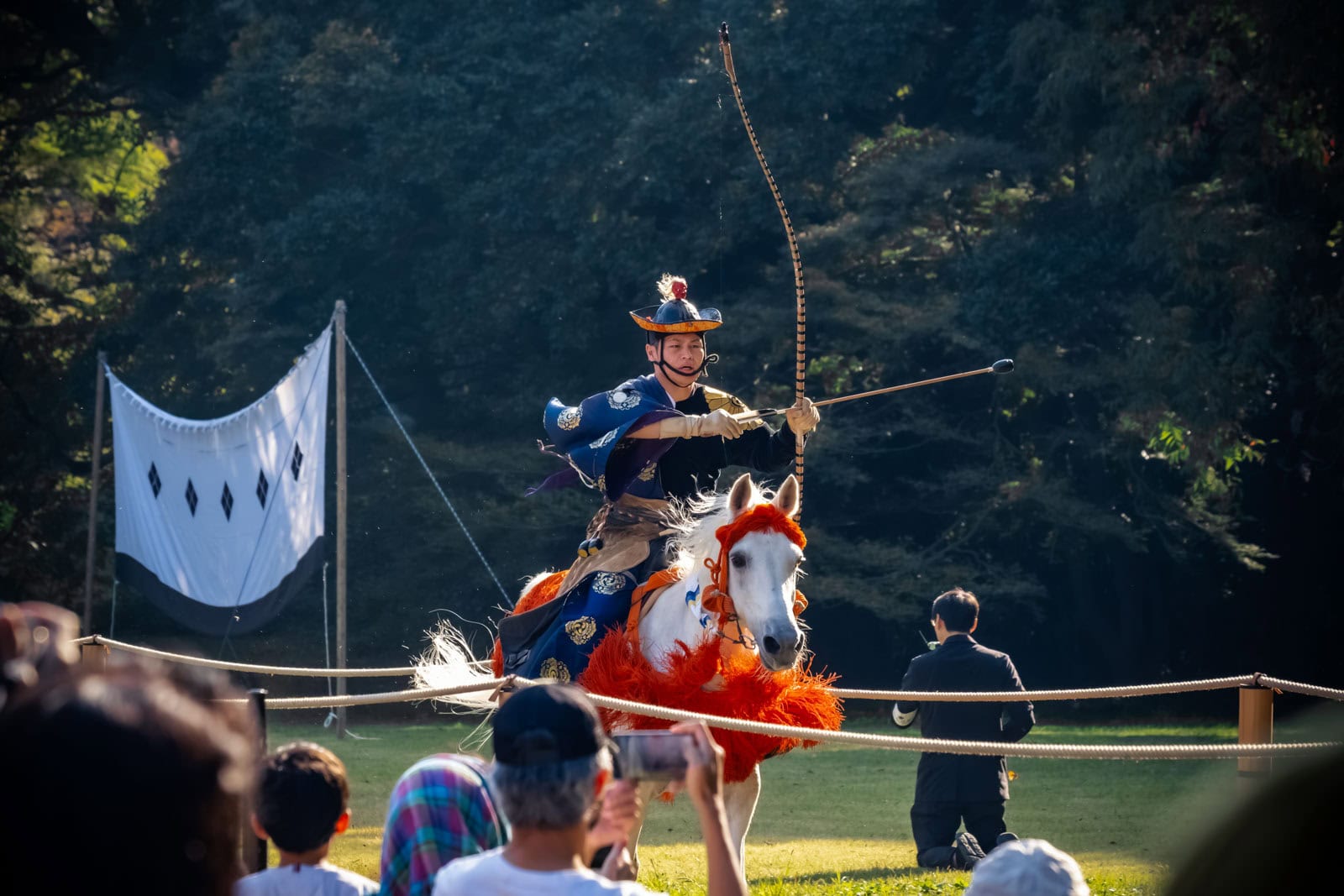
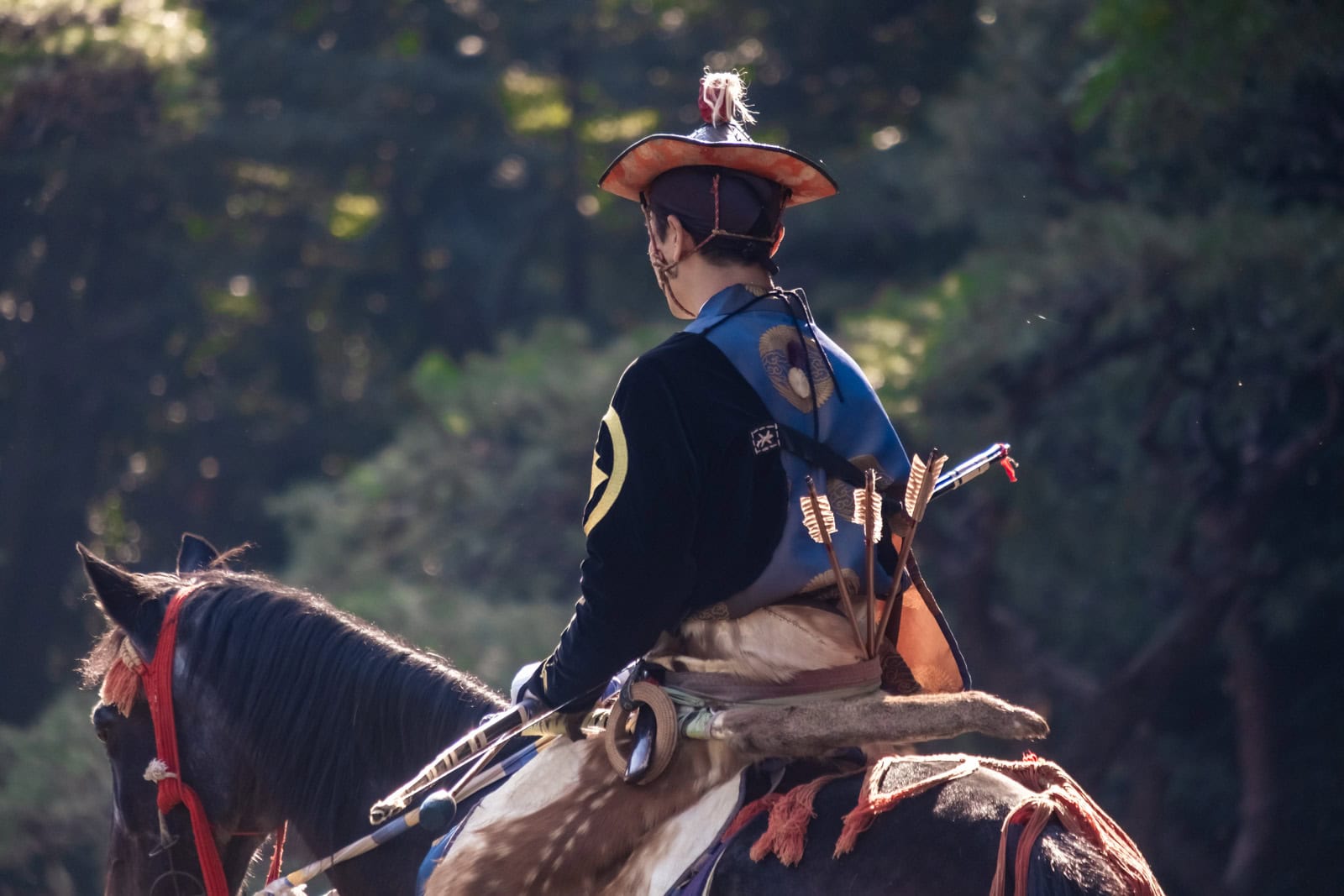
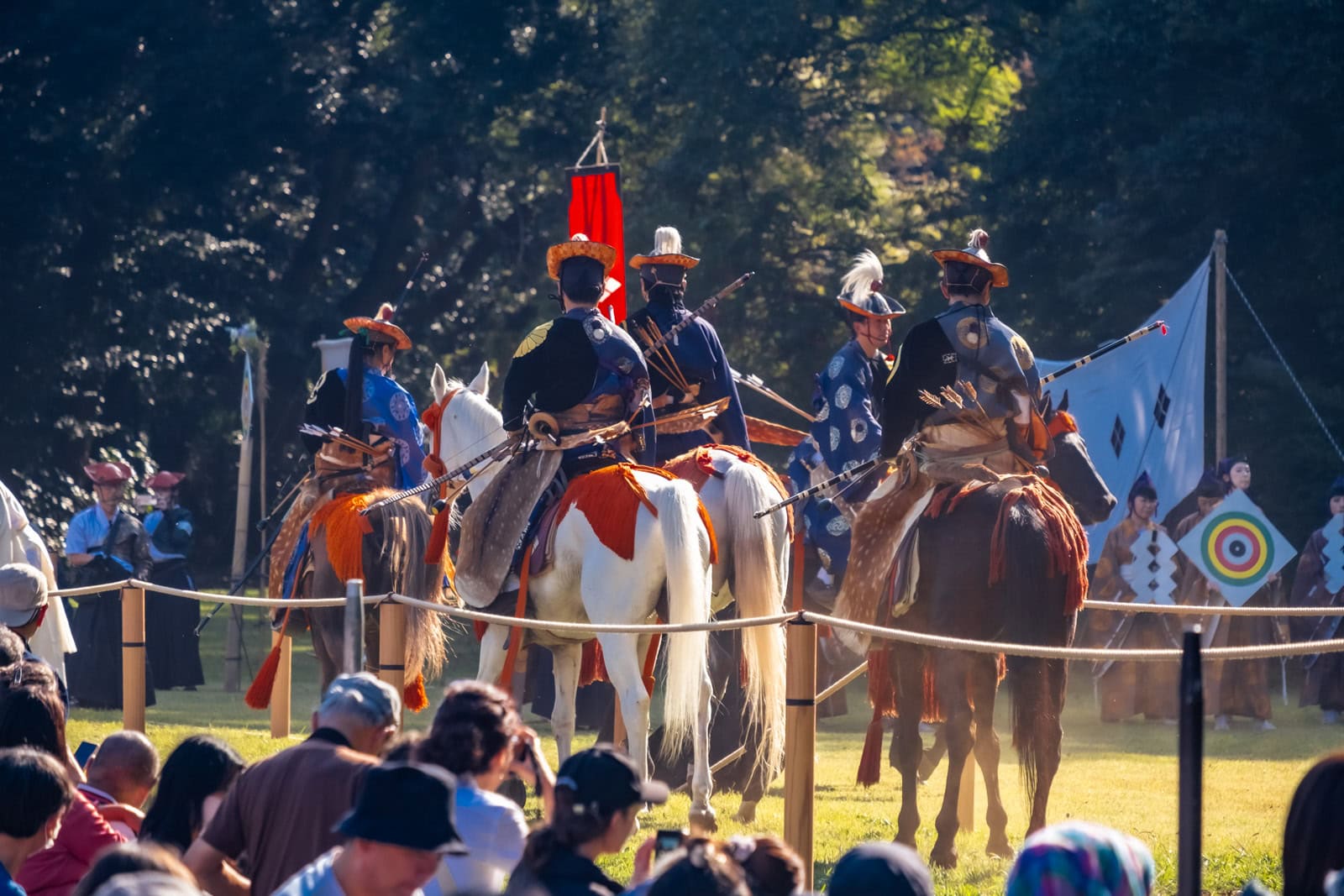
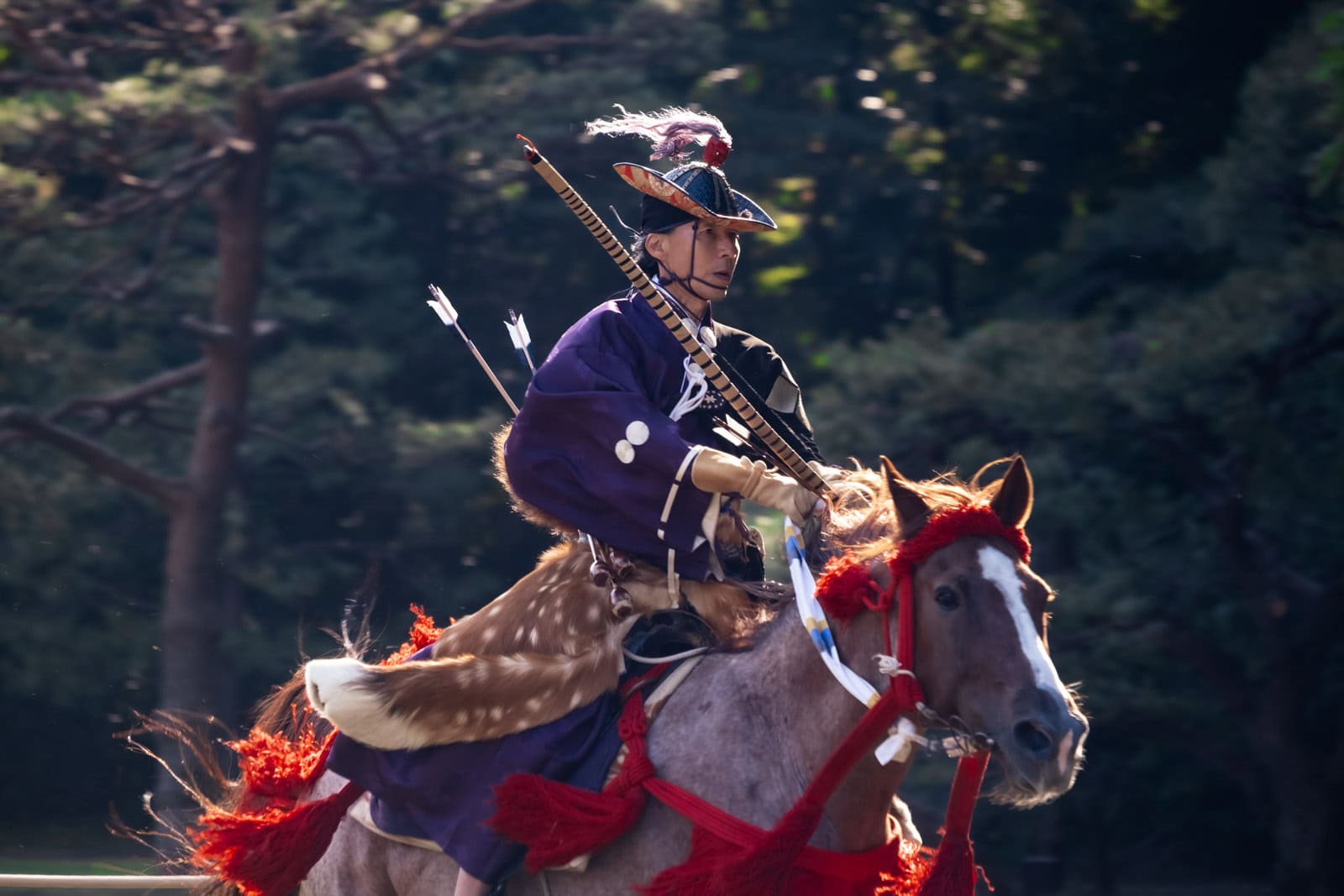
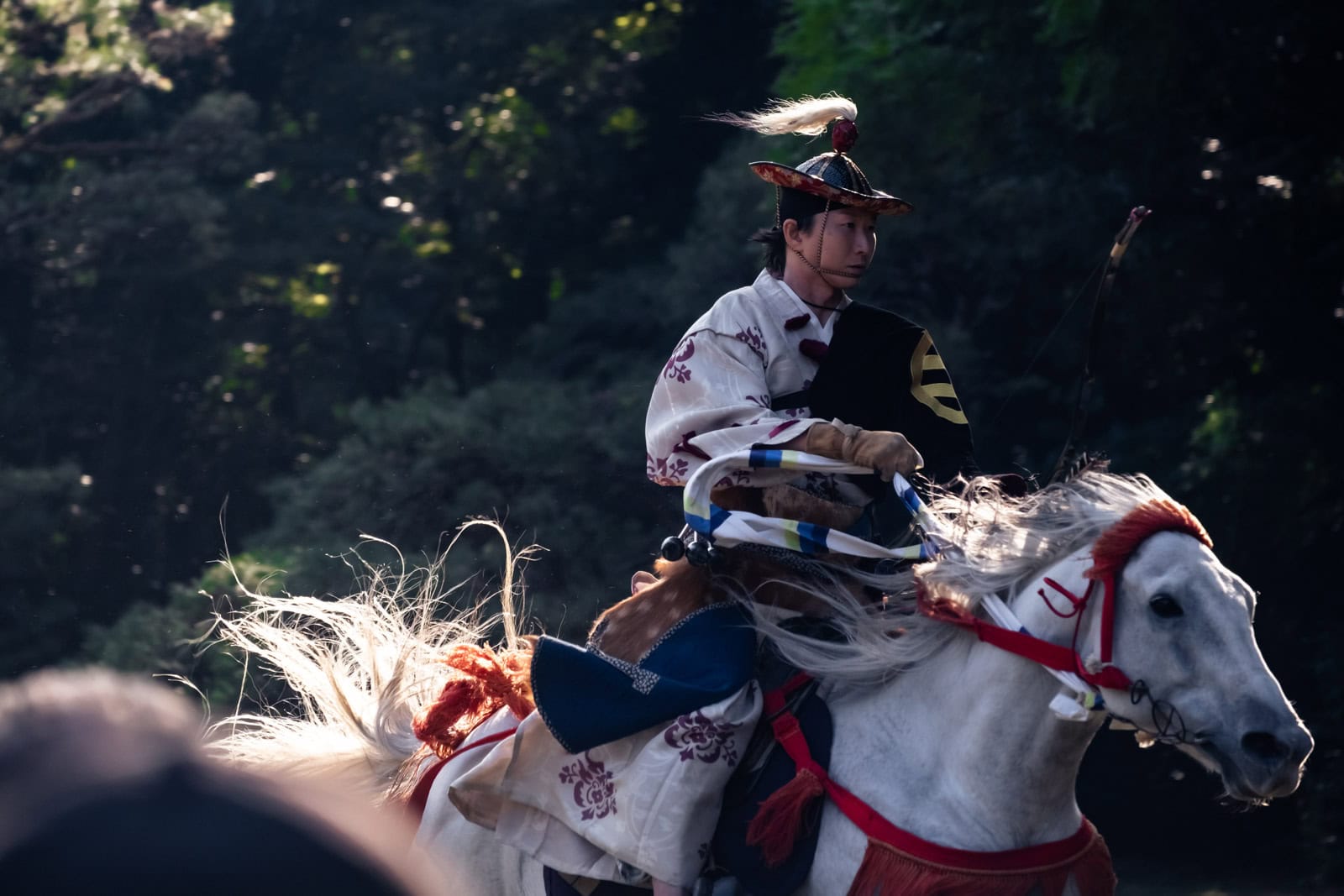
The first rider thundered past, a blur of hitatare silk, a bow, and arrows. This was Yabusame, a Shinto ritual of horseback archery that dates back to the sixth century.
The goal is simple: hit three paper targets while charging down a 218-meter course. But watching the raw speed of the horse and the intense focus of the archer, you understand this is anything but simple.
It’s a breathtaking, and potentially dangerous, display of skill.
What happens at the Autumn Grand Festival?
I attended the Meiji Shrine Autumn Grand Festival 2023, a three-day celebration of Emperor Meiji’s birthday held right in the heart of Harajuku. The festival is an annual event that showcases Japanese culture.
While I saw impressive demonstrations of Aikido, the clash of bokken, and even the lightning-fast slices of real katanas, it was the Yabusame I had come for.
Photography guide for yabusame
People are a problem
As a photographer, capturing this high-stakes action presented its own set of challenges. My main problem wasn’t even the blistering speed of the horses, but the density of the crowd. Packed in the middle, my lens was constantly fighting a sea of heads.
I could hear the horses thunder down the runway and was ready to shoot. But, someone would decide to suddenly pop up or stand, often blocking my line of sight. It demanded constant attention.
Camera settings for yabusame
Yabusame is “blink and you miss it” fast. To ensure you don’t go home with a memory card full of blurs, follow these settings:
- Burst mode: Essential. Don’t rely on single shots; fire off a high-speed sequence as the rider approaches.
- Continuous focus (AF-C): This was a lifesaver for me. It locks onto the subject and tracks them through the frame.
- Auto ISO: Experiment with your shutter speed and aperture for a few runs and dial them in. Then let the camera handle the ISO to maintain exposure as clouds move.
- Shutter speed: Yabusame is lightning fast, so set your shutter speed appropriately. Many of my action shots were taken at 1/1000 sec. But you could go much slower for creative purposes.
Best locations & positioning
You need to get a good position. If you want the best shots, you must arrive early (at least 1–2 hours before start) to claim a spot along the rails.
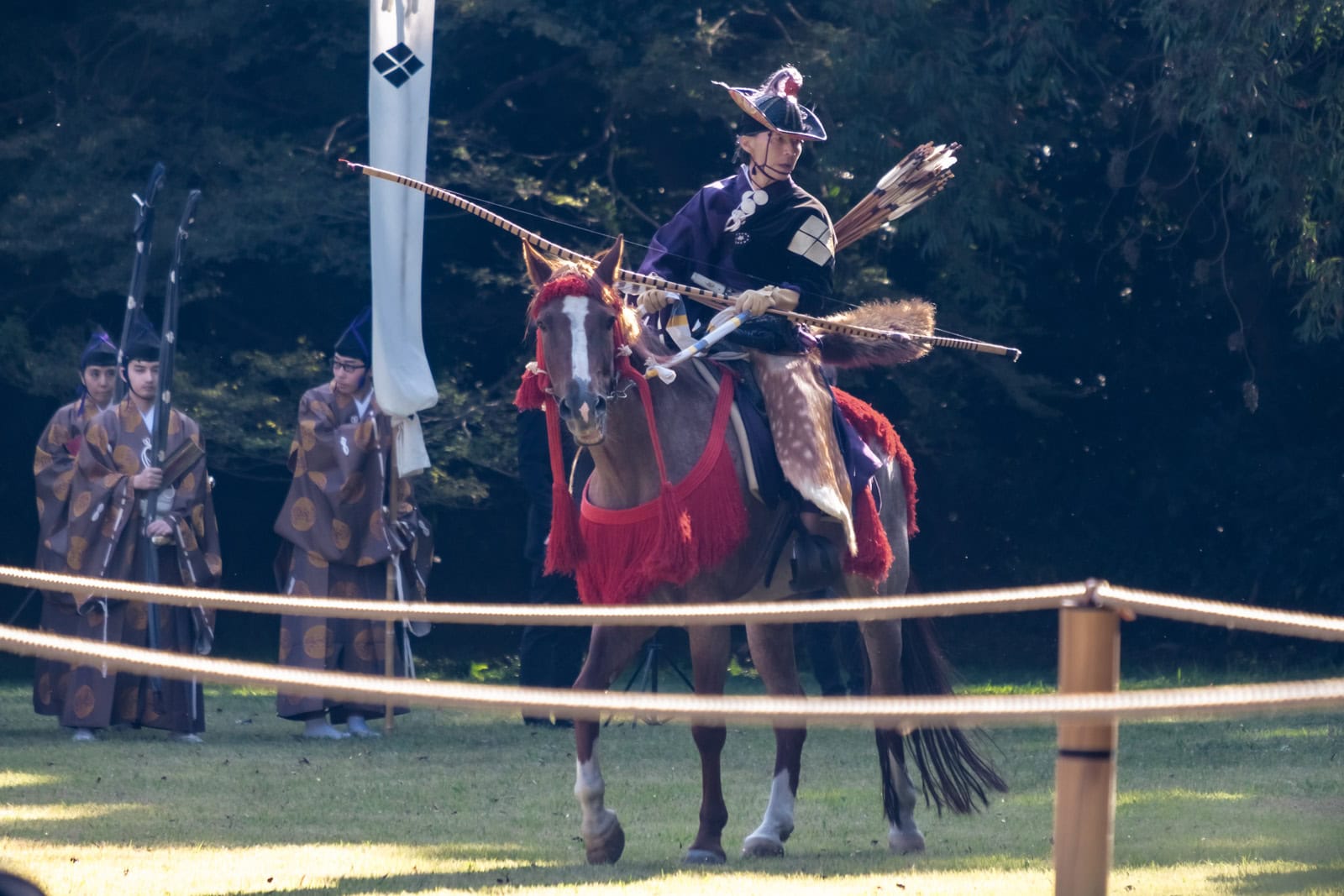
- The start of the runway: Great for shots of the riders calming the horses and preparing their bows.
- The end of the runway: My top recommendation. The horses are running almost directly toward you, making it easier for your autofocus to keep the subject sharp.
- The mid-section: You’ll see the riders whizz by, and the targets. It’s the dramatic spot for “shattering target” shots. But you’ll also be panning as the horses charge by. The amount of movement here makes it the hardest to shoot from.
Kenjutsu & samurai sword demonstrations
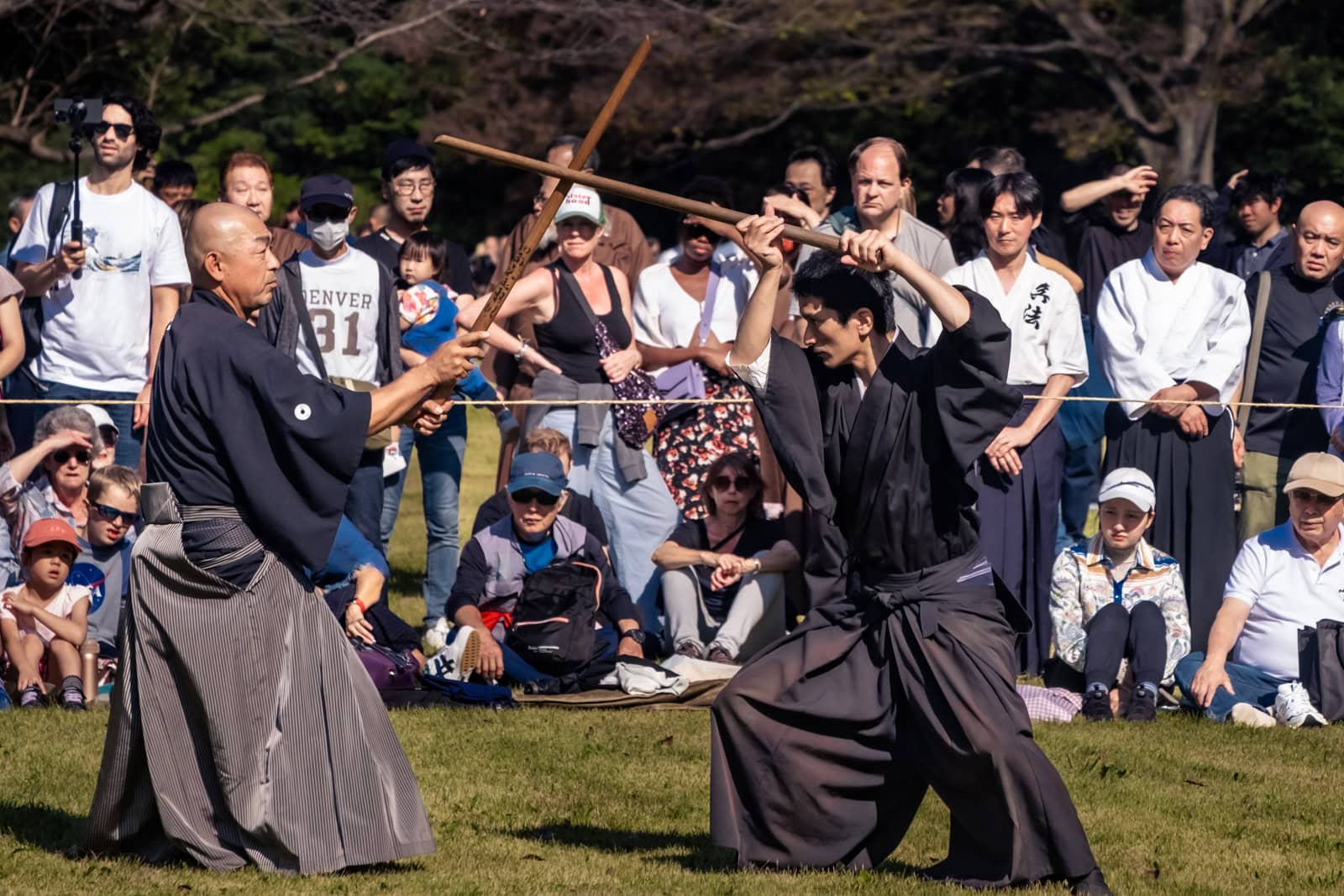
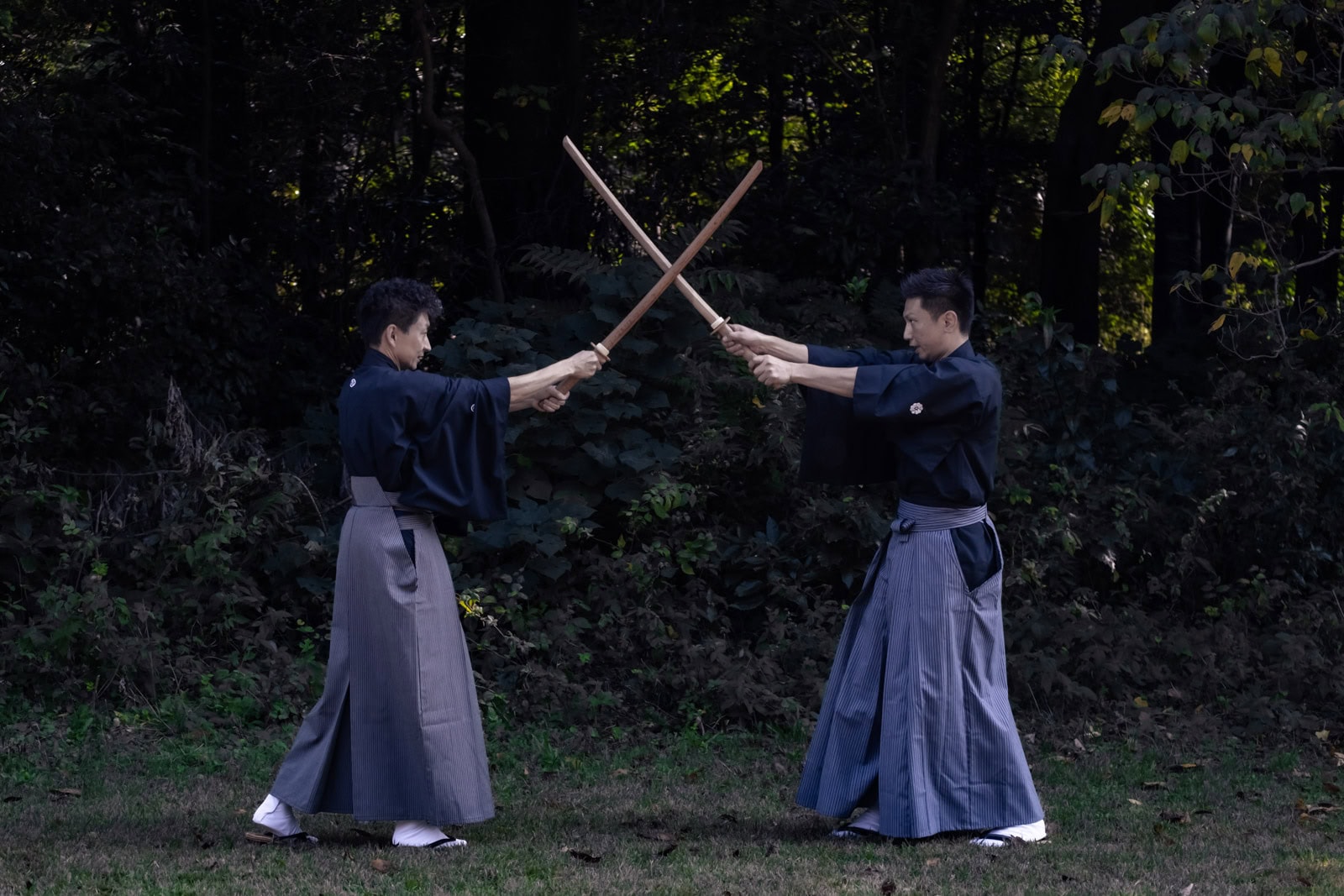
Another sport on display at the shrine was kenjutsu which was about sword techniques. One group used bokken (wood swords) and showed their sparring skills to an appreciative audience. That was fun, hearing the clash of weapons hit each other.
The second group used the real thing, katanas. These weapons are obviously dangerous by their very nature, so only the advanced students use them. They showcased iaido and kenjutsu, the traditional Japanese arts of samurai swordsmanship.
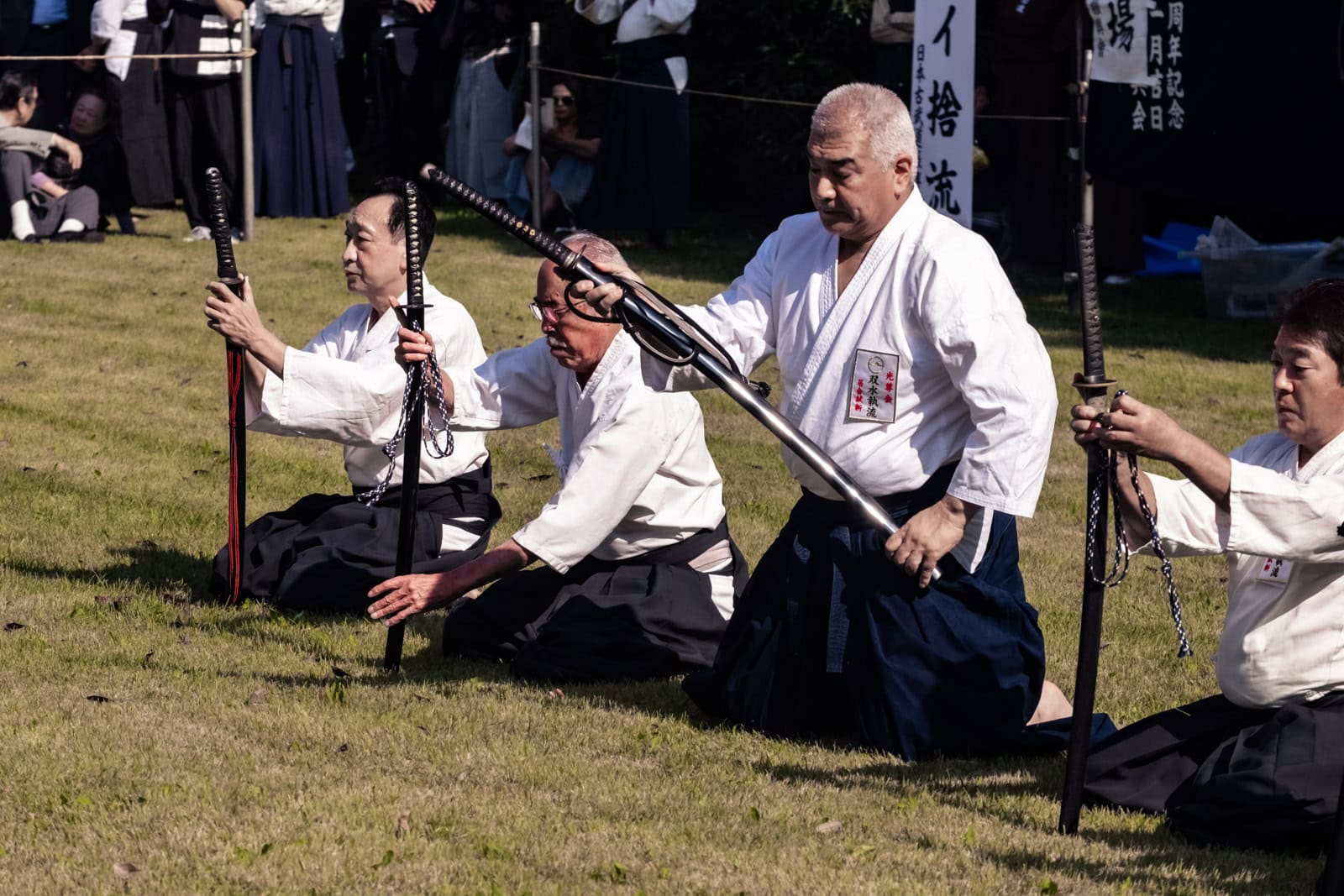
The practitioners focused on disciplined, prearranged, and high-speed techniques rather than competitive sparring.
Origins of Japan’s horseback archery start
This ancient sport is steeped in history. While many associate it with samurai skills from the Warring States Period, its origins are actually as a Shinto ritual, first performed by Emperor Kinmei in the 6th century.
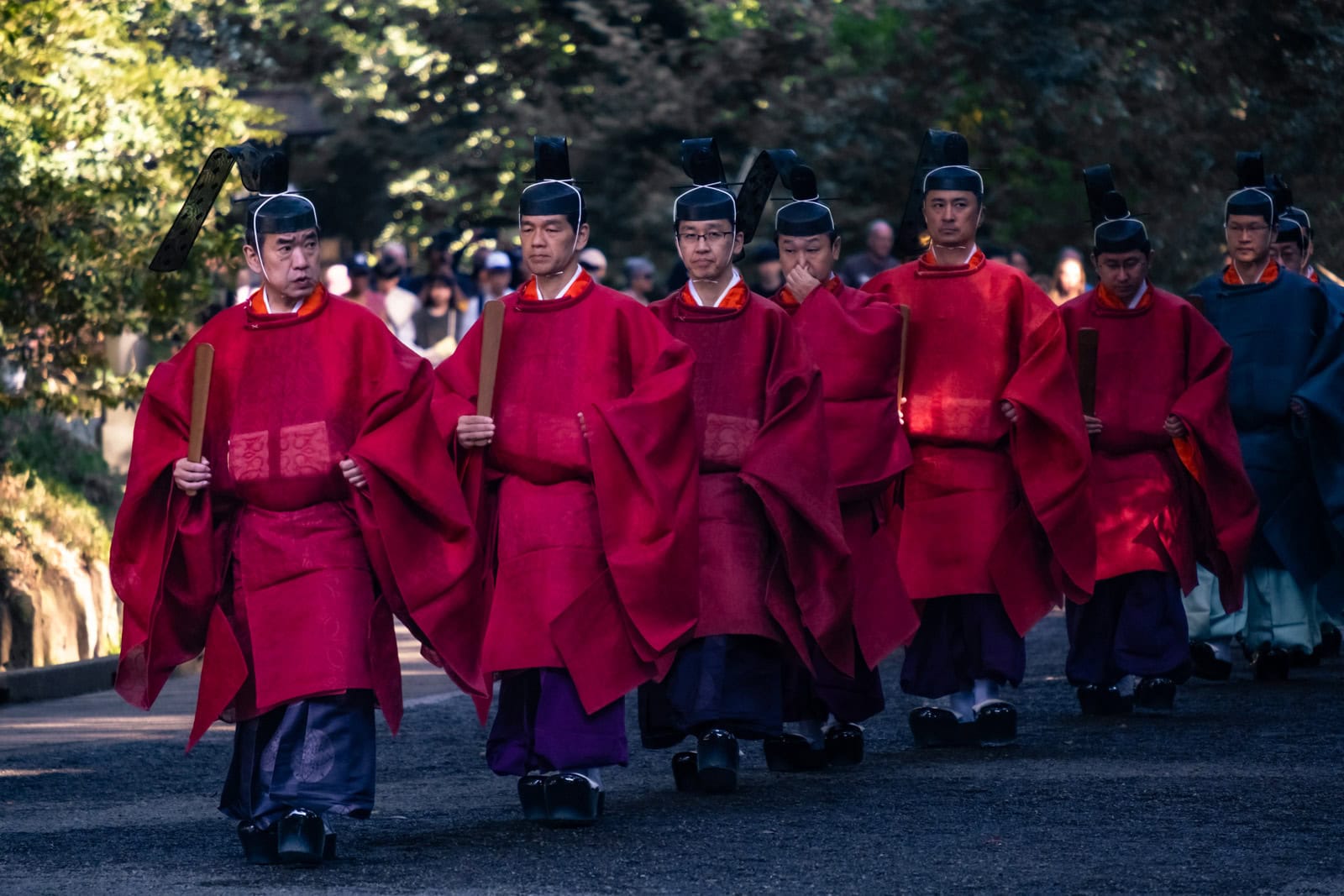
Minamoto no Yoritomo formalized it in the 12th century to improve his samurai’s discipline and skill. That spiritual connection is still palpable today. Before the first run, Shinto priests in white robes performed a blessing, their low chants carrying over the hushed crowd as they purified the bows and arrows.
It’s said that some exhibitions are used to predict the fortune of the coming year—the more targets hit, the better the harvest. With the fate of the year potentially on the line, the stakes felt incredibly high.
Should you attend the yabusame event?
The Meiji Shrine Grand Autumn Festival is a martial arts display with the Yabusame the centerpiece. I bet even after seeing it, you’ll remember the percussive thump-thump of hooves on the runway, the snap of the bowstring, and the thud of arrows finding their mark.
It’s more than a sport; it’s a piece of Japanese history, charging at full speed right before your eyes. I’m already counting the days until I can witness it again. If you want to see horse archery in the Kanto area check the schedule on the Japan Equestrian Archery Association website.
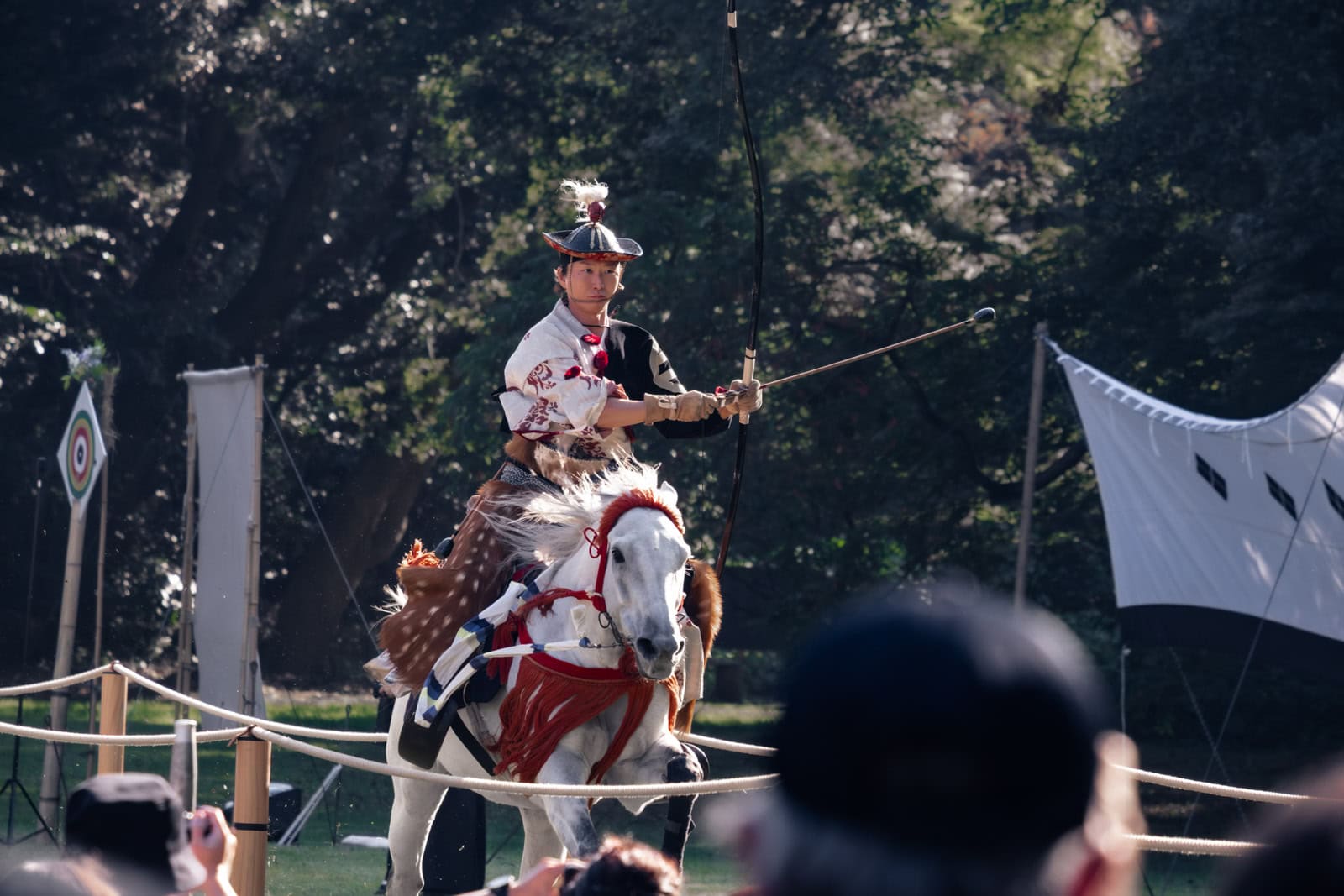
Date of Photos: 3 November, 2023