Shibuya Mikoshi Parade 2025
The Shibuya Mikoshi Parade is one of Shibuya’s largest and most spirited annual events. It is a deeply rooted Shinto tradition that prays for a bountiful harvest, prosperity, and the well-being of the local community.
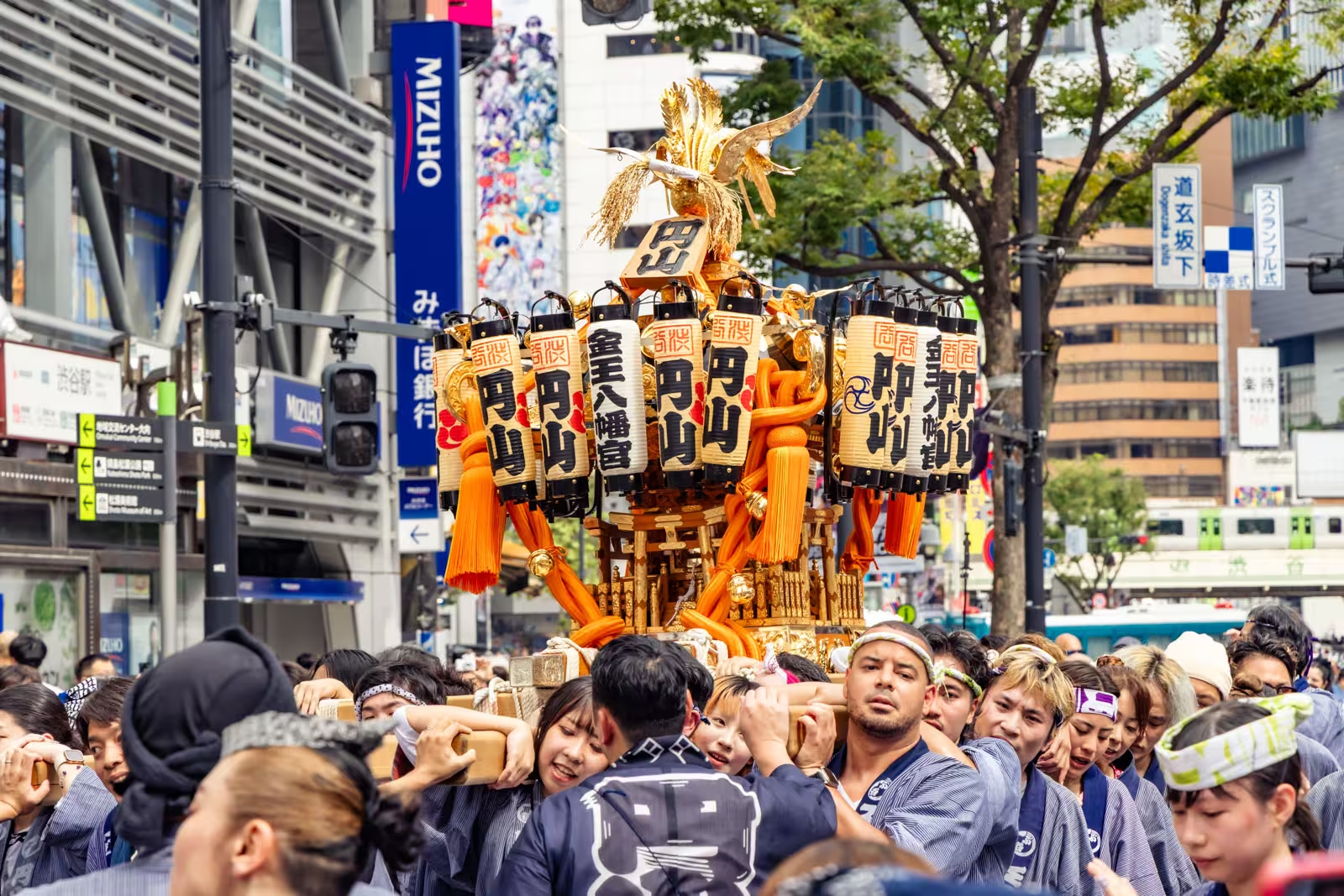
Originating at the nearby historic Konno Hachimangū Shrine, the festival transforms the heart of the area into a showcase of traditional Japanese culture. For several days in autumn, the shrine grounds are bustling with a variety of events, from sacred rituals to lively entertainment.
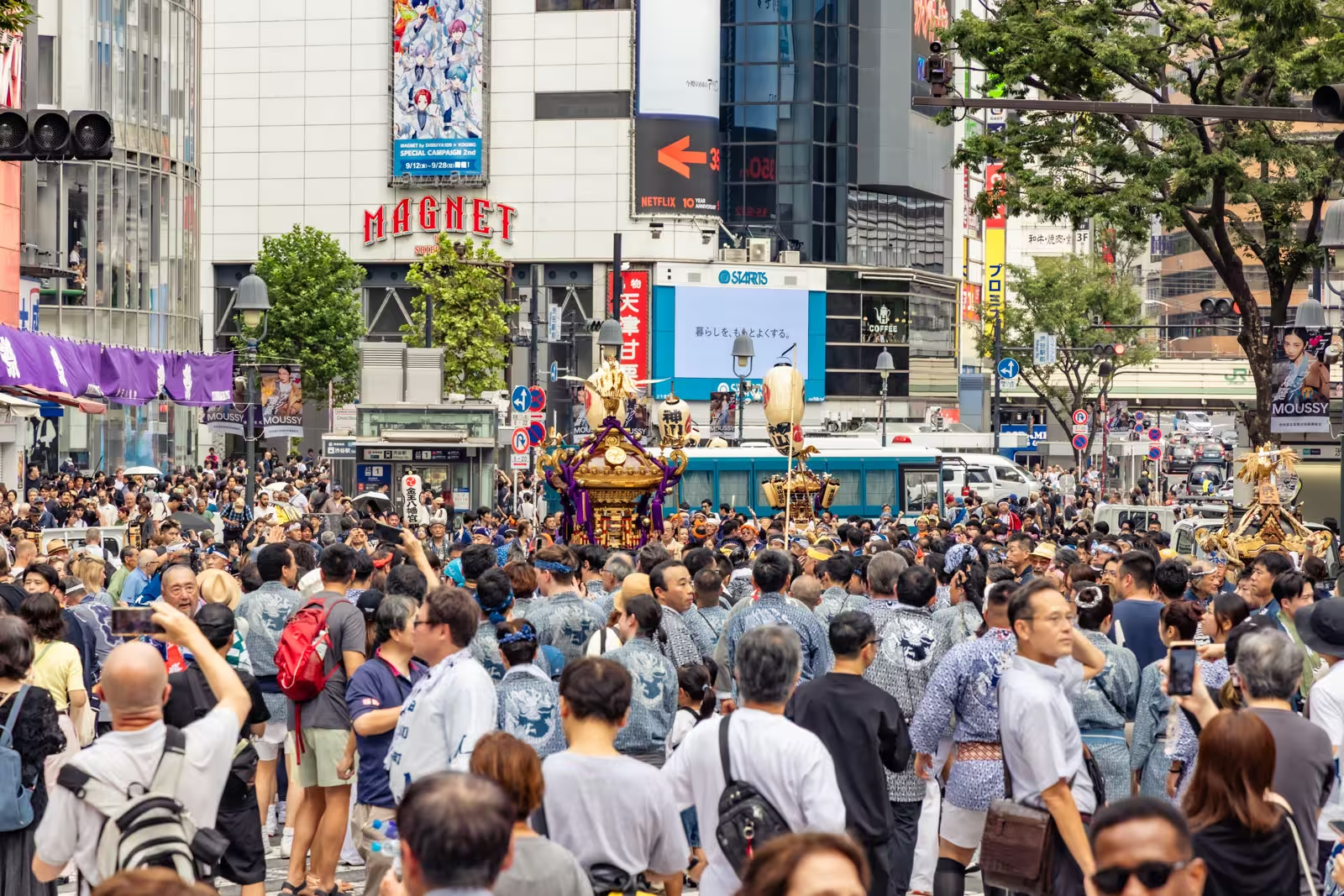
The best part of the festival is the mikoshi parade. While I didn’t make it to the shrine for the main festivities in 2025, I did photograph the procession which was a fantastic opportunity for Japanese festival photography. It might have been much smaller than Asakusa’s Sanja, but the participants displayed just as much energy and enthusiasm.
Shibuya Mikoshi Parade traditions
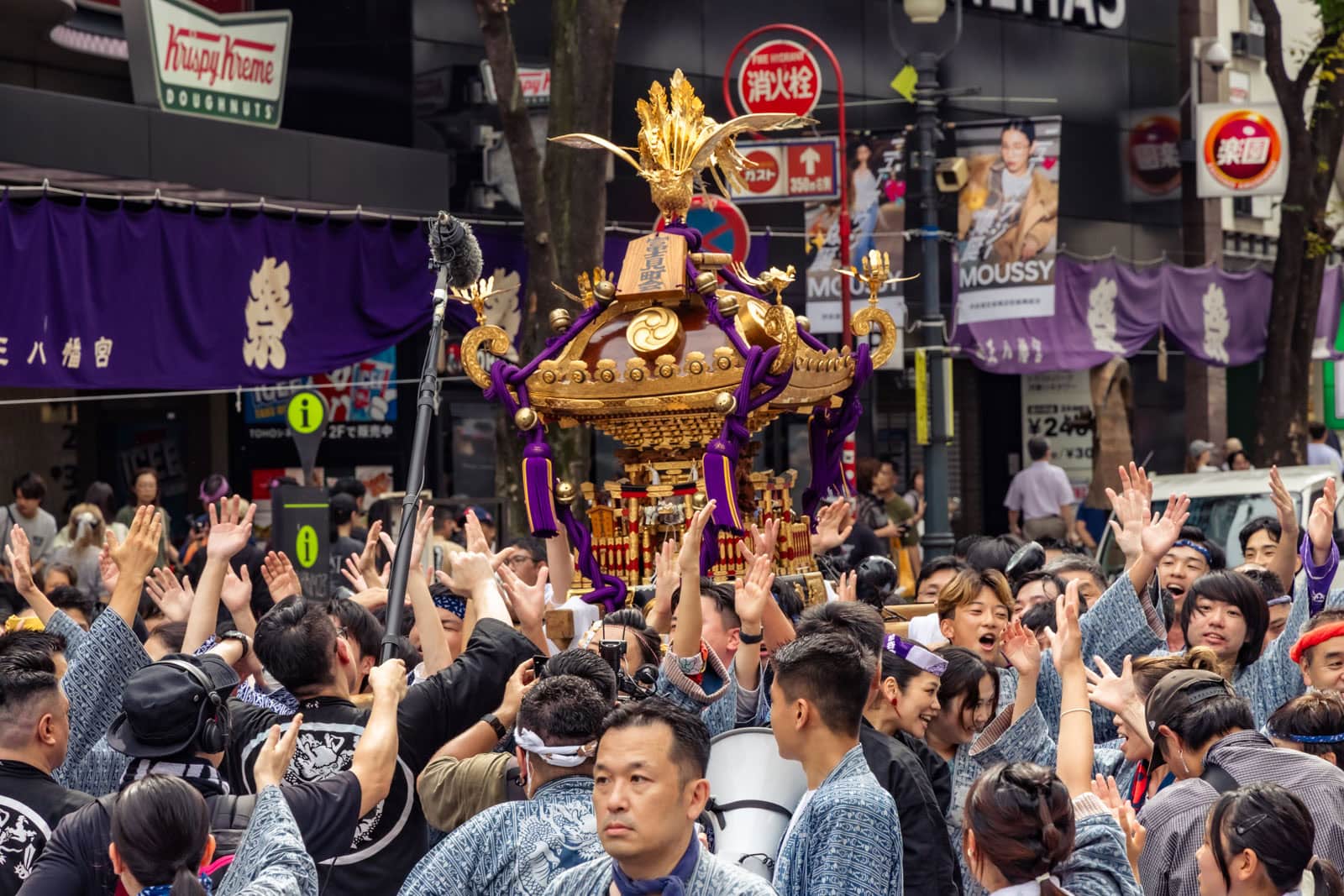
The undisputed highlight of the festival is the appearance of the mikoshi (portable shrines) on the final day. Fourteen of them paraded through the streets of Aoyama and Shibuya, creating a huge spectacle. They came together in front of the iconic Shibuya 109 building.
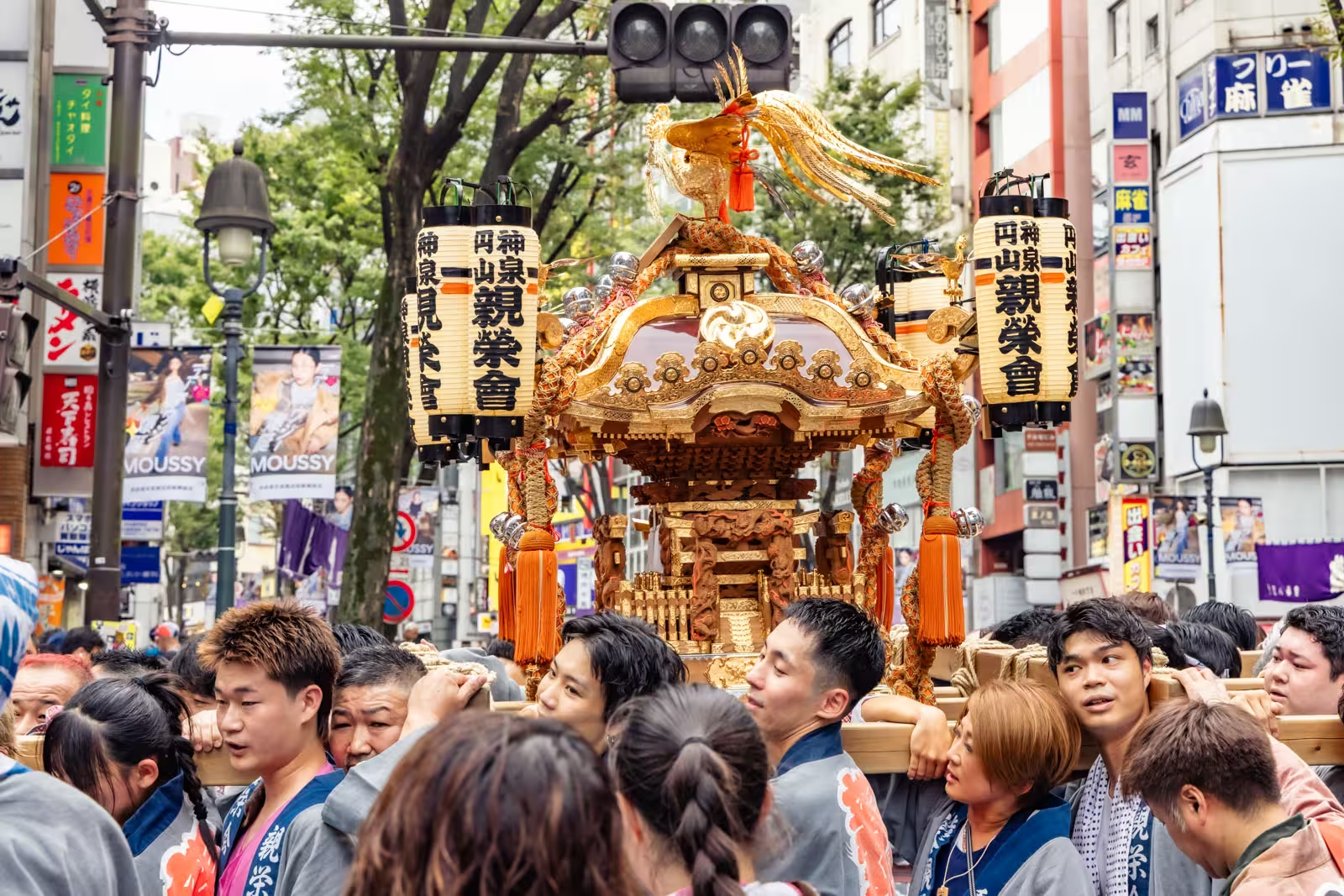
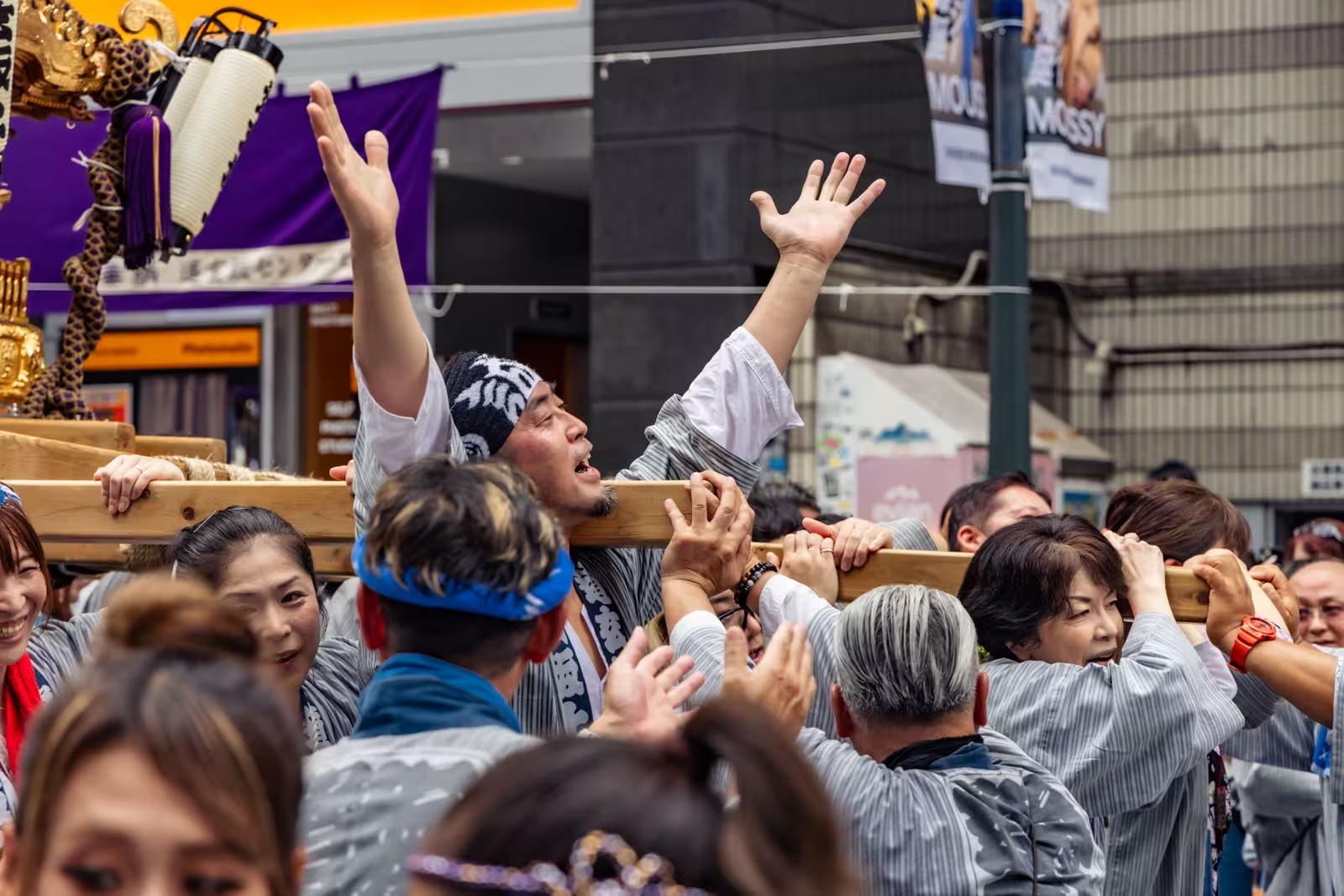
The spirited chants of the carriers and the enthusiastic crowds create a palpable sense of unity and excitement. This convergence of tradition and modern cityscape brought an enormous crowd to the area.
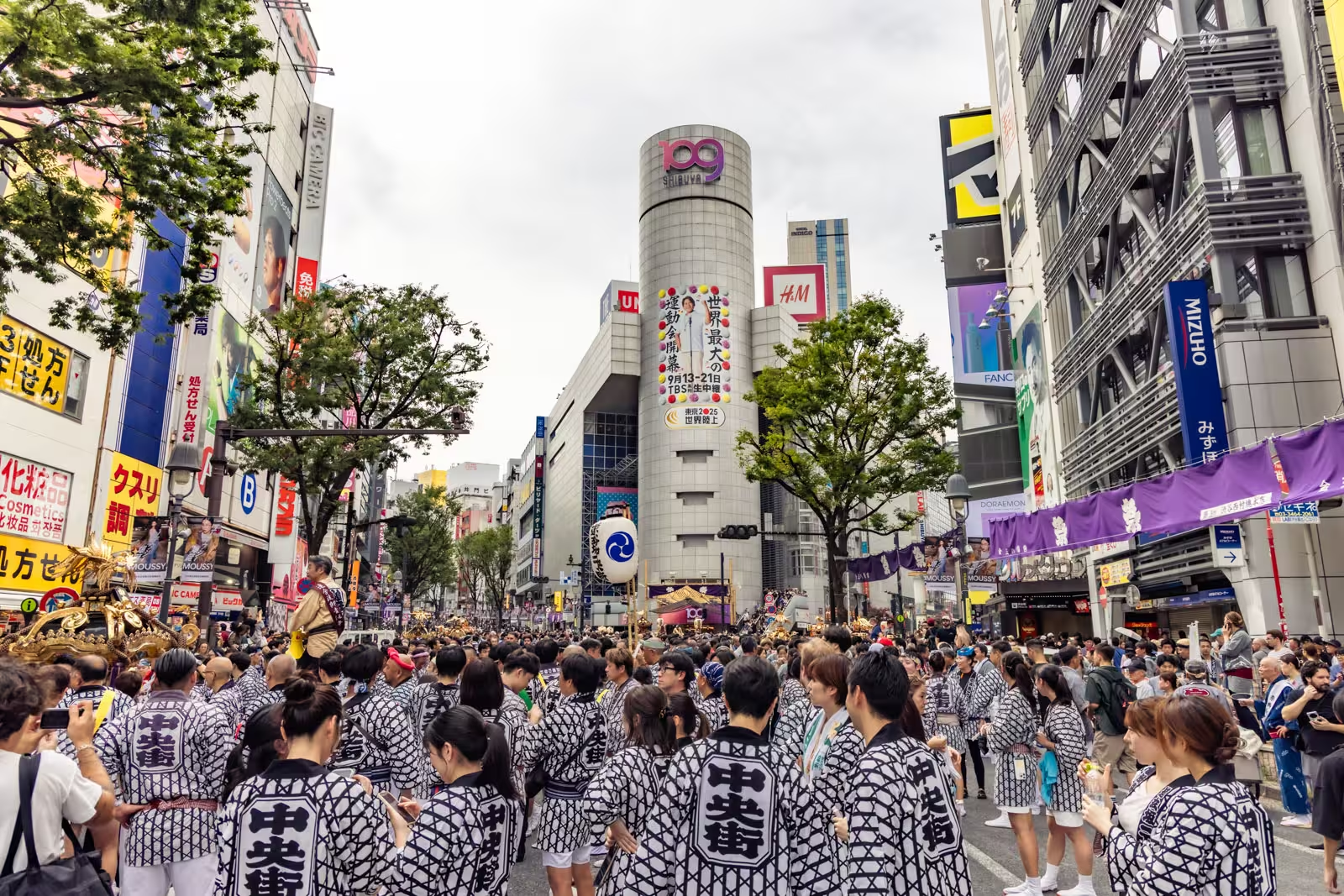
It was something completely new for me to see the mikoshi make their way down a hill lined with shops and businesses. A mass of festival lovers turned out to see the event, with the police blocking off the road to traffic to accommodate the procession. The energy of the carriers, dressed in traditional happi coats, was infectious as they rhythmically swayed and hoisted the heavy shrines.
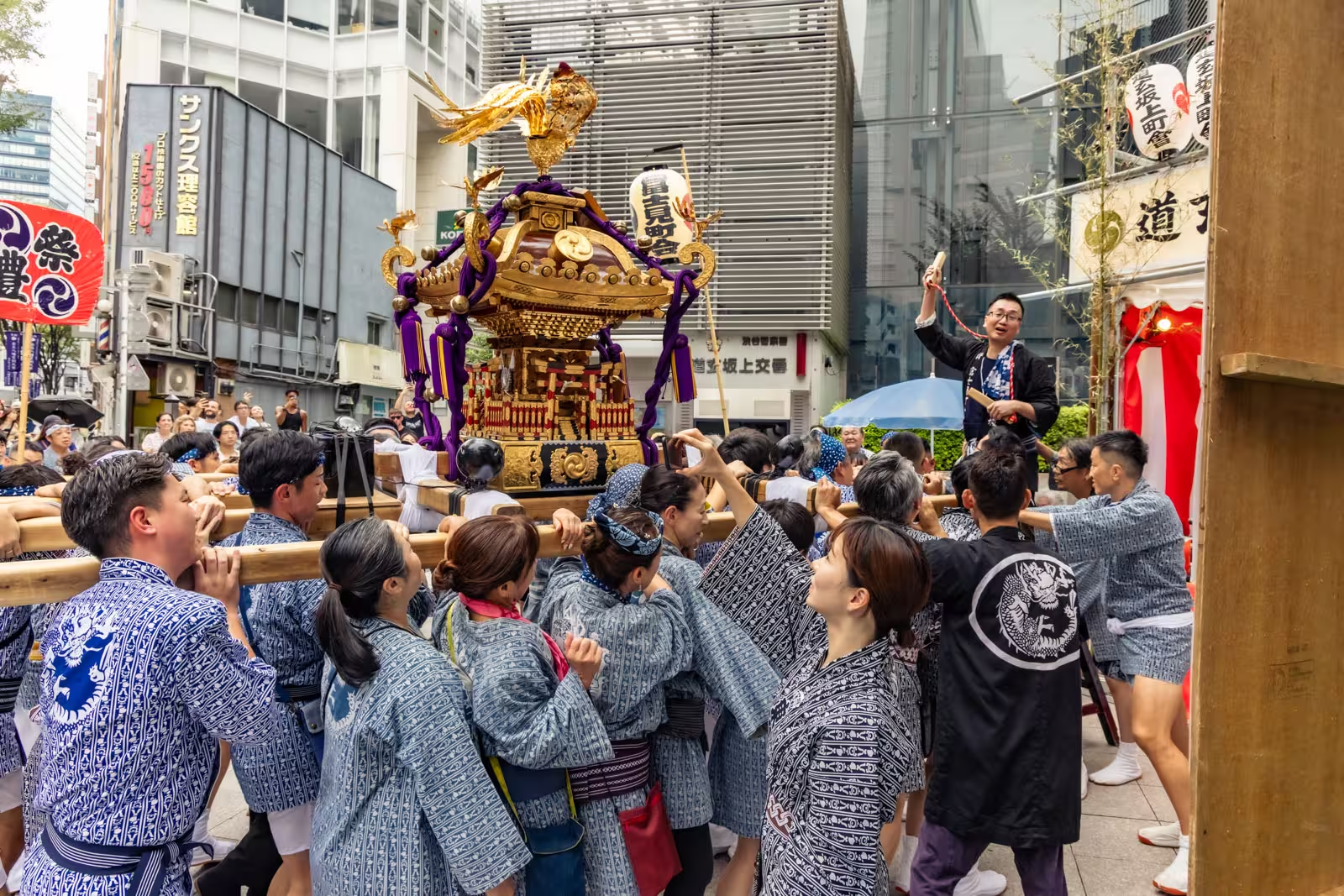
Shooting at Dogenzaka Hill
I chose to take my photos from Dogenzaka, the famous hill near the Shibuya 109 department store. As I settled in, it was fascinating to think about the history of the spot itself. The origins of the area’s name are a subject of some debate.
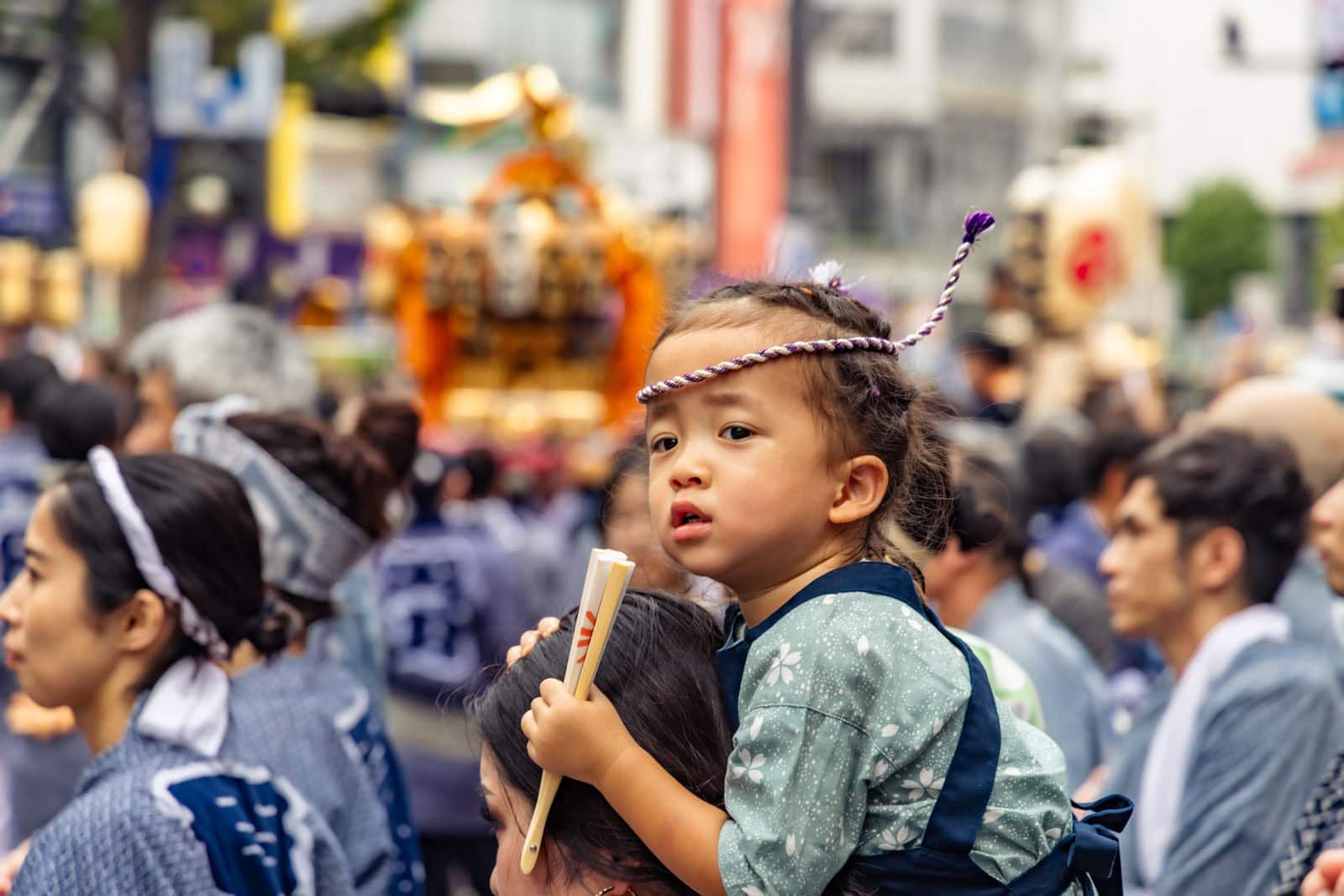
One story says the area was named after Owada Dogen, a bandit who was a remnant of the defeated Shibuya clan and haunted the area in the 16th century. This bustling commercial street was once filled with forests and fields. It’s said one could even see Mount Fuji from its summit long ago.
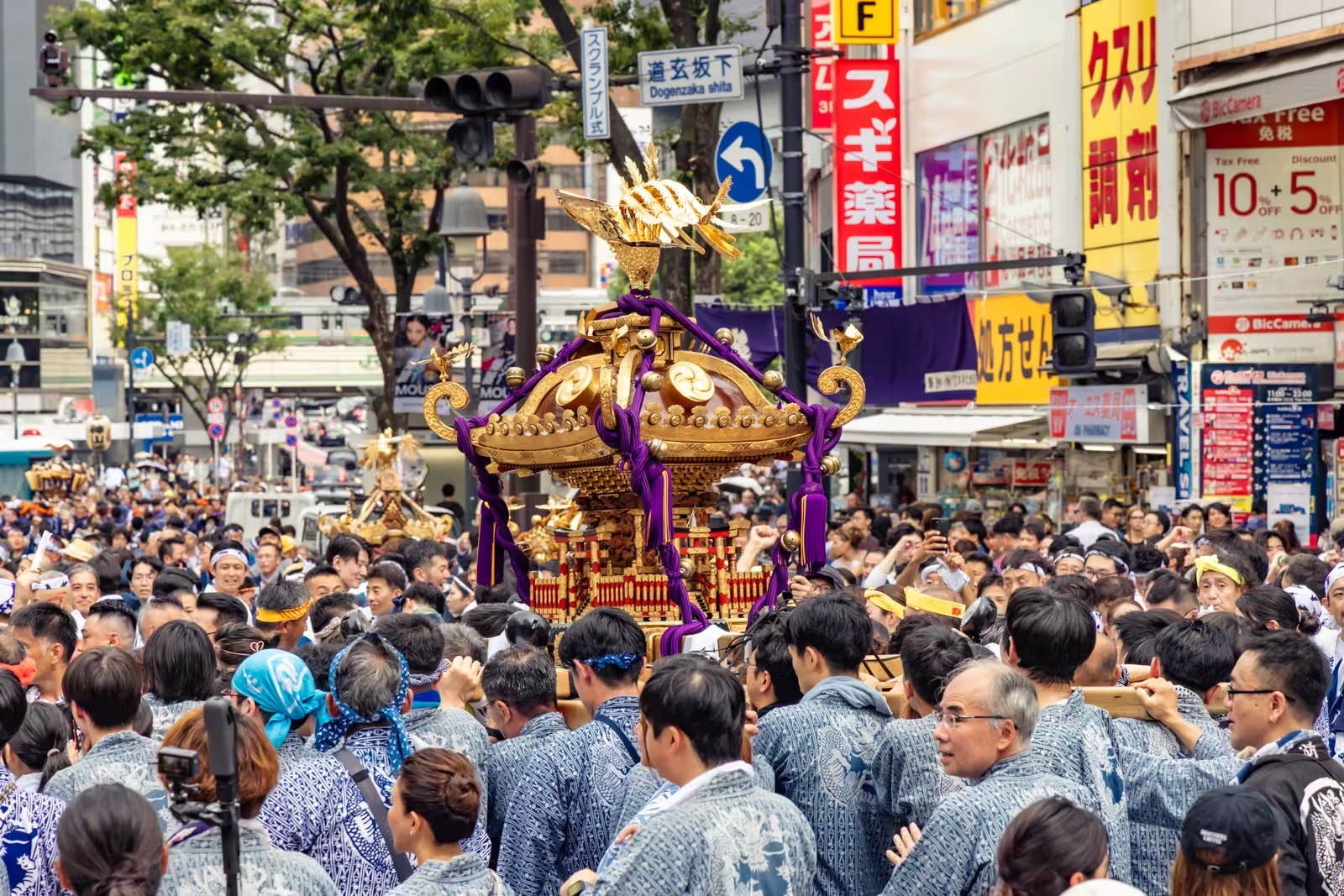
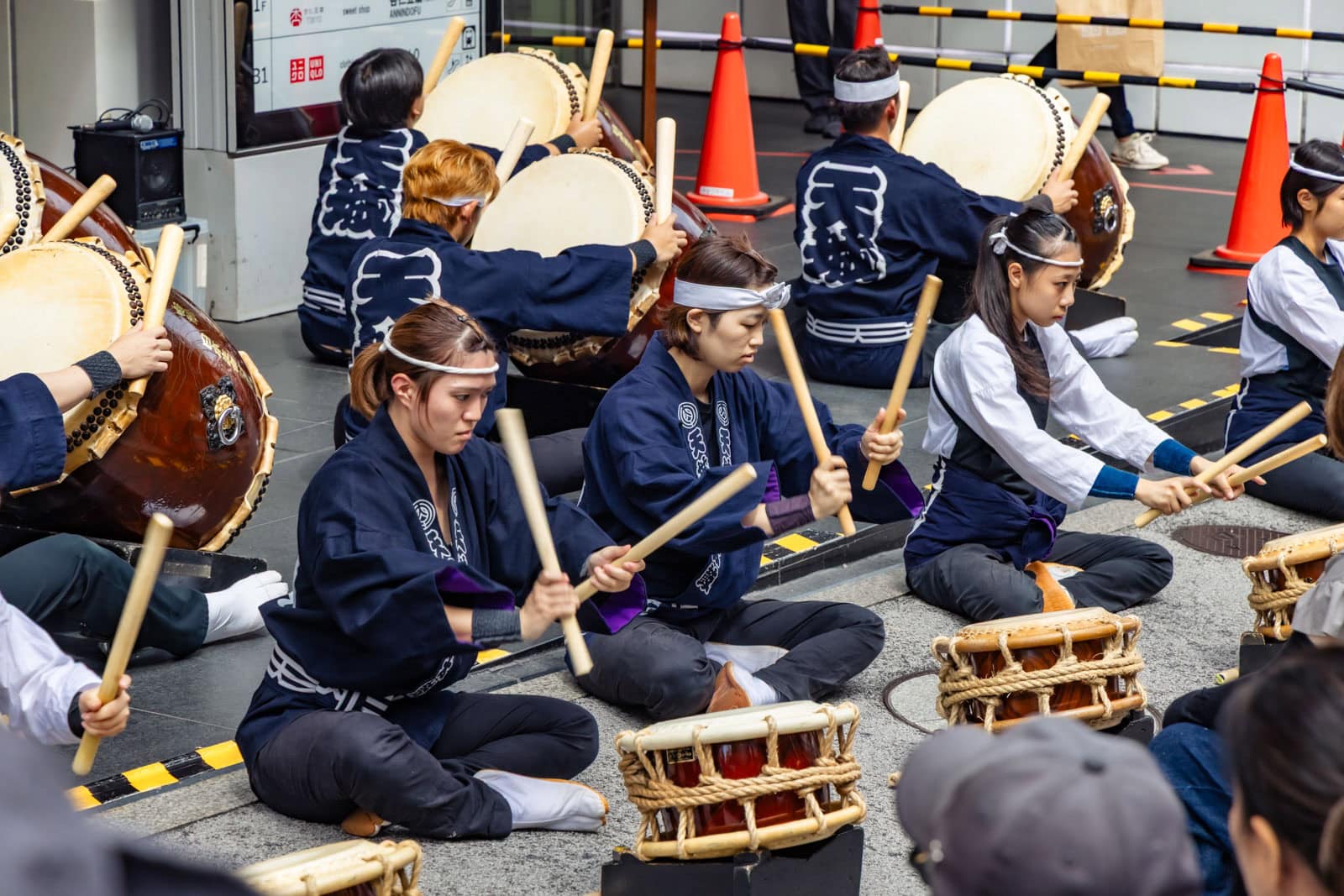
Standing there amidst the modern bustle, it was fascinating to ponder the history as I waited for the parade to begin. The conditions changed over the course of the afternoon. In the beginning, the streets weren’t crowded, except for a space in front of UniQlo being used by some flamboyant taiko groups.
Once they finished, I moved further up the Dogenzaka hill, listening for the approaching procession. It didn’t take long, as the familiar chant of “Wasshoi!” (わっしょい) could be heard, and I headed right for it.
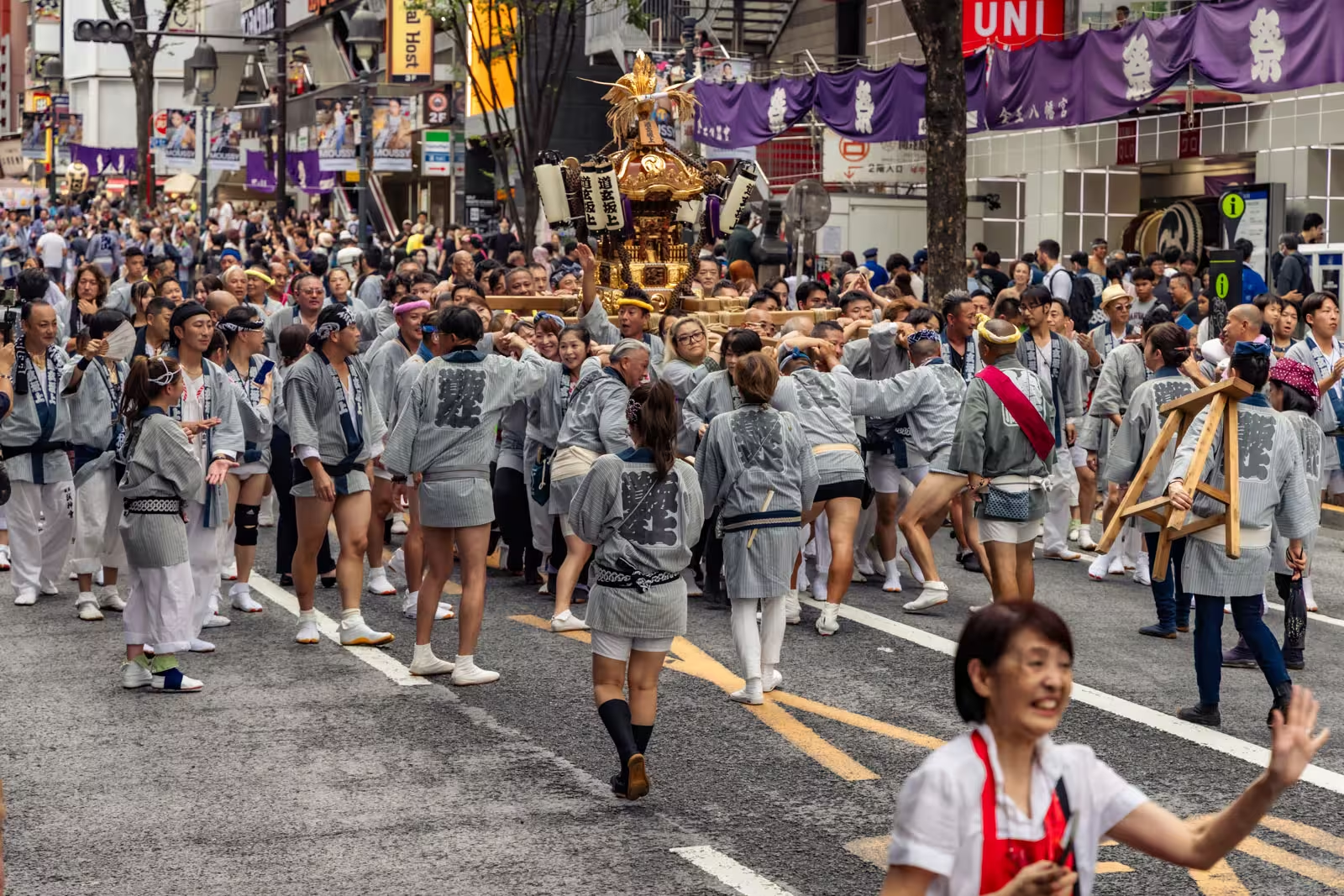
My Canon RF 24-105mm lens is a workhorse and performed well for capturing the wider scene, but I found it lacked reach when the action intensified. With the immense weight of the mikoshi and the sheer number of people carrying them, getting too close can be dangerous. I wished for a longer lens, like a 70-200mm, which would have been perfect for safely zooming in to capture the expressions on the carriers’ faces.
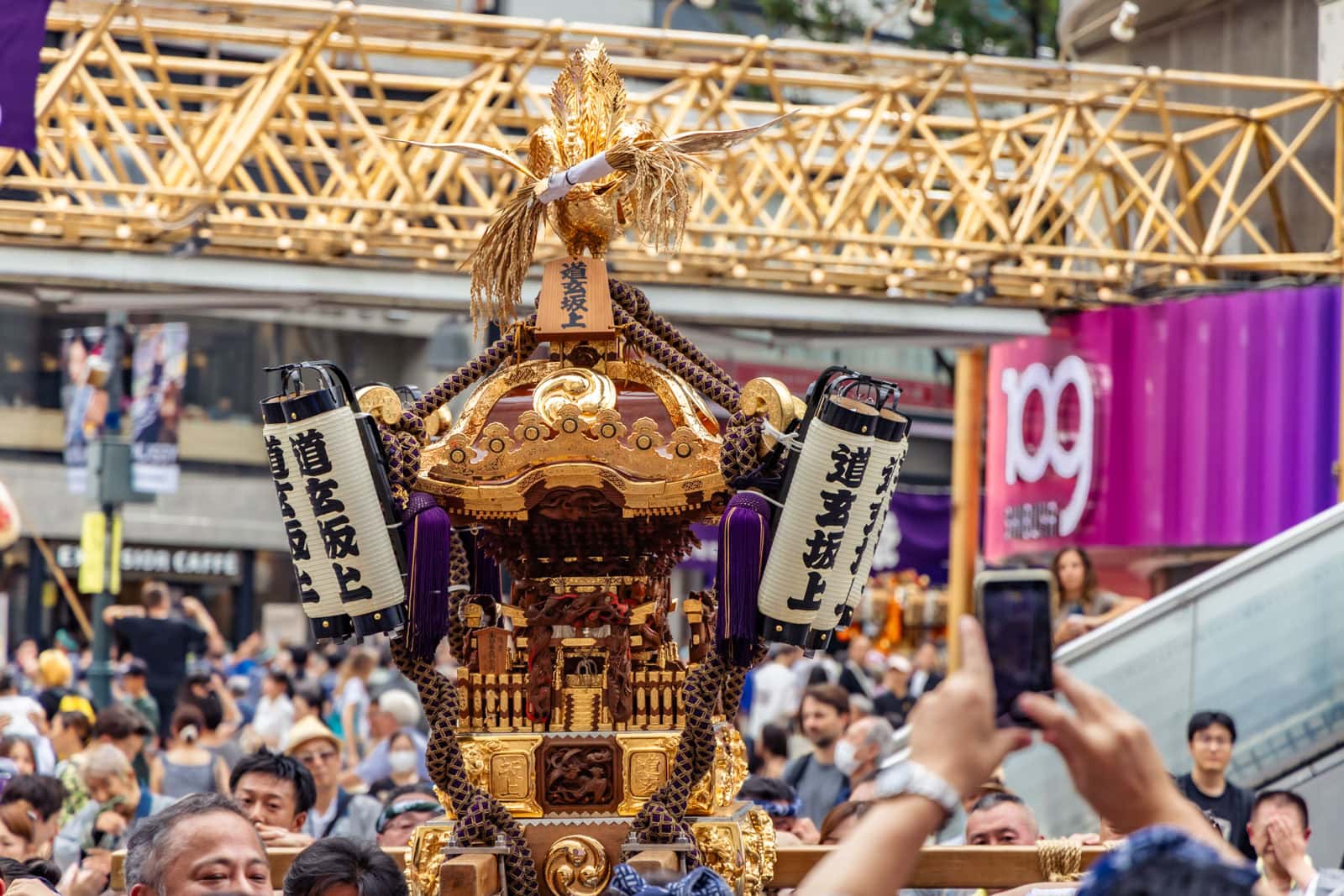
Is the Konno Hachimangu festival worth it?
Witnessing the tradition of the mikoshi parade unfold in the trend-setting heart of Shibuya was unforgettable. The energy of the procession against the backdrop of the district’s modern landmarks is a memory I’ll cherish.
Next time, I hope to delve even deeper by visiting the Shibuya Konno Hachimangū Shrine for its festivities, too. If you want to see a completely different type of festival take the time machine and look at [Shibuya Halloween 2017].
Where is the most unique place you’ve photographed mikoshi in Japan? Share your experiences in the comments section. To find out more about this event, look at the official Konno Hachimangu website.