JGSDF Public Information Center: Japan’s Modern Military
For military hardware enthusiasts and photographers visiting Japan, there’s a hidden gem just outside Tokyo that you cannot miss: The Japan Ground Self-Defense Force (JGSDF) Public Information Center.
The information center, often called “Rikkun Land,” is a unique opportunity to get up close and personal with the tanks, helicopters, and equipment of Japan’s military. Unlike the fleeting glimpses you get at a parade, here you can take your time, compose detailed shots, and truly appreciate the engineering and scale of these incredible machines.
Experience Rikkun Land’s JGSDF armor up close
The JGSDF Public Information Center serves as the public face of the JGSDF, aiming to educate visitors on its role in national defense, international peacekeeping, and disaster relief, so it’s not a museum. While it doesn’t cover World War II history, it provides a fascinating look at Japan’s modern capabilities, including its ongoing bomb disposal work on WWII-era ordnance. For photographers, it’s a dream:
- Unrivaled access: Photograph rare Japanese military vehicles in a clean, static environment.
- Crowd-free shots: No parades, no moving vehicles, no crowds blocking your view. Just you and the hardware.
- It’s free! There is no admission fee to enter and explore.
Key exhibits: JGSDF tanks, helicopters, and vehicles
The collection is impressive, well-maintained, and spread across an outdoor display area and a two-story main building.
Outdoor Display: Type 10 tank, artillery, and armor
The moment out the back of the main building, a formidable lineup of armored vehicles will greet you. This is your chance to capture the evolution of Japanese armor. Highlights include:
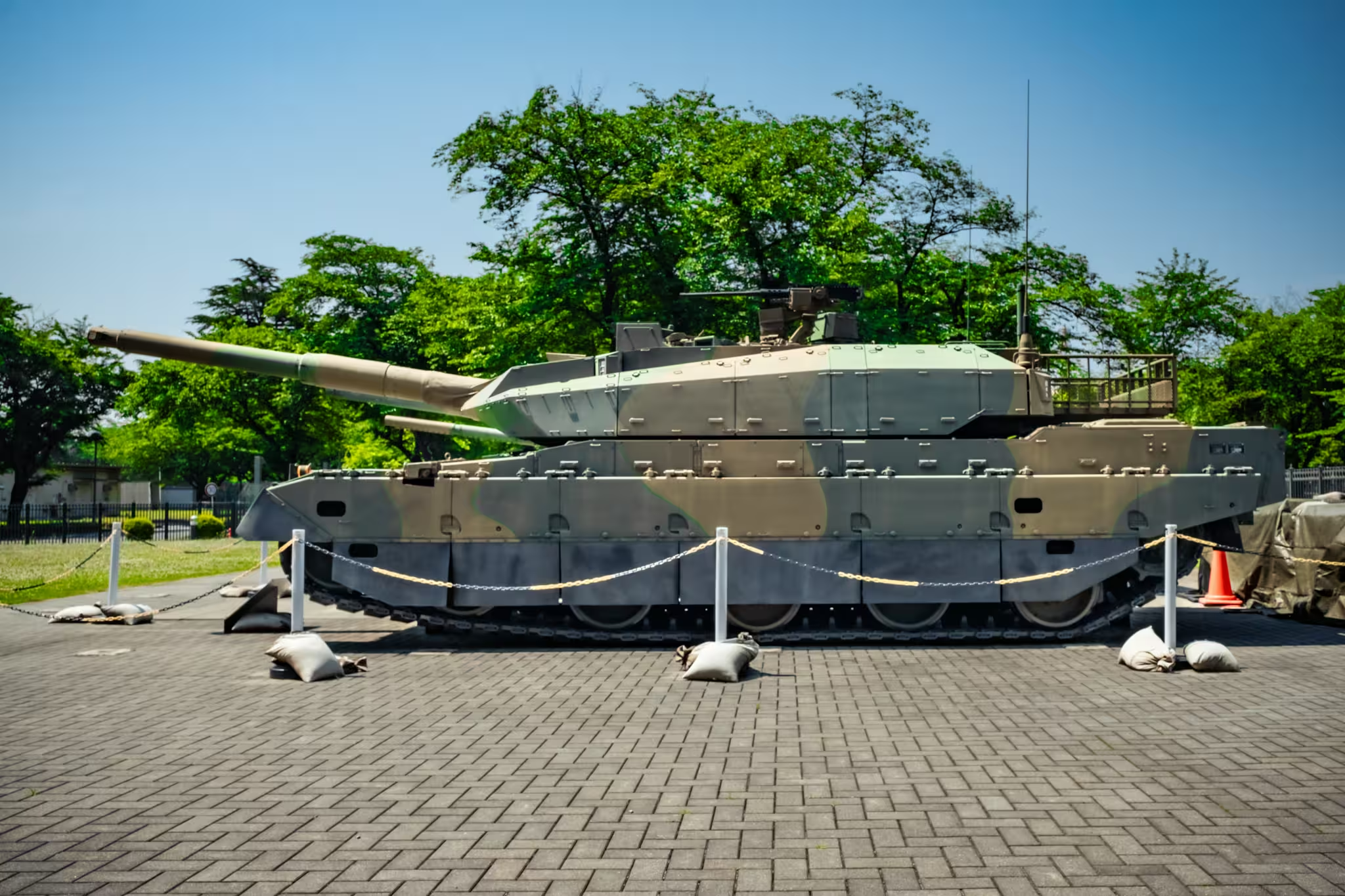
- Type 10 main battle tank: The JGSDF’s current, cutting-edge tank, known for its advanced electronics and mobility.
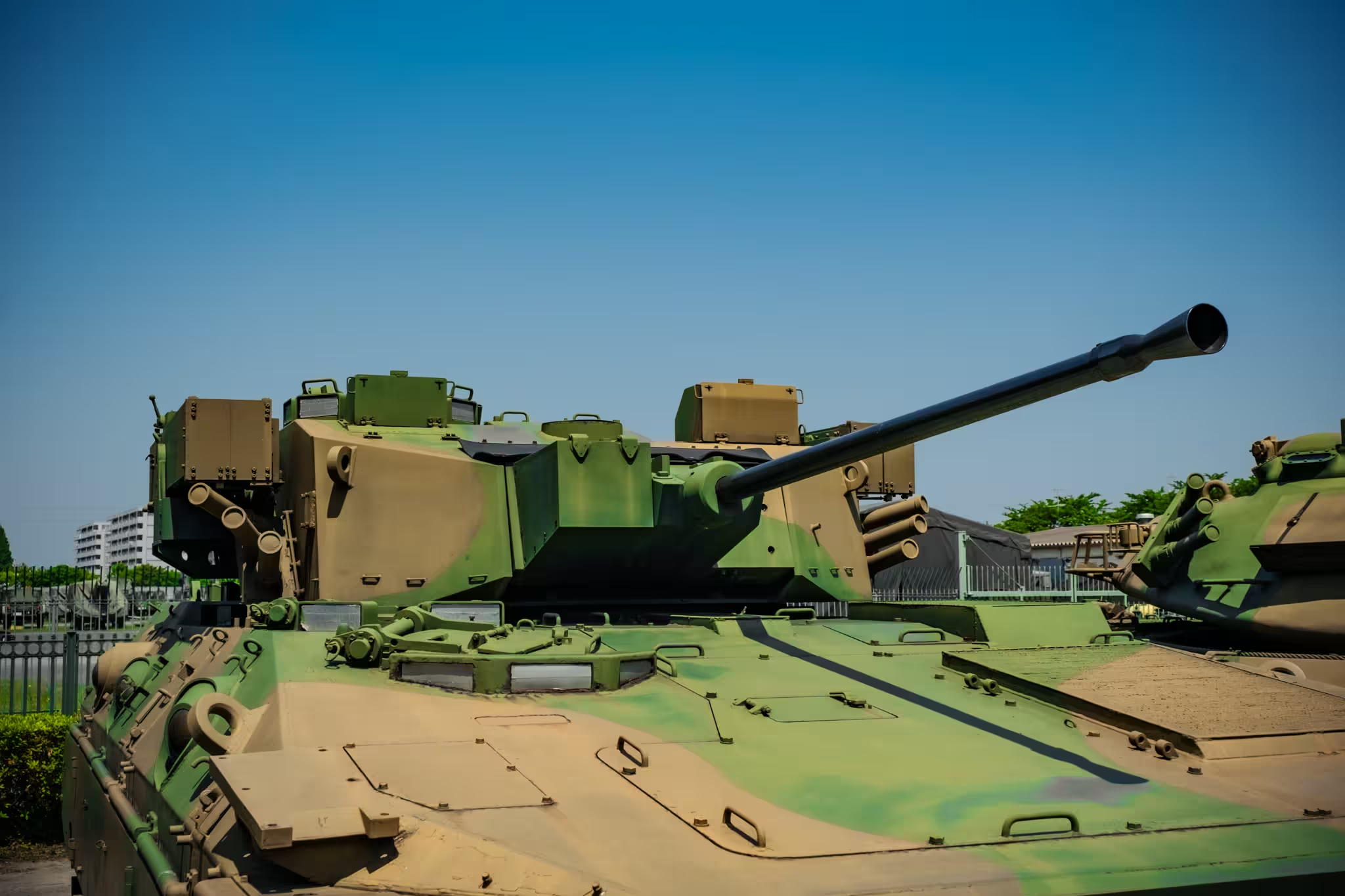
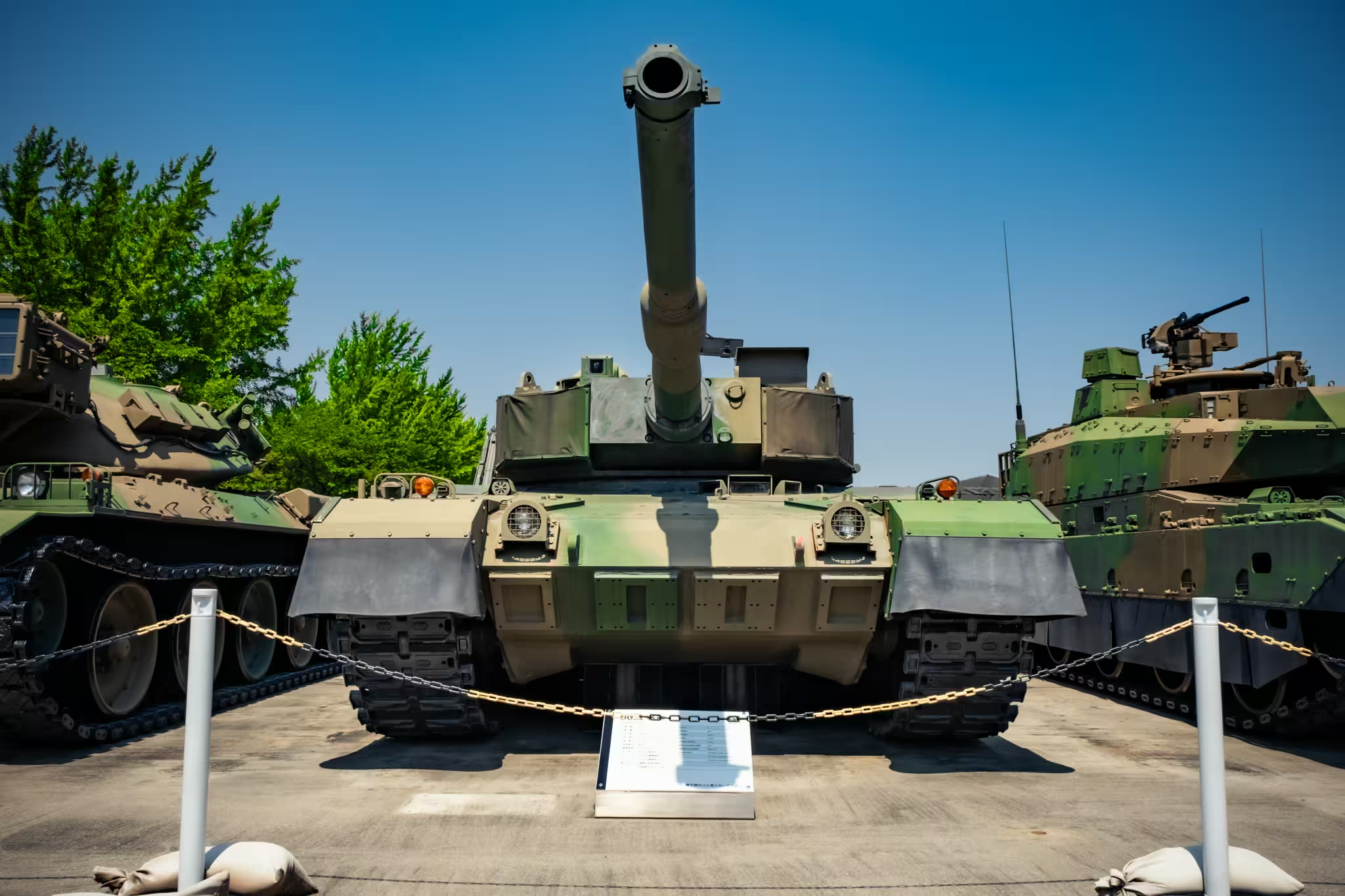
- Type 90 main battle tank: The powerful predecessor to the Type 10, a classic icon of the Cold War era.
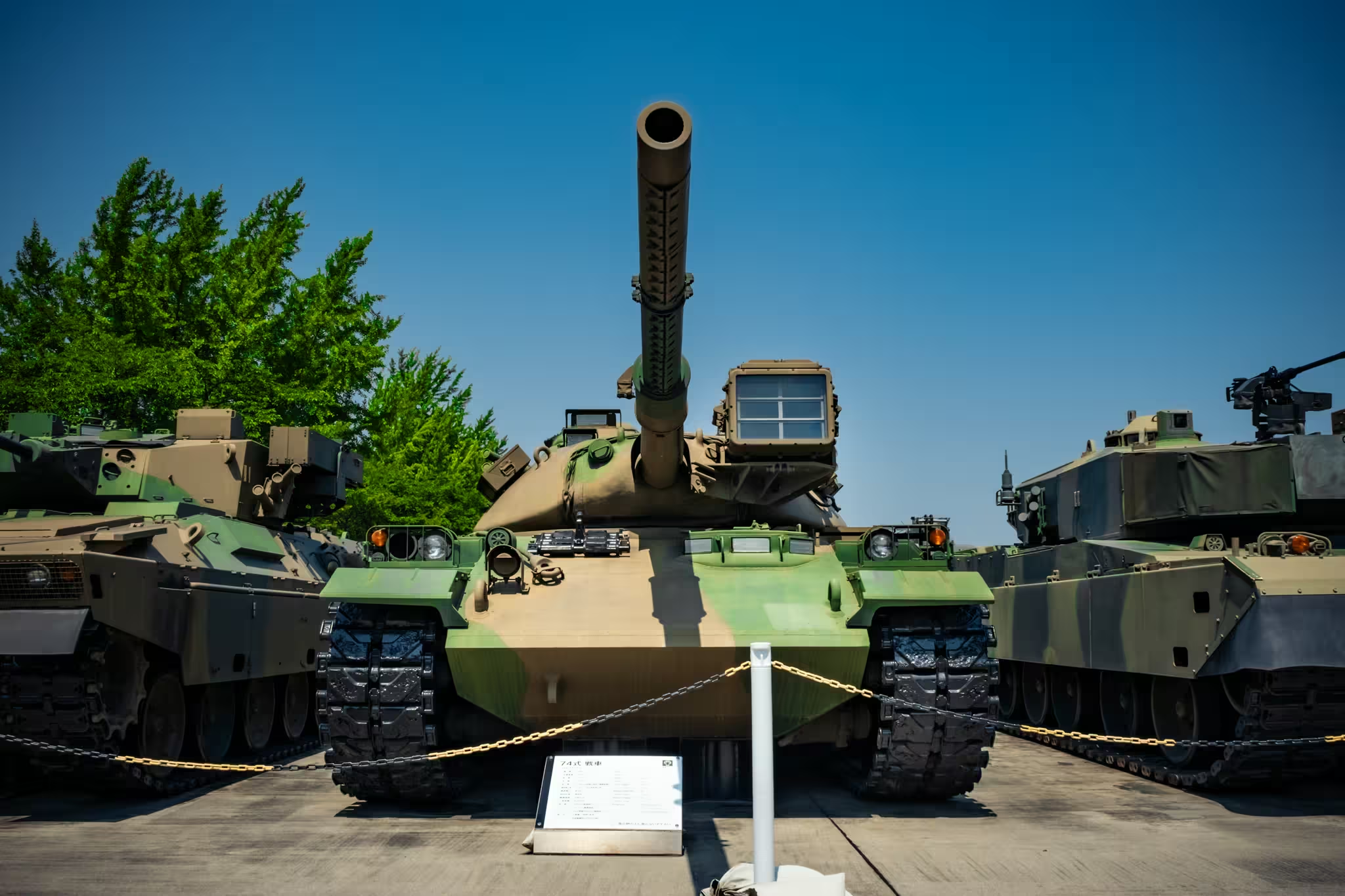
- Type 74 main battle tank: A beautifully designed older tank with distinctive hydropneumatic suspension.
- Type 89 IFV: A boxy, rugged infantry fighting vehicle.
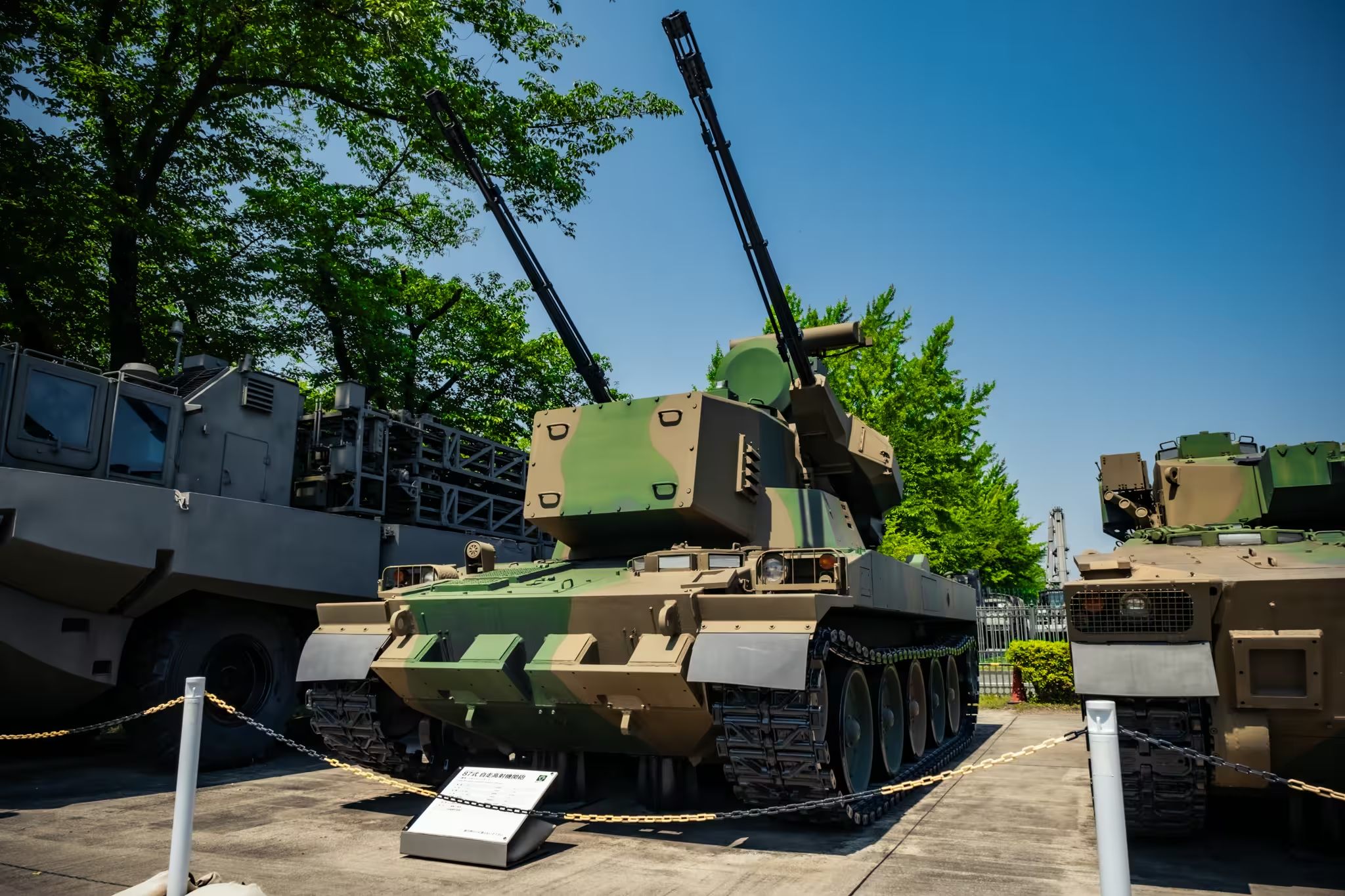
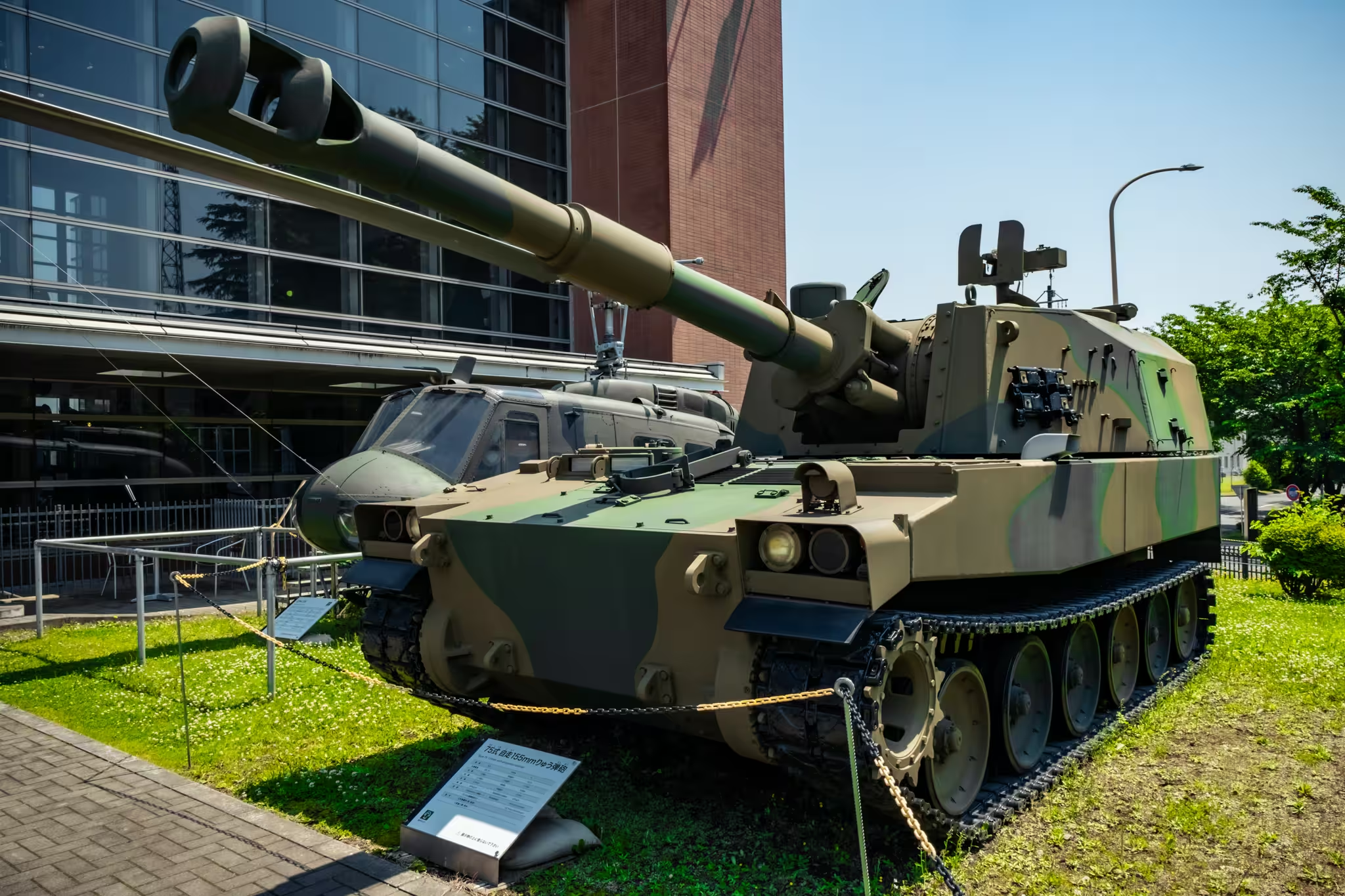
- Self-propelled guns: Including the Type 75 and the powerful Type 87 self-propelled anti-aircraft gun.
Next to the vehicles, you can even peek into an underground command bunker display to see how operations are coordinated.
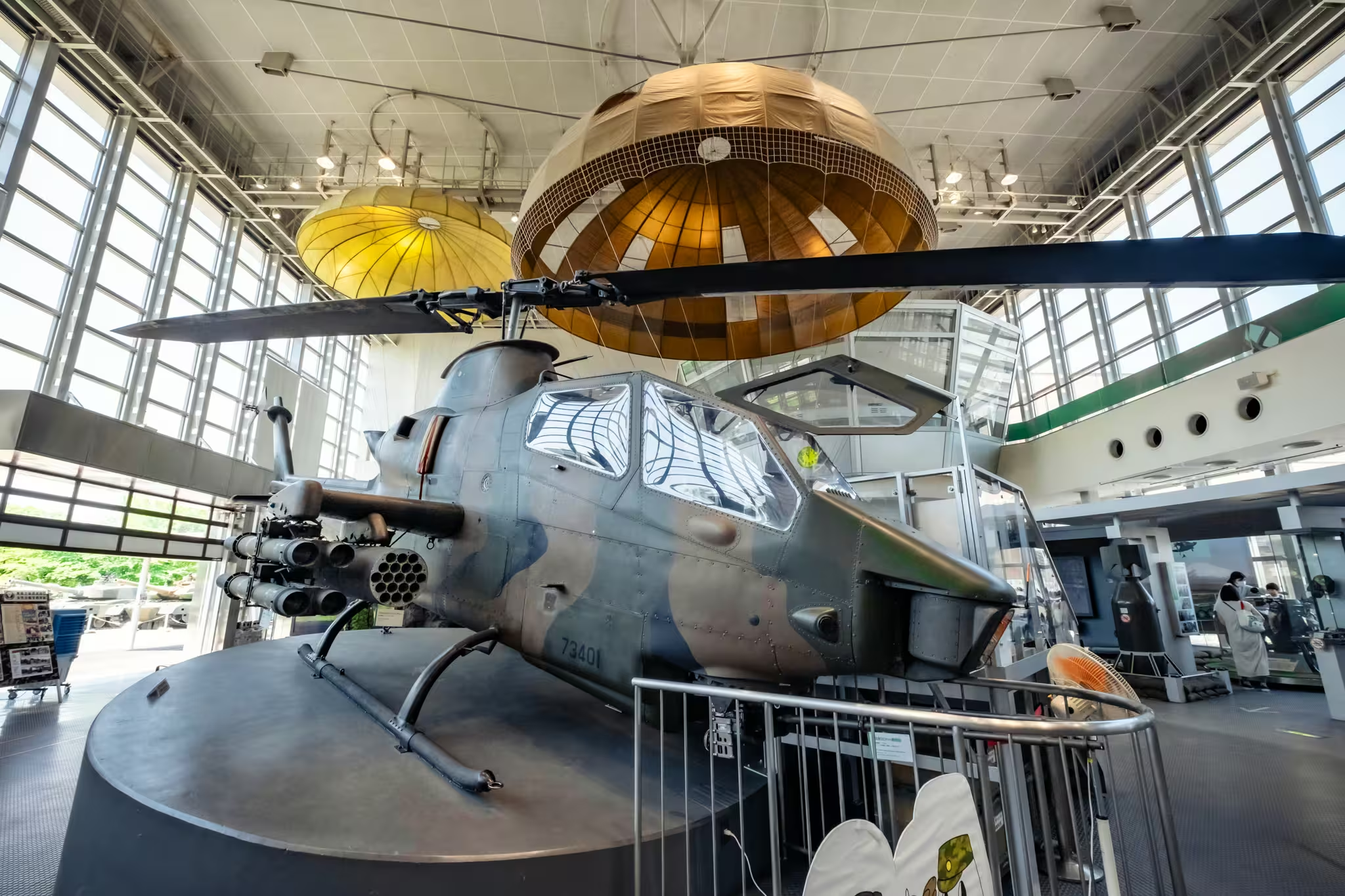
Indoor displays: AH-1S Cobra helicopter and equipment
The main hall features an awe-inspiring centerpiece, the Bell AH-1S Cobra Attack Helicopter. Walk around it and appreciate its sleek, menacing design. It was the world’s first dedicated gunship.
Surrounding the Cobra are:
- Light infantry weapons, gas masks, and even military rations.
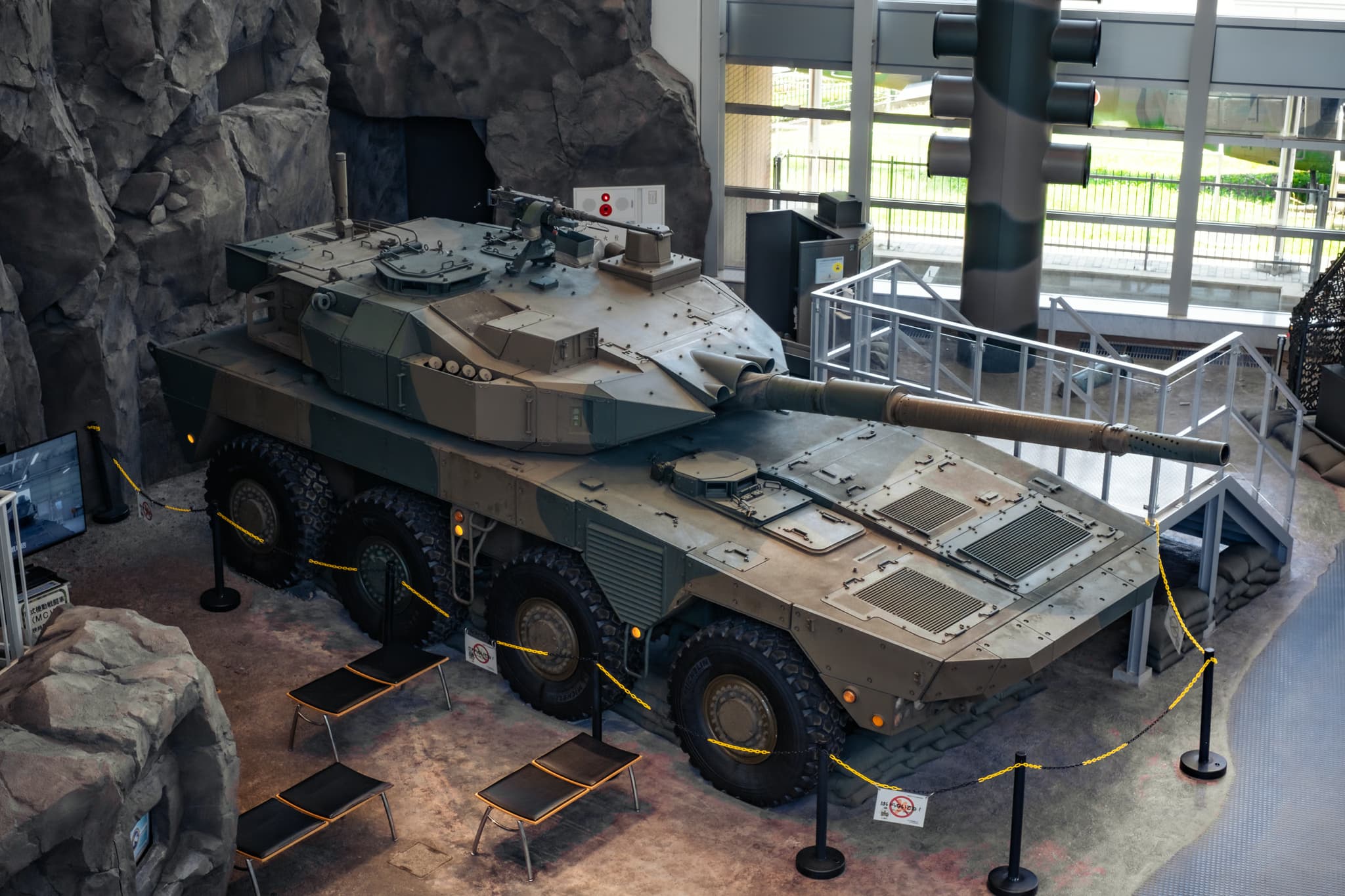
- A Type 16 Maneuver Combat Vehicle, an eight-wheeled tank destroyer.
- A decommissioned one-ton bomb from WWII, highlighting the JGSDF’s ongoing bomb disposal mission.
- For younger visitors, there’s a corner where they can try on kids’ sized uniforms and helmets.
Interactive displays and more
- Simulators: In the main building, you can try your hand at driving a tank or flying a helicopter. While they are more for fun than realistic training, they offer a glimpse into the operator’s seat.
- 3D theater: A PR theater shows films about the JGSDF’s activities. Note that the audio is in Japanese only.
- Gift shop: The “PX” sells models, clothing, memorabilia, and of course, military rations.
Photography tips for military hardware
Recommended gear: Lenses and filters
- Go wide and go tight: Use a wide-angle lens (e.g., 16-35mm) to capture the immense scale of the tanks, and a telephoto lens (e.g., 70-200mm) to isolate details like welds, tracks, and textures.
- Think about taking a polarizing filter. They cut the glare and reflections from the metal and glass surfaces of the vehicles, making your colors deeper and richer.
Composition tips for static displays
Experiment with angles: While eye-level shots are great, try getting low to make the vehicles look more imposing. Don’t be afraid to shoot details and abstracts.
JGSDF Public Information Center access & visitor info
Location
The center is in Asaka, Saitama Prefecture, right on the border with Tokyo.
Address: 4-6 Sakaecho, Asaka, Saitama Prefecture
Here is the center on Google Maps:
How to get to Rikkun Land (train and walk)
The nearest station is Wakoshi Station, which is conveniently served by the Tōbu Tōjō, Yūrakuchō, and Fukutoshin lines. From the station, it’s about a 20-minute walk.
Opening hours and holiday closures
- Morning: 9:30 a.m. – 11:45 a.m.
- Afternoon: 1:15 p.m. – 4:45 p.m.
- Closed Mondays, Tuesdays, and over the New Year holiday. Always check the official website before you go.
Admission cost and reservation requirements
- Admission is free.
- Pro Tip: For entry, download an application form from the official website, fill it in and send it to the center before you go. Be aware, Japanese is the language on the site.
Bonus tip: The official app
Download the official “JGSDF Public Information Center” app. It’s bilingual (English/Japanese) and contains a map, exhibit information, and photos to enhance your visit.
Is Rikkun Land worth the trip?
While the JGSDF Public Information Center isn’t a massive museum that will take all day, it’s a superbly curated collection that offers an unparalleled look at modern Japanese military technology. For any military enthusiast or photographer, it’s an essential and highly rewarding half-day trip from Tokyo.
If you want to see some of Japan’s WW2 military, read our Yushukan article (coming soon). It’s a military museum located within Yasukuni Shrine.