Holy Resurrection Cathedral Photography Guide
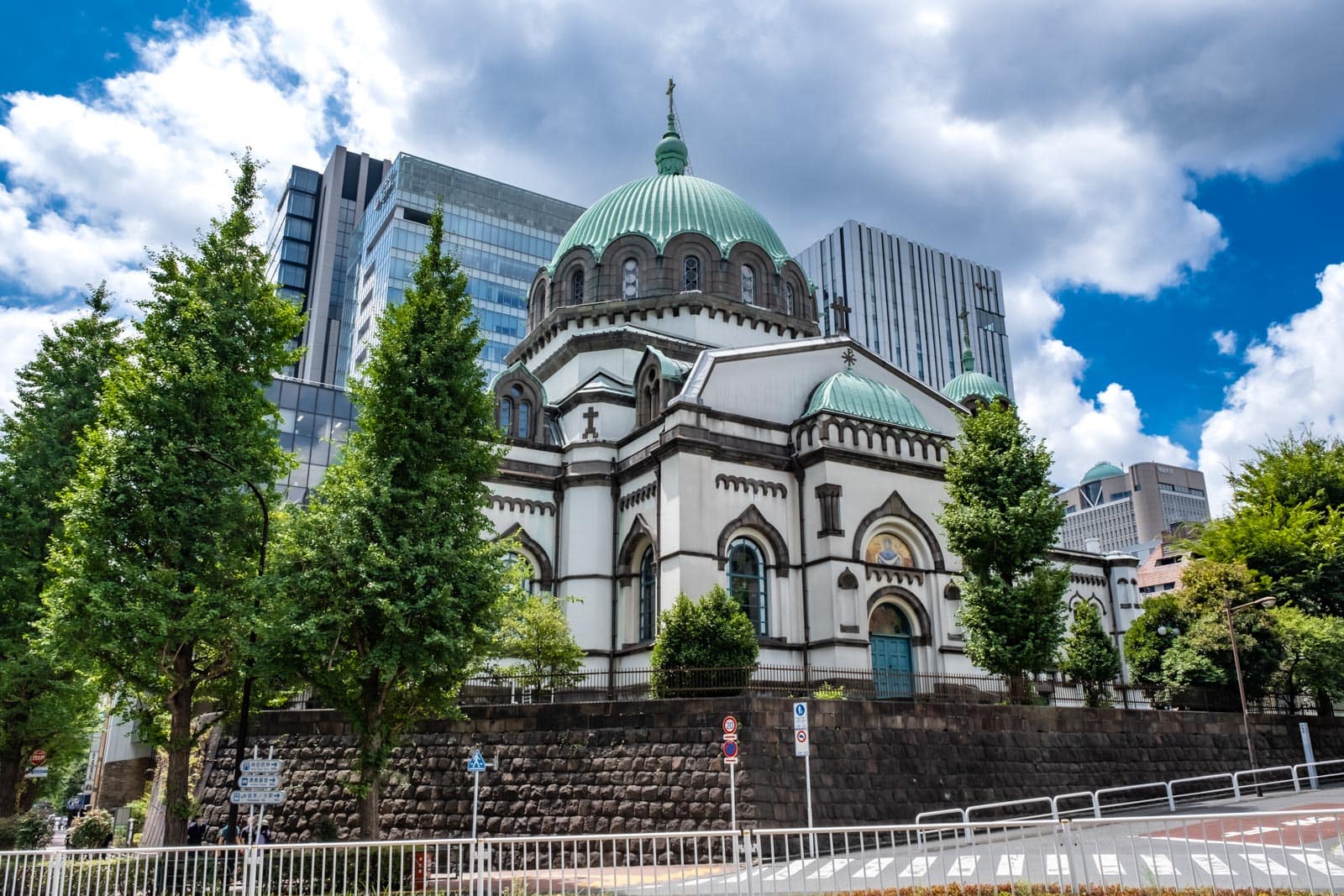
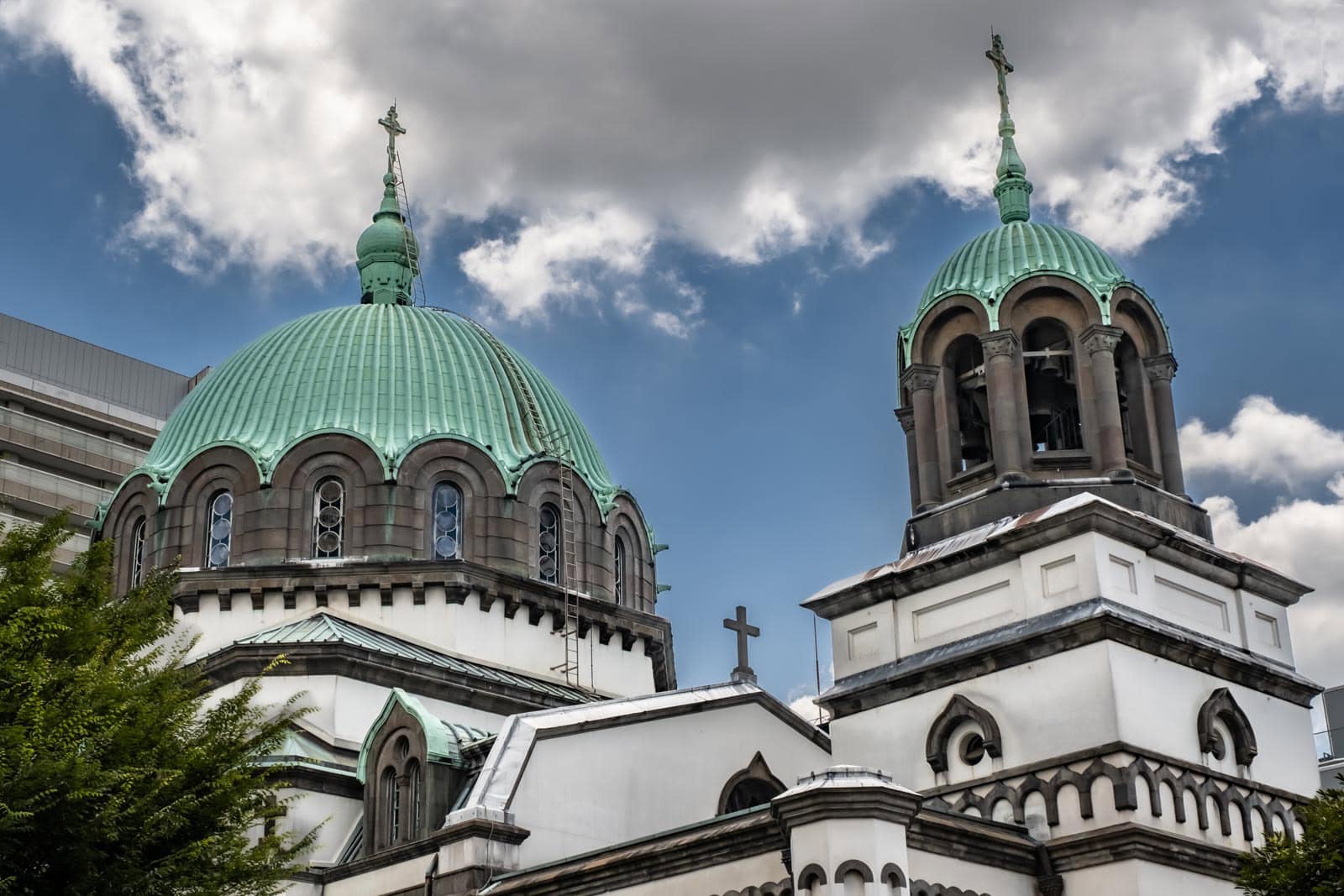
Rising unexpectedly from the backstreets of Ochanomizu, the Holy Resurrection Cathedral’s grand Byzantine dome is a glimpse into Meiji-era architecture. Known locally as Nicolai-do, this Eastern Orthodox church offers photographers a unique challenge and a direct connection to the city’s history.
Key architectural & historical highlights
- A Josiah Conder masterpiece: The building is one of the few remaining public works by the influential British architect Josiah Conder. It is a must-see for those tracing his impact on Tokyo’s cityscape.
- A rich history: The cathedral’s story is intertwined with its founder, St. Nicholas Kasatkin, who introduced the Eastern Orthodox Church to Japan. He earned respect for his humanitarian work during the Russo-Japanese War.
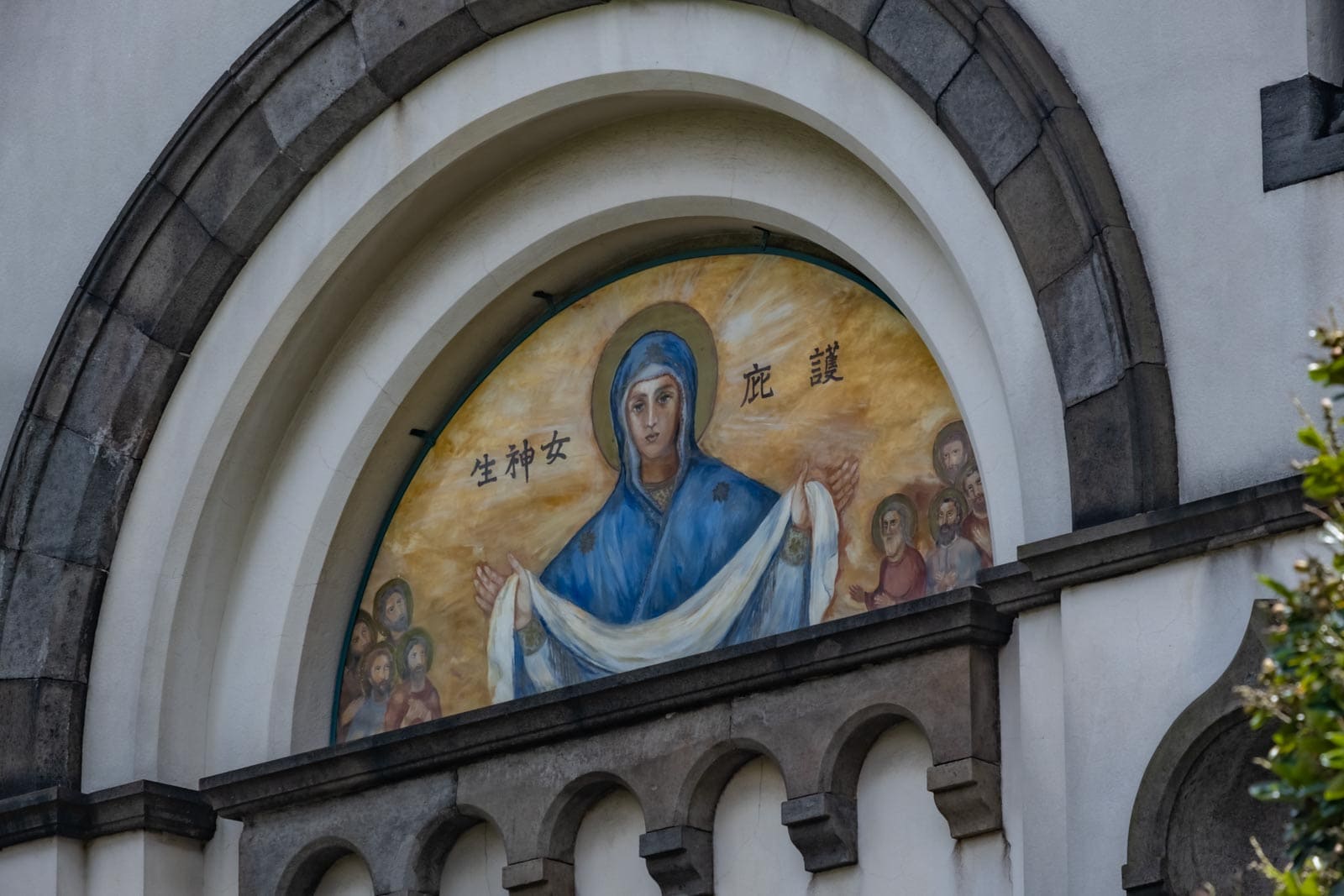
- Exquisite stained glass: The interior, though off-limits to photography, features stunning stained glass artwork. It filters light beautifully into the main worship space.
Photography tips for the cathedral
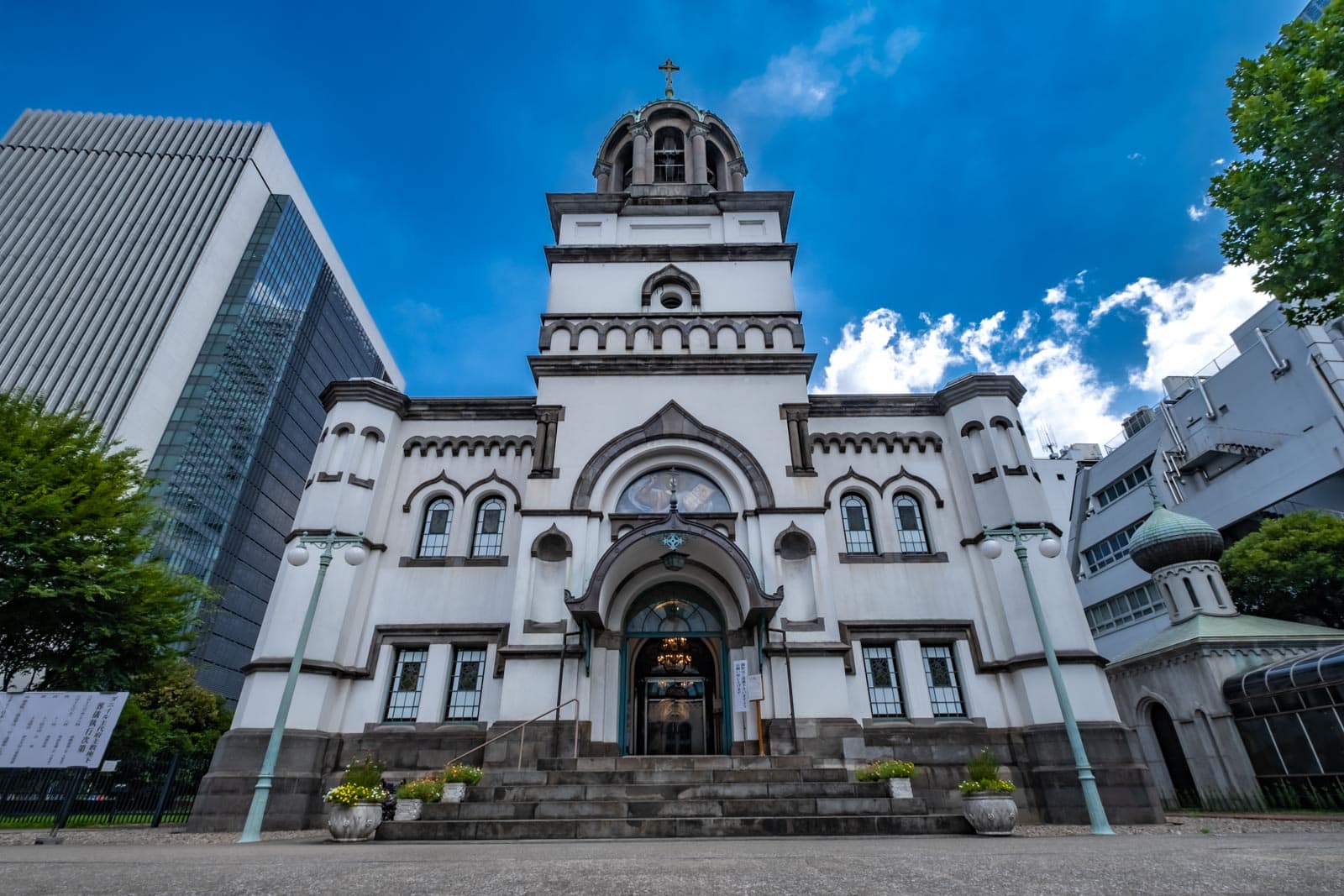
- The courtyard area is cramped. Use a wide-angle lens (16mm) to photograph it in its entirety. Or, take several photos and stitch them together in post.
- It’s no problem if you don’t have a wide-angle lens. You could use a longer one to photograph from over the road (check the map for positions).
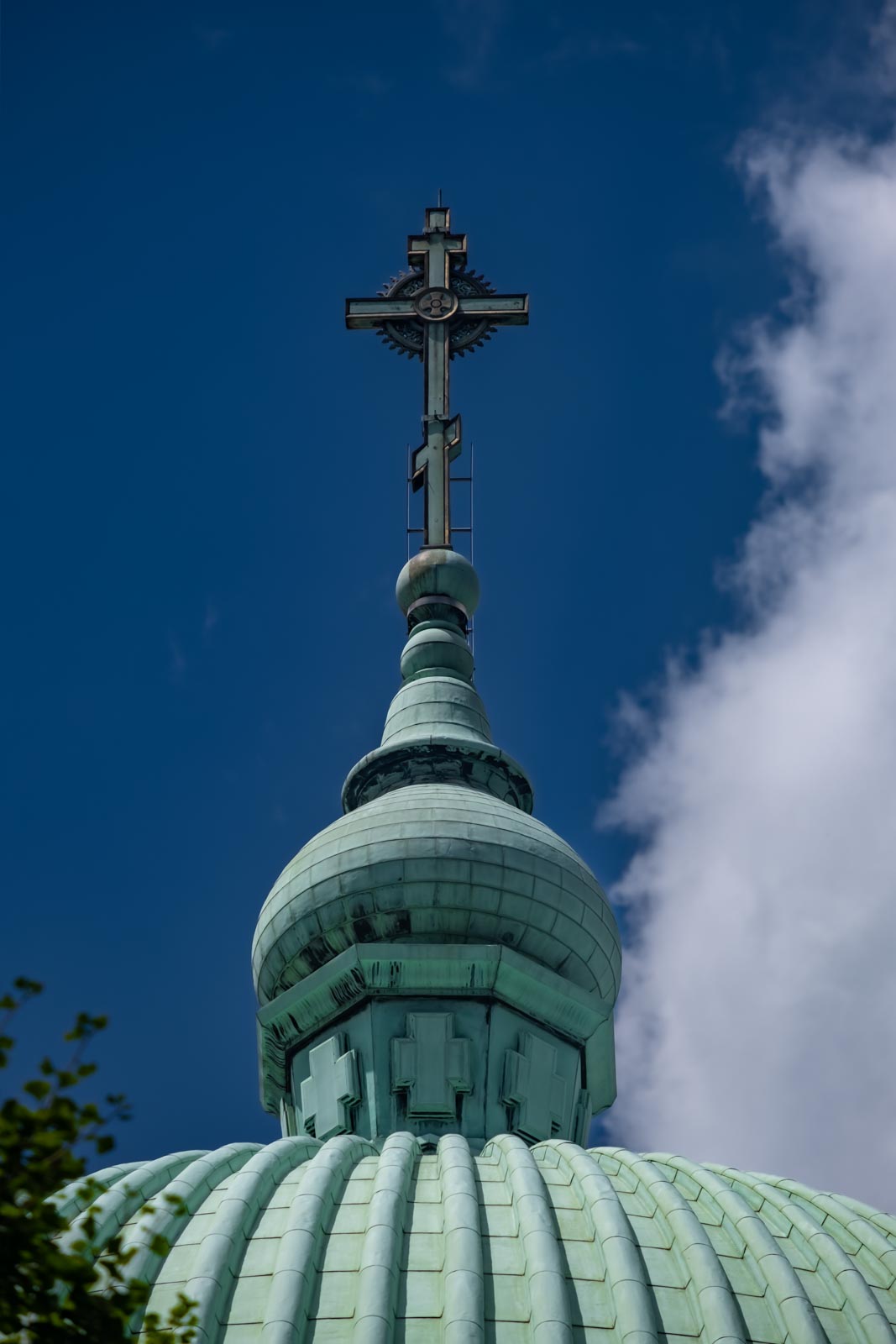
- Longer lenses can zoom in on building details, like the stonework, arched windows, and green copper dome.
- The church has tall buildings on two sides. Shadows will be problematic. Plan your photo shoot accordingly.
- Photography is not allowed inside the church.
Nearby Ochanomizu photo spots
- Akihabara (the manga and anime capital of Tokyo)
- Guitar Street (aptly named for all the guitar shops a one-minute walk from the cathedral)
- Kanda Myojin (one of Tokyo’s most important shrines)
- Yushima Seido (Tokyo’s only Confucian temple)
History of the Holy Resurrection Cathedral
Locals refer to the building as “Nicolai-do” after its founder, St. Nicholas Kasatkin. He came to Japan in 1861 and was a priest at the Russian consulate in Hokkaido. Through him, the Eastern Orthodox Church entered the country. In 1870, he moved to Tokyo and worked hard to grow his congregation.
Nicholas commissioned Dr. Michael A. Shchurupov to plan the edifice. He used my favorite Tokyo architect, Josiah Conder, to design it. This centerpiece of the Japanese Orthodox Church was completed in 1891.
In its early years, several misfortunes befell the building, including a collapse of the belfry. In those days, you could see the Imperial Palace from it. Now, tall buildings block that view.
The collaboration between Conder and Shchurupov resulted in a design of remarkable beauty and detail. The intricate stonework and classic Byzantine forms create a powerful aesthetic, making the cathedral a rare and valuable architectural landmark of its time.
Its survival through events like the Great Kanto Earthquake of 1923 means we are fortunate to still be able to experience it today.
As for St. Nicholas, he died in Tokyo in 1912. You can visit his grave in the historic Yanaka Cemetery.
Is the cathedral worth photographing?
The Holy Resurrection Cathedral is a piece of Tokyo’s architectural and cultural history. While the surrounding modern buildings present a unique photographic challenge, the effort is rewarded with views of a unique Byzantine masterpiece.
By planning your visit around the light and utilizing the right lens, you can capture the essence of this Josiah Conder gem. Whether you are there to admire the architecture or soak in the history, Nicolai-do is an essential stop for any explorer of Tokyo’s rich past.
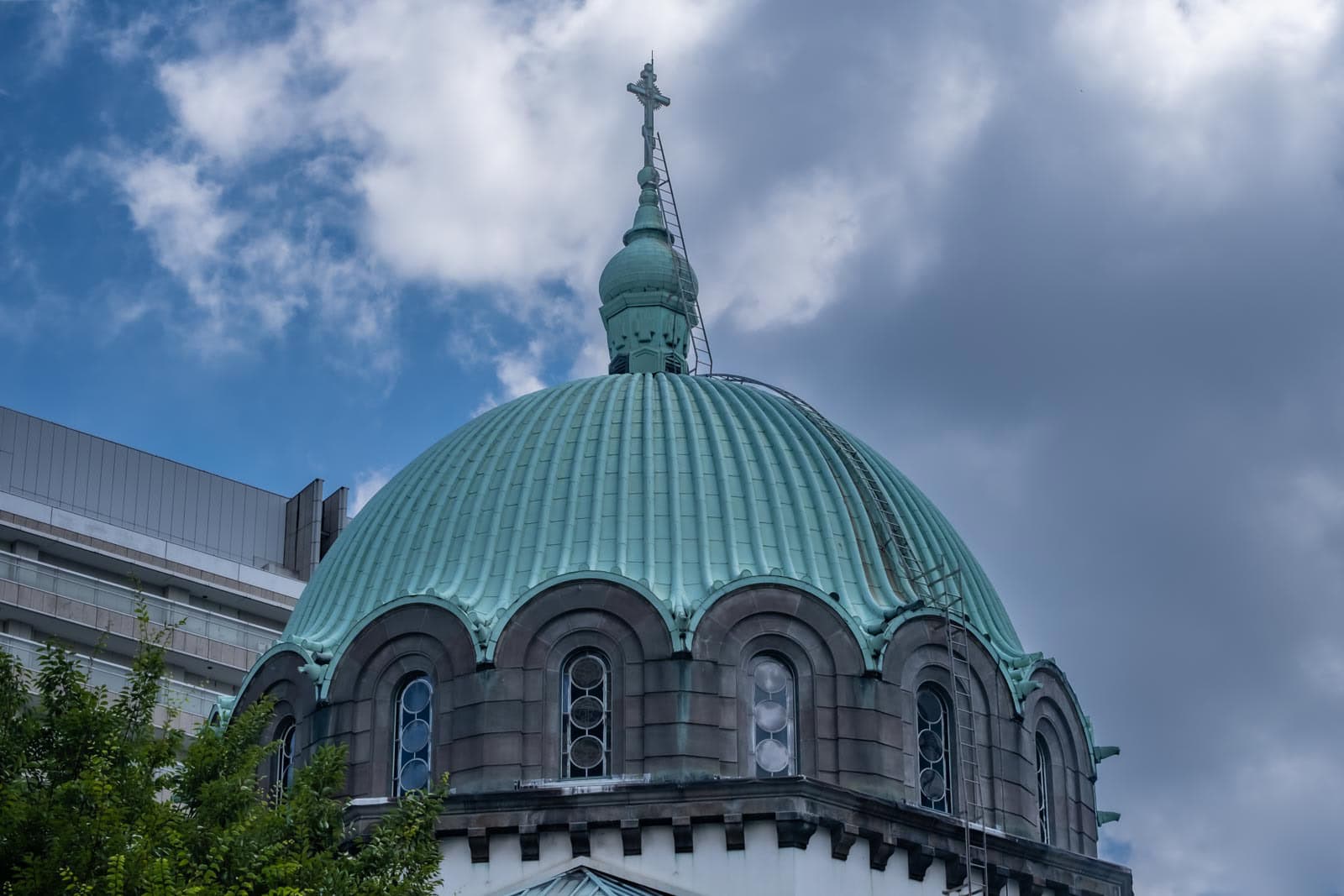
If architecture and churches interest you, Holy Resurrection Cathedral is a great place! You can enter the building for a small fee, provided no religious services are scheduled.