Tokyo Station’s Domed Ceilings
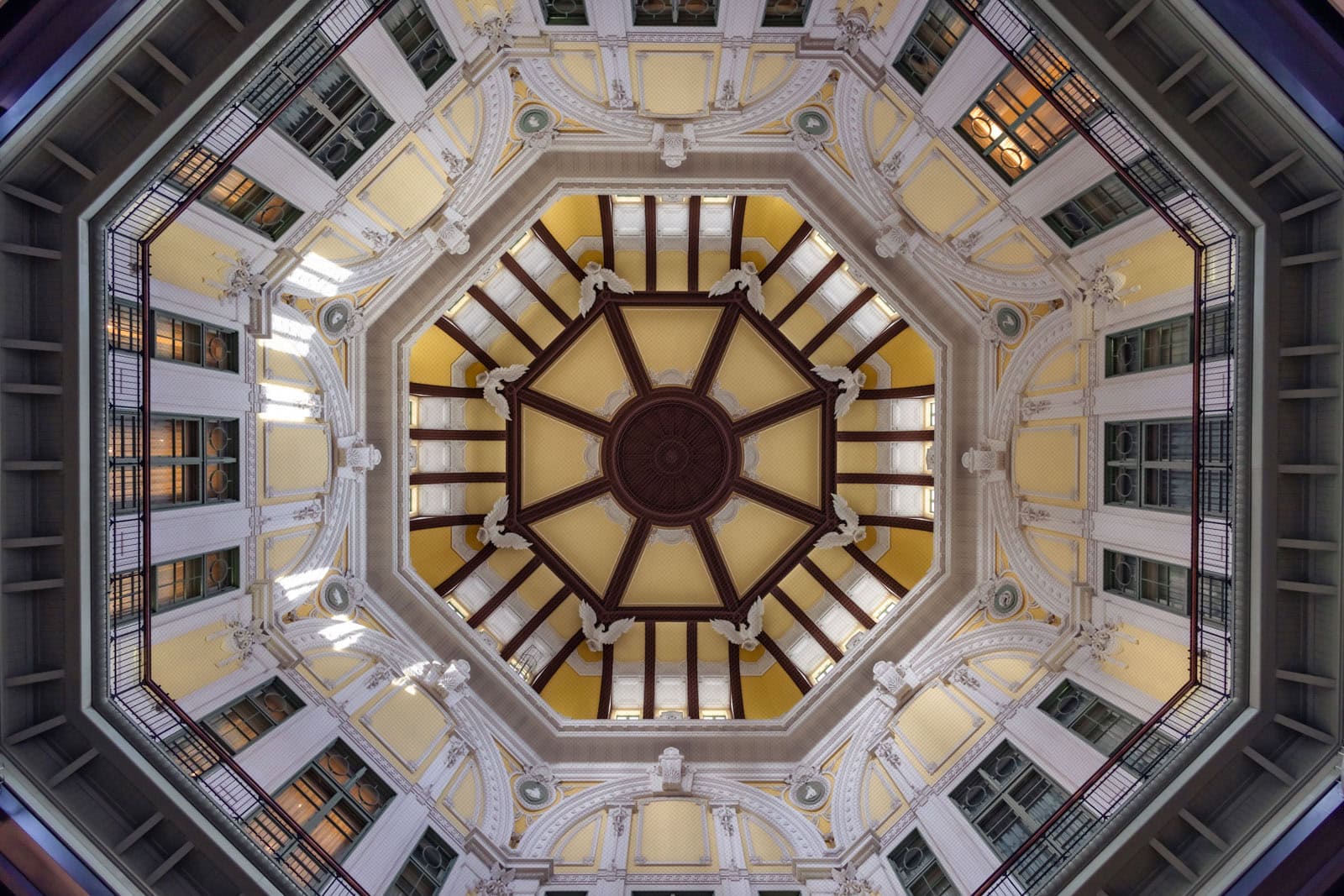
Canon RF 16mm f/2.8 STM (1/50 sec at f/5.0, ISO 800)
The domed ceilings of Tokyo Station take you back to an era of elegance and style. At first glance, they seem to be treasures of old-world grandeur, perfectly preserved for over a century. But their true story is even more compelling.
Canon RF 24-105mm F4 L IS USM (1/100 sec at f/11 at ISO 6400)
The domed ceilings of Tokyo Station take you back to an era of elegance and style. At first glance, they seem to be treasures of old-world grandeur, perfectly preserved for over a century. But their true story is even more compelling.
These magnificent creations aren’t survivors, but glorious revivals.
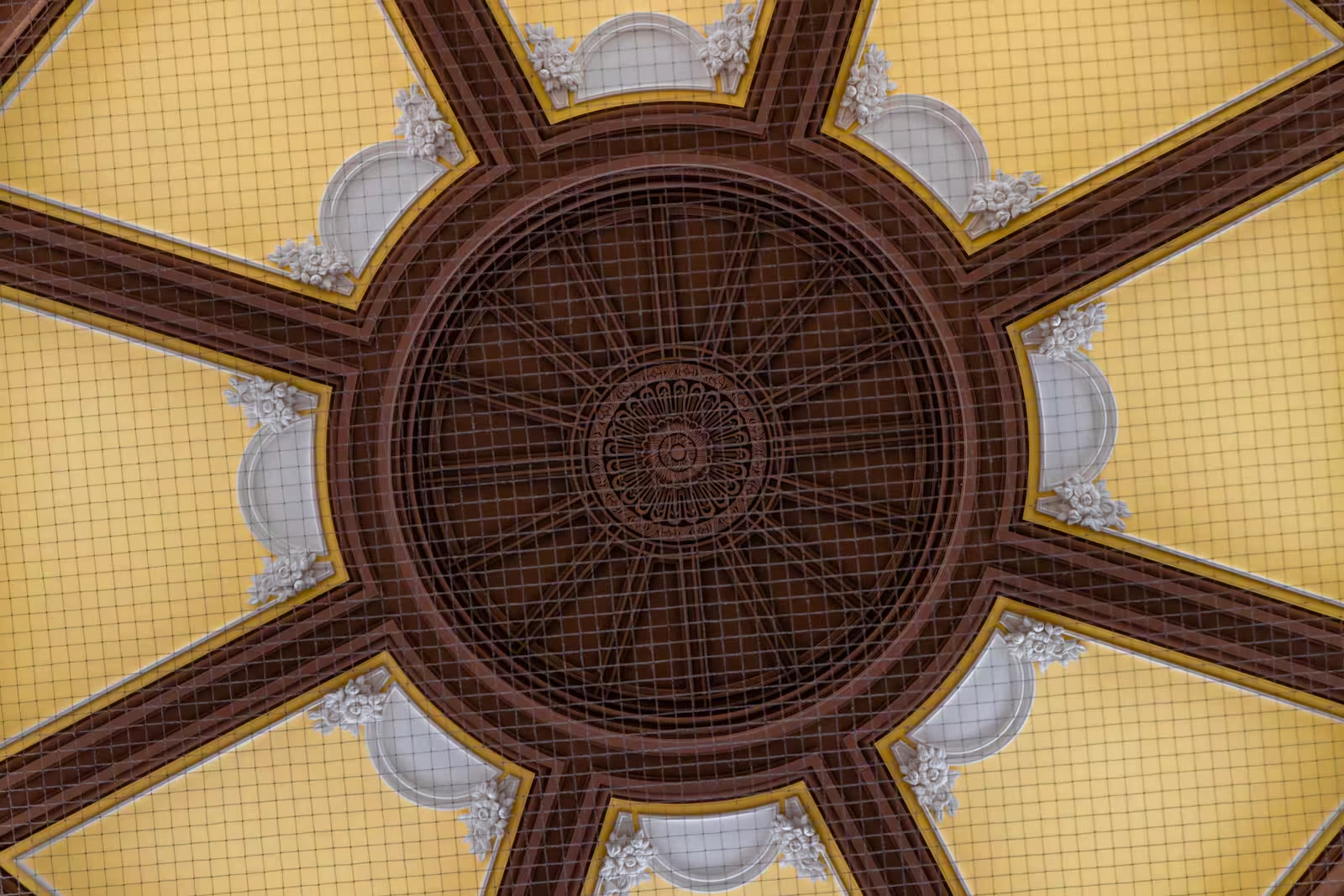
Canon RF 24-105mm F4 L IS USM (1/100 at f/5.6 at ISO 3200)
Having been destroyed by war and rebuilt without their original flourish, the station’s ceilings were resurrected in 2012 to their pre-war design. They are a testament not only to timeless architecture but to a city reclaiming its history.
So grab your wide-angle lens, because these beauties have a story to tell.
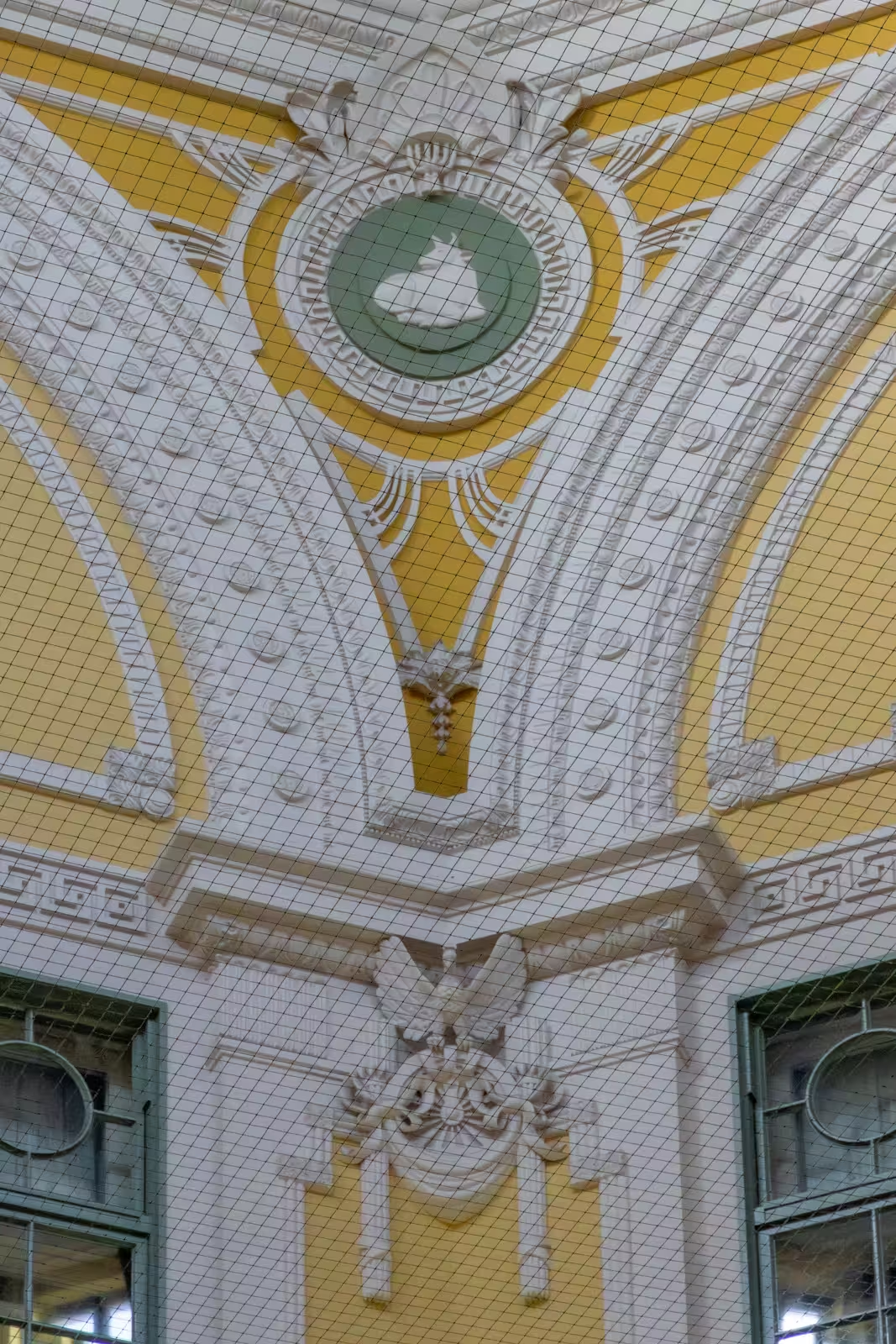
Several hundred million people use this station every year. I often wonder how many have never looked up as they walked through the Marunouchi North and South gates?
Many must be missing out on a great Tokyo photo spot. But to be honest, when I went there for the first time, I didn’t look up either.
Where are the domed ceilings?
The ceilings are above the Marunouchi north and south gates. They are about two hundred and twenty meters apart. Ignore the Marunouchi Central Exit. Don’t enter the station.
If you arrive at Tokyo Station by train, they are easy to find. Everything is well-marked, so keep your eyes open and follow the signs. If you’re outside, walk around the building until you are on the west side.
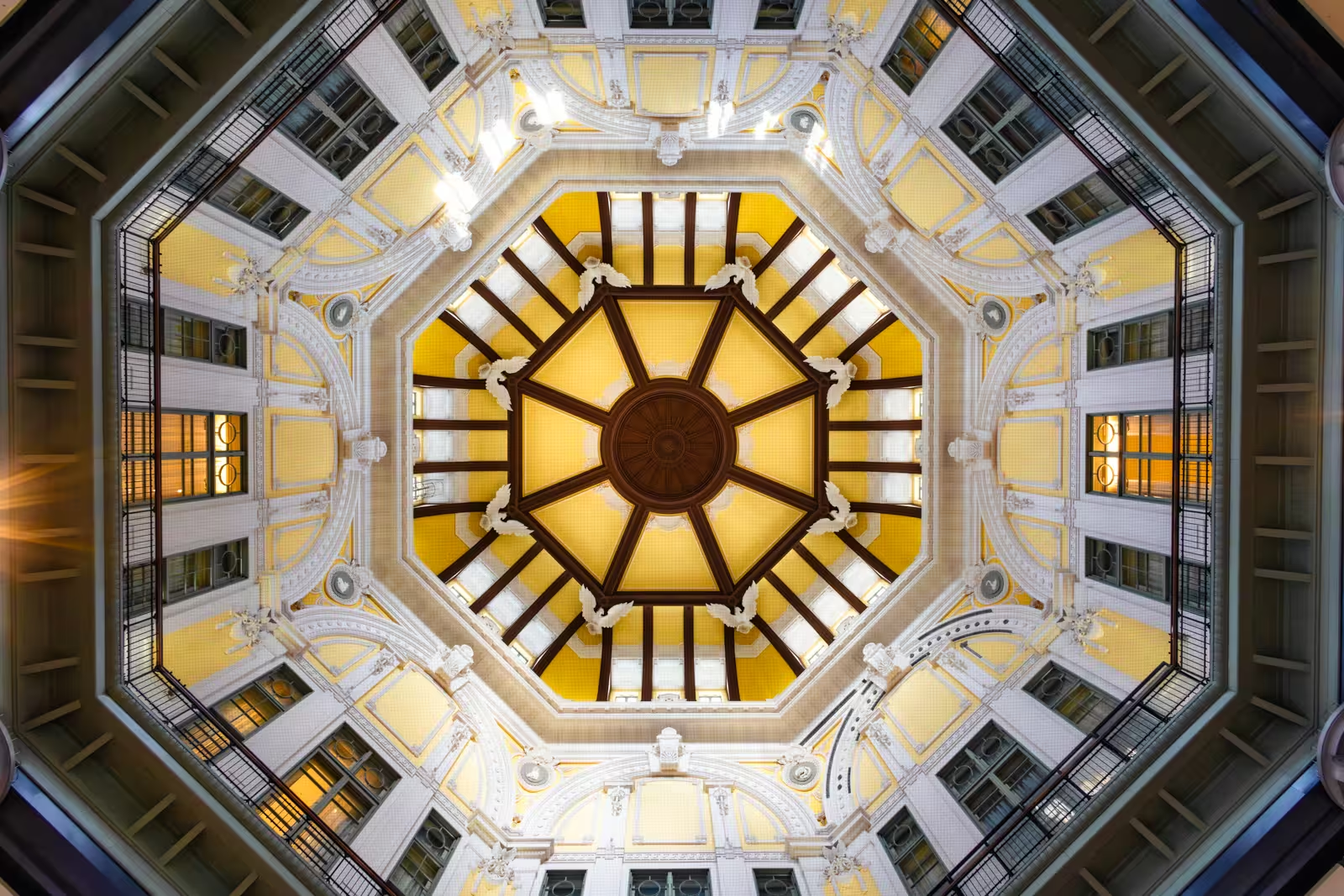
Architectural details to look for
The ceilings are gorgeous and (usually) well-lit. So, even though they are high, you can see details. What is there exactly?
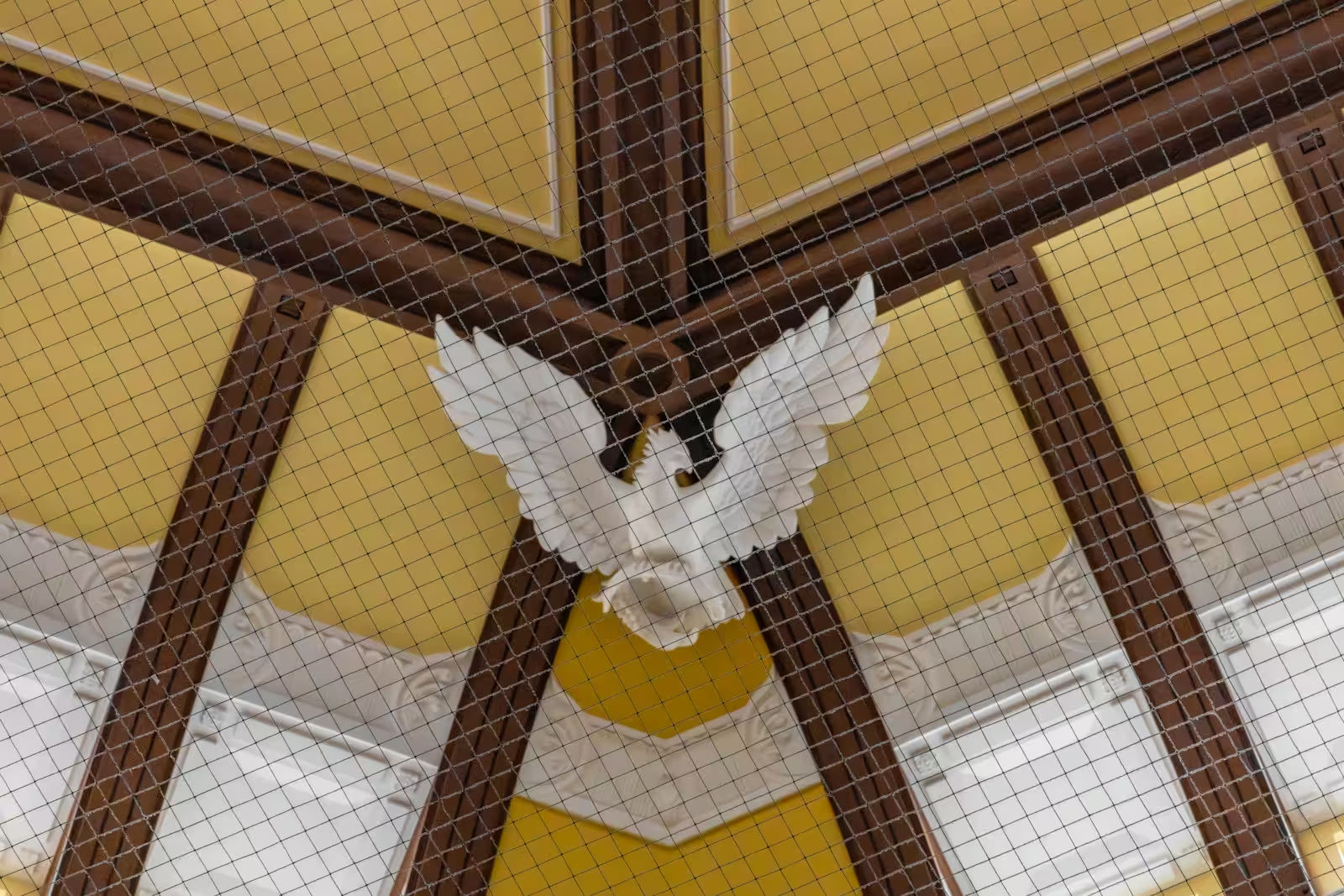
- There are eight eagles, looking to the left, are in the octagon-shaped ceiling spaces, like the original. Under them are eight of the twelve animals of the Chinese zodiac.
- A wheel motif (車輪のモチーフ) is in the very center of the ceiling. Kingo gave it radial “spokes” and circular lines to make it look like a wheel. He thought that was appropriate for a major train station.
- Surrounding the wheel motif are 16 flower reliefs (eight to a dome) modeled after the Clematis plant which was was selected because, in the “language of flowers,” it represents “traveler’s joy” (旅人の喜び). It was a poetic greeting to passengers passing through the station.
The missing zodiac animals mystery
- So why only eight of the twelve? The missing animals are the Rat, Rabbit, Horse, and Rooster and represent the cardinal directions (North, East, South, West). They were omitted from the octagonal design.
- The eight animals you can see are those associated with the intermediate directions. They are the Ox (north-northeast), Tiger (east-northeast), dragon (east-southeast), snake (south-southeast), monkey (west-southwest), dog (west-northwest), and boar (north-northwest).
- Another fascinating detail from the reconstruction is the incorporation of original relief work found within the old domes. After being reinforced with advanced chemical compounds, these historical fragments were integrated, with great results.
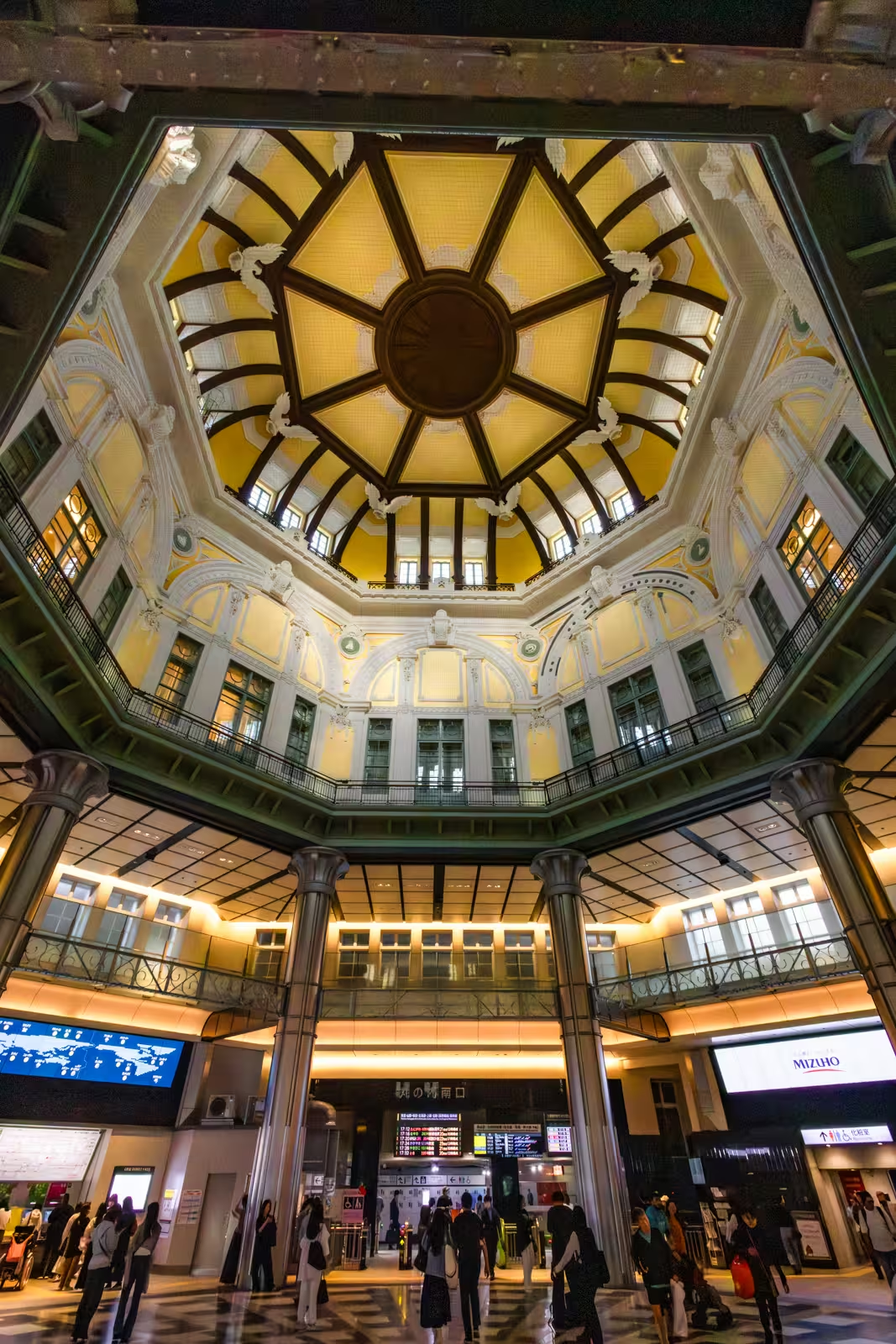
Lens: Canon RF 16mm f/2.8 STM (1/400 sec at f/5.0, ISO 12800)
Photography tips
- The key to a great shot of the domes is symmetry. For the best results, stand directly under the center of the ceiling and point your camera straight up. Use gridlines in its viewfinder or on the screen to line up the architectural elements perfectly.
- These ceilings are perfect subjects for a rainy day in Tokyo. If the weather has you stuck indoors, this is a beautiful and accessible photo opportunity.
- The use of tripods for photos inside Tokyo Station is forbidden.
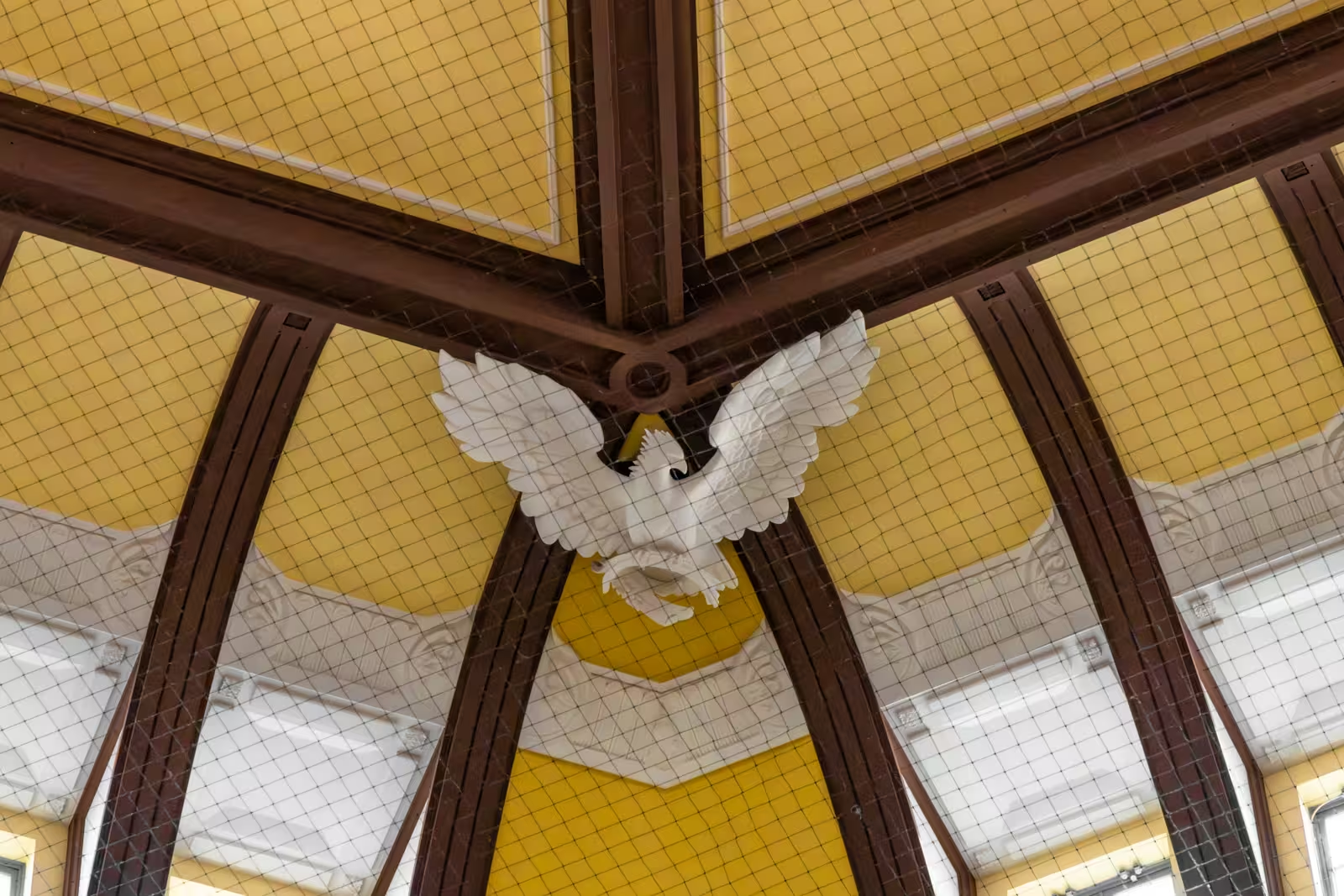
Lens: Canon RF 24-105mm F4 L IS USM
1/100 sec at f/11, ISO 12800
Recommended lenses
Wide angles and zooms have their uses. The ceilings are wide and my Canon RF 16 mm just fits them in. To focus on small details like the animals of the Zodiac, you need something with reach. For that, I only had the Canon RF 24-105mm F4 L IS USM, which wasn’t quite long enough!
In the end, I did some serious cropping to get the details to a suitable size. Something in the range of 200 mm would be perfect I imagine.
Photo spots near Tokyo Station
- Hibiya Park
- Imperial Palace
- Kite Museum
- Tokyo International Forum
Visitor information
- Address: 1-1 Marunouchi, Chiyoda-ku, Tokyo 100-0005
- Opening hours: Daily from 5:00 a.m. to 12:30 a.m. (open during train operating hours)
- Entry fees: None
- To help plan your visit, consult the Tokyo Station City website.
- Here is the station on Google Maps:
History of Tokyo Station’s ceilings
- Construction began and finished in 1914. Tatsuno Kingo, a prominent Japanese architect (and student of Josiah Conder), was responsible for the design. He used steel framing and red brick to create a building reminiscent of those in Europe.
- Only two gates were on the Marunouchi side of Tokyo Station when it opened. The North was the exit, and the South was the entrance. They gave a good view of the Imperial Palace’s walls.
- The sturdy steel framing, largely imported from England, enabled the structure to survive the devastating 1923 Great Kantō earthquake.
- WW2 bombings caused extensive damage. They were rebuilt at the end of the conflict but with a different design. Simple roofs replaced the domes.
- In 2007, reconstruction began and was completed in 2012. The facade of the building was restored. Most importantly, the domes and their beautiful ceilings returned!
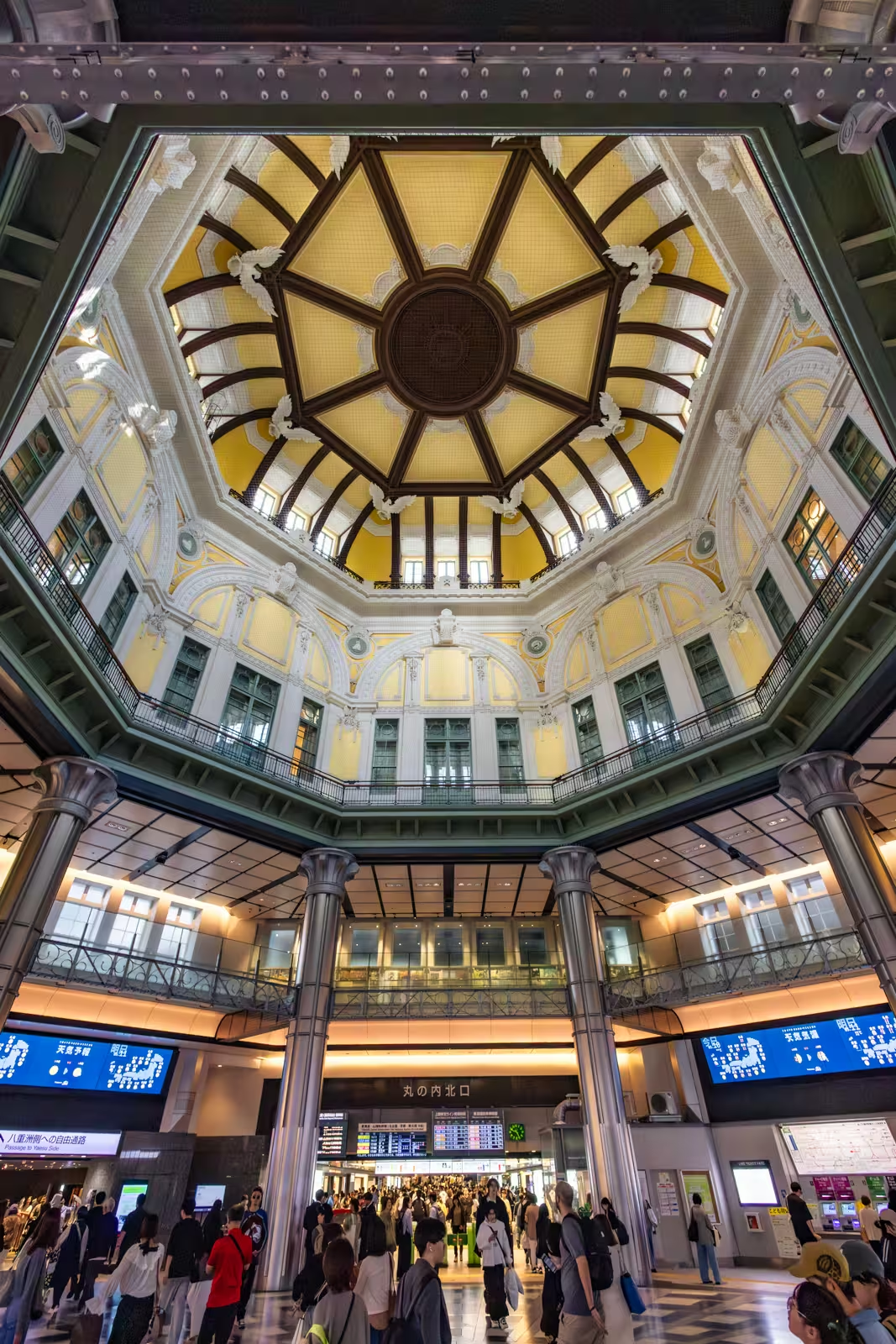
Lens: Canon RF 16mm f/2.8 STM
1/400 sec at f/5.0, ISO 12800)
Are the domed ceilings worth visiting?
Tokyo Station is often the first stop for visitors, but it shouldn’t just be a place to catch a train. Between the zodiac animals and the symmetrical geometry of the domes, it is a great subject for architectural photography in the city.
So, pack your wide-angle and your telephoto lens, keep your gridlines on, and make sure to visit both the North and South gates to get the full experience. And if you want to take photos of Japanese trains, check out [The Railway Museum] in Saitama.
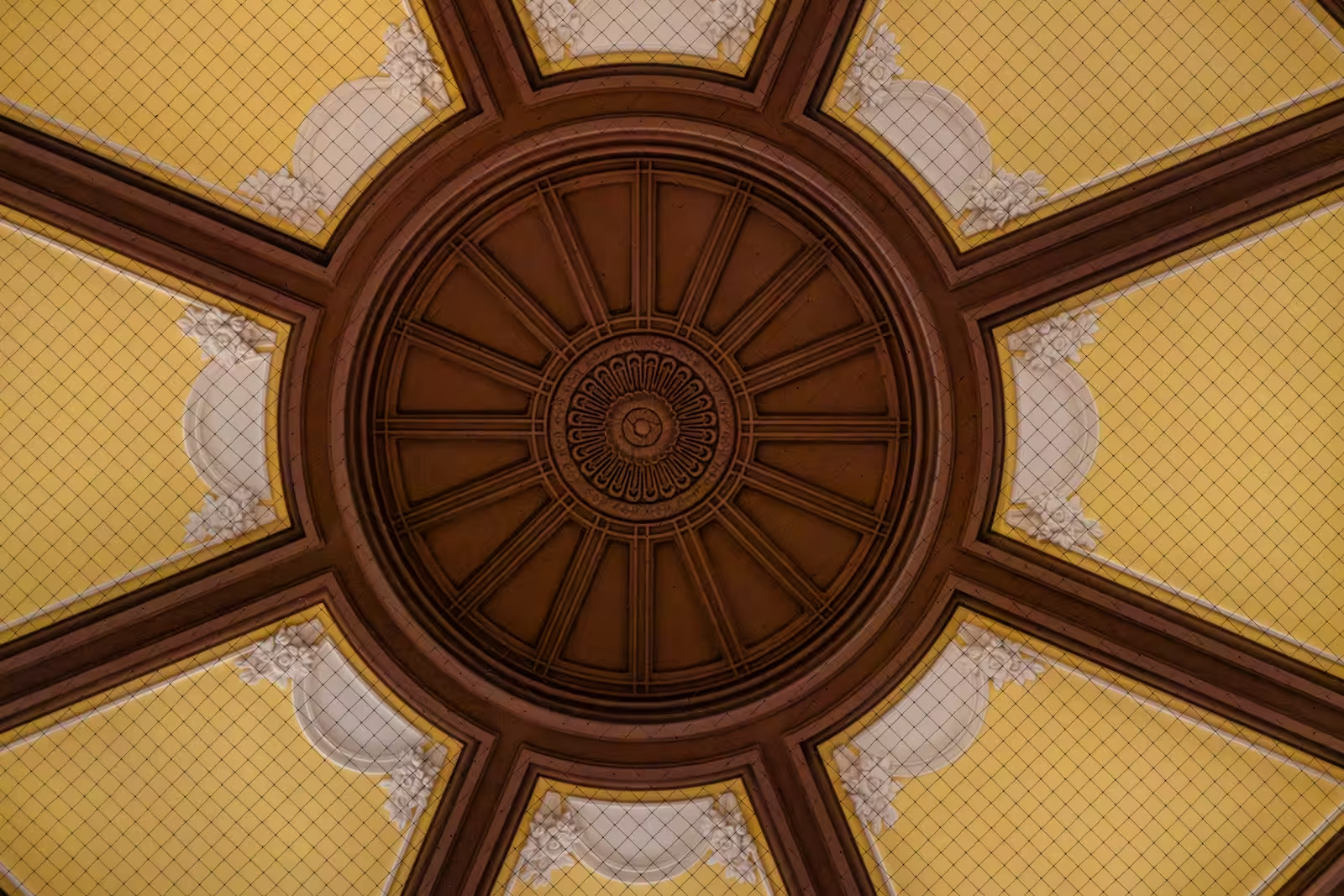
Canon RF 24-105mm F4 L IS USM (1/100 at f/5.6 at ISO 3200)
FAQ
My photography gear for this shoot
- Camera: Canon EOS R5
- Lenses:
- Canon RF 24-105mm F4 L IS USM
- Canon RF 16mm f/2.8 STM