Asakusa Culture & Lights 2026
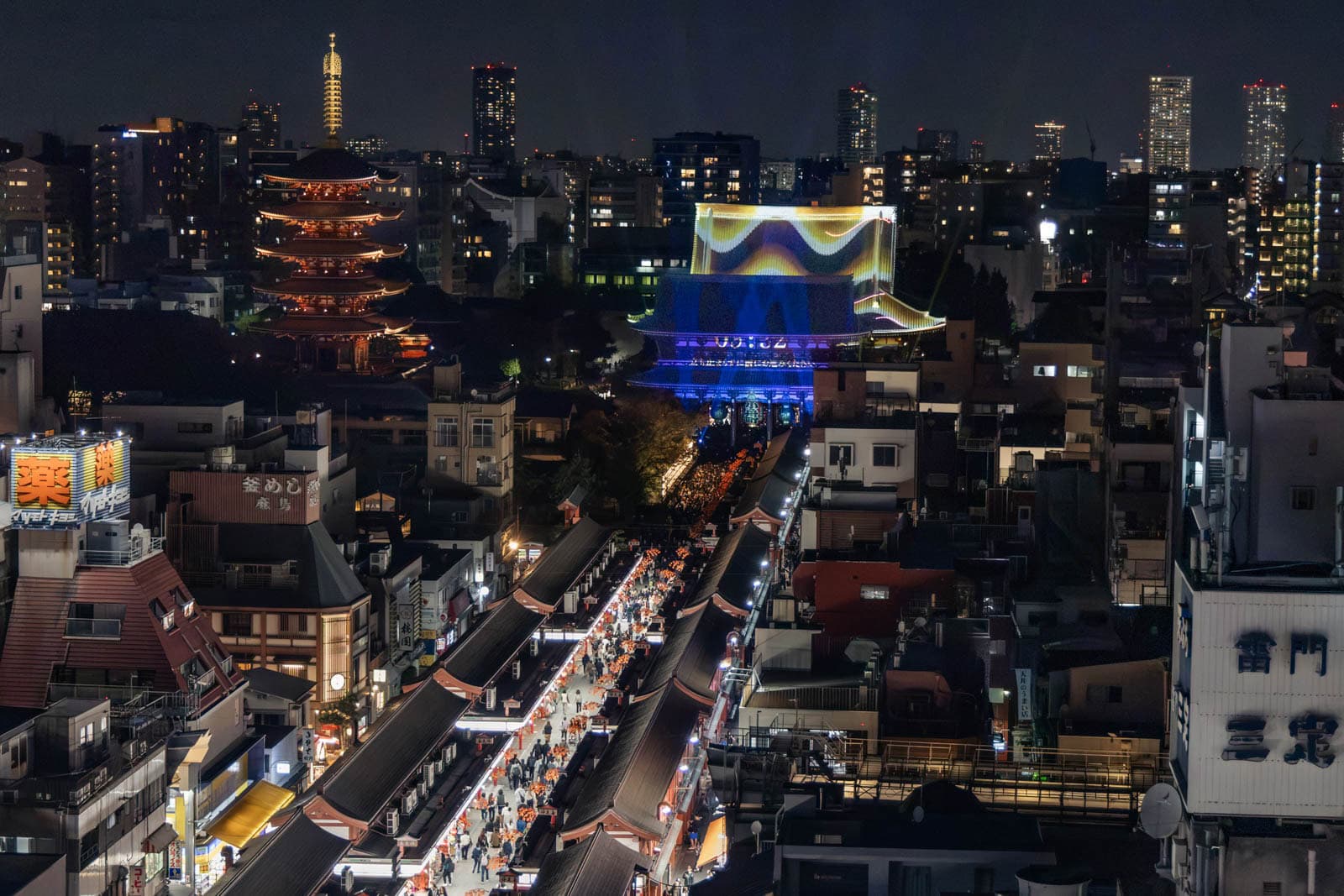
I got my first taste of Asakusa Culture & Lights during its inaugural run in 2025. Seeing Tokyo’s oldest temple brought into the digital art age, almost as if teamLab had taken over Senso-ji’s historic grounds, was unforgettable.
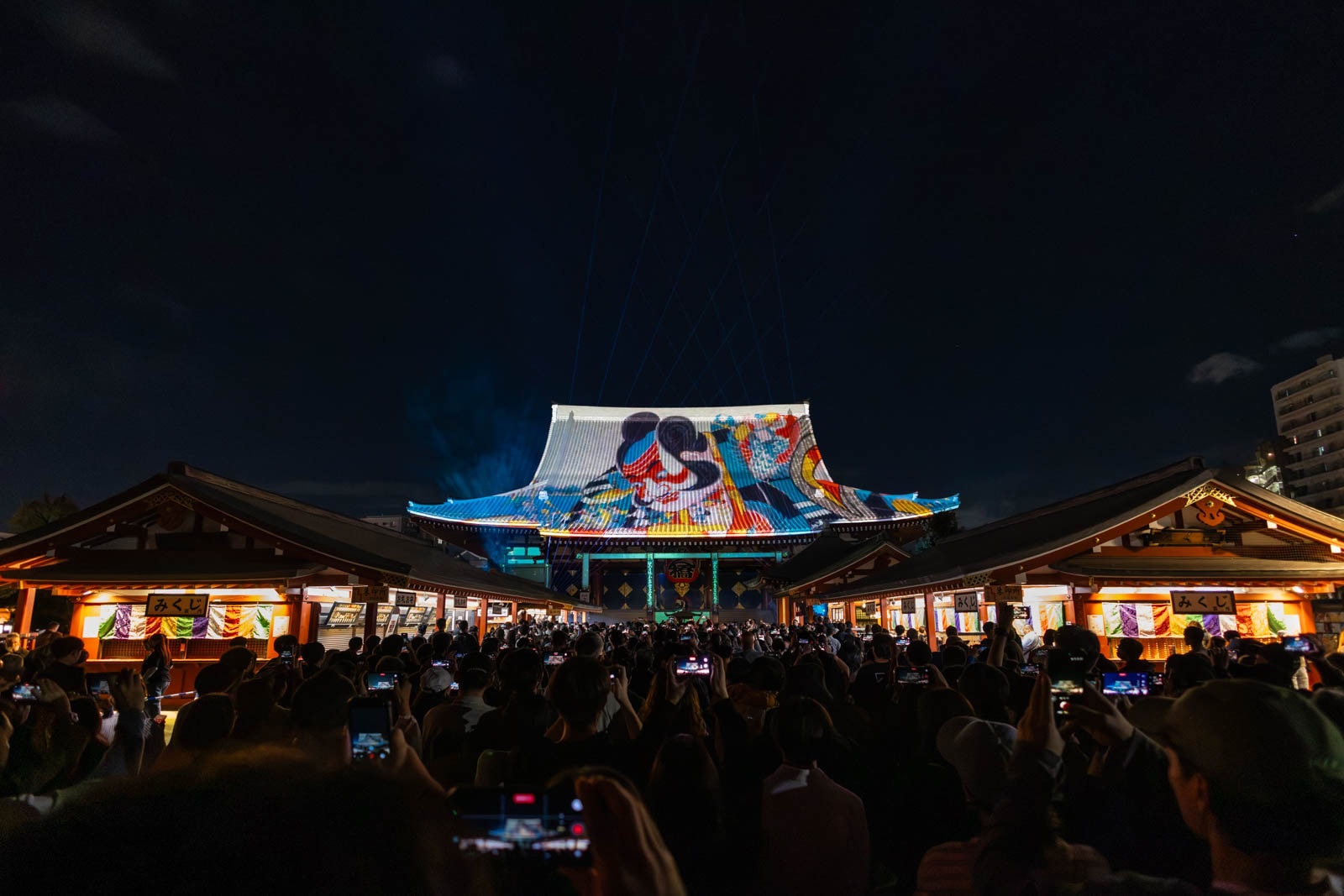
Returning for the 2026 event, which blends 1,400 years of Buddhist history with vibrant projection mapping and wadaiko drums, I wanted to see how the organizers improved the experience. Here is my complete visual review, 2025 vs. 2026 comparison, and night photography guide.
What is Asakusa Culture & Lights?
Asakusa Culture & Lights takes place at night, blending 1,400 years of Senso-ji’s Buddhist history and traditional art with modern digital animations and music. It’s similar to the projection mapping at Shinjuku’s Tokyo Metropolitan Government Building.
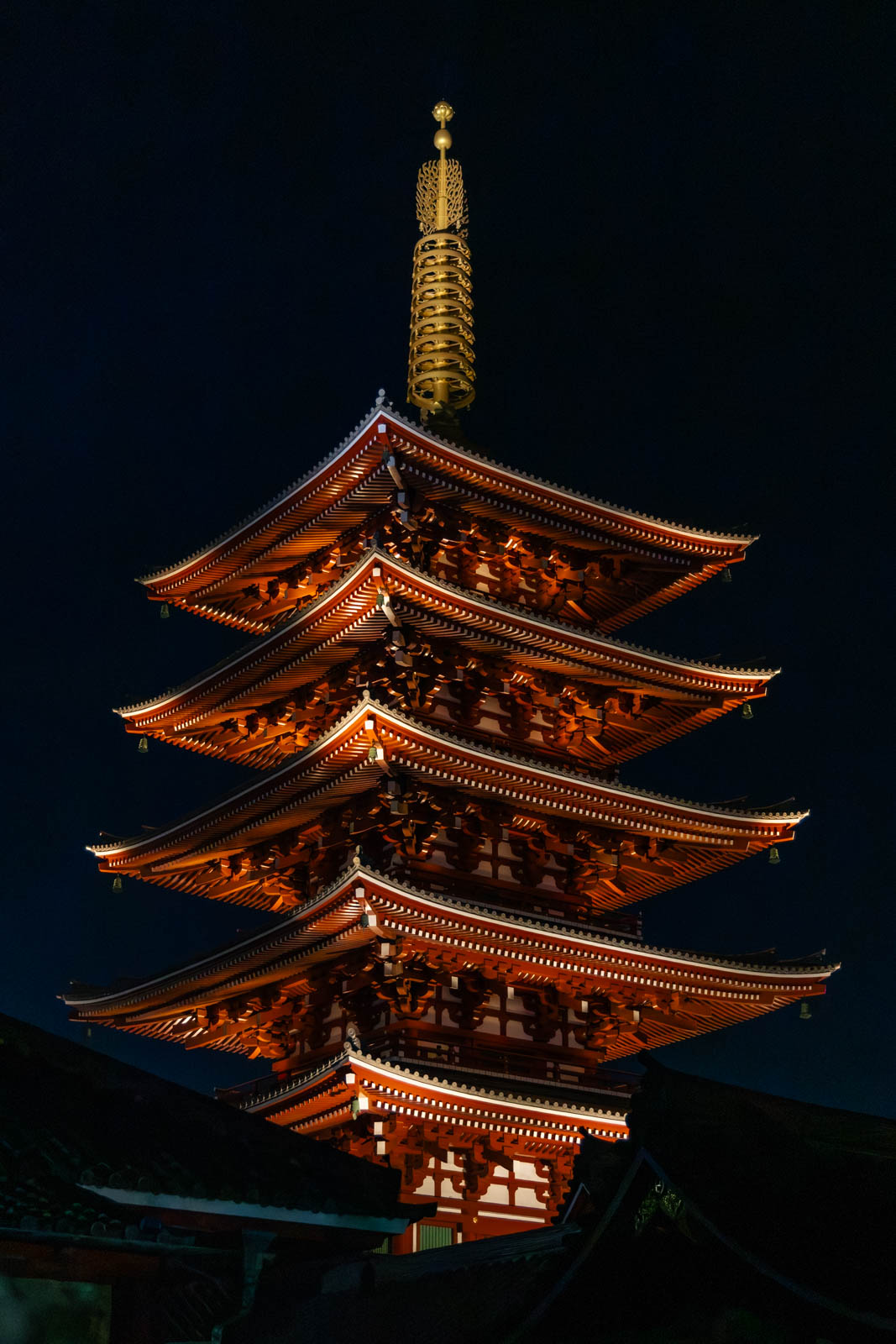
What changed for Asakusa Culture & Lights 2026?
Here is what was different from 2025:
- The pagoda didn’t get any special colored lights in 2026. Actually, it looked much better this time in my opinion.
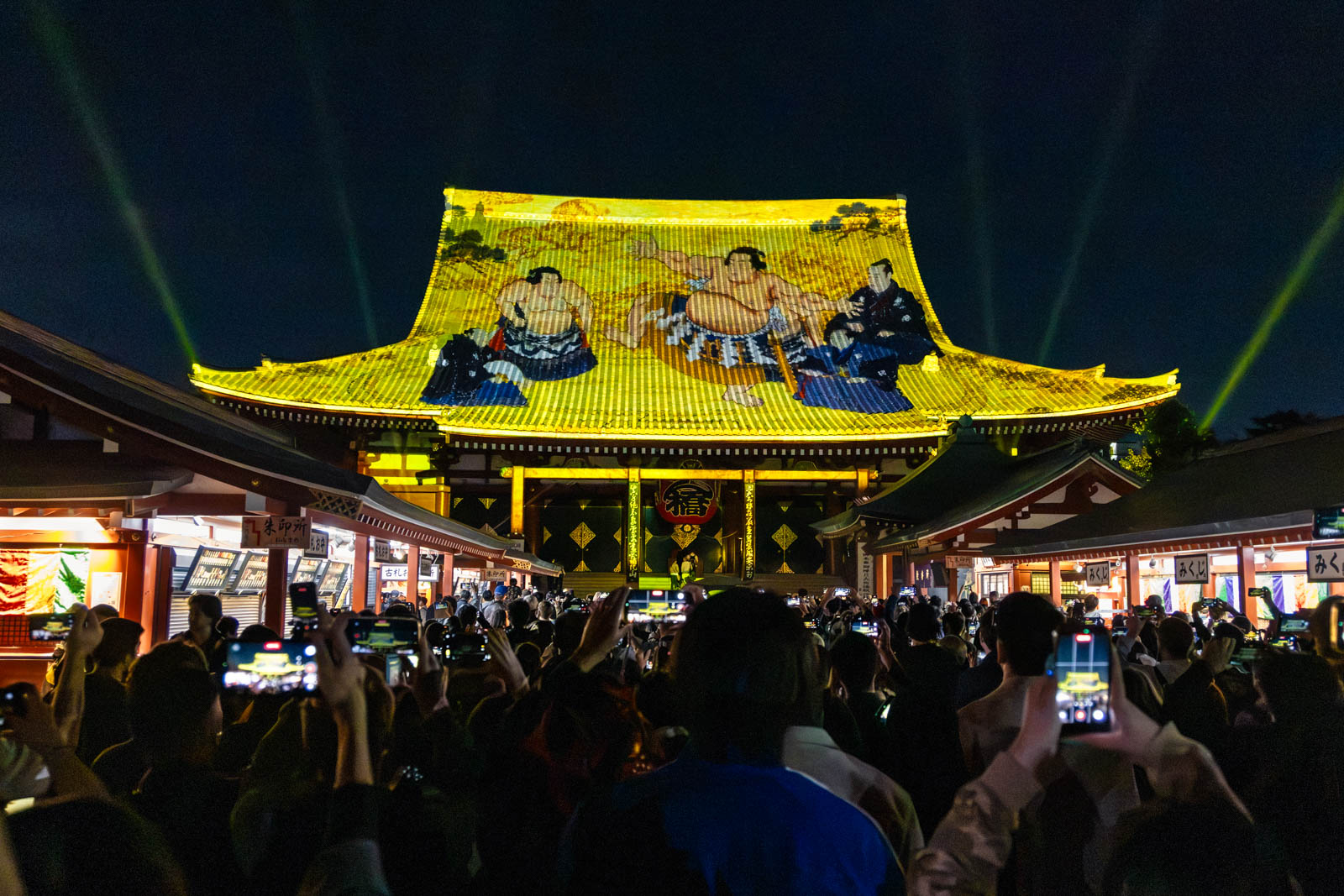
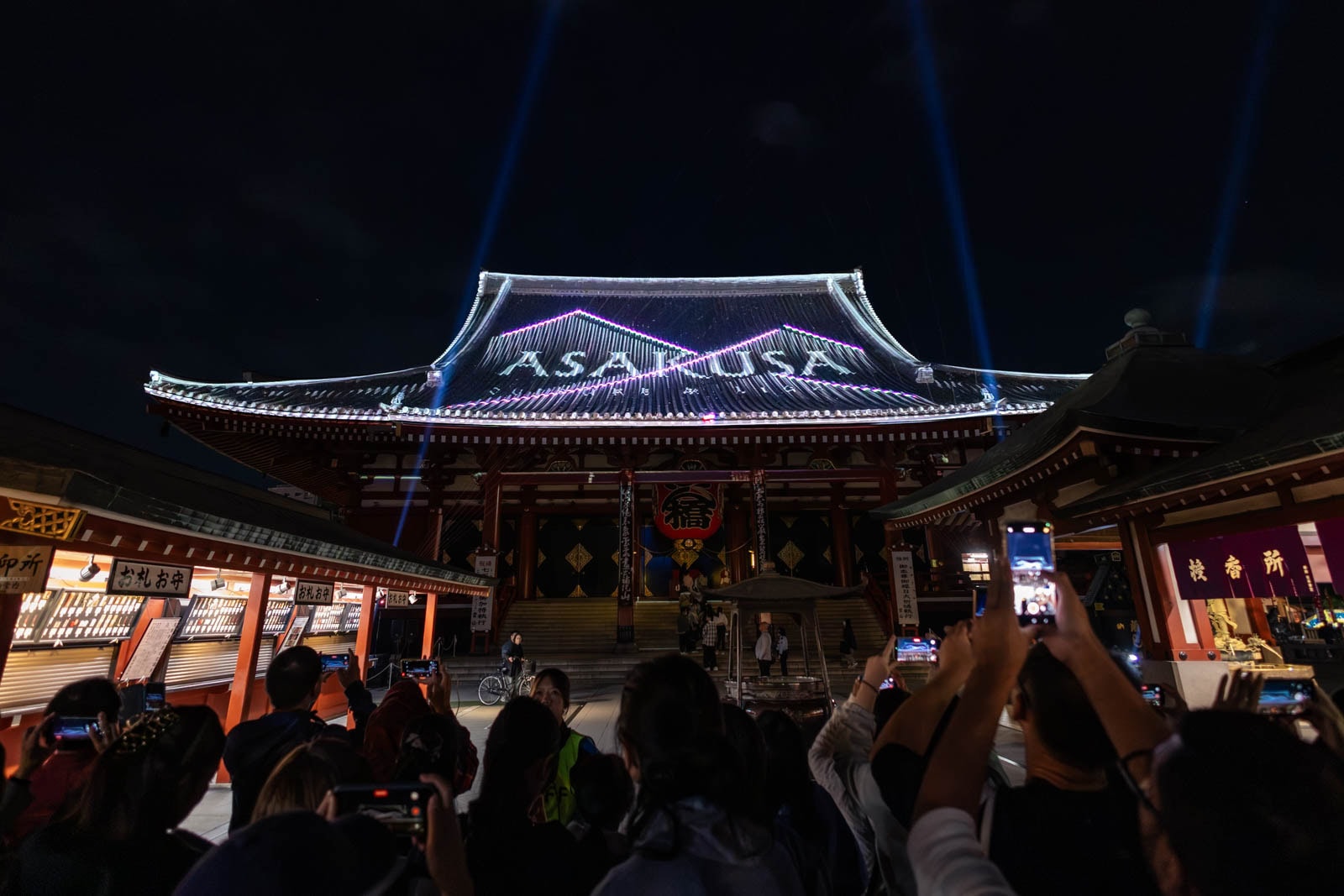
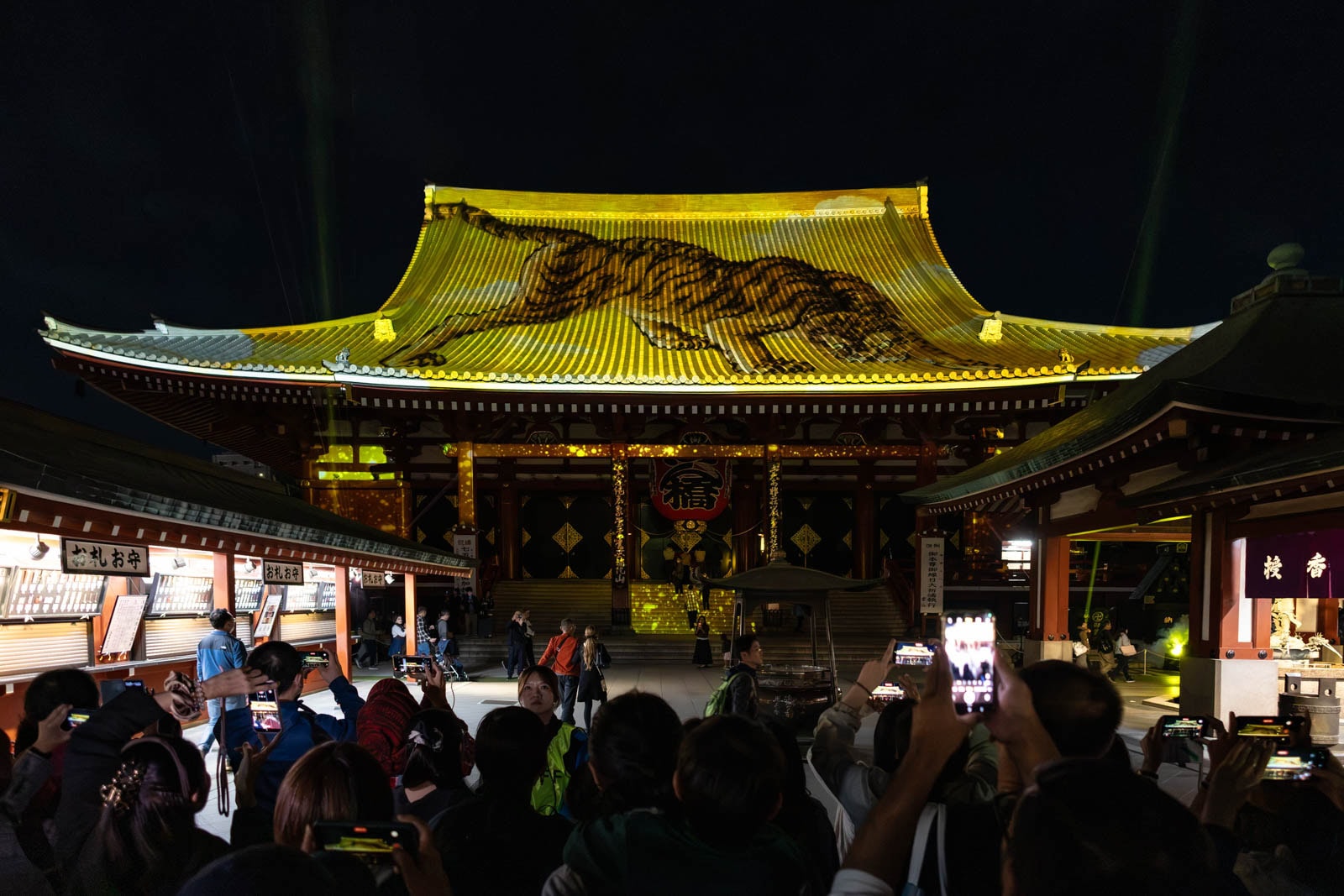
- Sensoji’s main hall got its own projection mapping for the first time.
- The Nitenmon Gate’s animations were weak in 2025, so I didn’t mind it not being used in 2026.
- To see more of the previous year’s event look at [Sensoji Projection Mapping 2025].
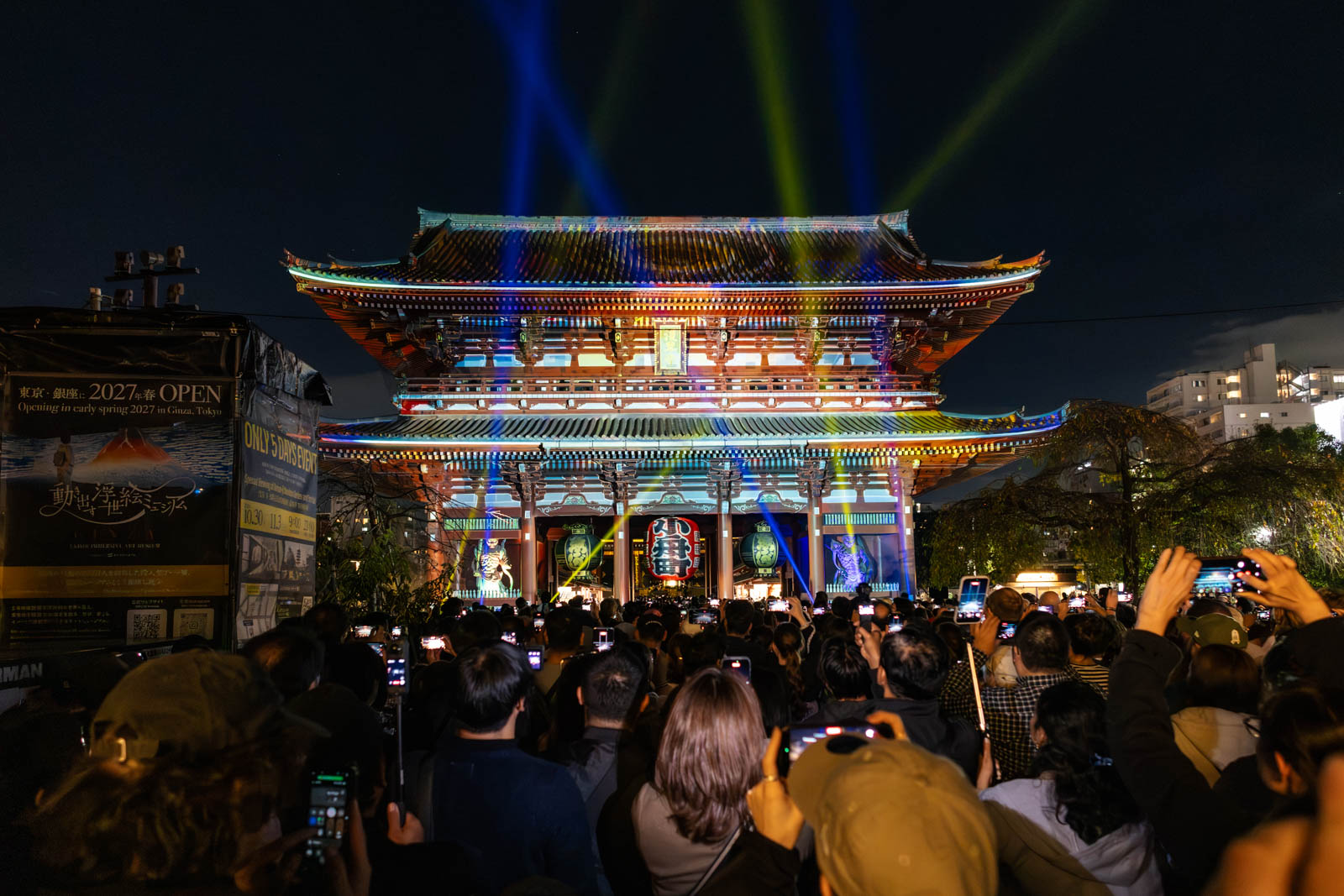
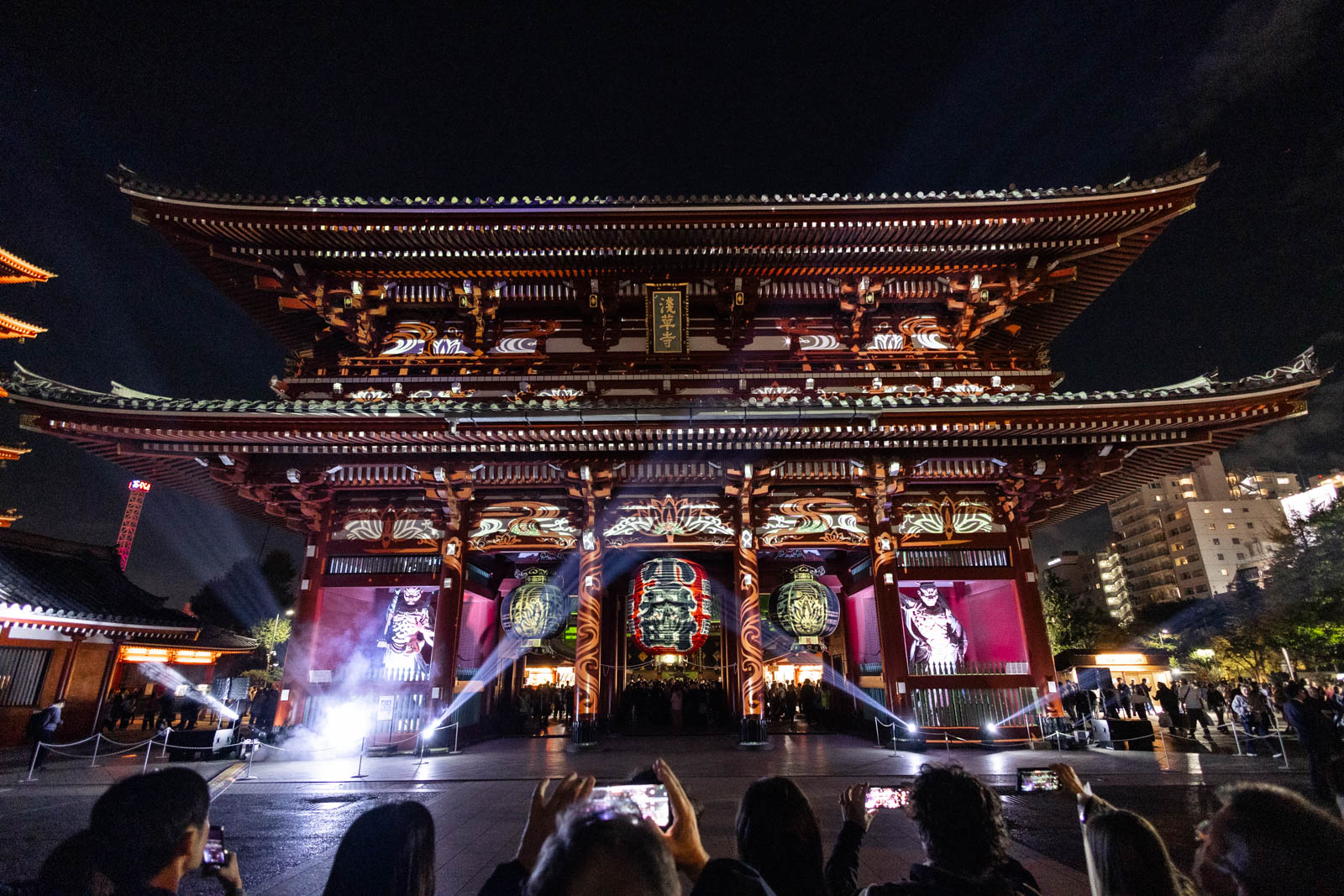
Hozomon Gate projection mapping & illumination
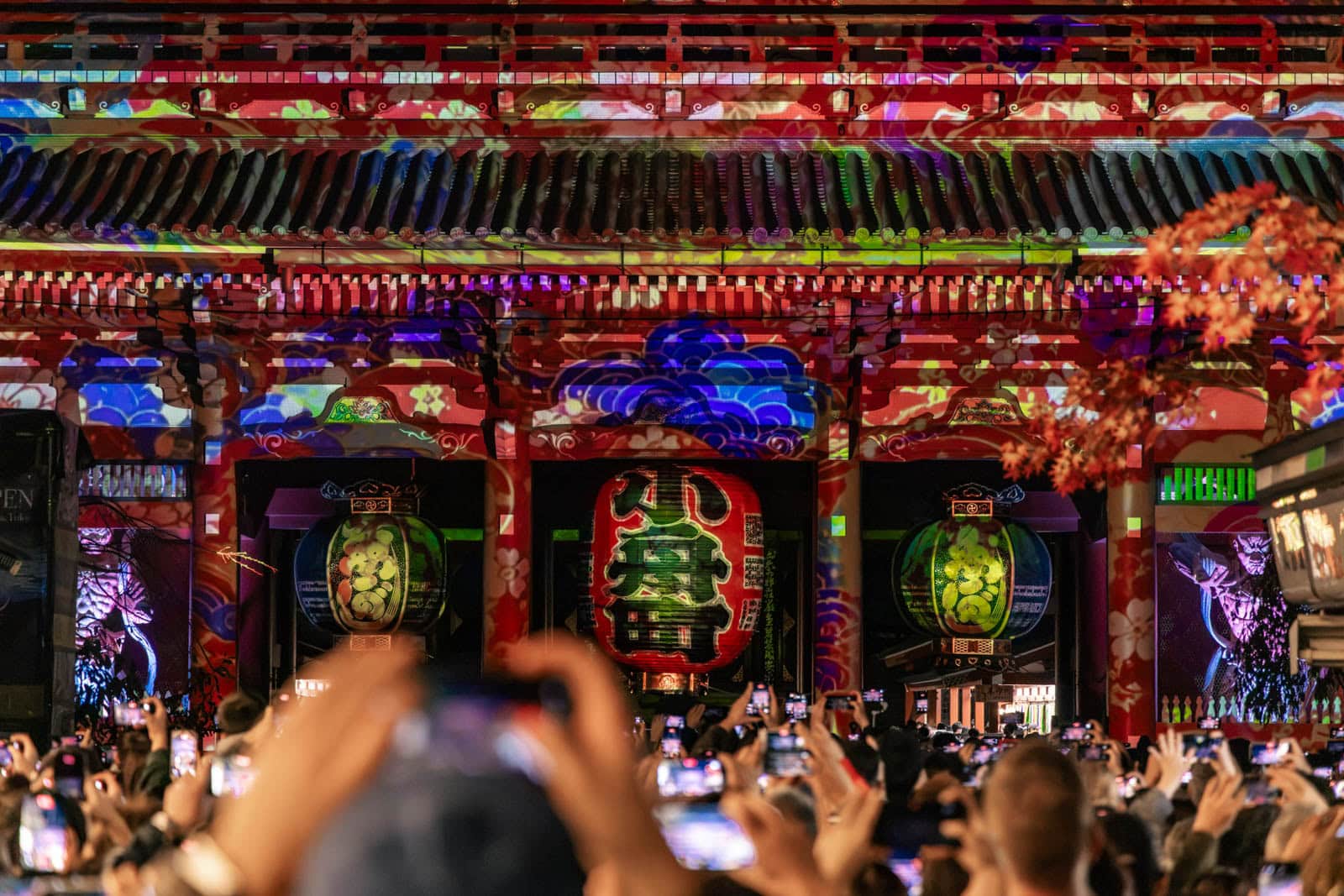
As the projection mapping began, the red lacquer served as the backdrop for a swirling kaleidoscope of exploding colors, spring and autumn scenes. We watched as digital cherry blossoms and maple leaves cascaded down the pillars, followed by Kaminarimon (Thunder Gate) lanterns heading into the sky.
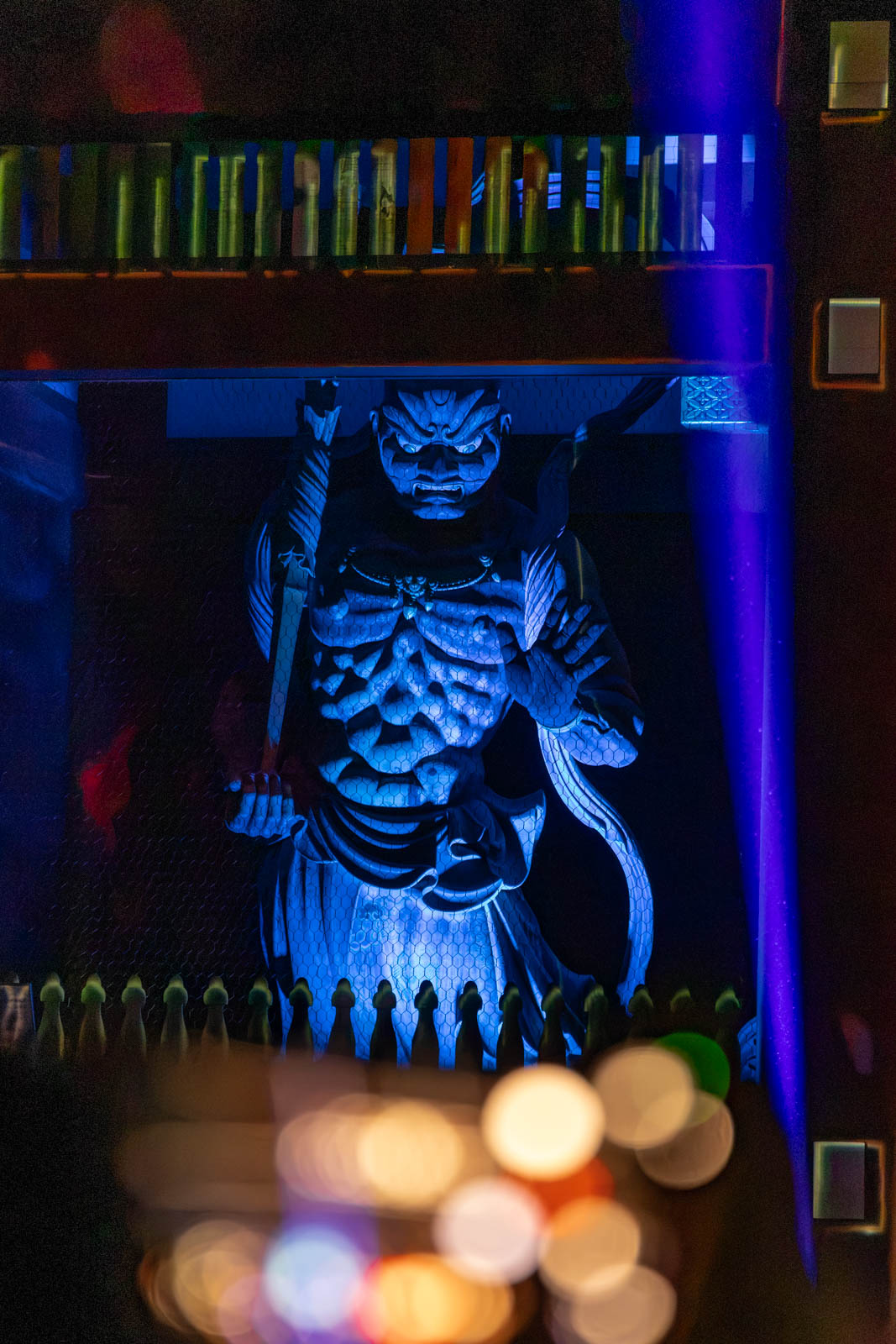
Fujin (God of the Wind) and Raijin (God of Thunder) appeared on the gate and were surrounded by lightning. Laser beams sent multi-colored lights into the night sky.
Main Hall projections: Myths, legends & wadaiko drums
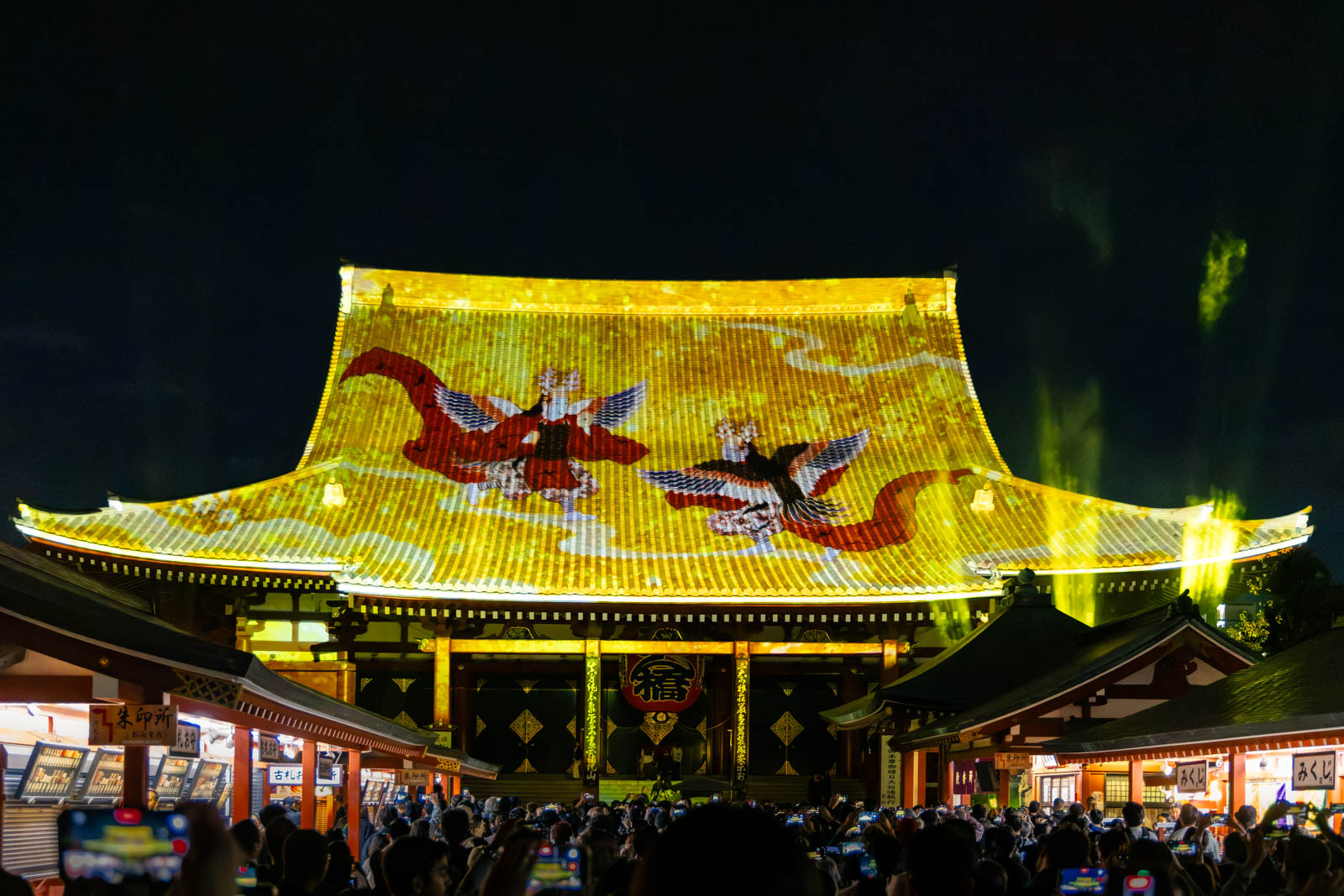
The main hall segment started with various patterns painting the roof accompanied by a thunderous wadaiko drum soundtrack. The various scenes involved sumo, tigers, samurai battles, magical birds and other scenes from Japanese myths and legends.
The Hinokuma brothers’ role in establishing Sensoji was shown with them recovering the golden statue of the Goddess Kannon from the Sumida River.
What to Expect: Crowds, atmosphere & smartphones
Asakusa Culture & Lights is a fun experience. The music and animations all blended together perfectly. It’s a great free Tokyo event.
But you will be in a sea of smartphones. Everyone (including me) videoed the event. If you just want to enjoy the music (those wadaiko drums are powerful) along with the animations, you might find the sea of screens around you annoying.
I overheard a couple of people comment about this. They said they wanted to enjoy the event without seeing all the screens wherever they turned their head. Even though I love photography and images myself, I sympathised with them. How many of the videos taken on the night will be viewed again?
Event rules & photography etiquette
If you are planning to attend a future “Asakusa Culture & Lights,” keep these logistics in mind:
- Timing: The projections loop every few minutes. There is no need to worry about arriving in the middle; audiences flow freely.
- Respect the space: While this is a digital art festival, the grounds of Senso-ji are a sacred religious site. Please be mindful of where you stand and keep voices low.
- Photography: Turn your flash off. Flashes will dazzle other guests and wash out the projection effect.
- Equipment: Tripods are not allowed due to crowds.
- Schedule: The 2026 event ran from October 30 to November 3, between 6 p.m. and 9:30 p.m. Check the official [Asakusa Culture & Lights website] to see when it returns.
Note: For an additional fee, visitors could also enter the Denbōin Garden and Ema Hall. I plan to do this in the future, particularly to see the garden illuminated in the evening.
Suggested gear & camera settings
Asakusa Culture & Lights is a night event, so:
- Gear: Take your fastest lenses (f/1.8 or f/1.4 if possible).
- Lowering your shutter speed will also improve your camera’s lowlight ability but that can cause motion blur. But everyone videos the event, so they’ll be standing still.
- What settings did I use?
- ISO ranged from 10000 to 25600
- Shutter speed: From 1/40 to 1/100 sec.
- Crowds: It will be crowded, so be patient and forgiving when people walk through your frame.
Is Asakusa Culture & Lights worth visiting?
Definitely. Sensoji and its grounds are a major destination on their own, drawing millions of worshippers and visitors each year. However, Asakusa Culture & Lights 2026 elevated the experience through digital art and animation, offering exactly what people want to see in an outdoor setting at Tokyo’s oldest temple.
The organizers learned valuable lessons from 2025, which showed in 2026. I cannot wait to see what the 2027 event brings. And to learn more about the temple look at [Sensoji Temple Photography Guide].