Fujinon XF 55-200mm Review

Editor’s Note (March 2026): While I moved to Canon in 2024, I am keeping this review because the Fujinon XF 55-200mm was a part of my photography life for seven years. My thoughts are based on long-term, real-world use and remain relevant for Fujifilm shooters.
Between 2018 and 2024, the Fujinon XF 55-200mm f/3.5-4.8 was always in my camera bag. During that time, I captured 1000s of images with it, from airshows and car races to fashion models.
It’s not a ‘Red Badge’ zoom, and it’s not perfect. But for its price, it offers a blend of image quality, reach, and portability. It should appeal to many X-series photographers.
In this long-term review, we’ll see where it shines and where it falls short. I’ll help you decide if it belongs in your camera bag too.

Fujifilm XF 55-200mm pros
- It’s reasonably light – the 55-200 weighs 75 grams less than the 16-55 I once used. That’s a big difference.
- It’s not big. This zoom you will find space for in your camera bag.
- It’s an affordable lens that gives quality pictures. For about US$850, it is excellent value.
- Vignetting and chromatic aberrations are well-controlled.
- The bokeh isn’t creamy or the smoothest. It’s pleasing but has some cat’s eyes, especially towards the edge.
- Even though plastic makes up a large part of this lens, the 55-200 is quality. The lens feels durable and solid.
- Autofocus is quiet.
- The OIS is great. I’ve shot at 1/80 sec at 200 mm and still got sharp images.

Lens cons
- Variable aperture. This means that as you zoom from 55mm to 200mm, the lens lets in less light. This can be challenging for manual exposure in video or for maintaining fast shutter speeds for indoor sports.
- Autofocus struggles in low light. The autofocus is near-silent and adequate for well-lit scenes like landscapes and portraits. In dim conditions, it can hesitate and “hunt” for focus. Manual focus might yield better results.
- Not weather-resistant.
- No teleconverter for this lens exists.
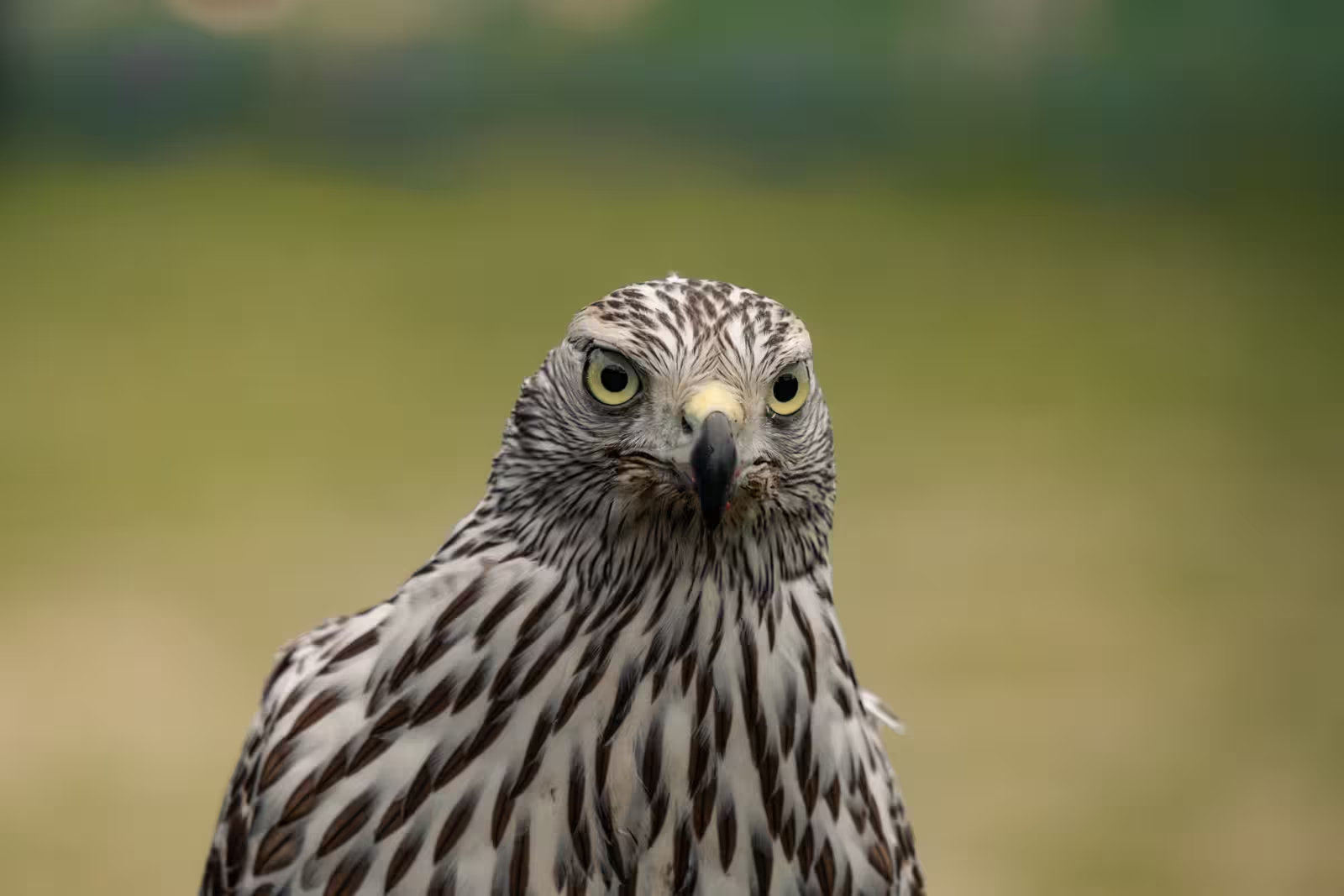
- Limited reach for dedicated wildlife photography. The 200mm (a 300mm full-frame equivalent) is plenty for travel, portraits, and larger field sports. For small birds or distant wildlife, you might want more.
- The minimum focus distance is 1.1 meters, but many lenses in this class have the same limitation.

Where I used this lens
- Festivals: Sanja Matsuri
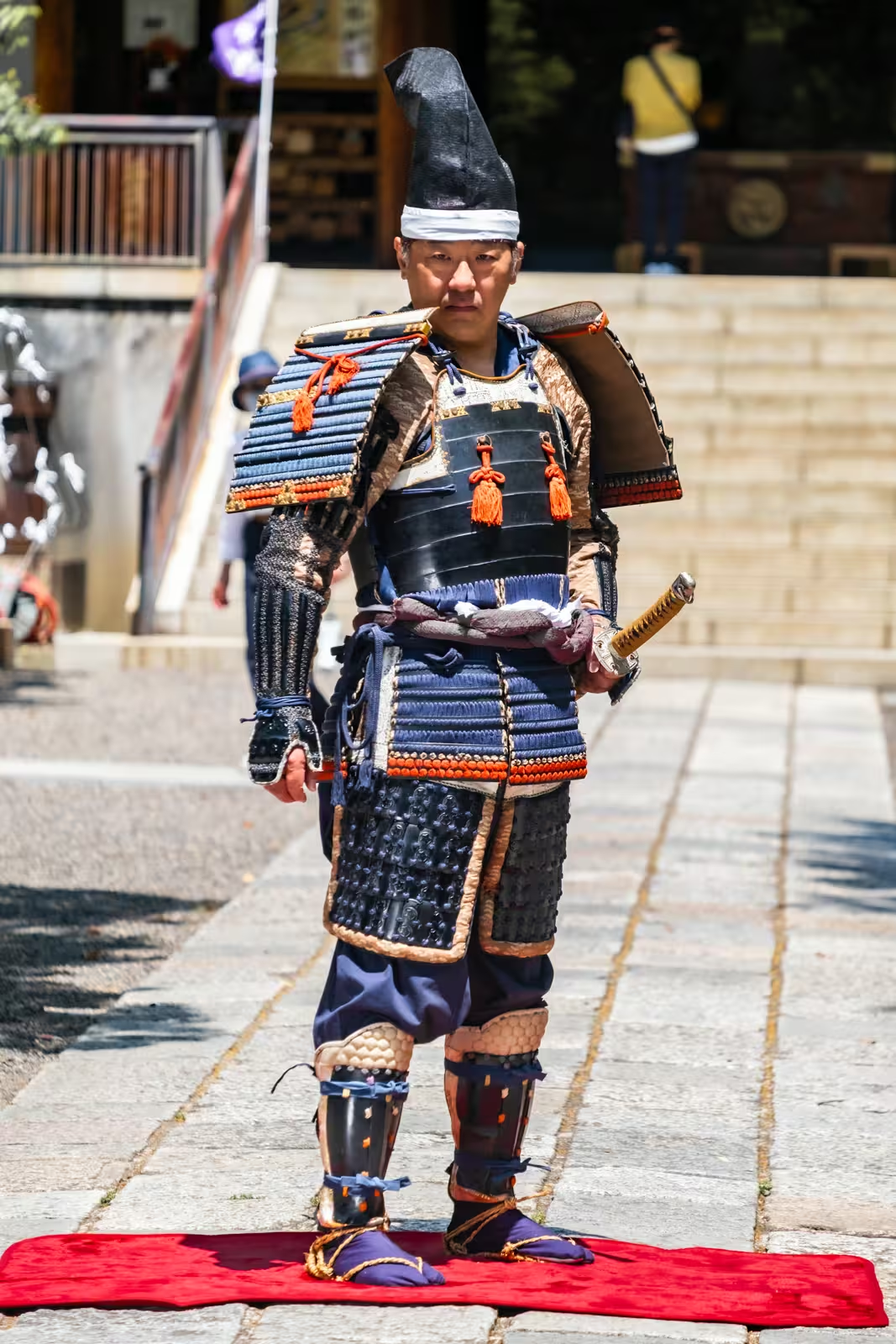
- Historical reenactment events: Tokyo’s 1000-Year-Old Samurai Parade
- Airshows: JASDF Iruma Air Base Open Day 2019
- Modelling Events: 55th Yumi Katsura Grand Collection
- Motorsports: FIA Intercontinental Drifting Cup 2018
- Sports:
- City/Landscapes
- Portraits

Fujinon XF 55-200mm technical specifications
- Mount Type: Fujifilm X
- Focal Length: 55 to 200 mm
- Lens construction (elements/groups): 14 /10
- Angle of view: 29.0 – 8.1°
- Number of diaphragm blades: 7 (rounded diaphragm opening)
- Maximum aperture: f/3.5 – 4.8
- Minimum aperture: f/22
- Minimum focus distance: 1.1 meters/3.7 feet
- Max magnification: 0.19 x (telephoto)
- Weight: 580 g
- Dimensions: 75 mm (wide) x 118 mm / 176 mm (telephoto)
- Filter size: 62 mm
- Optical Image Stabilization: Yes (rated at 4.5 stops)
55-200mm alternatives
Let’s look at the alternatives in the Fujifilm world. One is the 50-140mm which I haven’t used. It has a fixed aperture of f/2.8, but it is 995 grams. That’s about 400 grams heavier than the 55-200. It’s also far more expensive at about US$1900, though.
The other choice is the Fujifilm 100-400mm. It has more reach, but it isn’t a fast lens either. It costs about $2200. So unless you have a bottomless wallet, think about what you really need and what you can afford. I used this lens and thought it was great.
The Fujinon XF55-200mm is hard to find now, but the Fujifilm Fujinon XF 70-300mm F4-5.6 LM OIS WR is a great alternative
Do you have this lens? Share your opinion about it by leaving a comment below. By the way, if you need a bag to carry this lens and other gear check [Lowepro Pro Trekker BP 350 AW II].