Hideki Tojo, the Imperial Japanese Army general and 27th prime minister, remains one of modern history’s most controversial figures. As a key advocate for the ‘preventive war’ against the United States, his leadership ended in Japan’s devastation and his own execution.
Is he revered or reviled? The answer is complex, but for history buffs, his memorial at Tokyo’s Zoshigaya Cemetery offers a tangible connection to this turbulent past. The story behind this ‘grave’ is as complicated as the man himself.
Tojo’s grave is something else
The historical record is clear: after his trial for war crimes, Hideki Tojo was executed by hanging at Sugamo Prison on December 23, 1948. To prevent his final resting place from becoming a nationalist shrine, his ashes were scattered over the Pacific Ocean.
This presents a puzzle. Why does a prominent grave bearing his name stand in Zoshigaya Cemetery?
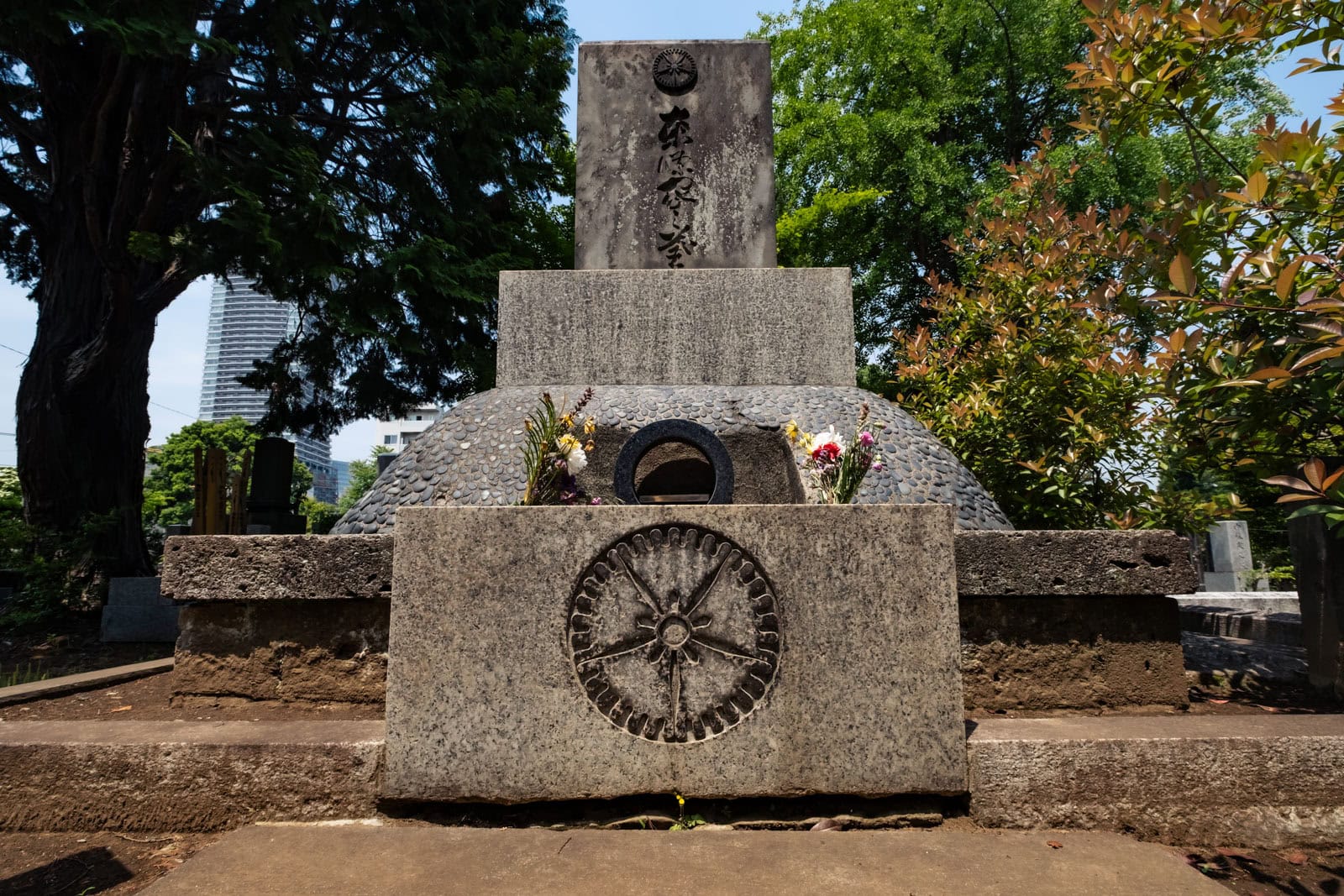
The answer is that the stone monument is a cenotaph, a memorial erected for an individual whose remains are elsewhere. It was created so that family, friends, and supporters would have a place to pay their respects, a common practice for many countries.
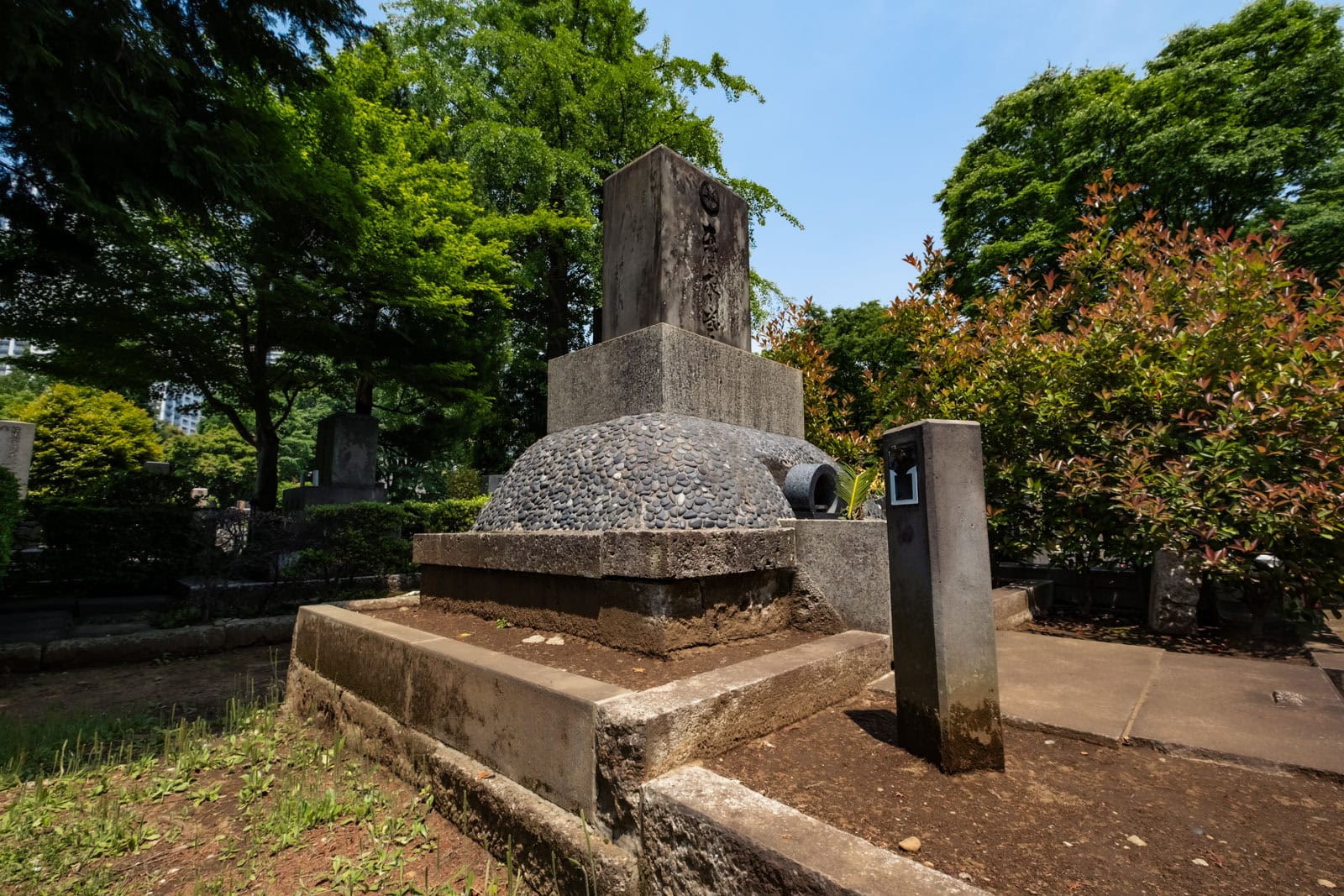
Tombstone with a mail box
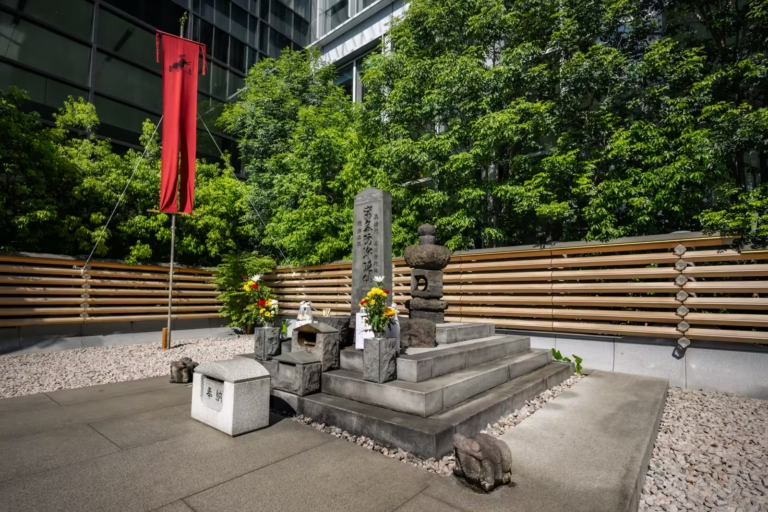
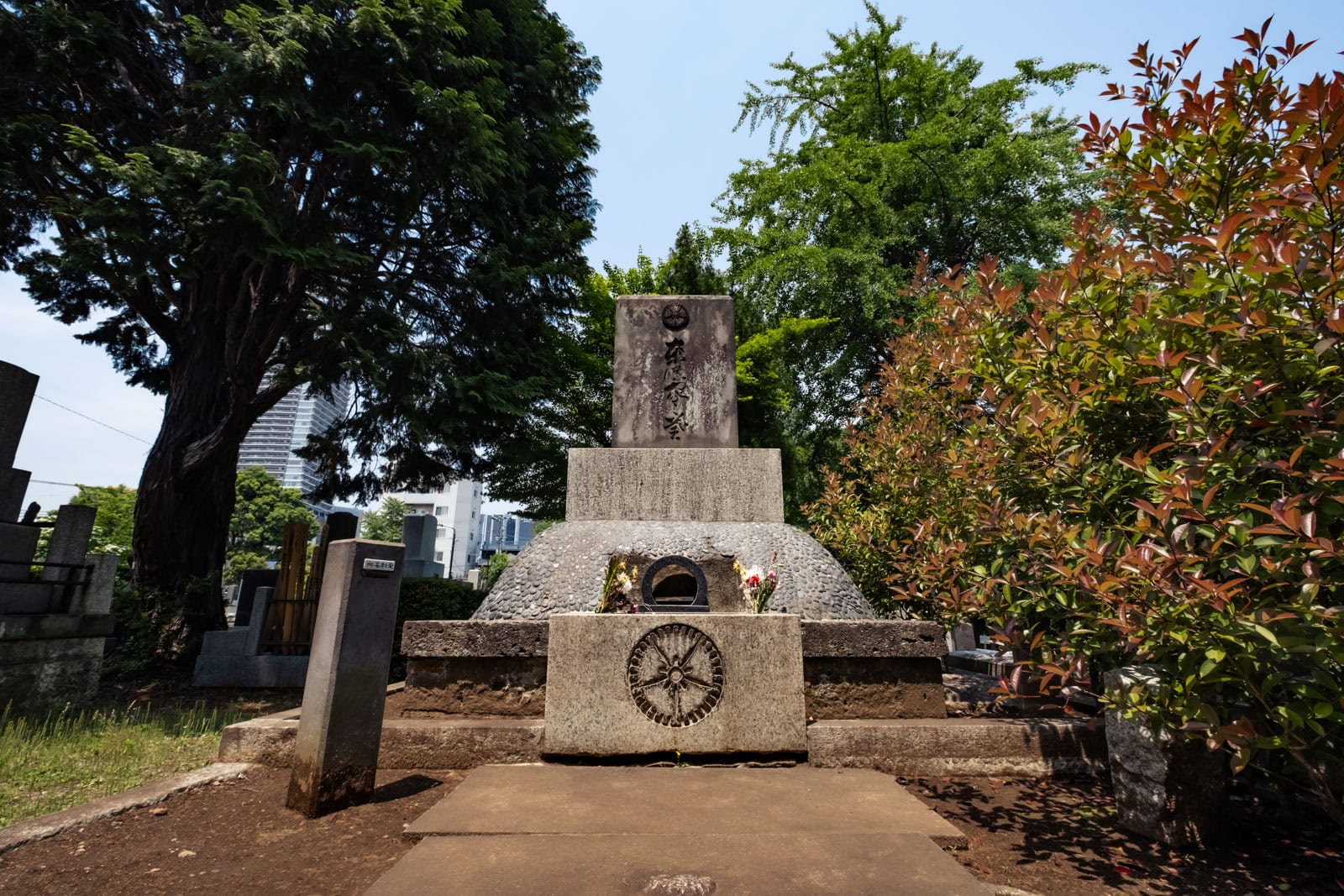
While the history is dramatic, the memorial itself is a study in austerity. It is a simple, tower-style tombstone, surrounded by trees.
As you can see in the photos, the site is kept tidy, and fresh flowers are often left at its base. On the left, you’ll even find a small “mailbox” for visitors to leave their business cards.
There is little space around the grave, so photographers should be aware that setting up a tripod can be challenging.
Finding the General’s memorial
Having understood the history behind the memorial, you might wish to see this piece of history for yourself. Finding it is straightforward.
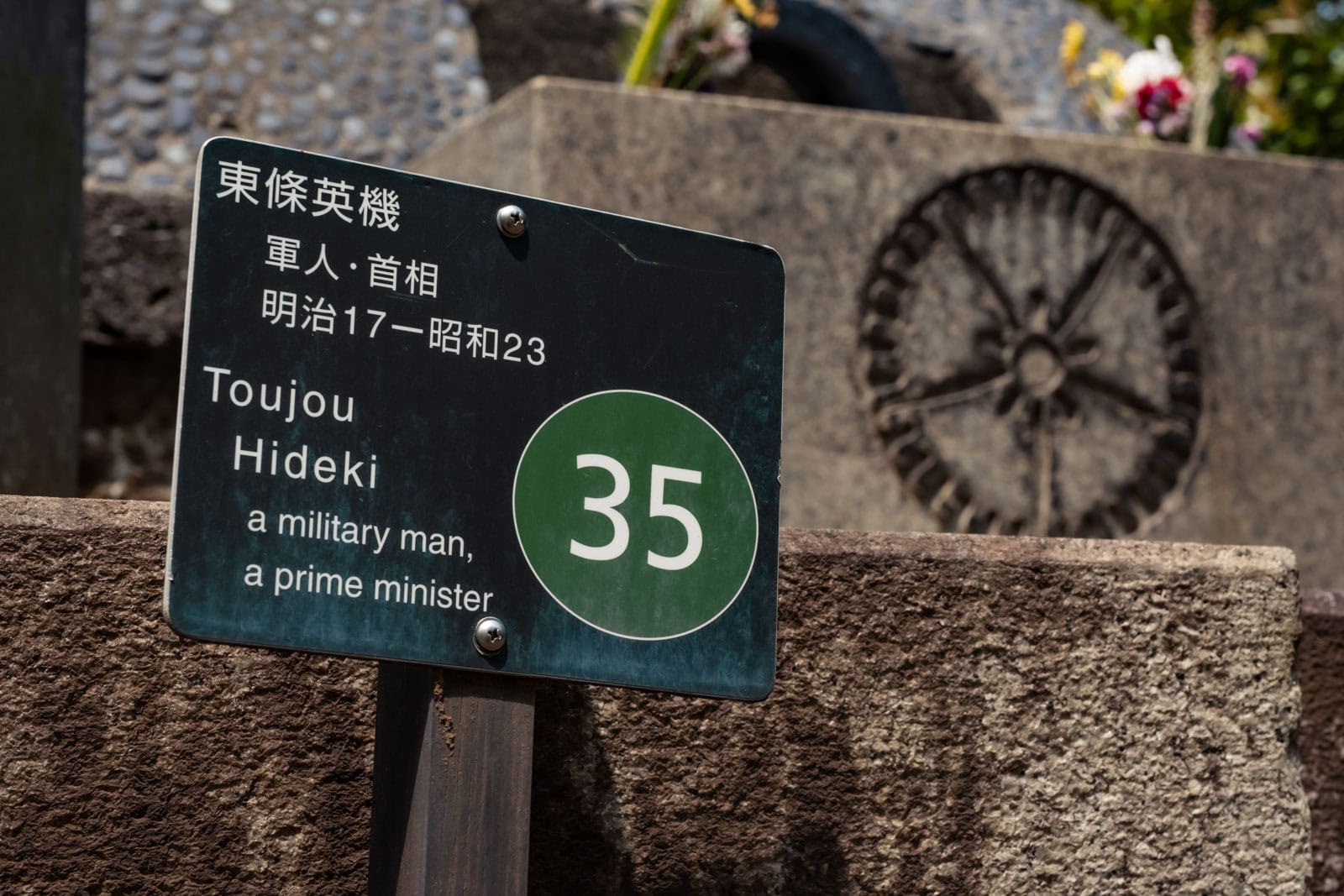
The cenotaph is in Zoshigaya Cemetery (official website). The best way to locate it is to first pick up a cemetery map at the administration office. His memorial is listed on the map, numbered thirty-five.
Many of Tokyo’s historic cemeteries, like Aoyama and Yanaka have these maps. The surprising thing is that the Japanese version is better than the English one. Why? Because the tombstones are written overwhelmingly in Japanese.
Also the cemetery’s graves aren’t in neat rows which can make finding them problematic. My recommendation is to go with language support to minimize problems.
My photography gear for this shoot
- Camera body: Fujifilm X-T3
- Lenses:
- Fujifilm XF 10-24 mm F4 R OIS WR
- Fujifilm XF 16-55mm F2.8 R LM WR
Is Hideki Tojo’s grave worth visiting?
If you are a history lover, it is. Though he was a war criminal, Tojo was a major player in 20th century world history. That alone makes his grave attractive.
The other fact is that he rests in Zoshigaya Cemetery which is also the resting place of many giants of Japanese history. Soseki Natsume, the writer of “I am a Cat” fame is there too.