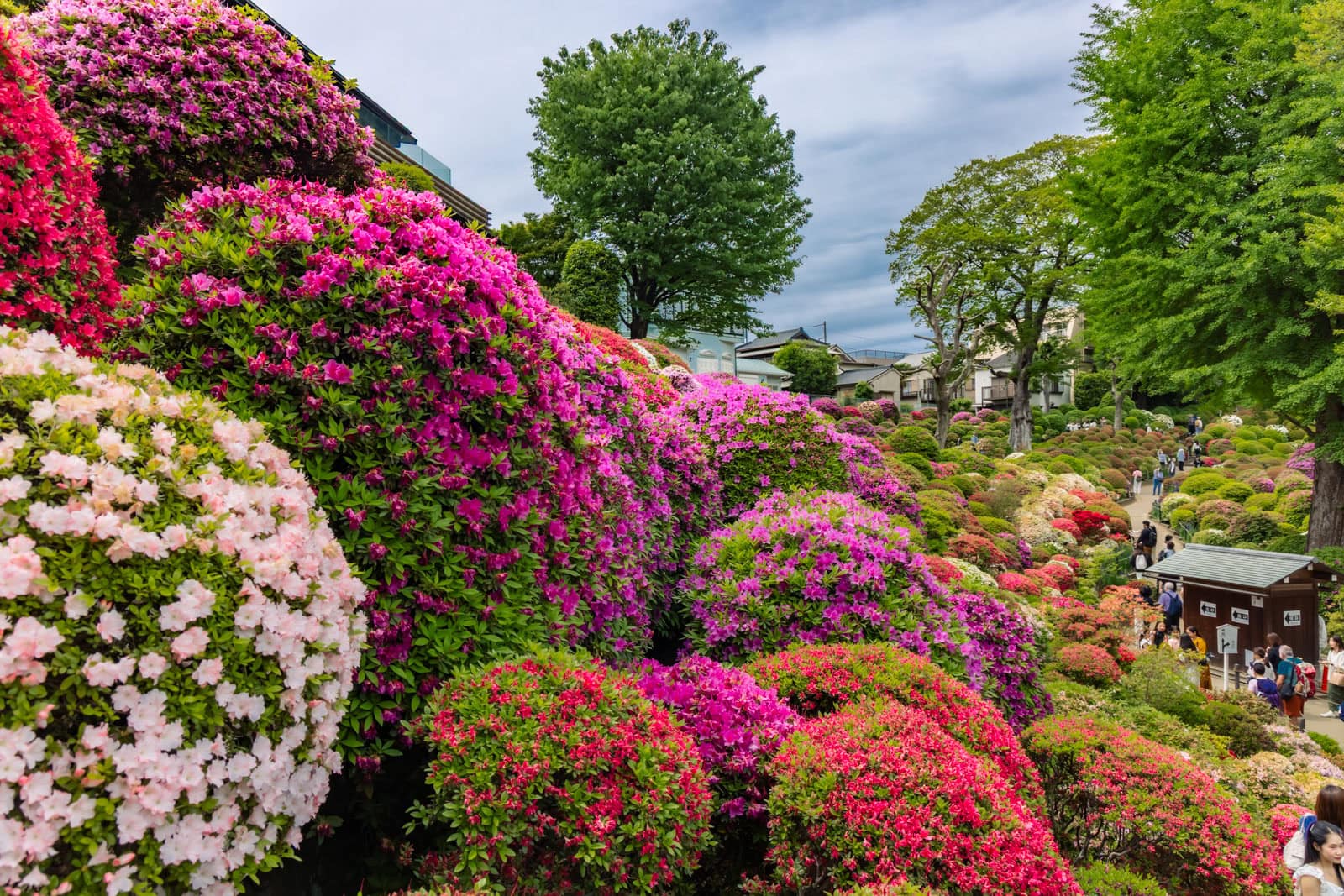
I wasn’t able to go to the 2026 Nezu Shrine Azalea Festival during the peak bloom, which turned out to be a mixed experience. It couldn’t be helped; I’ve started several new jobs recently, and making a living is a priority.
However, since I have rarely missed this event over the last decade, I decided to make the trip anyway. While the timing wasn’t perfect, I managed to get some photos.
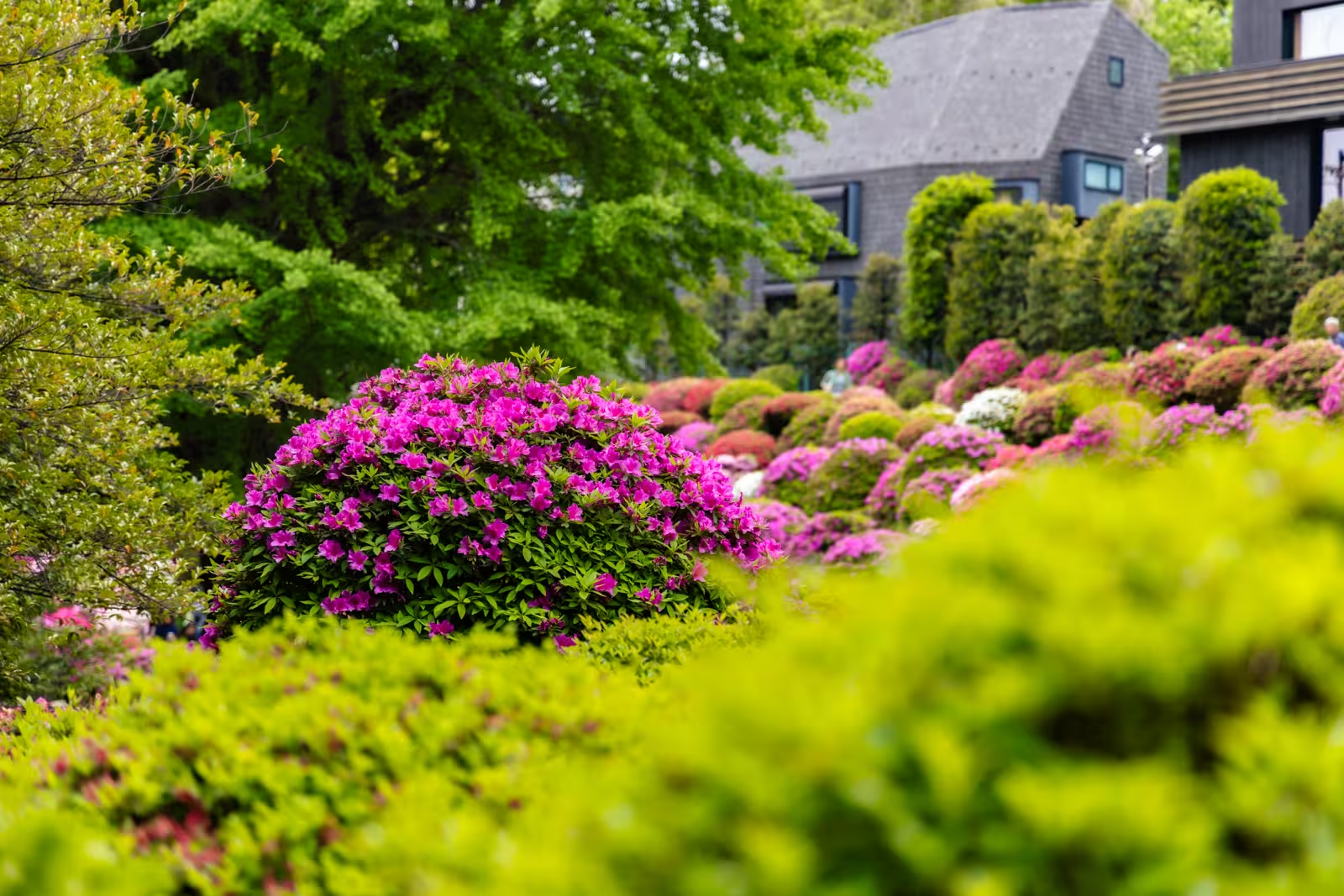
Usually, I arrive as early as possible to beat the crowds. This year, I went around lunchtime because the morning weather was poor. Clear blue skies were missing, but I hoped the clouds would provide a softer, more even light for my shots.
Festival price hike
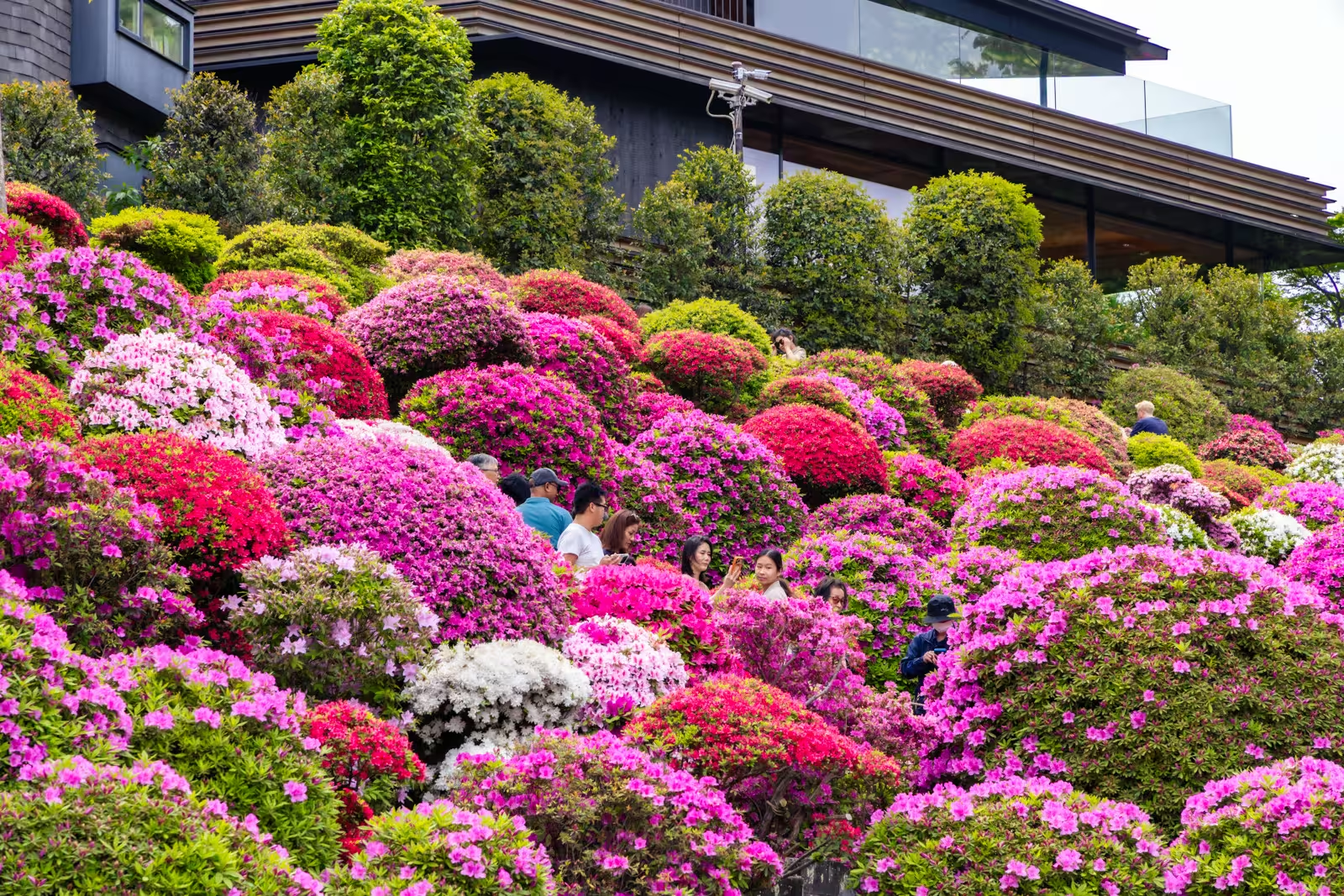
Nezu Shrine Azalea Festival 2026 was scheduled from April 1 to 30. I visited on the twenty-first, just past the halfway mark. It seemed reasonable to expect the flowers to be in good condition. However, as soon as I walked onto the grounds, I saw that wasn’t the case.
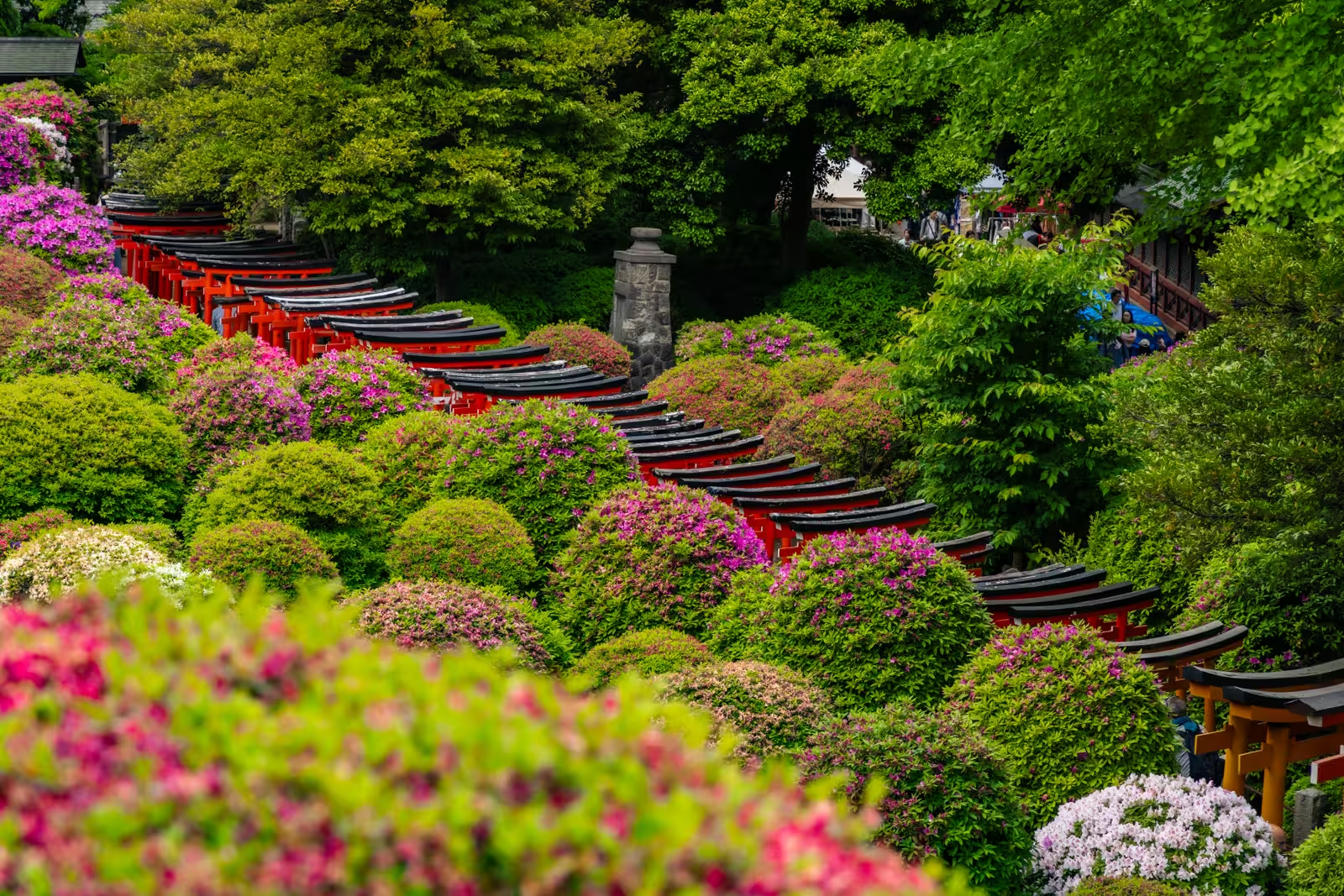
Large patches of green covered the hill in several spots. In other areas, wilting flowers dominated the view. It was disappointing, but my schedule simply didn’t allow for an earlier visit this year.
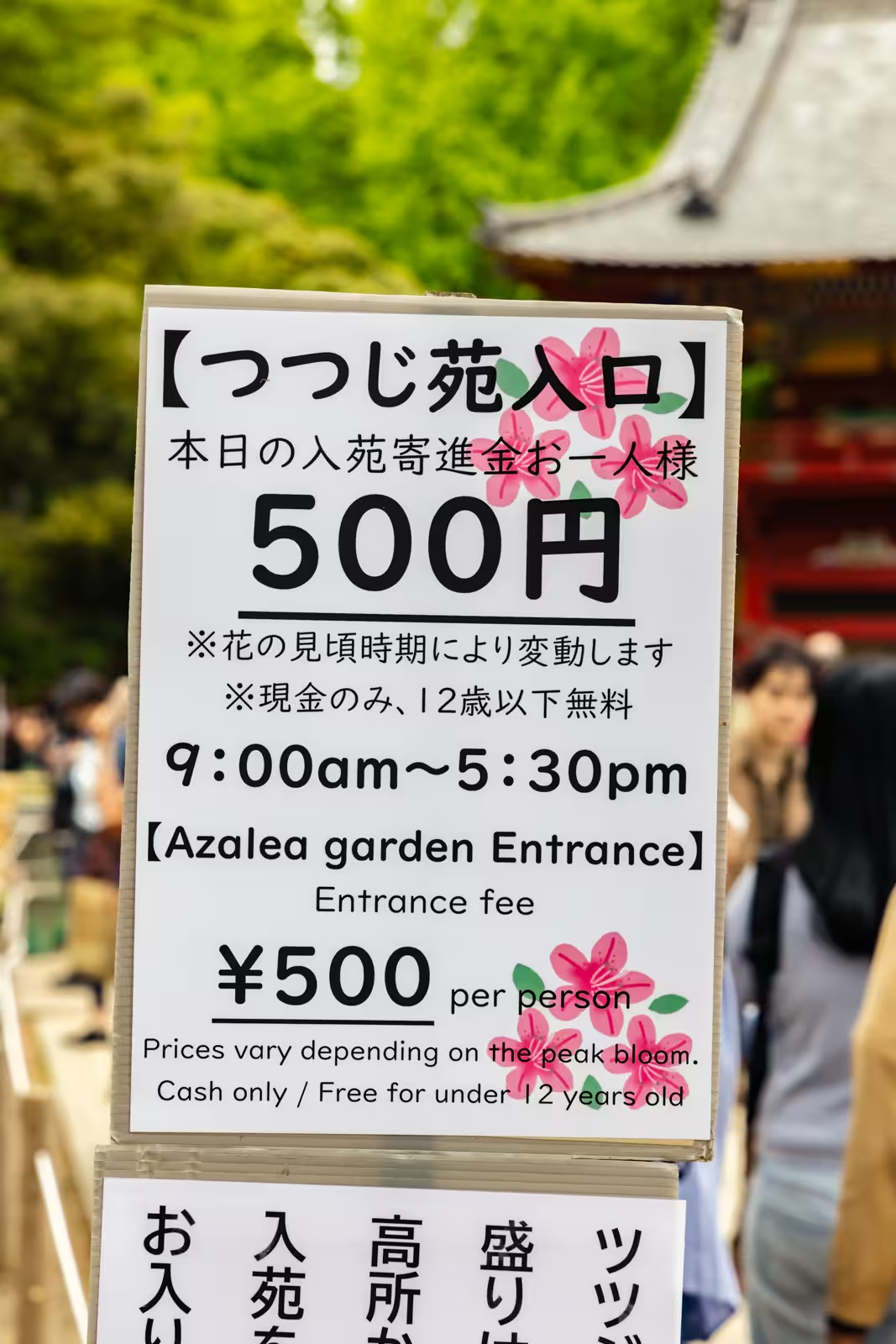
As I lined up, I saw something that gave me a shock. The sign at the entrance stated the fee was ¥500 per person. I recall the price being as low as ¥200 or ¥300 in past years.
Underneath, in smaller print, a note explained: “Prices can vary depending on the peak bloom.” I learned that during the best days, the cost now reaches ¥1000. That is a massive increase.
Overtourism is the current buzzword in Japan, and I suspect this new pricing strategy is designed to capitalize on it. Overseas visitors might find ¥1000 reasonable, but for those of us on Japanese wages, it makes us rethink if the festival is still worth the cost.
Is a ¥1000 entry fee justified?
The new price feels too high just to look at or photograph flowers. While the 3,000 bushes require year-round care and staff costs are rising, it remains to be seen if we will see any real improvements to the festival experience.
I find it hard to justify the hike when other local spots offer similar value for much less. The Kiyose Sunflower Festival is free, as are the flower events at Kameido Tenjin. The rose festival at Kyu-Furukawa Gardens is only ¥150.
Even the massive Jindai Botanical Gardens costs only ¥500. With so many parks around Tokyo offering at least equal value for their events, 2026 might be my last time paying to enter the garden at Nezu.
How to see Nezu’s azaleas for free
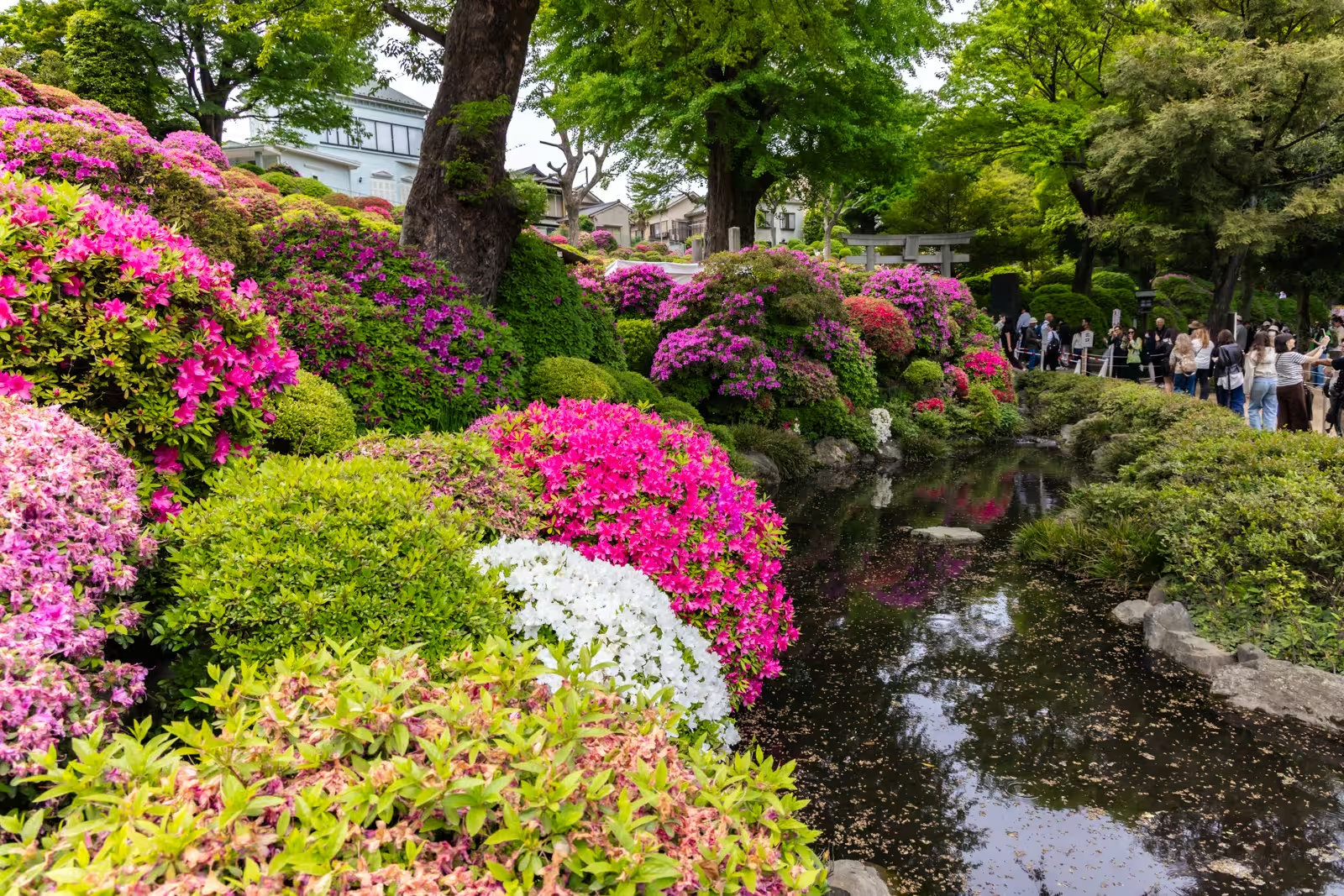
If you want to save your money, seeing the festival for free is actually possible. The azaleas are not hidden behind a tall wall, so you can still photograph the hillside from the bottom of the slope. While you won’t be able to walk among the bushes, you can get close enough to capture some quality images.
Photography tips for fading flowers
A sky full of grey clouds and fading flowers is a difficult combination for any photographer. When I face this, there is only one real solution: tight framing.
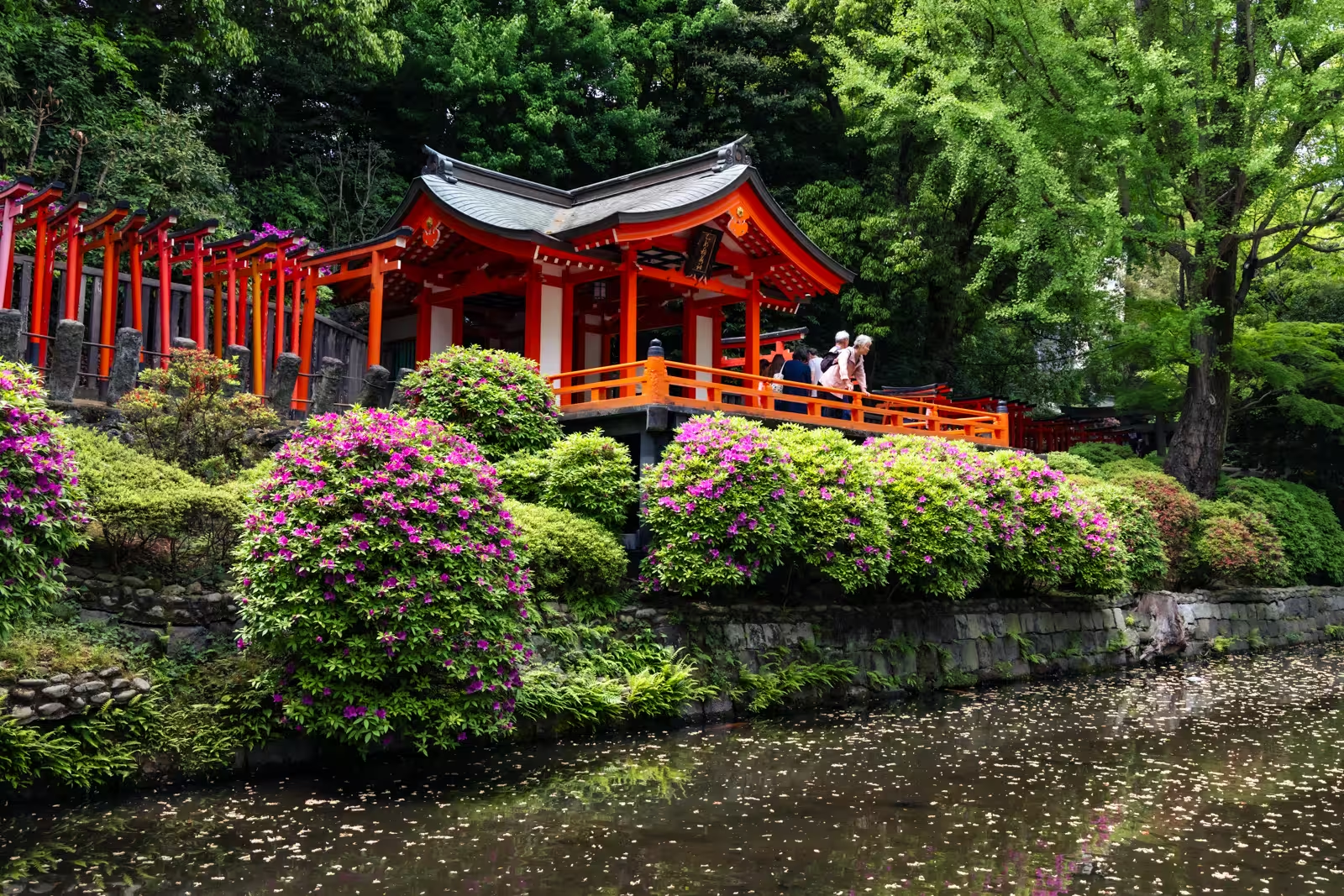
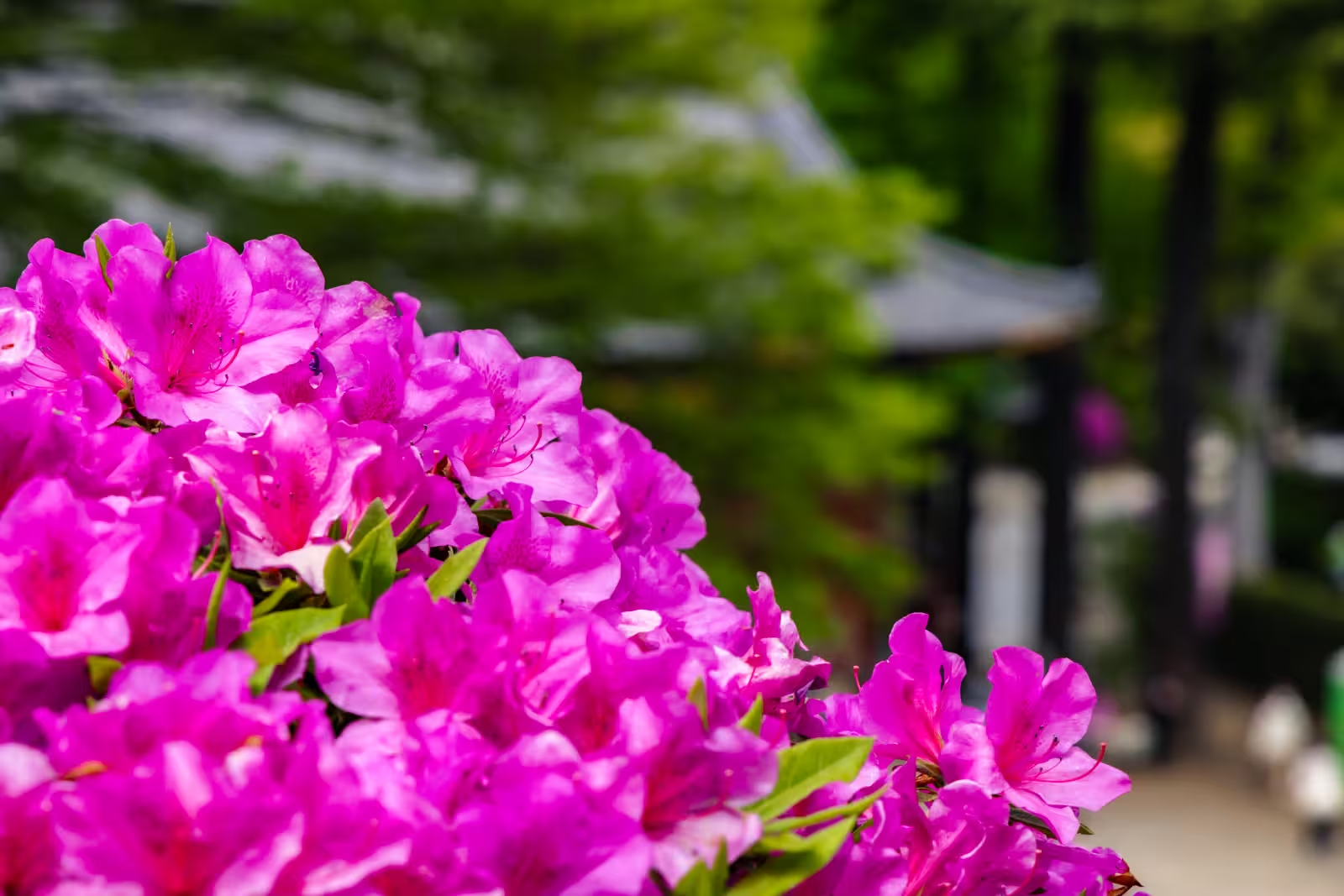
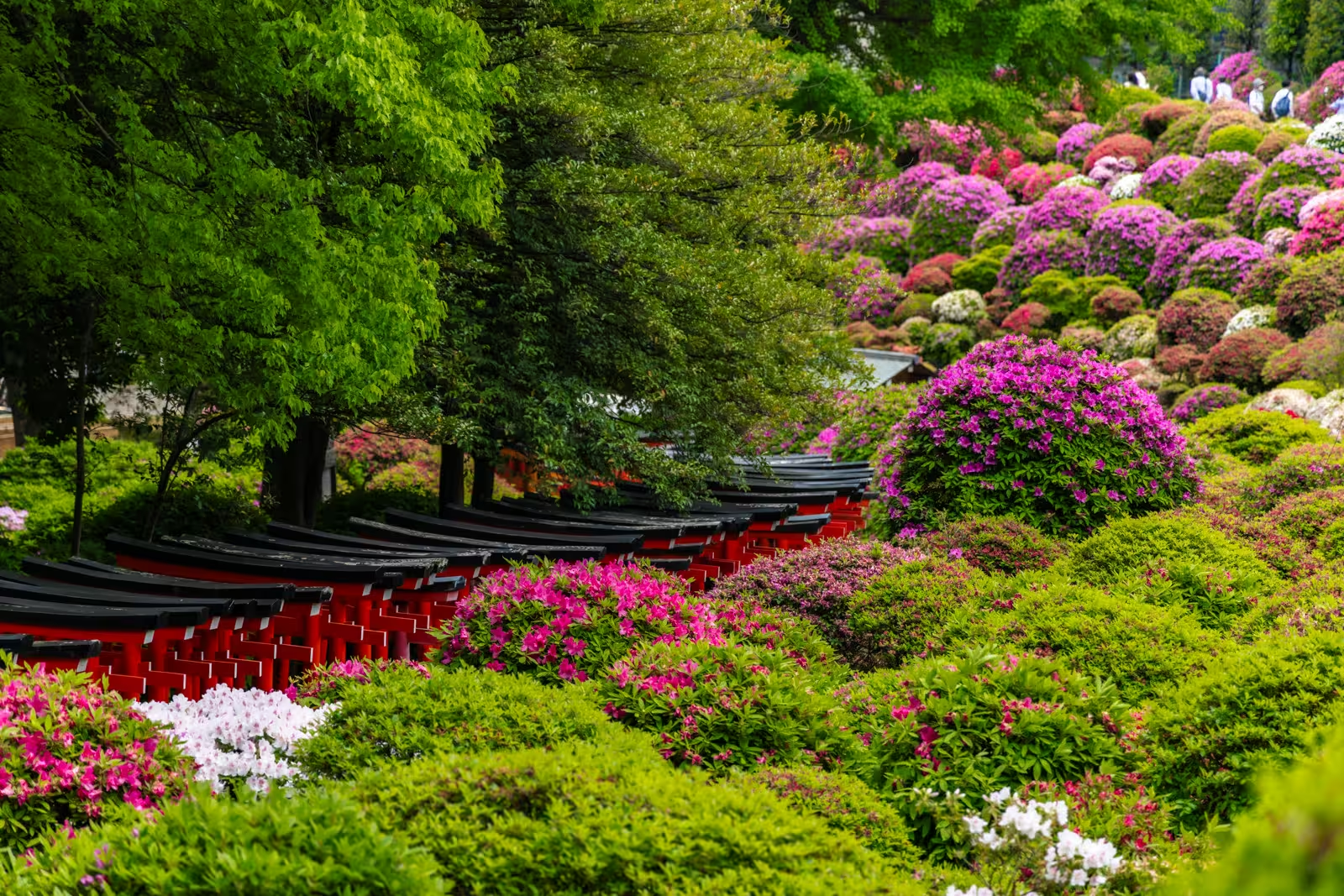
You must be selective and avoid pointing your camera at anything unsightly. Focus on individual bushes that are still holding their color and use the red torii gates to add interest to the composition.
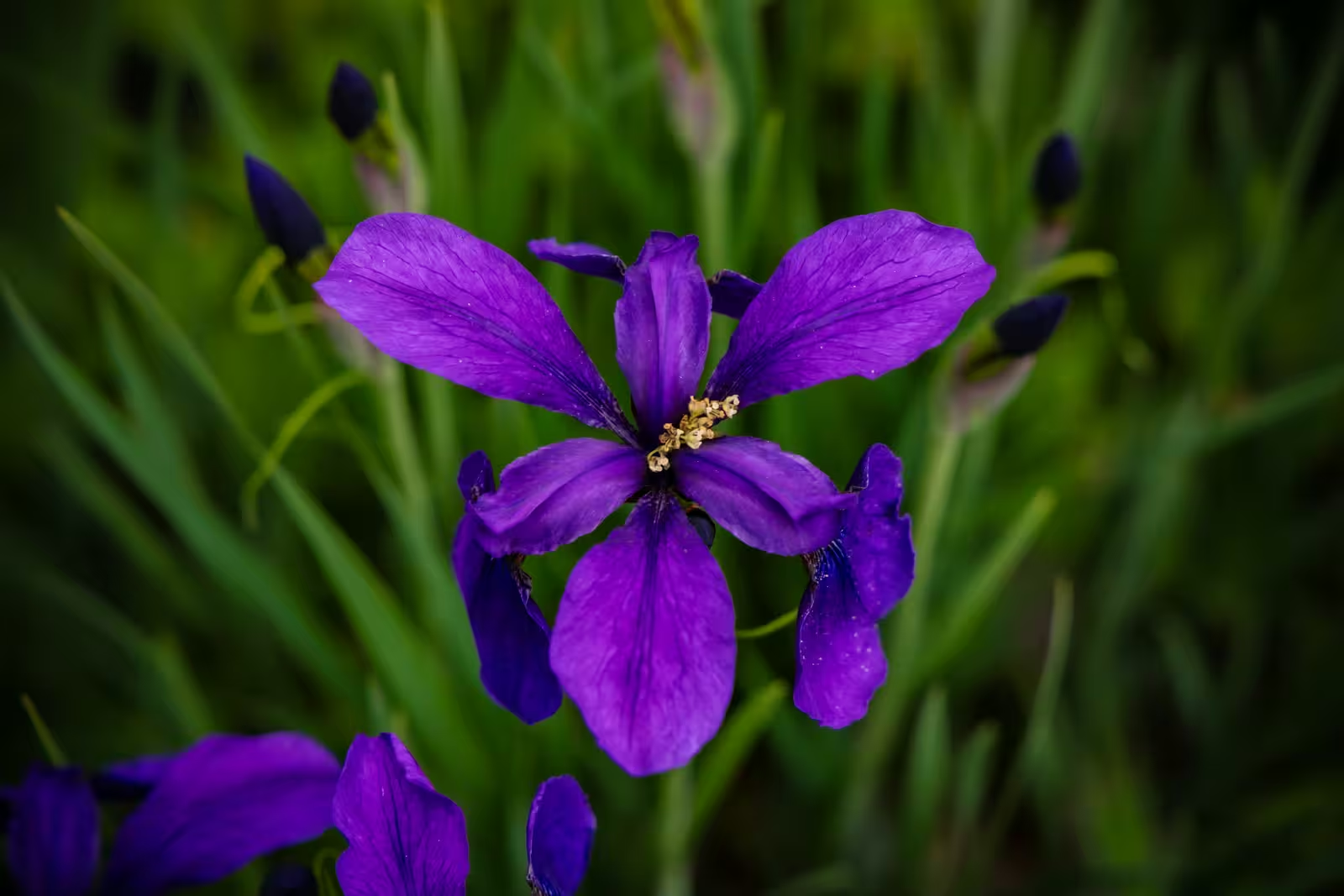
I had one other idea for the day and that was not to photograph azaleas. On the hill, there were some Japanese Irises which were worthy of photos. That signalled summer isn’t too far away.
Is the Nezu Shrine Azalea Festival worth visiting?
Usually, I would say yes because I love Tokyo and its seasonal events. But I am worried. Will this price hike spread to other venues?
I wonder if places that were once free will start charging fees, eventually pricing locals out of their own traditions. Only time will tell if this is a one-time change or the start of a new trend in Tokyo.
My photography gear for this shoot
- Camera body: Canon EOS R5
- Lens: Canon RF 24-105mm f/4 L IS USM
Are you ready to see the shrine for yourself? I’ve compiled [Nezu Shrine Photography Guide] which has all the information you need to know.