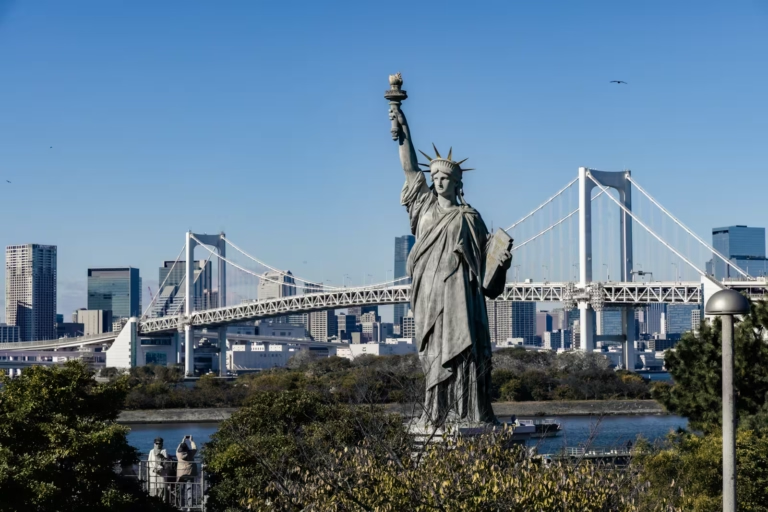
15-Stop ND Long Exposure of Rainbow Bridge
Odaiba is far from where I live, but going there is always worth the long train trip. The views of Rainbow Bridge and Tokyo Tower from its shoreline are legendary. They are the city’s power couple, especially when lit up at night.
One evening in 2019, I arrived at about 4 pm, roughly thirty minutes before sunset. The conditions were electric: clouds were moving, the sun was sinking, and I had my LEE 15-stop neutral density filter ready.
My goal was to capture some dramatic long exposures, a technique that uses slow shutter speeds to blur motion. If you’re new to this, my [How to Take Long-Exposure Photographs] covers all the fundamentals.
Capture motion with a 15-Stop ND Filter
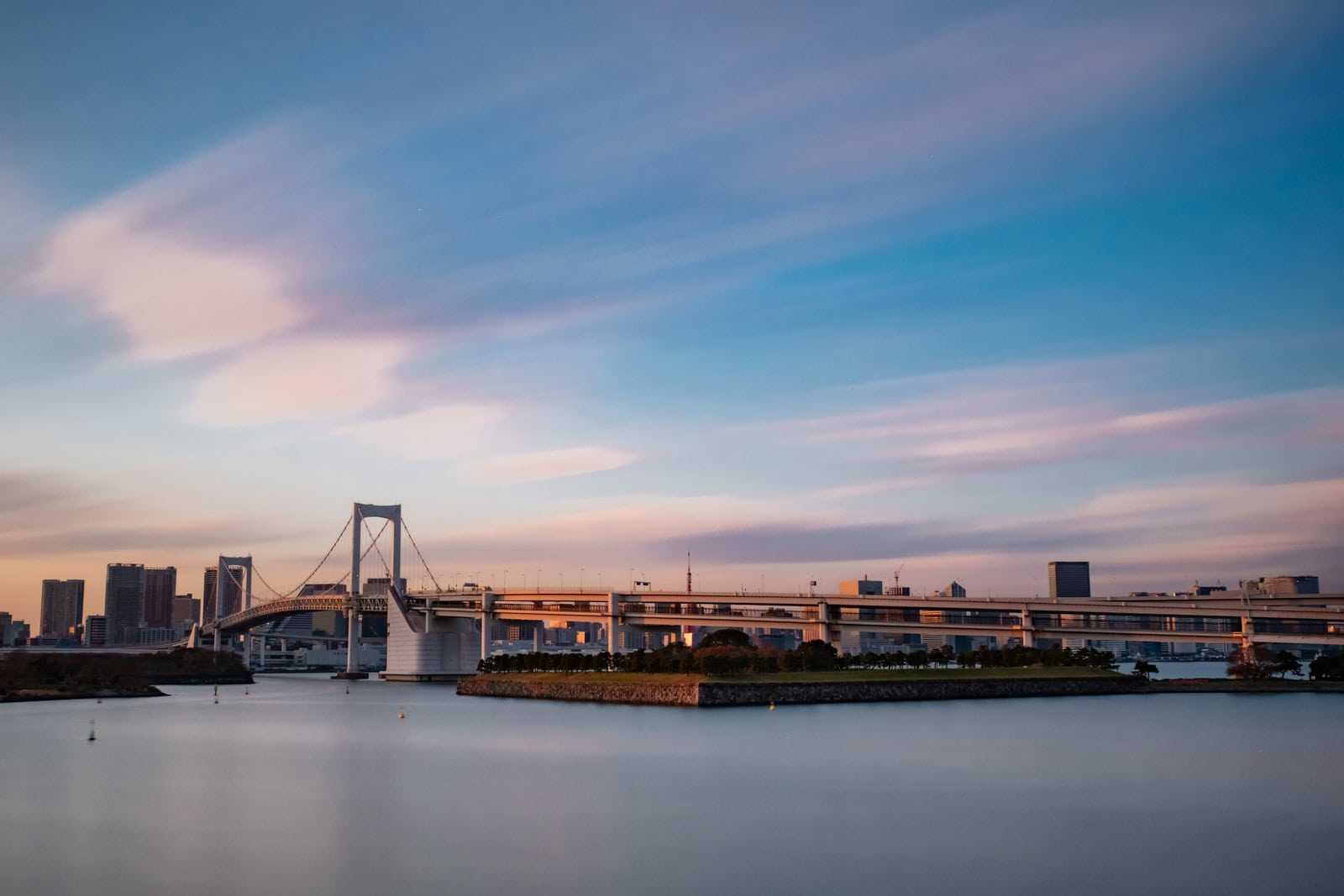
I did manage to get the shots. After processing them, I chose this one. It best captured the feeling of that evening: racing clouds looked like they were over Rainbow Bridge.
At the time, I felt I had nailed it. The 257-second exposure seemed perfect. The image was now of beautiful, milky water and a dynamically streaked sky. I was proud.
Self-doubt & artistic growth
But looking at it years later, that initial satisfaction has been replaced by a nagging sense of doubt. The image feels incomplete. Why? As I have looked at it many times, I realized my growth as a photographer is what makes me question this old favorite.
Timing your Odaiba sunset shoots
I captured this deep in the blue hour, which created a cool, moody atmosphere. But what if I had arrived just 20 minutes earlier? A touch more sunlight kissing the horizon could have introduced a warm-cool contrast, adding emotion to the scene.
Tokyo skyline composition lessons
My focus was entirely on the racing clouds. But what about the cityscape to the left? It feels like an afterthought. Today, I would likely use a tighter focal length to isolate the bridge and tower. That would create a cleaner, more impactful composition that eliminates distractions.
Editing evolution: Fujifilm X-T2 workflow
Back then, my editing was simple when I used a Fujifilm X-T2. I applied the Velvia film simulation. I used radial filters to brighten areas and that was pretty much it. Still it was a fairly dark image, but in those days I was quite a conservative person.
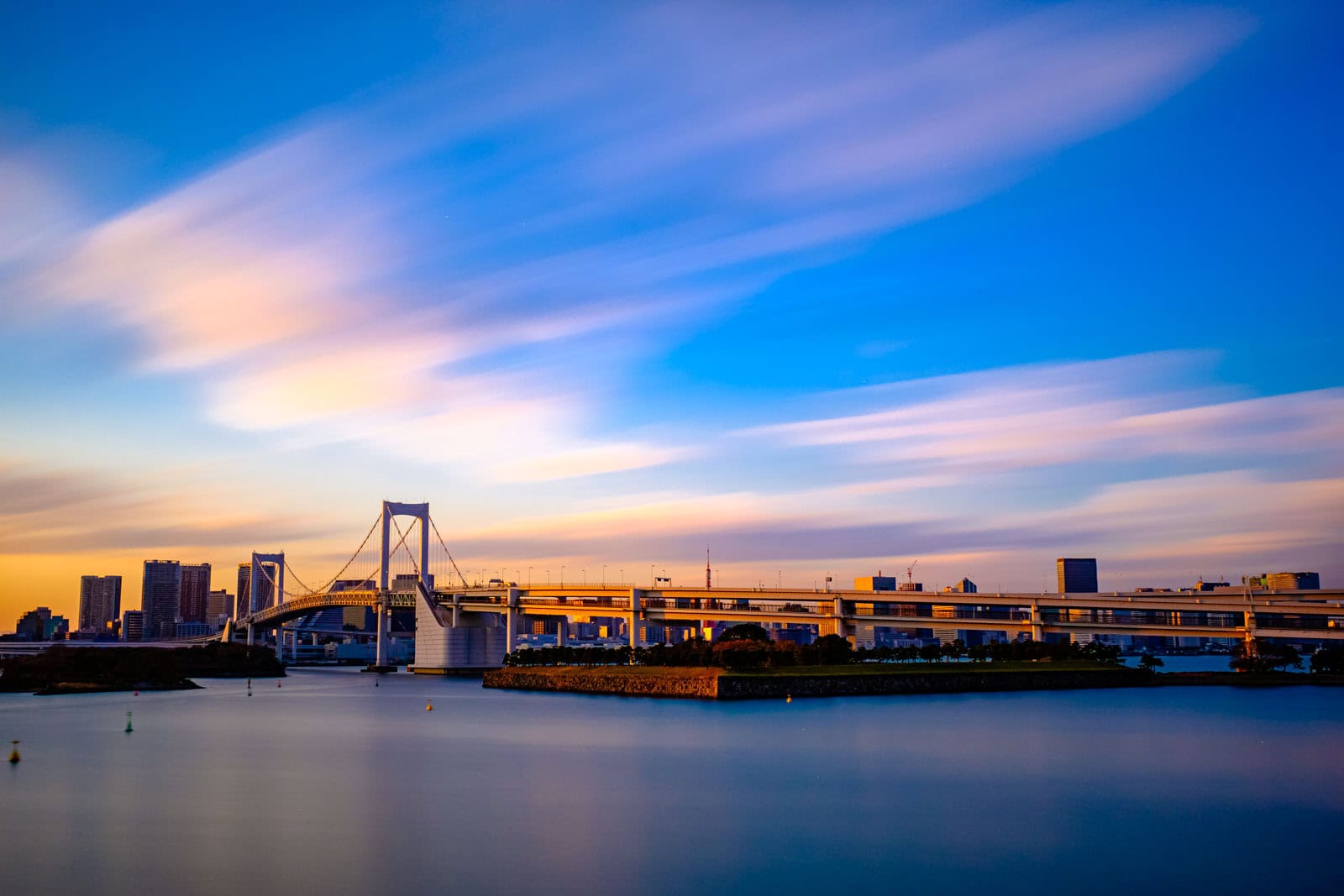
I reedited this photo in 2026. This time, I didn’t add a film simulation. Since moving to Canon I have used the workflow I apply to those files.
That meant using the color mixer and color grading. I also applied a linear gradient (and I was much bolder with the exposure slider) to brighten the ocean to quite an extent.
Both versions are here, and you can decide which you think is better.
From doubt to growth
I doubt I’m the only photographer to suffer from these feelings. It’s a frustrating cycle of being creative. The skills and vision you have today will inevitably cast a critical eye on the work you created in the past.
That doubt isn’t a sign of failure. It’s a sign you’re still learning and growing. It’s proof that the battle isn’t just with light and composition, but with our own standards.
Maybe that’s the most important part of the journey. Anyway, here’s to more photos taken with a LEE 15-stop ND filter.
Date of Photo: 12/14/2019
My photography gear for this shoot
- Camera body: Fujifilm X-T2
- Lens: Fujifilm XF 16-55mm F2.8 R LM WR
- Filter: LEE 15-stop ND filter
- Tripod
- Manual cable release
If you want to see more of the bridge, read [Rainbow Bridge Tokyo: The Photo Guide]. It’s a great place for photos from the bay!