Step into a world where ancient history meets vibrant energy. Sensoji Temple in Asakusa isn’t just Tokyo’s oldest spiritual heart, it is the ultimate photography destination. From the colossal red lantern of the Kaminarimon Gate to the bustling energy of Nakamise-dori, this guide reveals my photo spots.
Sensoji’s main attractions
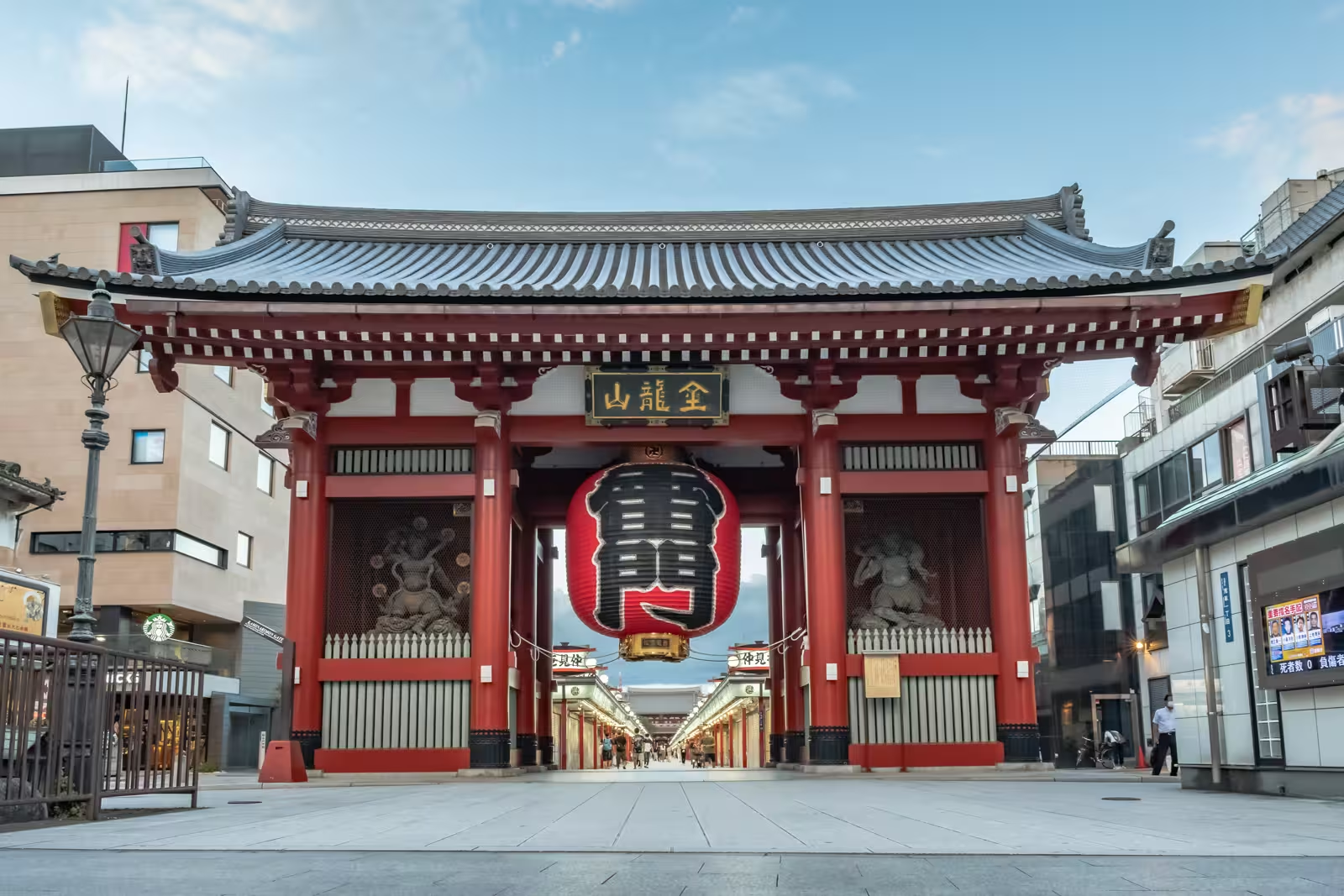
Kaminarimon (Thunder Gate)
Your photographic journey begins at the magnificent Kaminarimon, or “Thunder Gate.” This is the main entrance, famous for its gigantic red lantern and imposing statues of guardian deities.
It’s the go-to spot for group photos and selfies, so don’t be surprised if you must wait ages to get your own shot. Seriously, it can be incredibly crowded!
Nakamise-dori: Shopping street photos
Beyond the Thunder Gate lies Nakamise-dori, the famous 200-meter-long shopping street that leads to the temple’s main grounds. Whatever a Japanophile could want is here! You’ll find everything from senbei (rice crackers) and chopsticks to fans, replica swords, and even ninja suits. It’s the perfect place to find your Japan souvenirs and snacks.
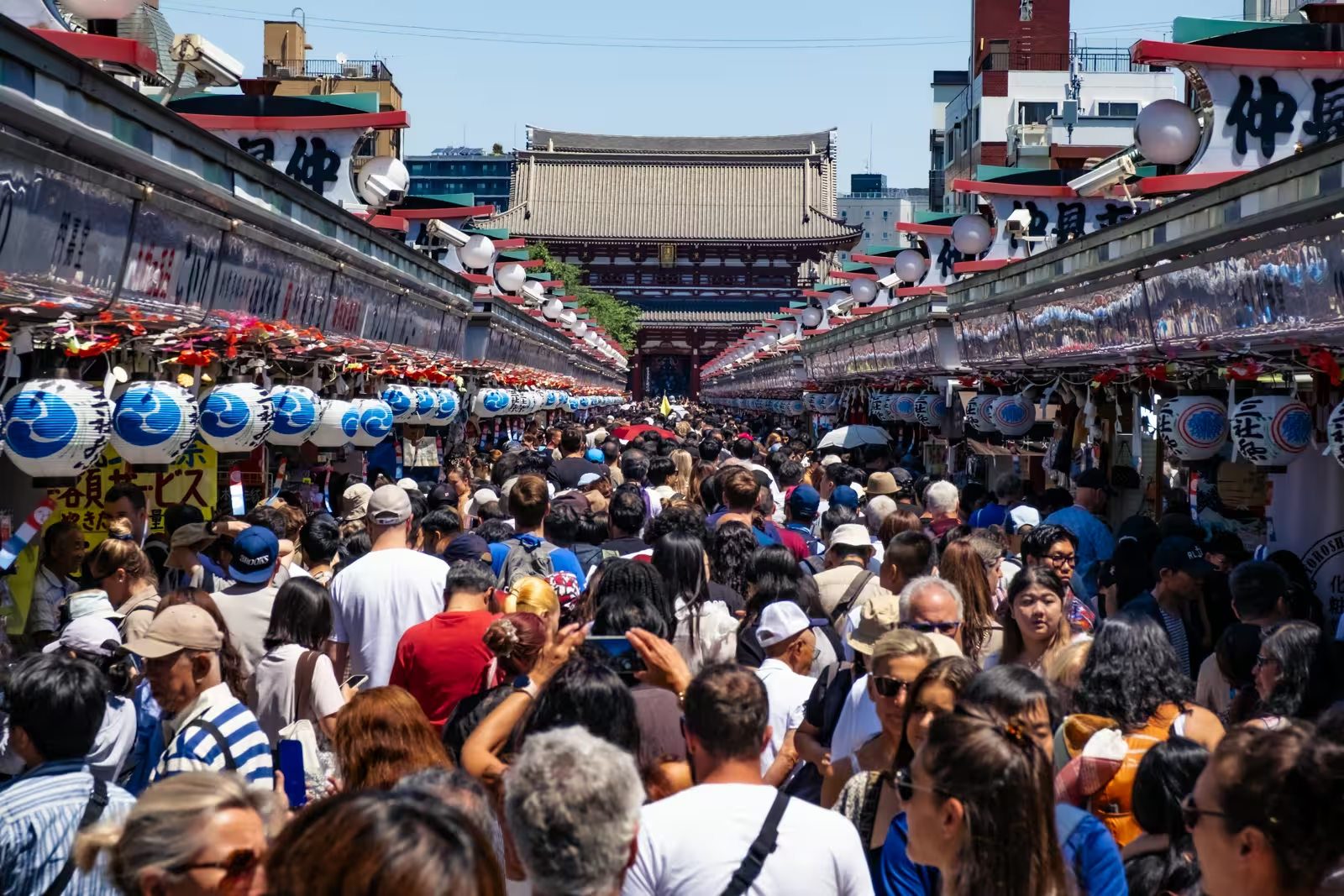
The street can be overwhelmingly crowded, especially during festivals, and you might find yourself walking at a snail’s pace. I don’t shoot here much, as some shops don’t allow photos, but there is one specific shot worth fighting the crowds for (more on that later!).
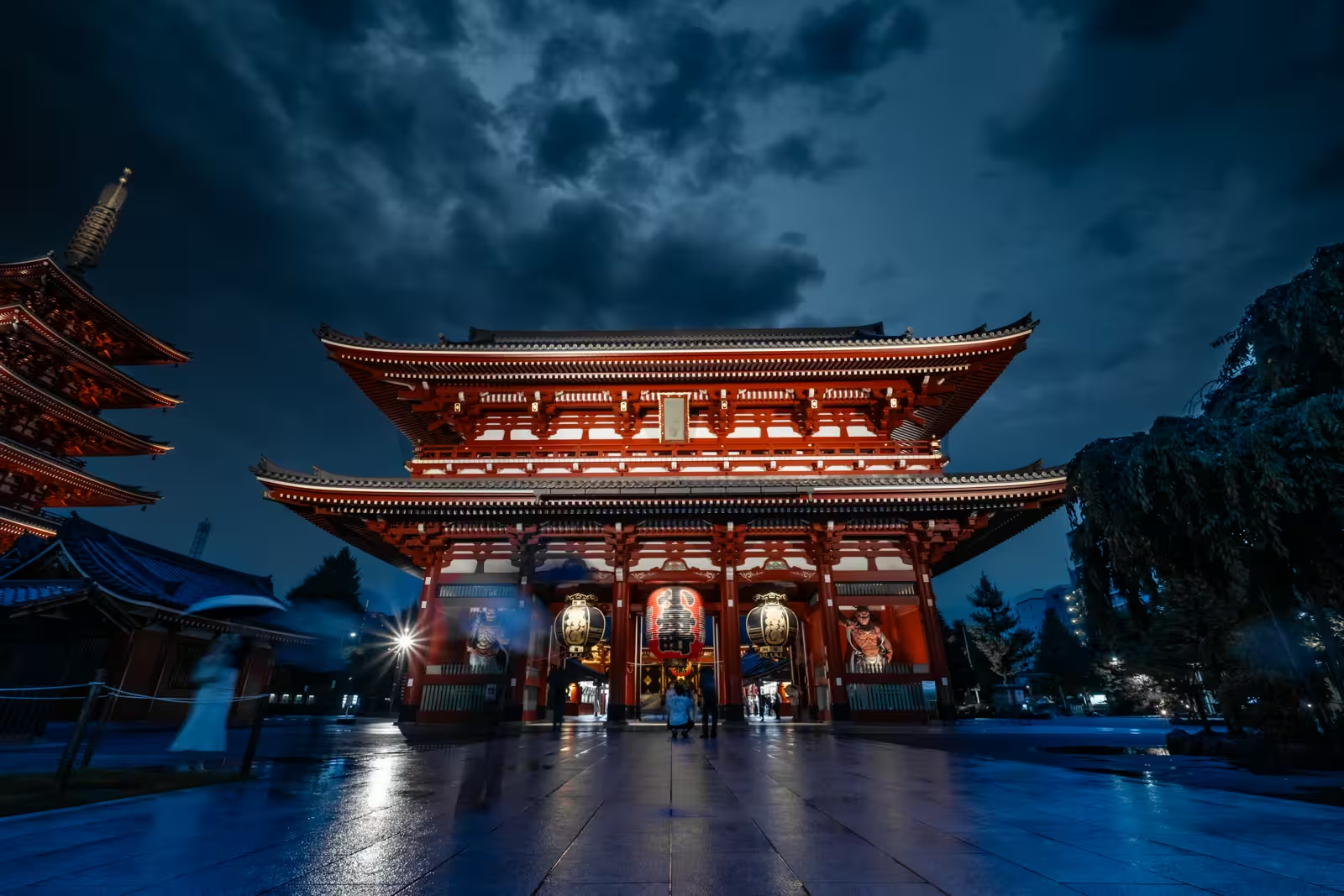
Hozomon Gate
The second large gate, the Hozomon, is just as impressive as the first. It’s another brilliant red structure with a massive lantern and fierce guardian deities on either side. Keep an eye out for visitors walking through in traditional kimonos—they add a perfect cultural element to your photos.
Five-story pagoda
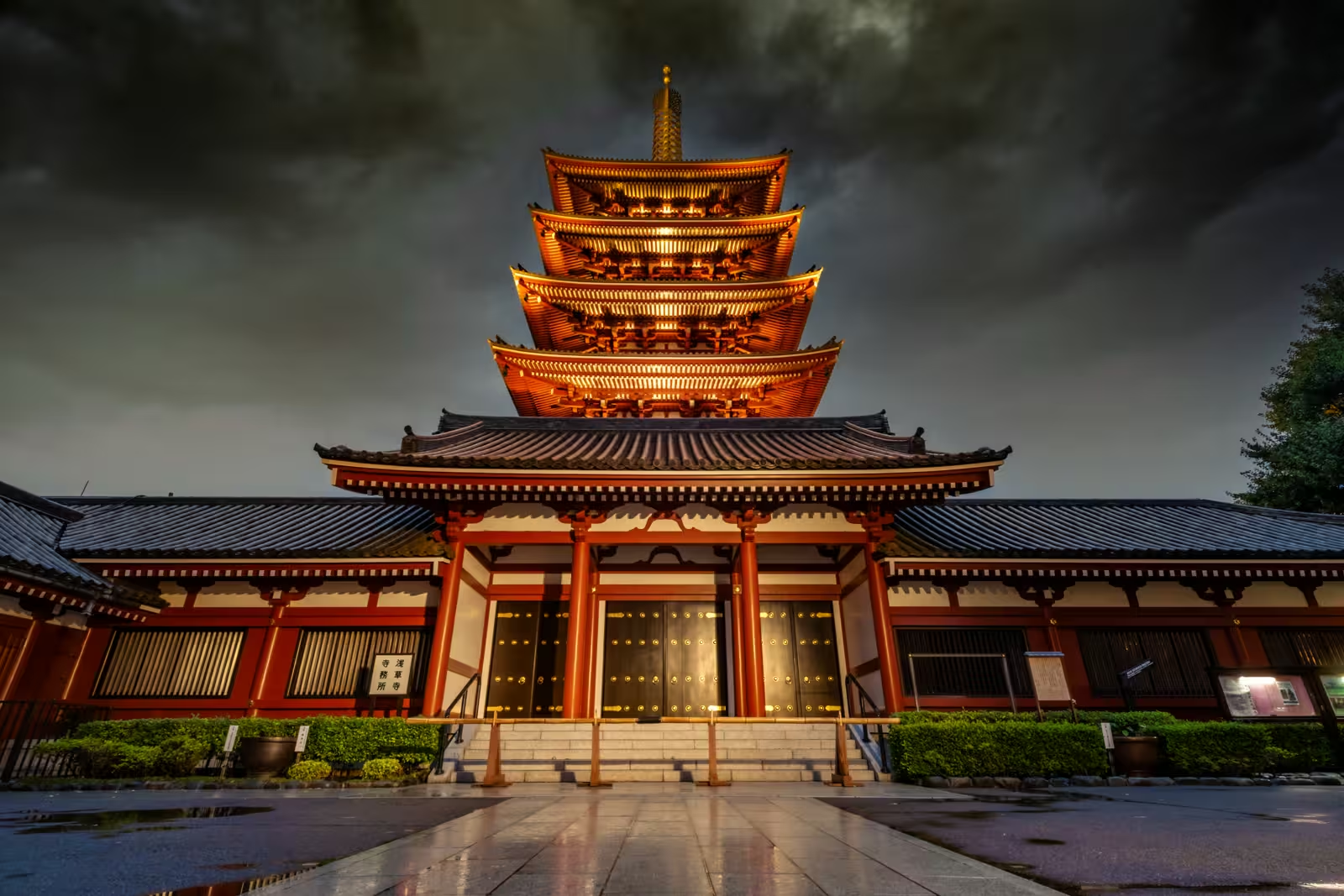
To the left of the Hozomon stands the pagoda, which is my favorite in the city. At 53.32 meters tall, it is the biggest in Tokyo. If you love architectural photography, this is a must-capture subject.
Main Hall (Kannon-do)
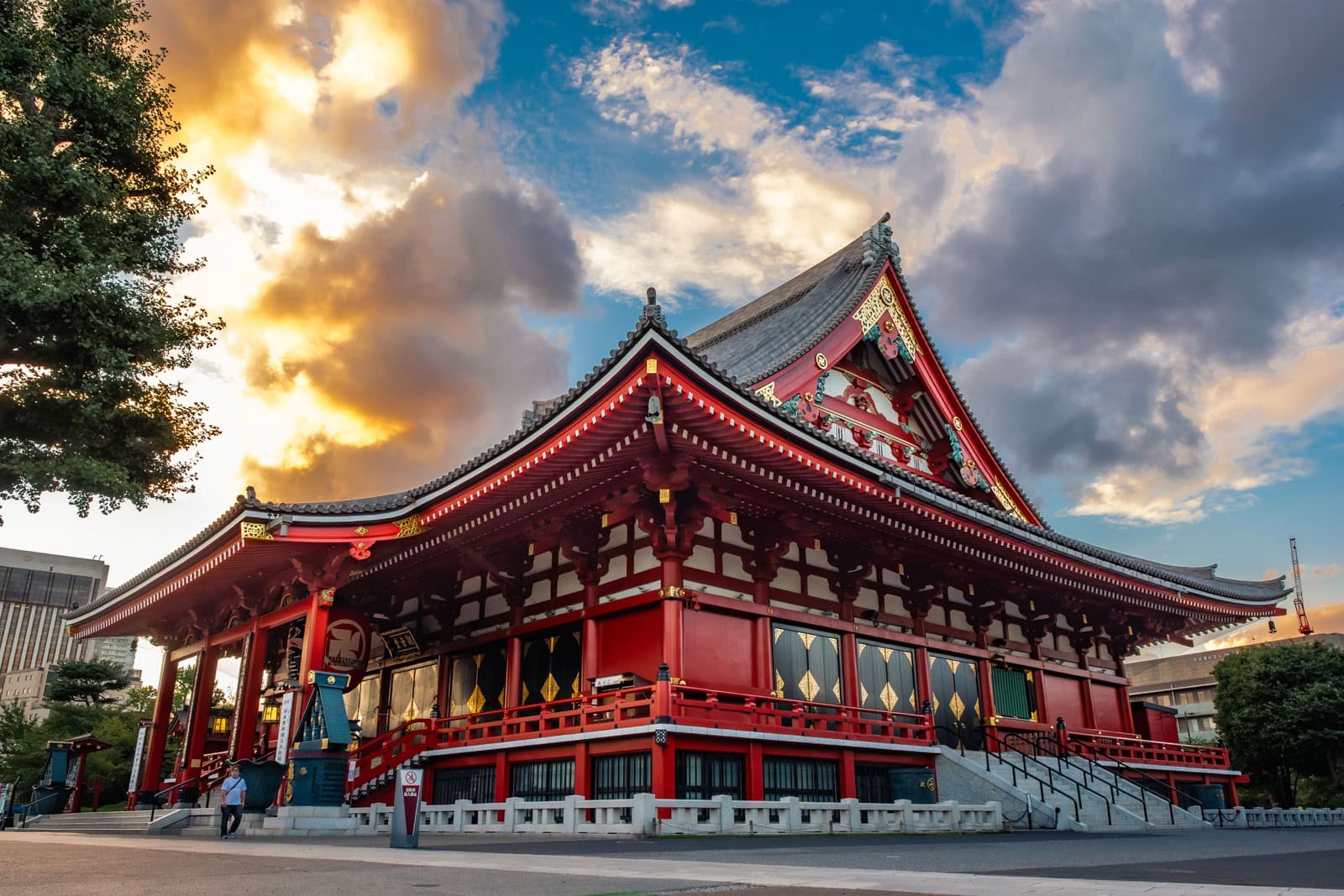
Just beyond the Hozomon is the main hall, with its beautiful, sweeping Japanese-style roofs. If you venture inside, remember to look up. The ceiling is covered in impressive artwork depicting Buddhist scenes.
Even after the doors close at night, many people continue to wander the grounds, offering a different, more serene atmosphere for photography.
Exploring the temple grounds
But that isn’t the end of it! The temple complex is vast and filled with hidden gems. You’ll discover other minor halls, gates, and even a tiny, peaceful waterfall. Right next door is Hanayashiki, Japan’s oldest amusement park. Don’t expect Disneyland; its charm lies in its retro vibe!
Best Sensoji festivals
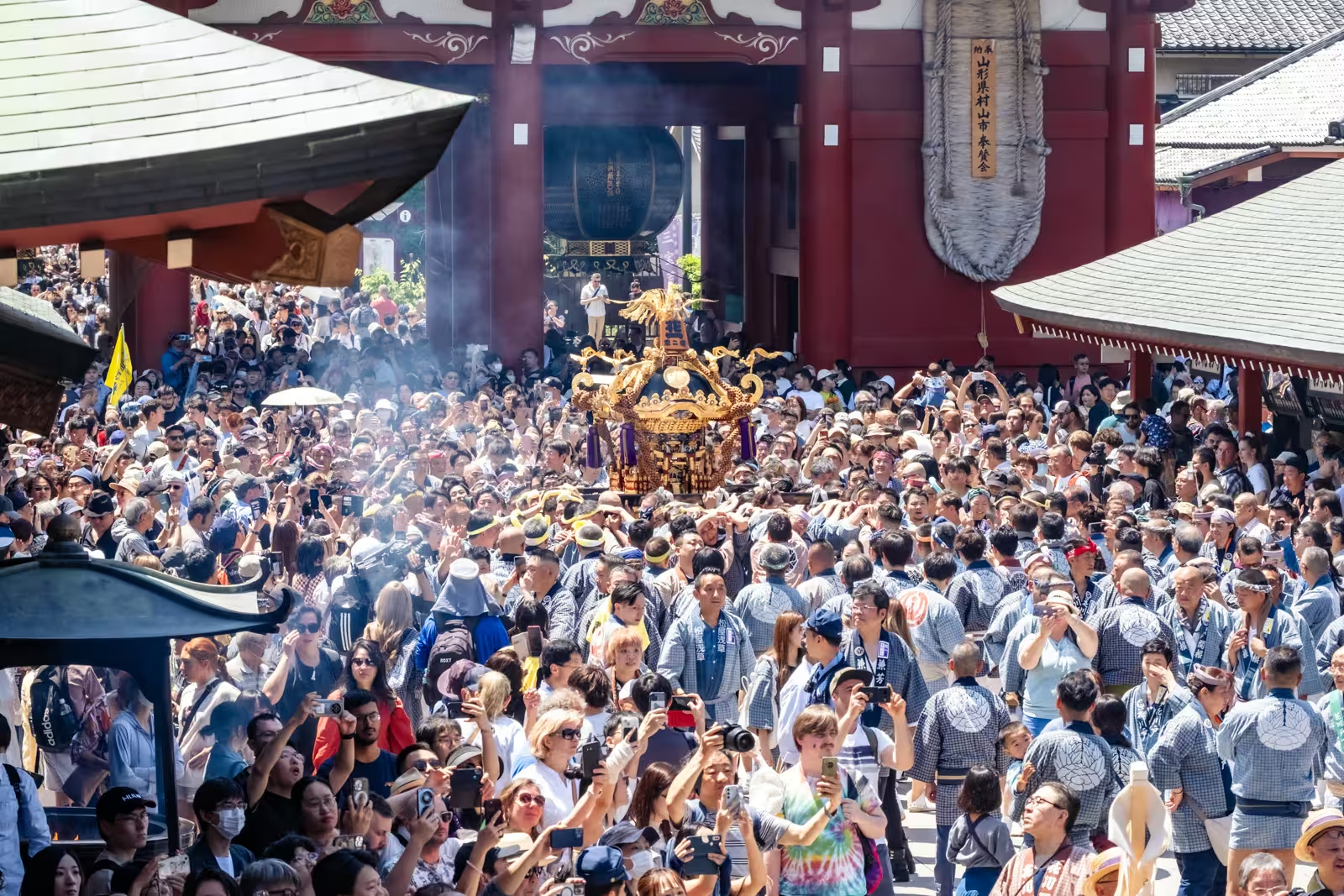
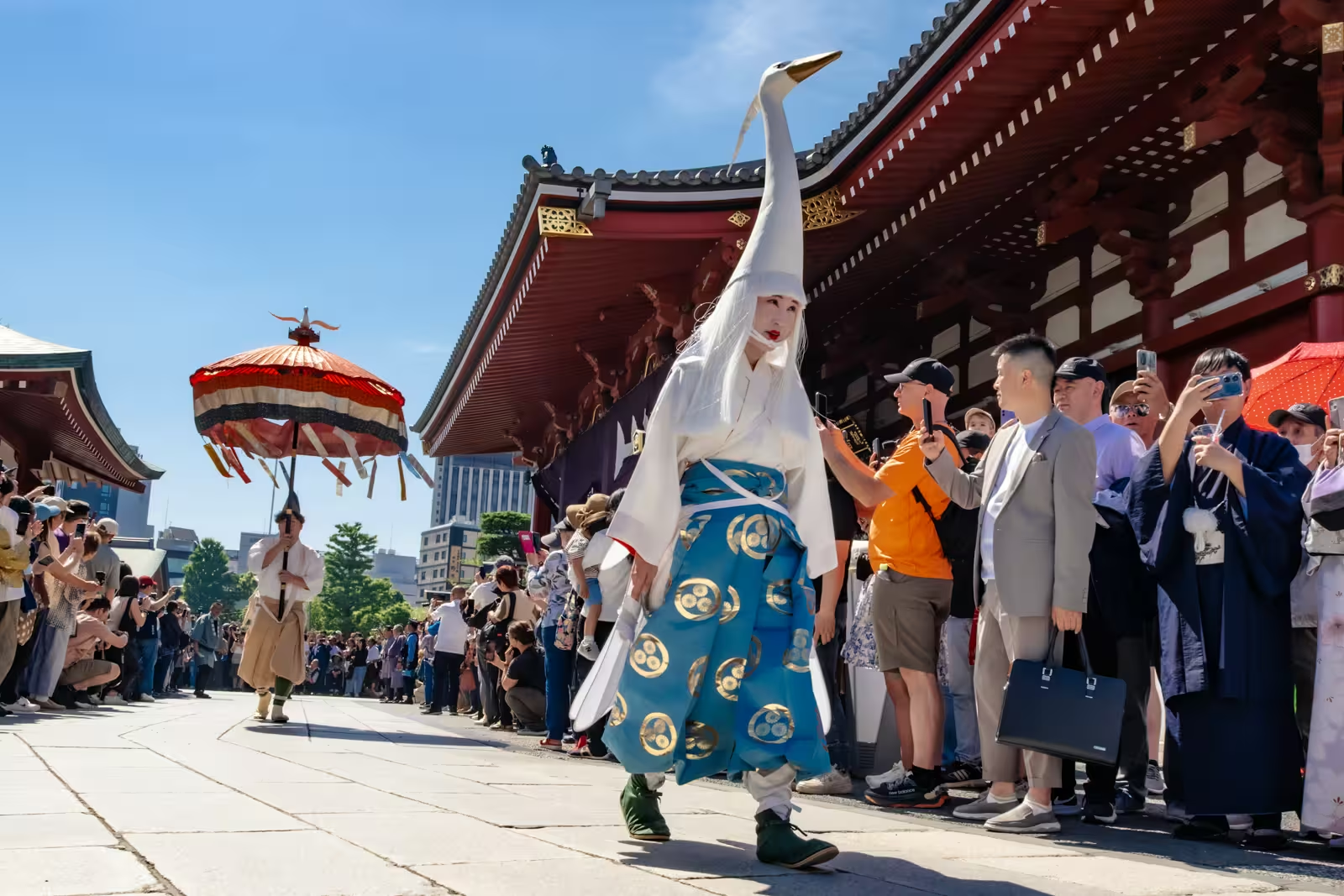
Sensoji Temple is home to one of Tokyo’s most immense festivals, the Sanja Matsuri. It takes place on the third weekend in May and is held by the adjacent Asakusa Shrine to honor the men who founded Sensoji.
The energy is electric as people carry mikoshi (portable shrines) through the streets. The crowds are massive, with an estimated three million people attending over the three days with the [Daigyoretsu] kicking it off.
This event is an amazing, chaotic, and unforgettable photo opportunity. New Year’s is another popular and visually rich time to visit. Read more in [Sanja Festival: A Photographer’s Guide].
Photography at Sensoji
What to shoot
As you can see, there is a lot to photograph. Here’s a quick summary of what to look for:
- The gates: Kaminarimon, Hozomon, and Nitenmon are all stunning architectural subjects. (Mon means gate in Japanese!)
- The people: Many visitors wear traditional kimonos or yukatas, especially in summer. This is also the season for the Bon Odori festival held near Kaminarimon.
- Architectural marvels: The five-story pagoda is a standout, along with smaller halls like Awashimado, Bentendo, Chingodo, and Yogodo.
- Major festivals: The Sanja Matsuri (and its Daigyoretsu) is one of the biggest cultural events in Tokyo and a prime opportunity for dynamic photography.
- Sensoji has many festivals throughout the year that you can find on the temple’s website. Keep an eye out for special winter illumination events like “Asakusa Culture & Lights.” Debuting in 2025, this projection mapping event lit up key points on the grounds and provided a rare fusion of digital art and ancient architecture.
- Surrounding area: The retro Hanayashiki amusement park and the side streets filled with cafes, restaurants, and izakayas provide endless inspiration for food and street photography.
Best time to visit
Consider the crowds. If you want to capture the temple’s bustling energy, go during the day or on a weekend. For quieter, more contemplative shots with solitary figures, an early morning visit is your best bet.
Lighting Advice
If you want the temple and its gates to be naturally lit from the front, plan your shoot around noon. The light will be direct, illuminating the main facades. In the early morning or late afternoon, you’ll find more dramatic shadows and softer light.
Stay nearby
The area has many places to stay. If your hotel is nearby, it’s easy to get up for a sunrise shoot. For many photographers, capturing the temple grounds in the peaceful morning light might be the thrill of a lifetime.
My favorite Asakusa photo spots
Nakamise-dori
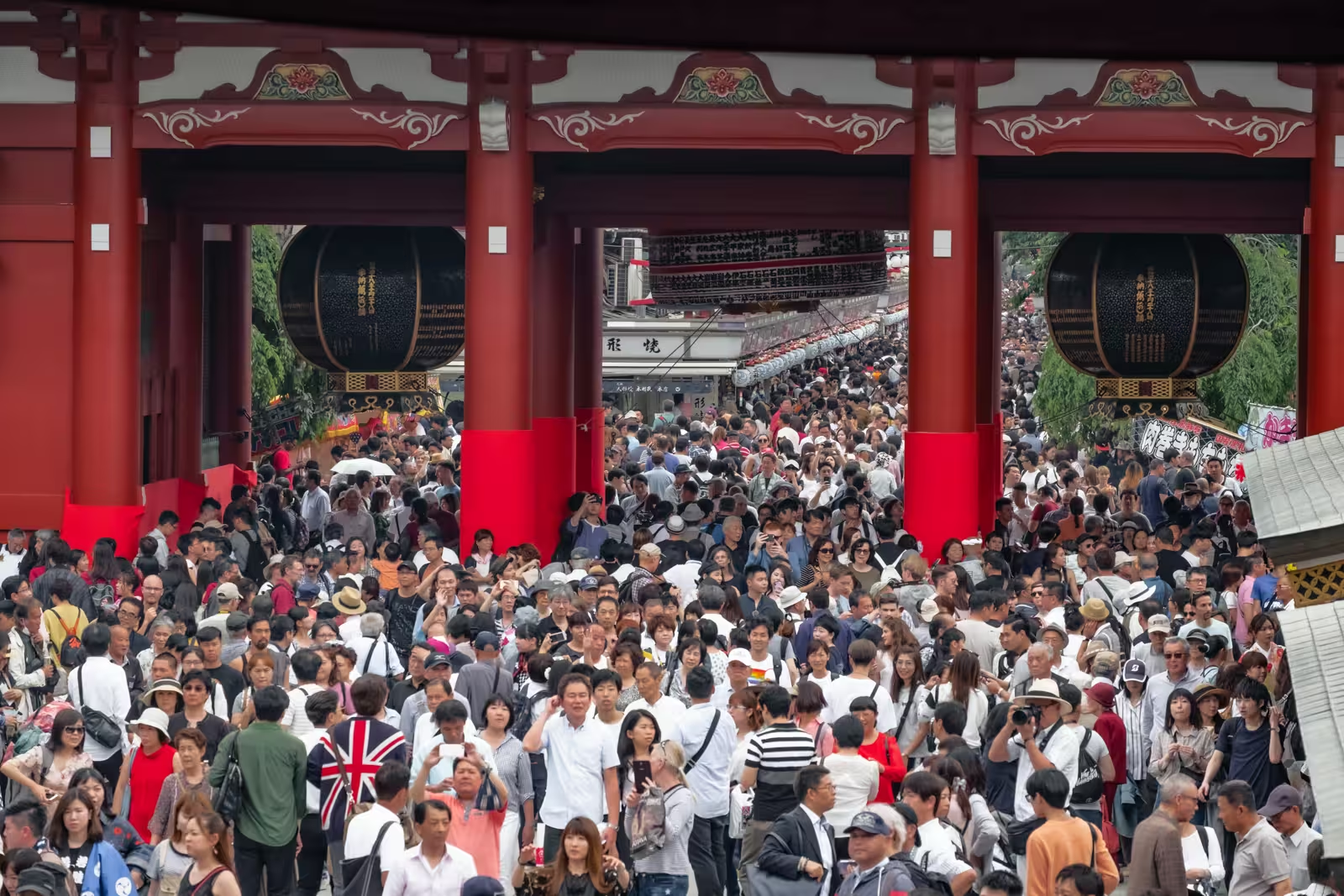
Earlier, I wrote that I don’t typically photograph Nakamise-dori because it’s so crowded. However, it does offer one great photo opportunity. Once you pass through the Kaminarimon, raise your camera as high as you can over your head and aim it towards the Hozomon, 250 meters away.
For this shot to work, you need the street to be crowded. Be prepared to get bumped and pushed around. Getting the perfect photo here can be difficult, so take many shots and persevere. Don’t forget to play around with your focus point to change the effect.
Asakusa Culture Tourist Information Center
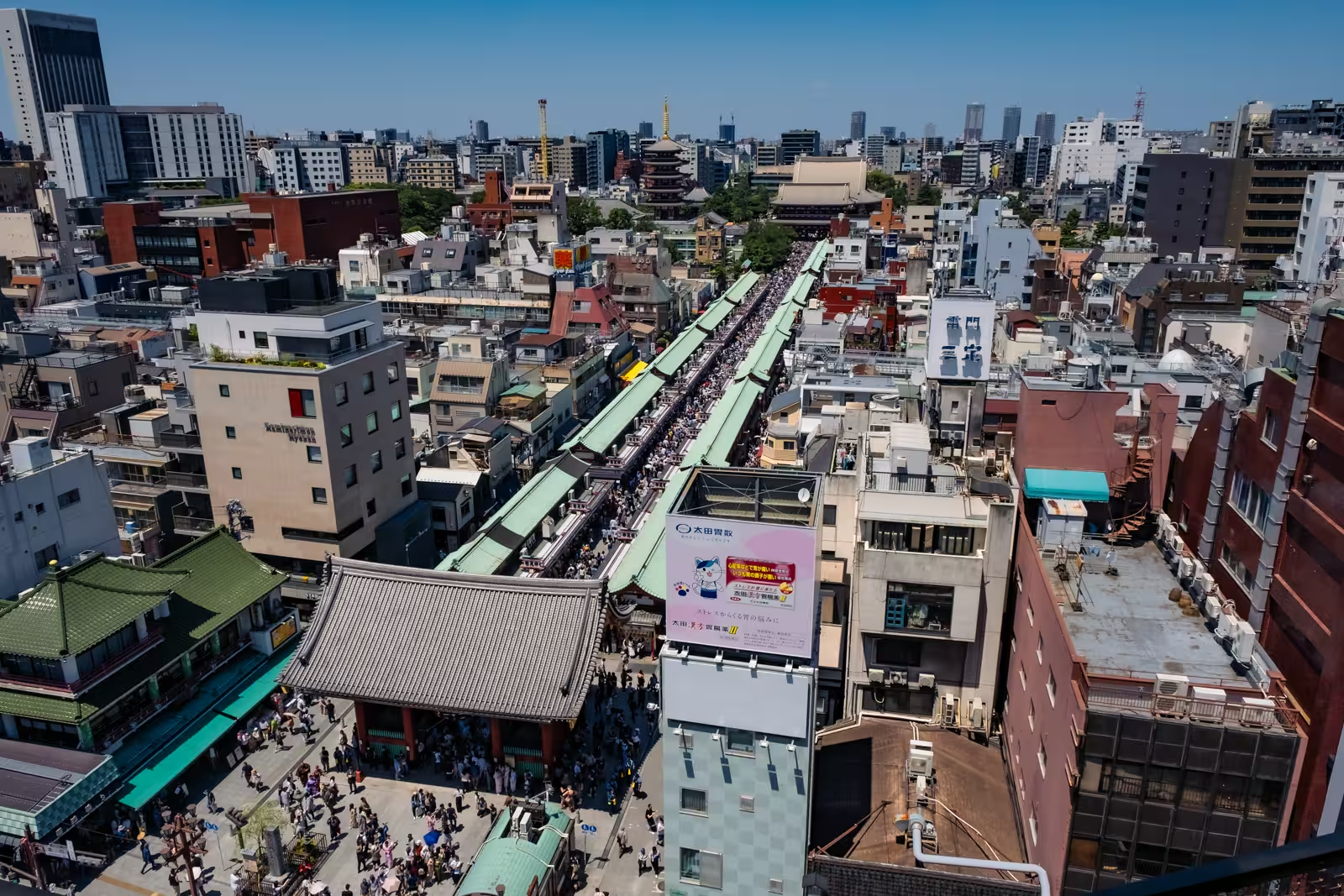
Directly across the road from the Kaminarimon is the Asakusa Culture Tourist Information Center. Take the elevator to the 8th-floor observation deck. From here, you get fantastic panoramic views over Nakamise-dori and the entire Sensoji Temple complex. It’s a fantastic, and often overlooked, photo spot.
Many smaller temples surround Sensoji’s main hall. One of them, Rokkakudo, is super interesting. It’s a wooden hexagonal hall (hence the name) and dates from 1618, making it the oldest wooden structure on the grounds.
Rokkakudo: The hexagonal temple
At this unique temple, you can make a wish, but with a specific timeframe. For example, instead of just wishing to lose weight, you vow to achieve your goal in 6 months—and then act on it.
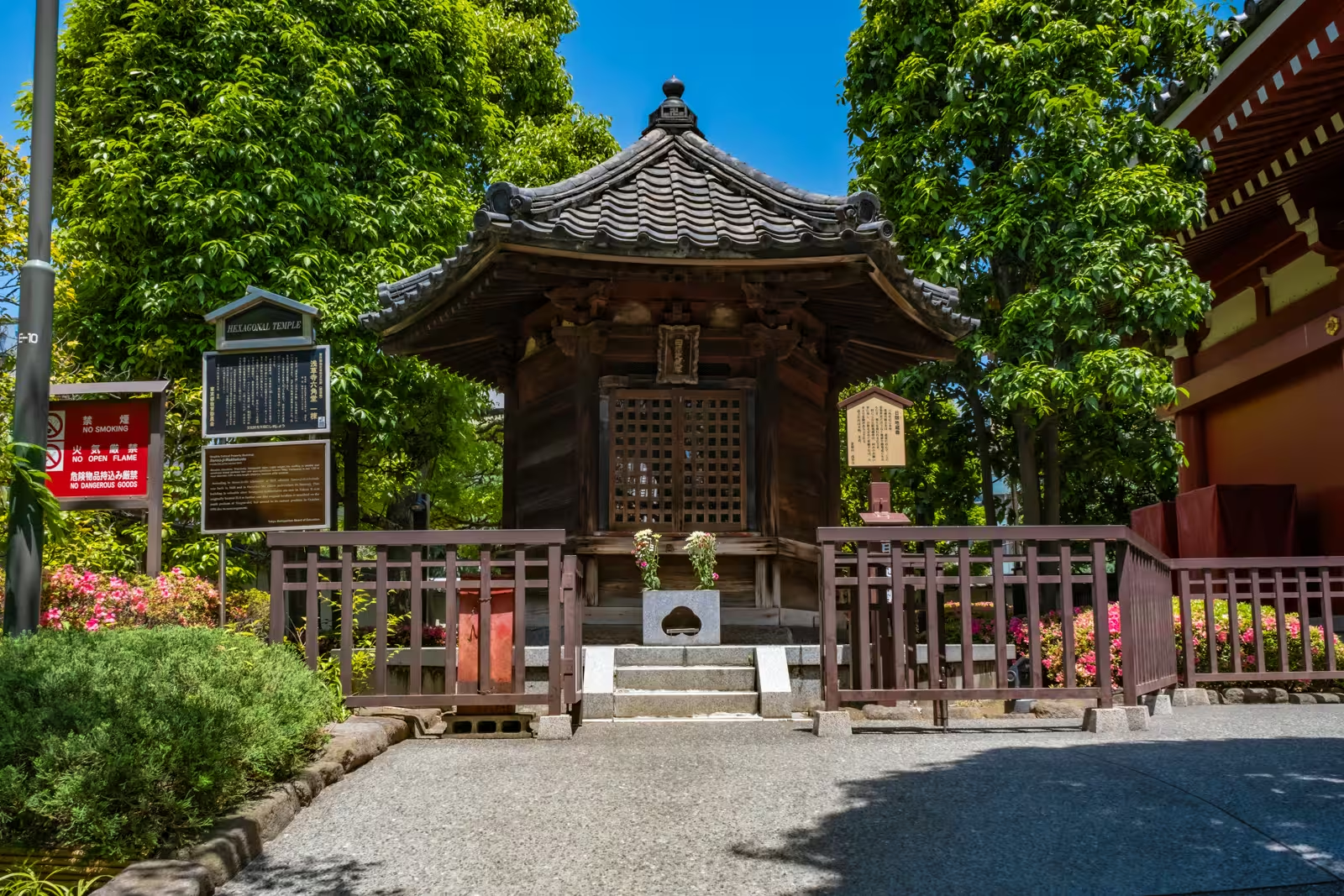
Photo spots near the temple
- Hanayashiki Amusement Park
- Imado Shrine (home of the “beckoning cats”)
- Kappa-bashi (known as Kitchen Town)
- Sumida River (especially beautiful for cherry blossoms and fireworks)
- Tokyo Skytree
- Ueno Station (a bit of a walk, but manageable)
Sensoji night photography
Sensoji Temple is a dream destination for any photographer. With its grand architecture, bustling crowds, and deep history, you could spend hours here and still discover new things. It is the perfect spot for photographers with limited time or knowledge of Tokyo, as you won’t have to work hard to get a beautiful shot.
When the crowds have gone home for the day, Sensoji transforms. It becomes a tranquil, serene place. The buildings are illuminated until 11:00 p.m., giving you plenty of time for night photography. The temple is truly beautiful after dark.
Visitor Information
- Location: 2-3-1 Asakusa, Taito City, Tokyo
- Train access: A short walk from Asakusa Station on the Ginza Line, Asakusa Line, and Tobu Skytree Line.
- Opening hours:
- Main Hall: 6:00 a.m. to 5:00 p.m. (opens at 6:30 a.m. from October to March).
- Temple Grounds: Always open, 24/7.
- For the most up-to-date information, consult the official Sensoji temple website.
- Here is the temple on Google Maps:
History of Sensoji Temple
Sensoji Temple is a great Tokyo cultural and religious icon. Its history dates back to 628. Two brothers were fishing in the nearby Sumida River when they caught a small golden statue of Bodhisattva Kannon, the Buddhist goddess of mercy.
A temple was erected in the goddess’s honor to house the statue. Over the centuries, countless worshippers have come to seek the goddess’s favors.
This constant flow of pilgrims helped develop Nakamise-dori and the surrounding Asakusa area. Their devotion also funded the temple’s rebuilding after it was destroyed in World War II. Kannon would have been happy about that.
By the way, were you wondering about that golden statue? Unfortunately, it’s a hibutsu, or “secret Buddha,” and is never shown to the public. I’d love to see it too. Maybe one day! And if you are looking for more of Tokyo’s temples, check out Sengakuji, resting place of the 47 Ronin.