Soseki Natsume’s Grave
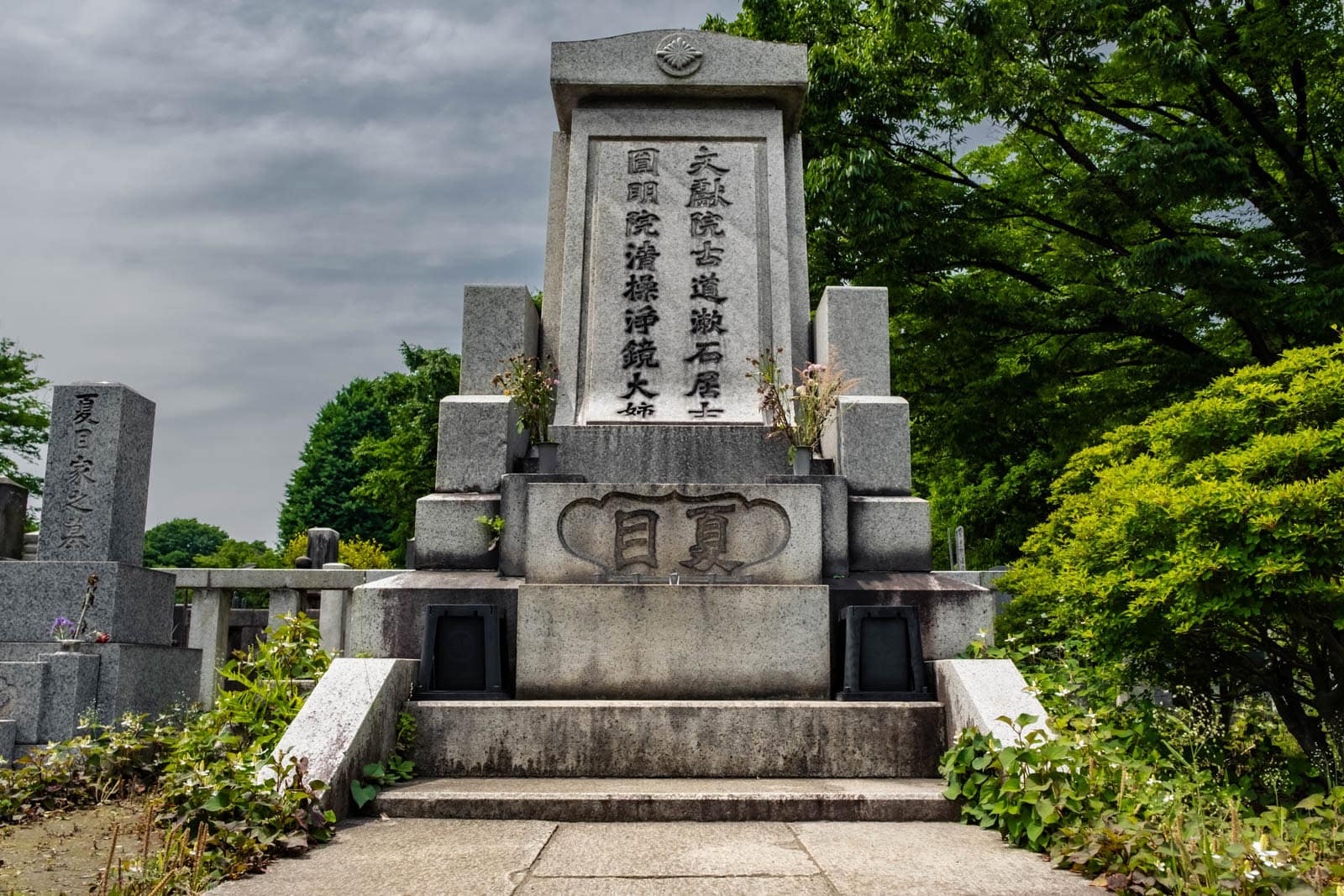
Like many who have studied Japanese, my first encounter with the literary giant Soseki Natsume was his classic novel, Botchan. While the specifics of the story have faded over the years, my fascination with the man himself has only grown.
This fascination has led me not to his books, but to a more permanent residence: his final resting place in Tokyo’s Zoshigaya Cemetery.
Who was Soseki Natsume?
- Born on February 9, 1867
- Spouse: Kyoko Natsume (married from 1896 to his death)
- Natsume’s birth name was Kinnosuke. He started using Soseki after his friend Masaoka Shiki tutored him in haiku. In Chinese, it meant stubborn.
- Studied in England from 1900 to 1902
- I am a Cat, published in 1905
Soseki’s fame is enduring. Though he passed away in 1916, his works have been translated into numerous languages.
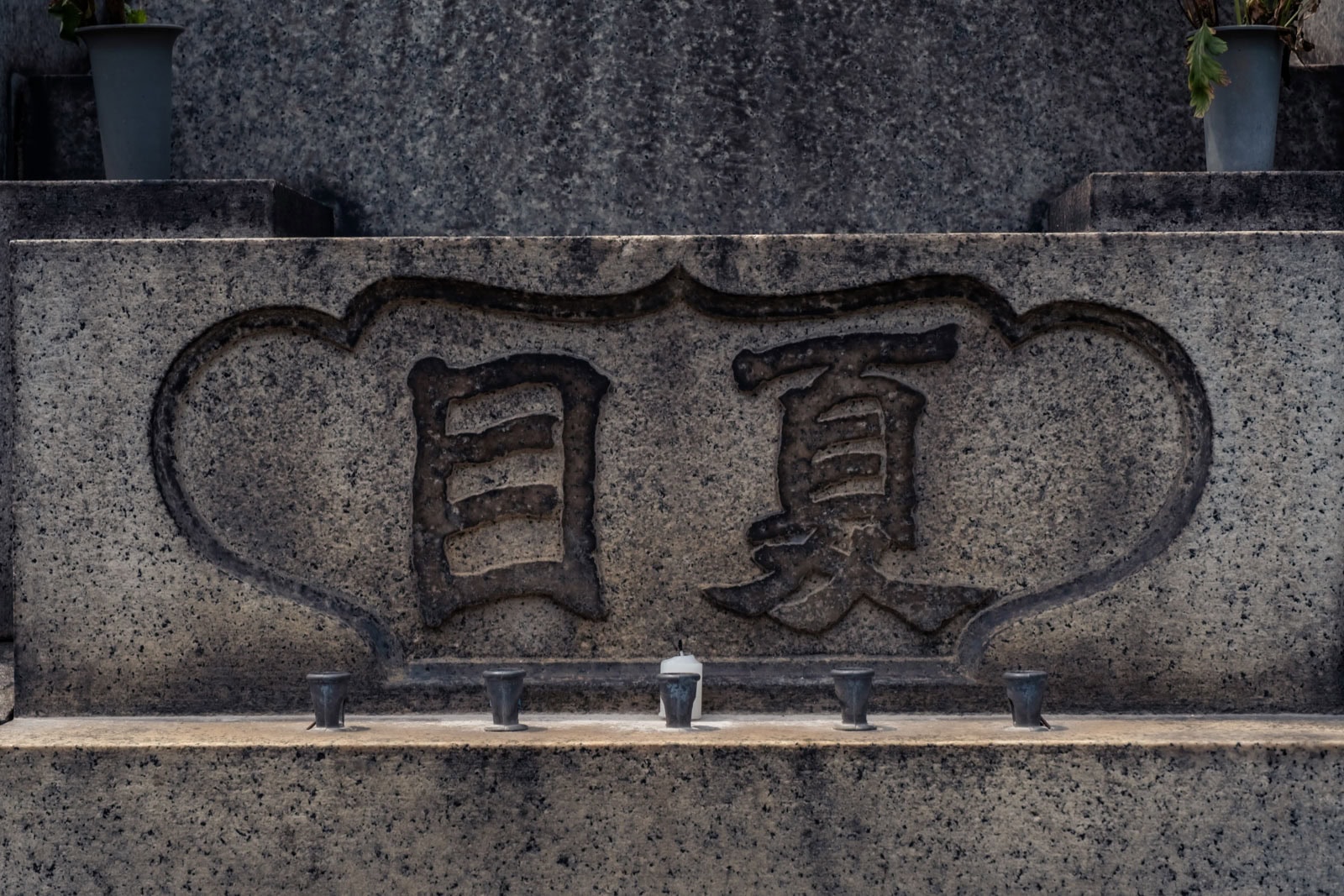
Critically acclaimed author Haruki Murakami considers him a favorite writer. For two decades, from 1984 to 2004, his portrait graced the 1000 yen note, cementing his place in the national consciousness.
About his armchair tombstone
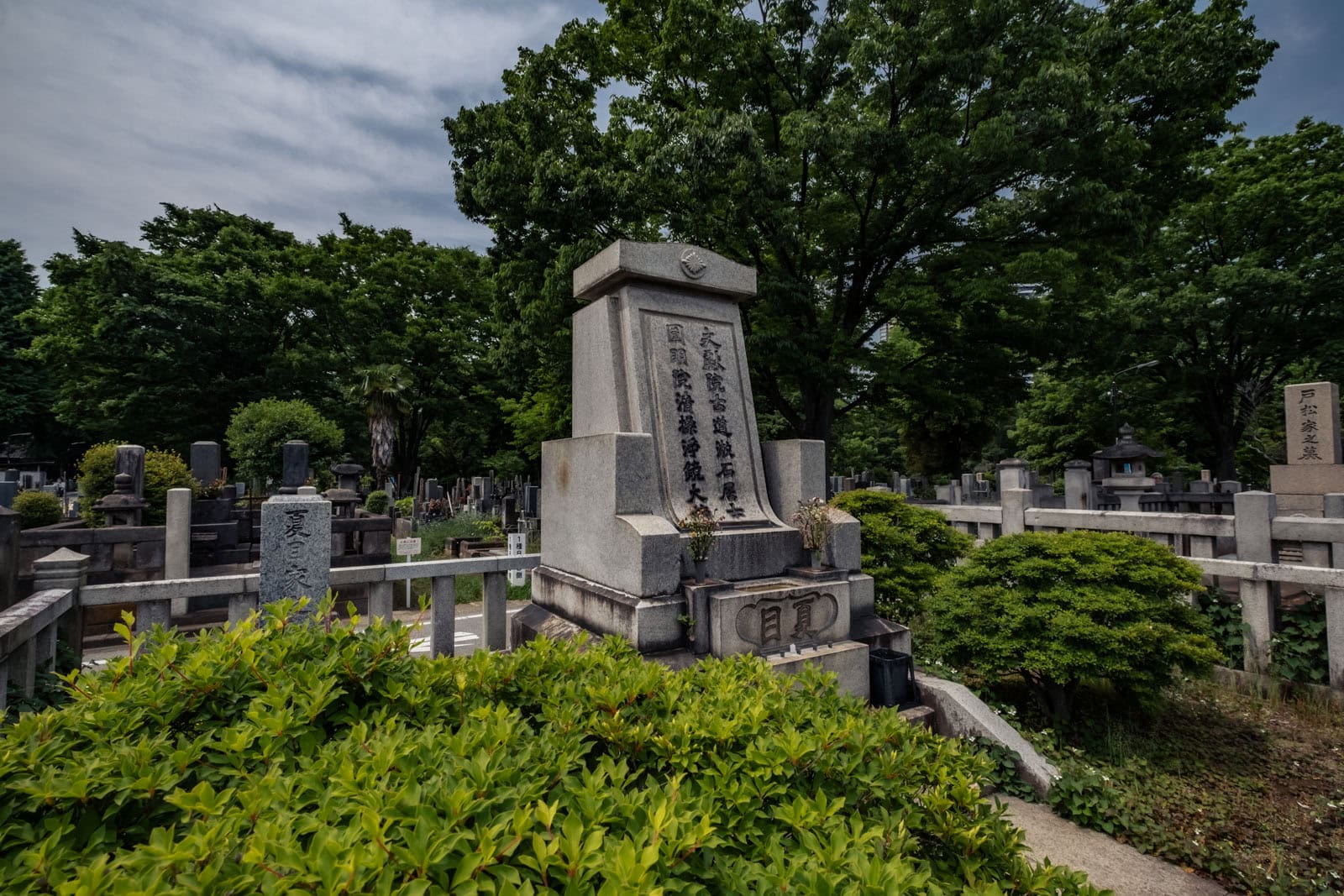
His headstone is unique. It resembles a comfortable armchair. Soseki died of a stomach ulcer, and it was painful for him to sit in the last months of his life. Does he use it to sit comfortably in the afterlife?
Who designed it?
The tombstone was designed by Teiji Suzuki (1870–1941), a prominent architect and professor who is often called the “architect who built Nagoya.” Suzuki was Soseki’s brother-in-law (his wife, Tokiko, was the younger sister of Soseki’s wife, Kyoko).
Because Soseki had once considered becoming an architect himself before choosing literature, he shared a bond with Suzuki. Following Soseki’s death in 1916, Suzuki was entrusted with the design of the monument, which was completed for the first anniversary of Soseki’s death in 1917.
East meets West
According to Soseki’s wife, Kyoko, the family wanted a design that avoided traditional clichés. In her memoir Soseki no Omoide (Memories of Soseki), she explained, “We wanted something that was neither a typical Western grave nor a typical Japanese one… something like him sitting relaxed in an armchair.”
Soseki lived during the Meiji era, a time of conflict between Japanese tradition and Western modernization, a central theme in his novels. The “armchair” design represents this hybridity: the form of a Western-style furniture piece made of solid stone in a Japanese cemetery.
Symbol of the writer’s study
The armchair is a symbol of Soseki’s life as a man of letters. Unlike many of his contemporaries who wrote sitting on tatami mats, Soseki famously wrote his later masterpieces while sitting in a chair at a desk in his study (the “Soseki Sanbo”).
Tombstone features
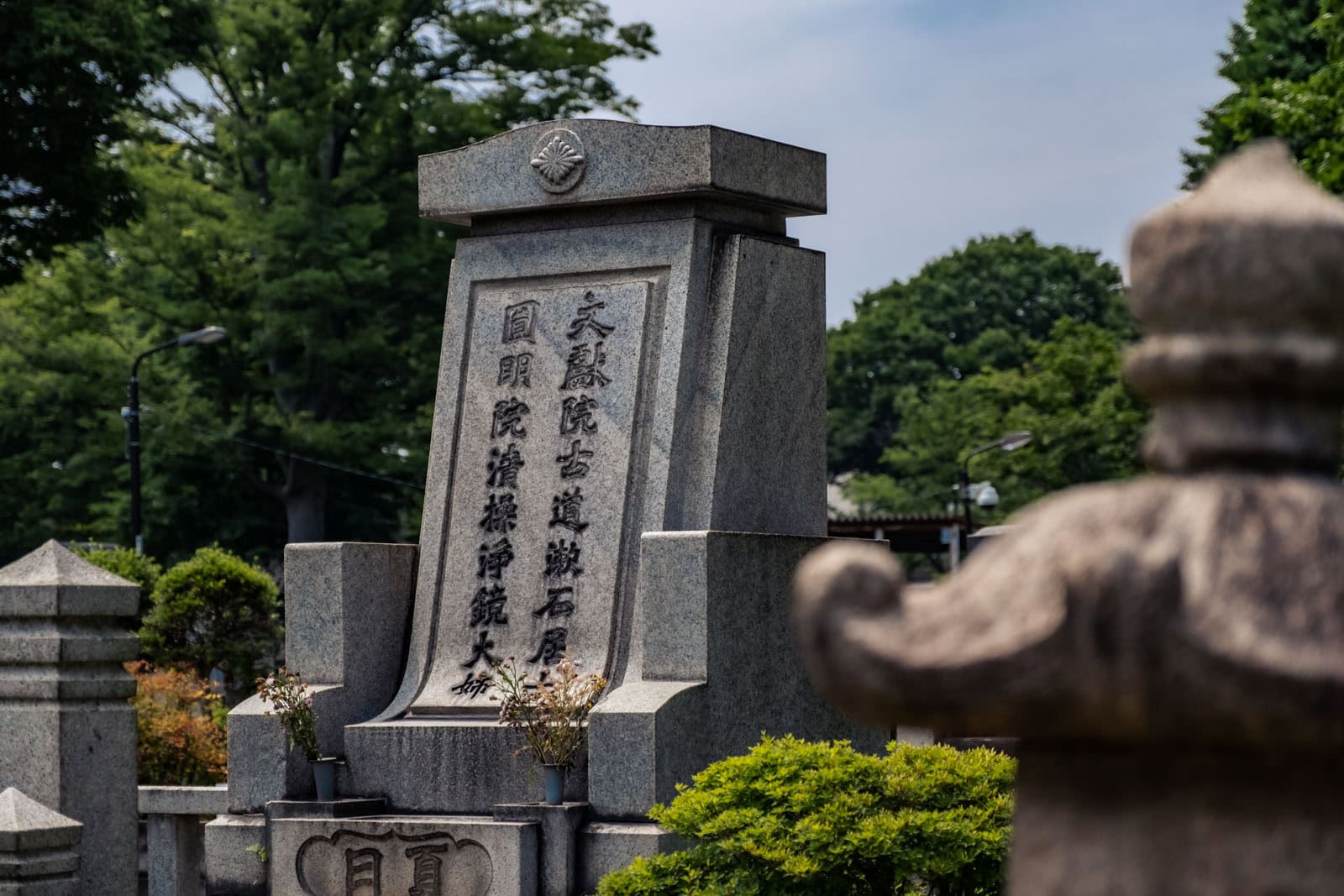
- Backrest: Inscribed with his posthumous Buddhist name (kaimyo), Bunken-in Kodo Soseki Koji.
- Armrests: Large stone slabs on either side that give the monument its chair-like silhouette.
- Size: The monument is unusually large and imposing, reflecting Soseki’s status as a “giant” of modern Japanese literature.
Finding the author’s grave
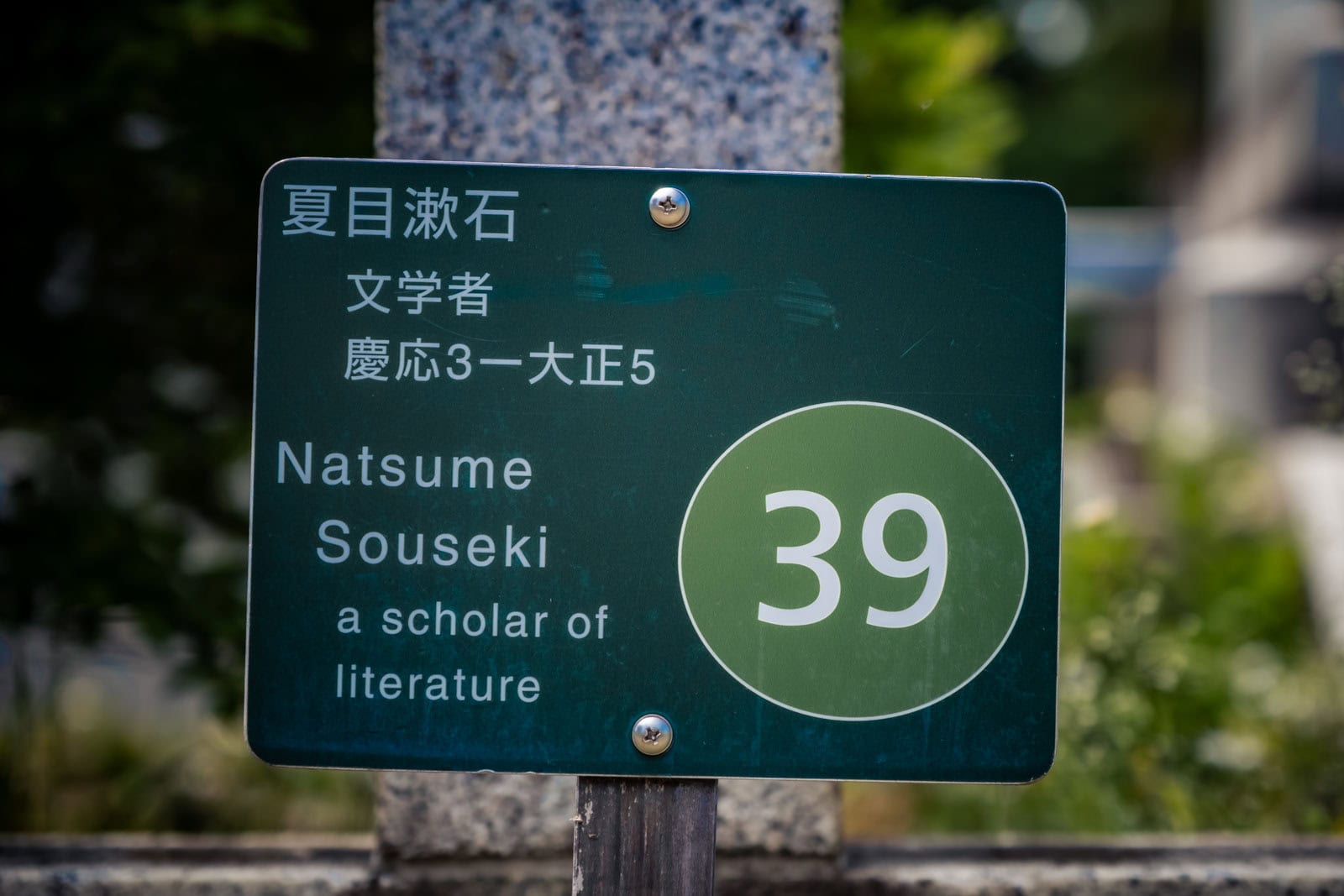
It is #39 on the map available at the administration office.
Soseki’s famous neighbors
Many other famous people lie near him. Hideki Tojo is only a short walk away. Ginko Ogino and Lafcadio Hearn are near, too. Others are mentioned on the map. He is not alone.
Quite a few cats also keep them company. Maybe they love being near the writer of “I am a Cat”? To learn more, you should look at my [Zoshigaya Cemetery Photography Guide] article.
A strange encounter at the grave
I visit Soseki maybe twice a year. But I drop by and say hello if I’m in the area. Of course, I take photos. Once, a family group with their grandmother in tow was there.
The grandmother started talking to me about Soseki. Like many Japanese, she had no idea that people overseas knew him. Suddenly, she reached out and grabbed my hand. She wrapped her Buddhist prayer beads around it and implored me to pray. I tried politely to worm my way out of the situation. But she wouldn’t have a bar of it.
If you didn’t know, I’m somewhere between atheist and agnostic. I go to a shrine on New Year’s Day because I enjoy the experience, but it’s not to pray. It’s not my thing. But this lady caught me off guard, and I ended up doing it. I put it down as one of those “Only in Japan” experiences. It certainly was strange.
Is Soseki Natsume’s grave worth visiting?
My visits to Soseki’s grave have given me some insight into his enduring influence. His unique armchair-like headstone seems fitting for a man whose occupation was writing. It serves as a reminder of his timeless impact on literature and culture. He bridged generations and continents.
But my biggest insight into Soseki’s legacy didn’t come from the stone itself. It came from the grandmother who grabbed my hand, her prayer beads a tangible link to the past.
Her reverence showed that Soseki is not just a historical figure. He still inspires connection and wonder. That strange, unforgettable moment showed me that his influence has bridged generations and continents. To learn even more about the man, check out [Natsume Soseki Memorial Museum].