Shinjuku Gyoen Chrysanthemums 2018
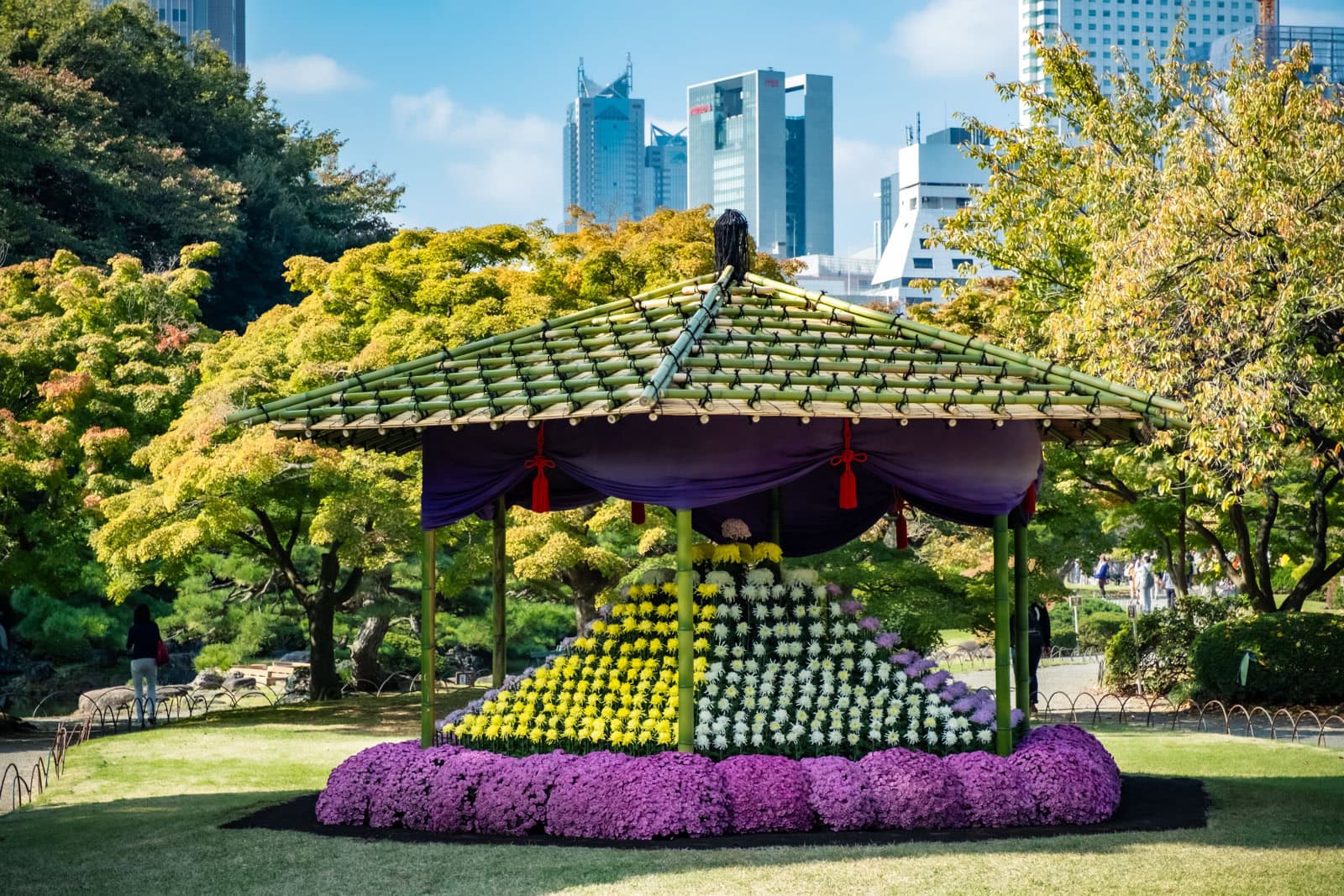
Shinjuku Gyoen chrysanthemums 2018 were autumn gold. Under the clear skies of a perfect fall day, the flowers were breathtaking. I actually visited twice in one day, once in the morning and again in the late afternoon.
Both gave me two very different experiences with the event and how to photograph it best.
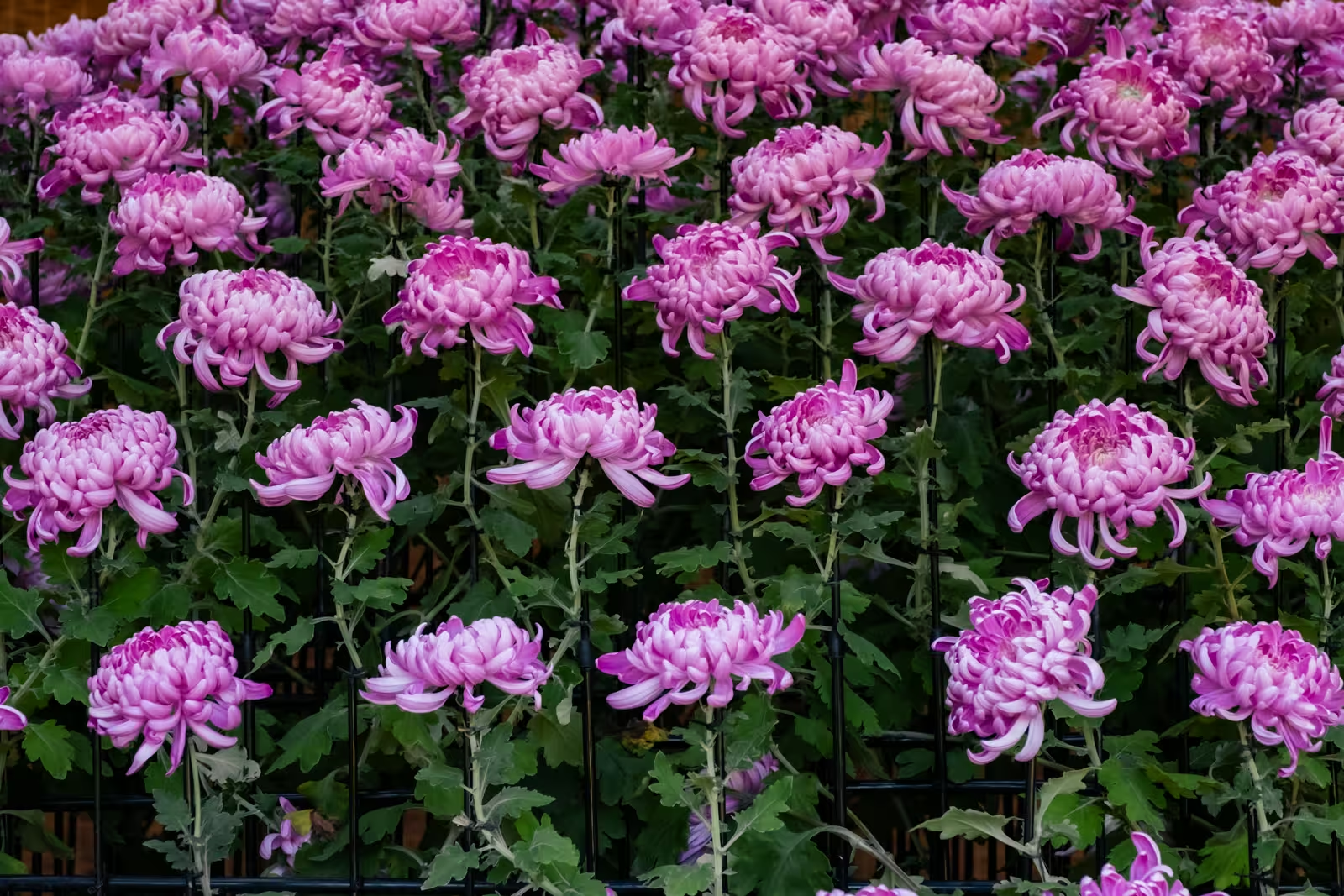
My first attempt in the morning was a lesson about popularity. The paths teemed with visitors, all eager to see the meticulously cultivated displays. It was so crowded that I gave up on getting any meaningful shots.
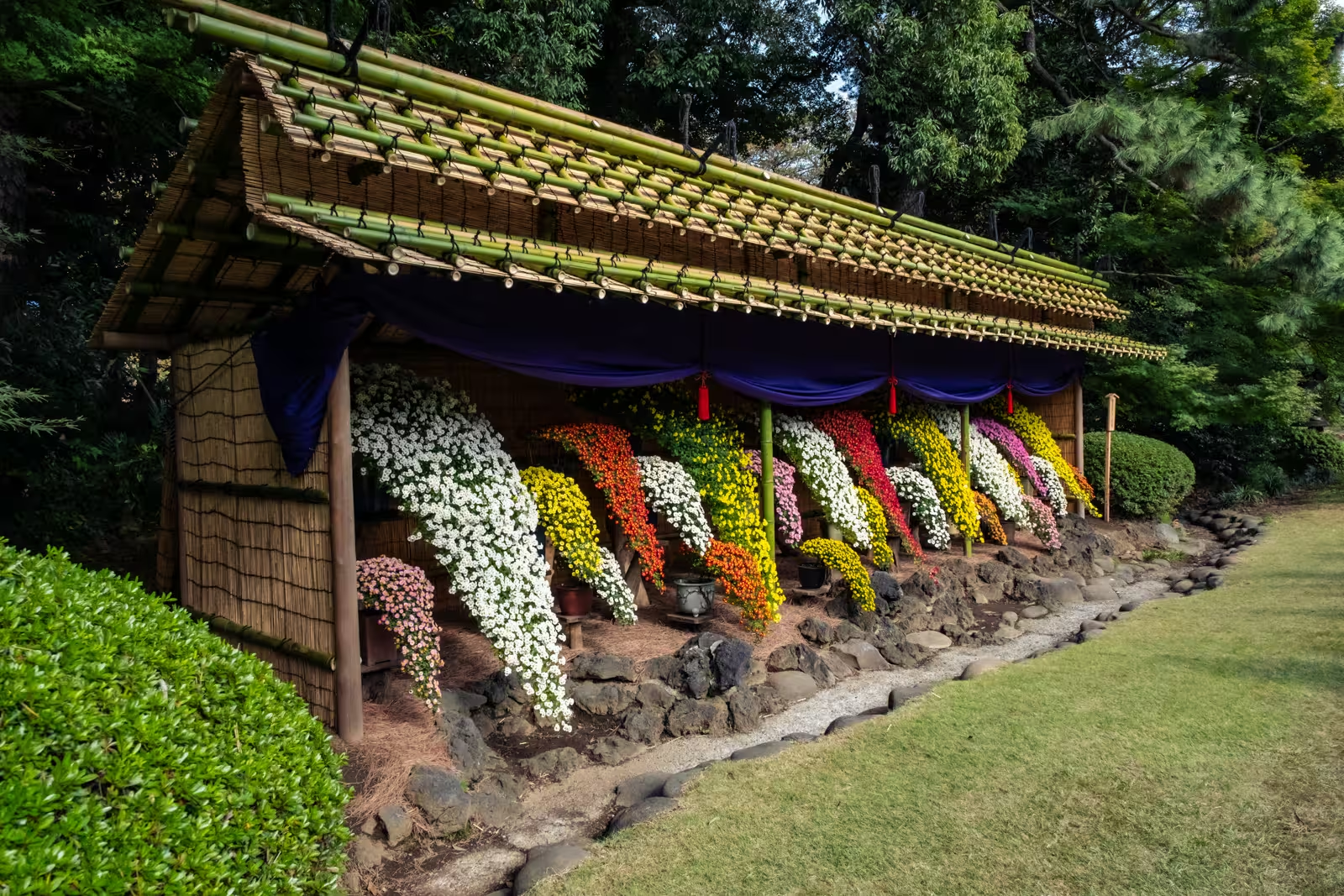
Rather than fight the crowds, I decided to return just before the gates closed. This meant less time for photography, but the trade-off was a calmer experience with fewer people around the flowers. That allowed me to capture the images I had envisioned.
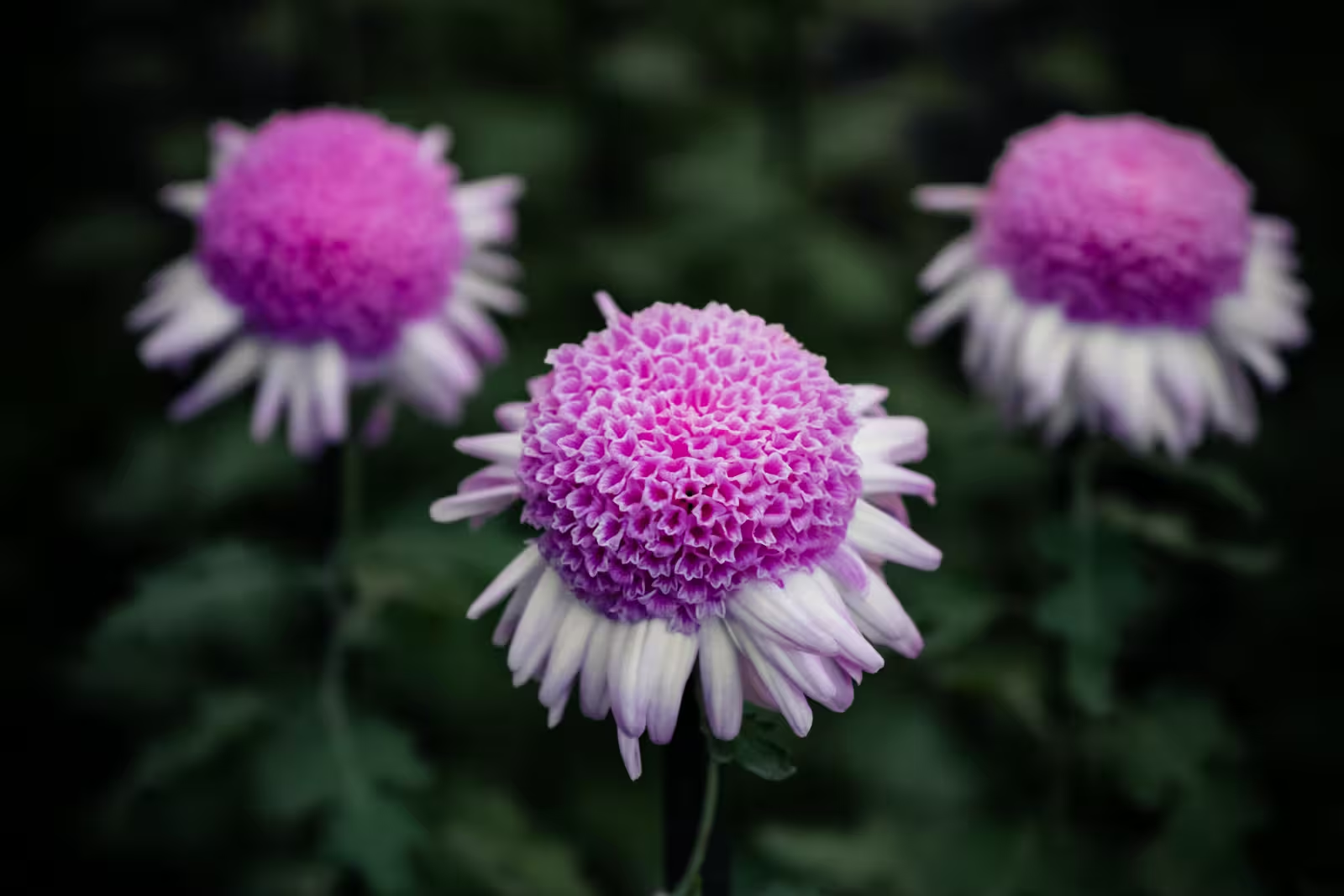
Three strategies for dealing with crowds
The biggest challenge at a popular event like this is dealing with the crowds. With a limited number of displays, everyone gathers in the same spots. As a photographer, you have a few choices:
- Embrace the human element: You can incorporate other visitors into your shots, which can sometimes add a sense of scale and life to your photos.
- Wait it out: If you have the patience, you can wait for a clearing in the crowd to get an unobstructed shot. Be warned, this can take a significant amount of time.
- Fill the frame: This was my strategy. Get up close and fill the entire frame with the chrysanthemums. I isolated them from the busy background. Patience was still key, but this approach allowed me to focus on the beauty of the blooms.
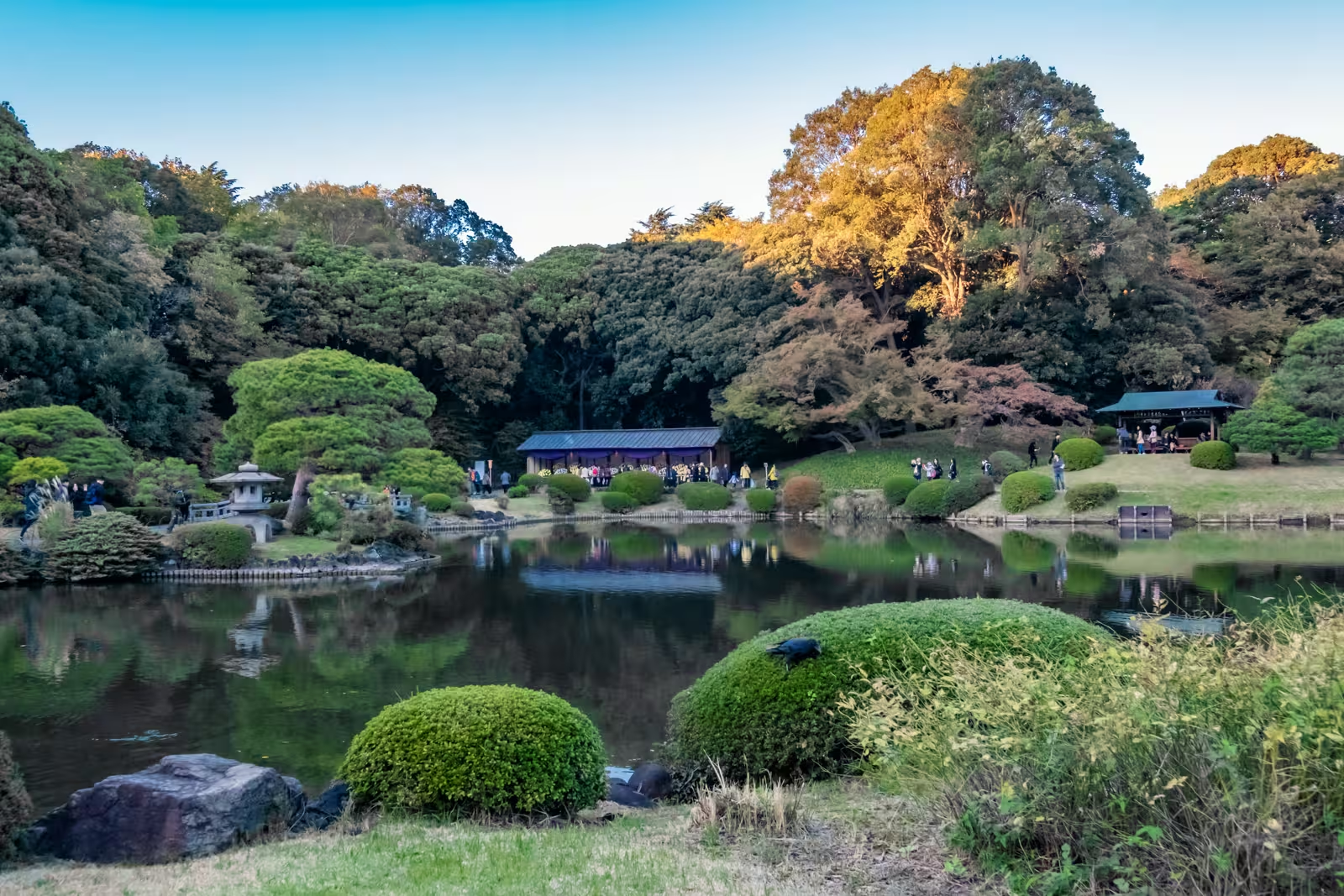
In the end, focusing tightly on the flowers was the most rewarding approach for me, and I was thrilled with the results.
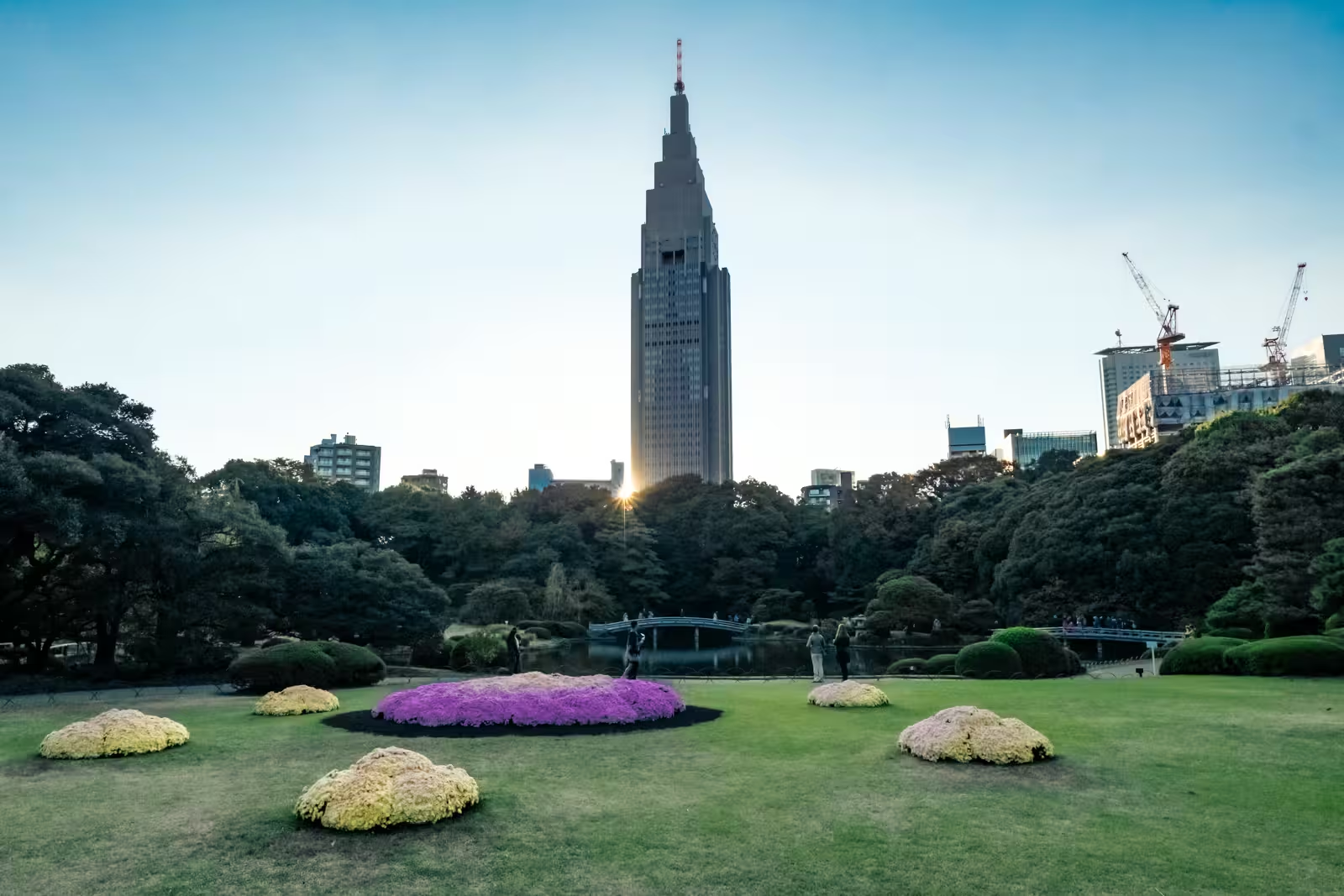
Stars of the show: Ozukuri
My favorite display was the ozukuri, a stunning, dome-shaped cascade featuring hundreds of blooms grown from a single plant. Photographing these masterpieces is always a challenge.
Do you shoot them head-on to capture its perfect symmetry, or from the side to appreciate their depth and structure? I tried both, and you can see the different perspectives in the photos here.
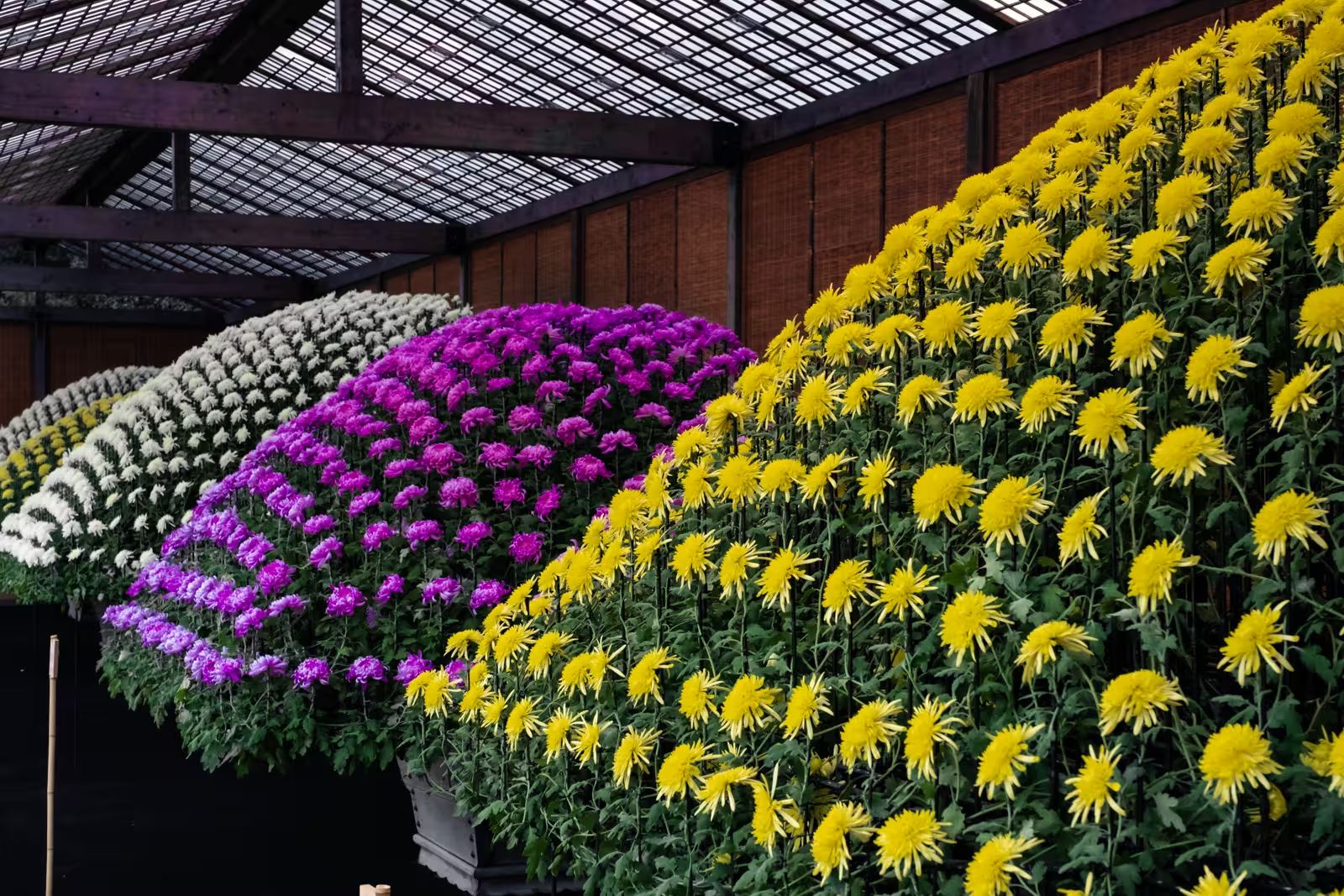
Wide-angle views of the chrysanthemums
That year, I also experimented with my wide-angle Fujifilm 10-24mm lens. The results were a mixed bag. While it allowed me to capture the displays in a way I hadn’t before, I found that when shooting up close, the corners of images were stretched.
You can see this in one of the ozukuri photos. This distortion wasn’t ideal, but it was an interesting learning experience in understanding the limits and strengths of a wide-angle perspective for flower photography.
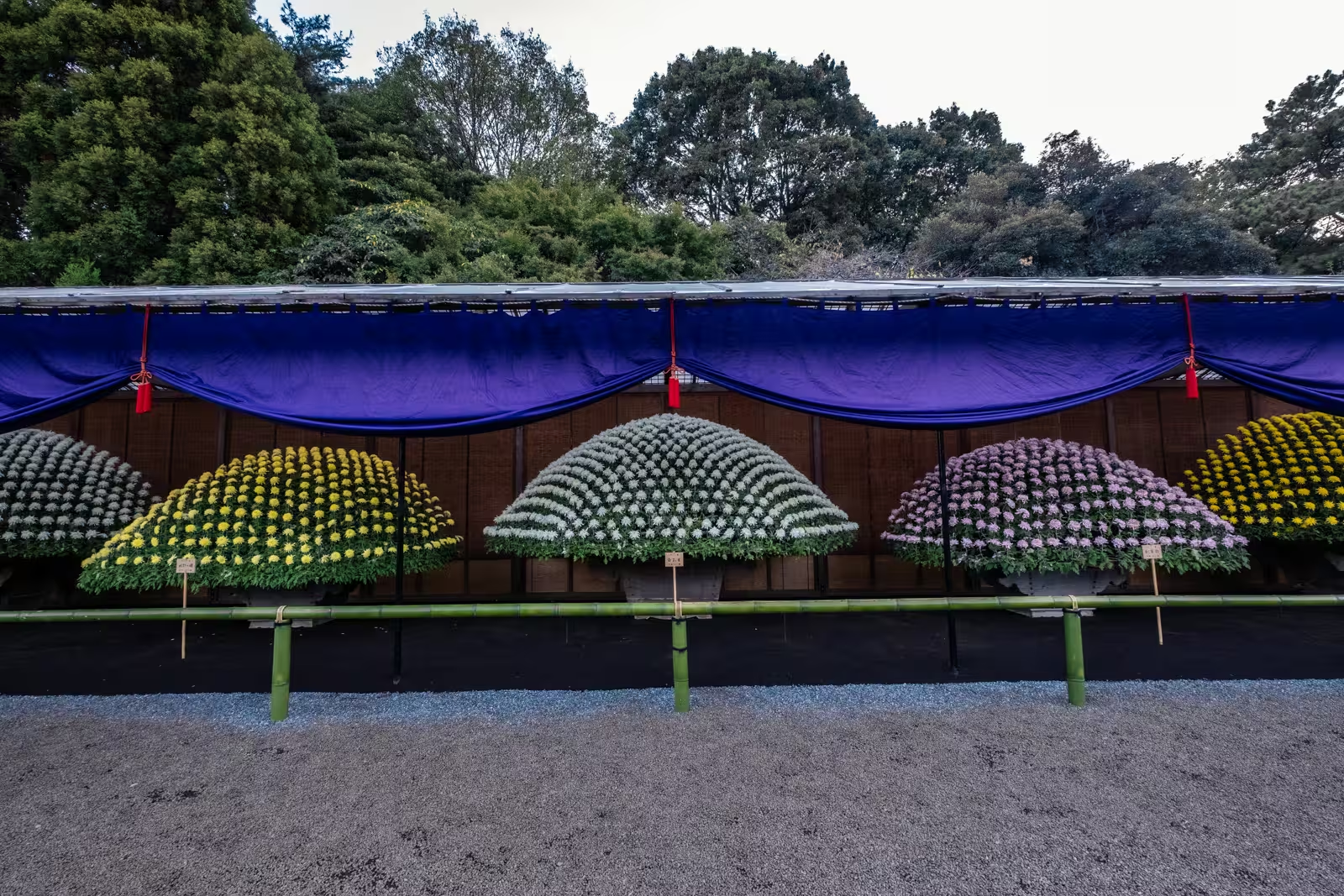
A final thought
As I wandered through the gardens, I found myself wondering about the chrysanthemum’s popularity. In Australia, it’s a traditional Mother’s Day gift. In Japan, the flower holds a place of honor as the symbol of the Imperial Family.
Yet, when people here talk about their favorite flowers, you often hear about cherry blossoms or hydrangeas before chrysanthemums. Despite this, the sheer number of people who flock to this exhibition every year proves its enduring appeal.
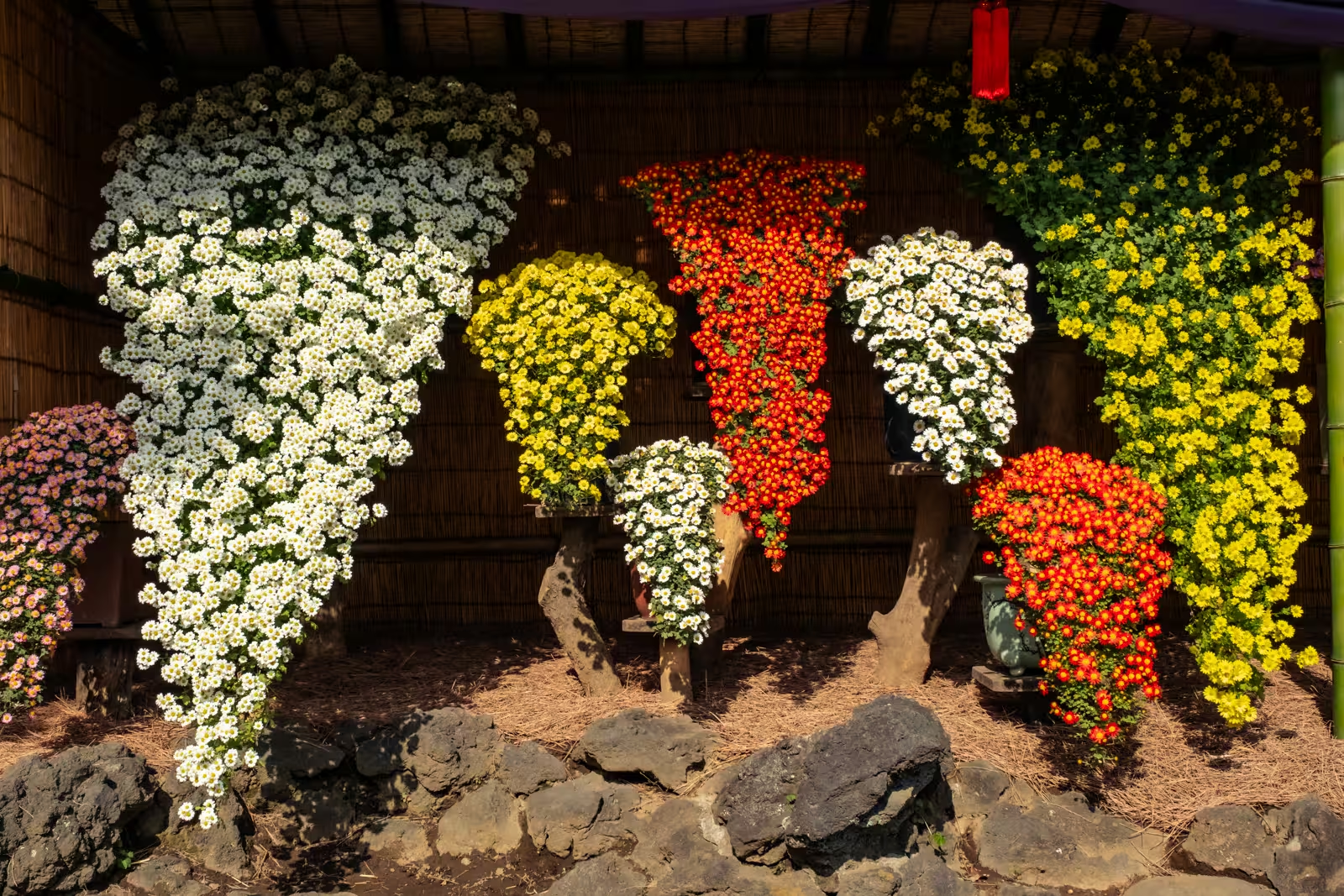
The Fujifilm 10-24mm was a mixed bag, but overall I liked it. You just need to keep things in the middle and be careful with the corners. For me, I need to experiment more with it. Let me know if you have used it or something similar.
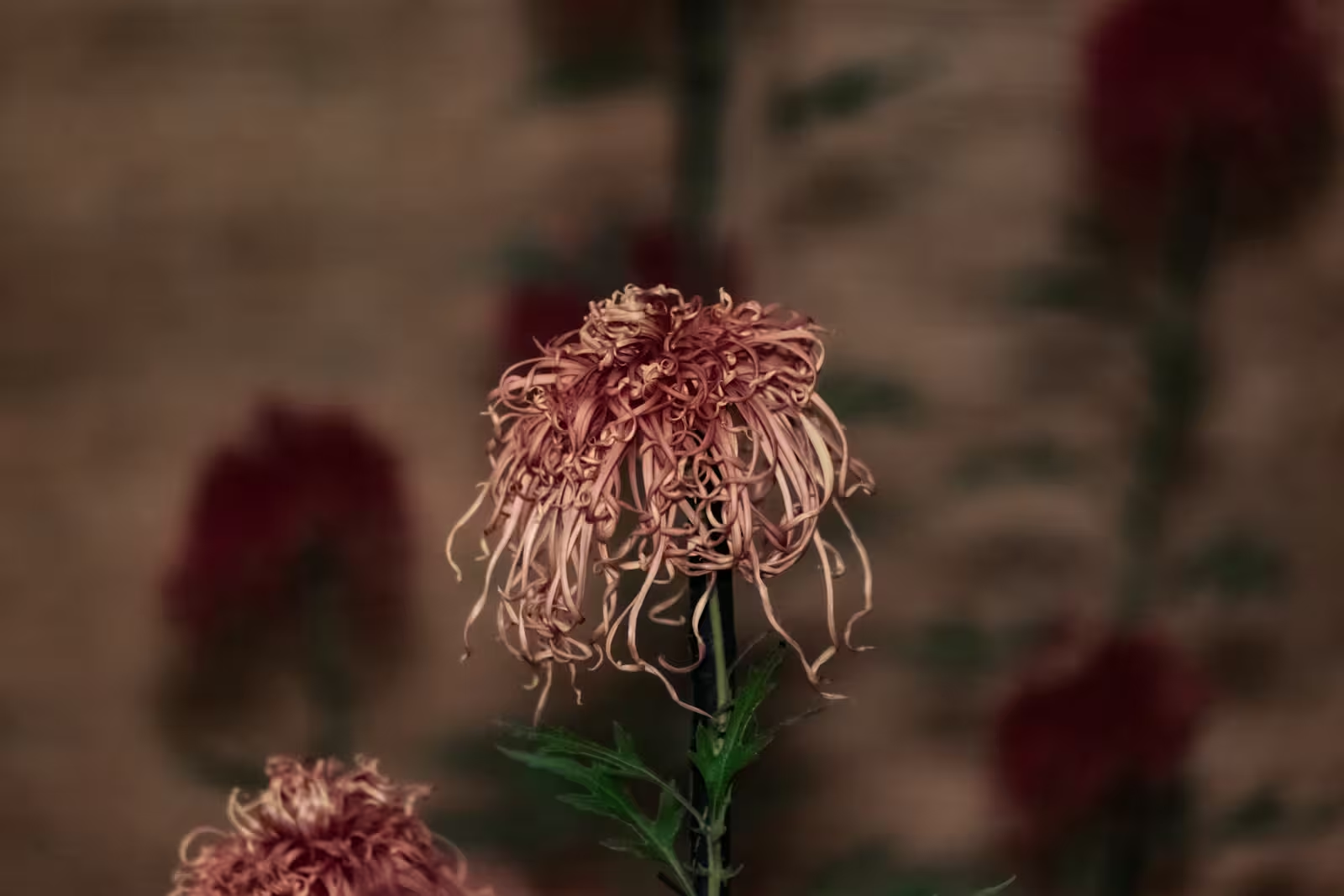
If you want to see these flowers shot with a different camera check out [Canon EOS R5: Shinjuku Gyoen Chrysanthemums 2024]. I didn’t have a wide angle that year, but the blooms still looked great.
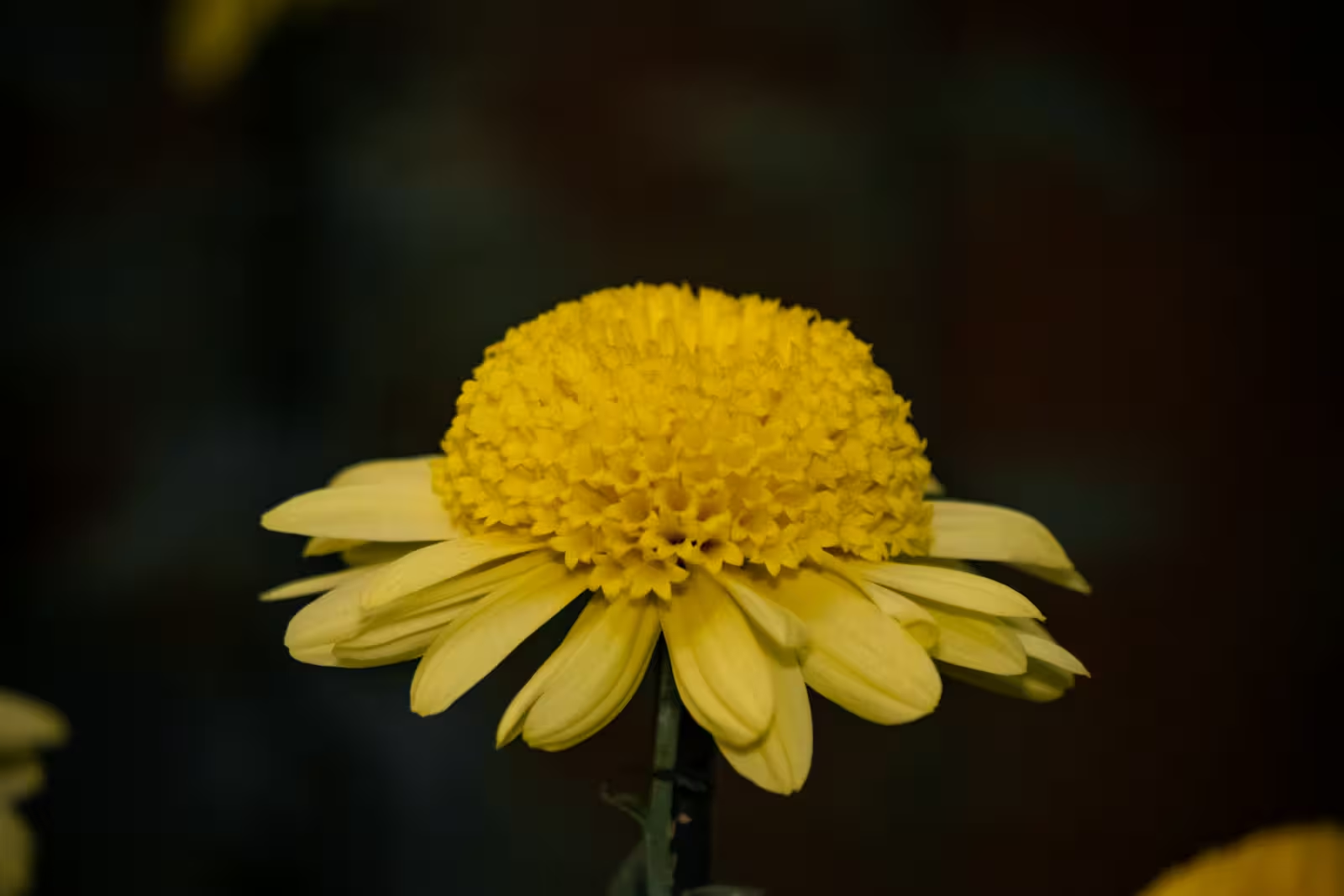
My photography gear for this shoot
- Camera: Fujifilm X-T2
- Lenses:
- Fujifilm XF 10-24mm F4 R OIS WR
- Fujifilm XF 16-55mm F2.8 R LM WR
- Fujifilm XF 55-200mm f/3.5-4.8 R LM OIS